Online Ordering System vs Marketplace: Which Wins for Your Restaurant?
Should you take orders through foodpanda and Pathao, or run your own ordering page? This balanced look at online ordering system vs marketplace compares reach, commission, customer data and control, and explains why the answer is usually both.
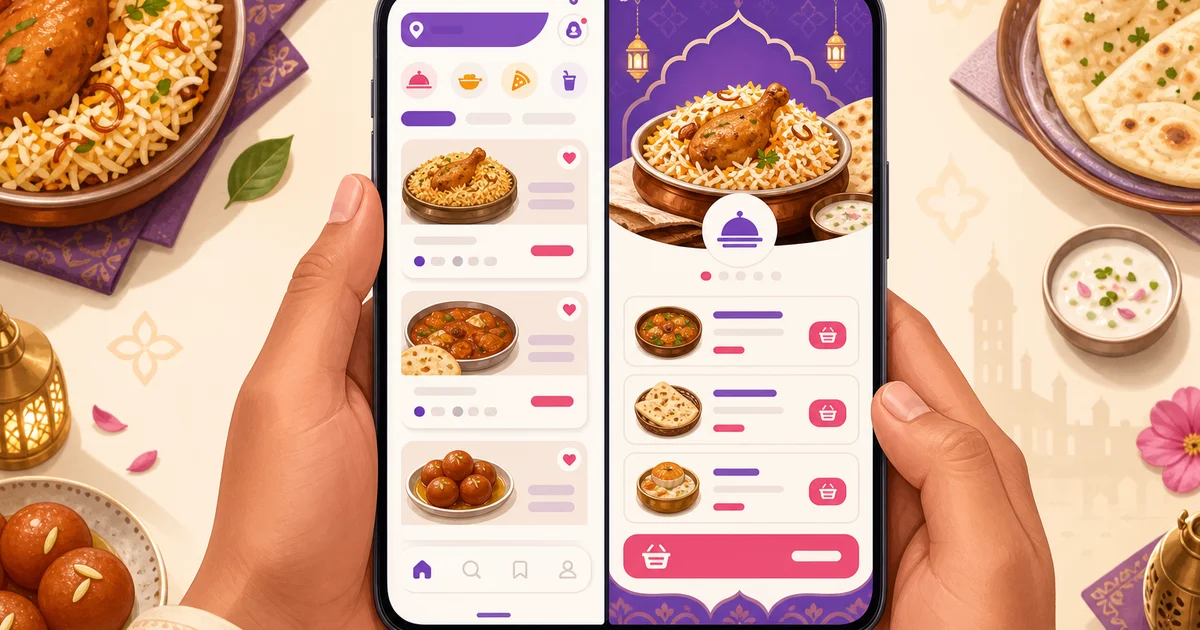
The online ordering system vs marketplace question is one every restaurant owner in Bangladesh faces sooner or later. A marketplace like foodpanda or Pathao gives you instant reach and a rider network. Your own ordering system gives you the whole bill and the customer relationship. Both are real tools, and pitching one as good and the other as bad misses the point. This guide compares the two honestly across reach, commission, customer data and control, then makes the case that most restaurants should run both, using each for what it does best.
Online ordering system vs marketplace: what each one is
A marketplace is a third-party app where many restaurants are listed together. Customers browse, compare, and order from whichever they like, and the platform handles delivery. You are one option among hundreds, and you pay a commission on every order it sends you.
An online ordering system is your own branded ordering page, in this case a storefront on your own subdomain. It lists only your menu. Customers who land there are already choosing you, they order directly, and no marketplace takes a cut. Rosuii gives every restaurant exactly this: a storefront on a branded subdomain with your menu, cart, checkout and order tracking, paid by bKash, Nagad or cash on delivery.
The honest comparison
Here is how the two stack up on the things that decide your margin and your future.
| Factor | Marketplace (foodpanda, Pathao) | Your own ordering system |
|---|---|---|
| Reach | High. Puts you in front of new customers searching nearby | Low at first. Only people you send there or who already know you |
| Commission | A percentage of every order, often 20 to 30% (varies by agreement) | None. You pay only normal bKash or Nagad processing fees |
| Customer data | Owned by the platform. Limited or no access to phone, history | Yours. Phone number, order history and loyalty in your records |
| Control | Platform sets the look, ranking and promotions | You control branding, menu, offers and prices |
| Delivery | Rider network included | Your own riders, or hand off to a courier |
| Best for | Getting discovered by new customers | Keeping regulars and protecting margin |
Read down the table and a pattern appears. The marketplace wins on reach and delivery logistics. Your own system wins on everything that compounds over time: margin, data and control. Neither column is all wins, which is exactly why the choice is not either-or.
Where the marketplace earns its keep
It is easy to resent commission, but a marketplace does real work for it. When you open a new outlet in a busy Dhaka neighbourhood, foodpanda and Pathao put your menu in front of thousands of people who have never heard of you and are hungry right now. They carry the rider fleet, so you do not need to hire and manage delivery staff from day one. For discovery, that is genuine value, and for a brand-new restaurant it can be the difference between a quiet first month and a busy one.
Think of marketplace commission as a customer-acquisition cost. You pay to be found. The mistake is not paying it. The mistake is paying it forever on the same person. There is also a marketing side that is easy to undervalue: a strong listing with good photos, fast prep times and solid ratings can win the top of a search in your area, and that placement keeps bringing first-time orders while you sleep. For a new kitchen with no following yet, that visibility is worth real money, and trying to replace it on day one with your own page alone is a slow road.
Where your own ordering system pulls ahead
Once a customer has ordered from you a few times and likes the food, you no longer need to pay to be discovered by them. They already know you. Continuing to hand 20 to 30 percent of their repeat orders to a platform is the leak that quietly drains a delivery business. Your own ordering page closes it.
The margin gap is large. On a ৳500 order at 25 percent commission (used here only to show the maths), the marketplace keeps ৳125 that a direct order leaves with you. The data gap matters just as much. On your own page you capture the customer's phone number and order history, so you can run loyalty, send them an offer, and win them back when they go quiet, none of which a marketplace listing lets you do. We break the money side down further in commission-free online ordering.
Why most restaurants should run both
The smart strategy is not to pick a side. It is to use each channel for its strength and move customers across at the right moment:
- Use the marketplace to get discovered. Keep your listing on foodpanda and Pathao active so new customers can find you. Treat the commission as the price of that exposure.
- Move regulars to your own page. Once someone has ordered a few times, nudge them to order direct next time with a card in the bag, a direct-only perk, or loyalty points.
- Keep both in one system. Tag every marketplace order to its channel so your reports show, order by order, what each platform costs and what your own page earns.
Done over months, this shifts your mix. New customers keep arriving through the marketplace and paying their first commission, while your regulars migrate to direct orders that cost you nothing extra. You keep the reach and you keep the margin.
How Rosuii lets you run both cleanly
The reason most restaurants do not run both well is fragmentation: a foodpanda tablet on one shelf, a Pathao phone on another, and their own orders somewhere else, with nothing reconciling. Rosuii is built to hold all of it in one place.
Your own storefront on a branded subdomain takes direct orders with no marketplace cut. For the marketplaces, Rosuii ships with presets for foodpanda, Pathao, Shohoz Food and Steadfast, so when a delivery order comes in through a platform, the cashier rings it up and tags it to that channel. Every order, direct or marketplace, then lands in the same orders list, fires to the same kitchen display, and shows up in the same reports. At day-close, your Z-report breaks revenue down by channel, so you can compare marketplace sales against direct sales side by side and judge whether each platform is worth its commission. The practical setup is covered in how to integrate foodpanda and Pathao into one restaurant system.
How to decide your own mix
Your right balance depends on your stage and your area:
- Brand new, unknown area: lean on marketplaces for discovery while you build a regular base, but set up your own page from day one so you have somewhere to move people.
- Established, loyal following: push hard on your own storefront, keep a marketplace listing for new faces, and watch the direct share climb.
- Thin-margin menu: the commission hurts most here, so prioritise moving regulars to direct orders quickly.
Whatever your stage, the tool that lets you measure both in one place is what turns this from a guess into a decision you can see in your reports.
The takeaway
Online ordering system vs marketplace is not a contest with one winner. A marketplace buys you reach and delivery; your own system keeps your margin, your data and your control. Use the platform to get discovered, run your own commission-free page for everyone who comes back, and keep every channel tagged in one system so the numbers tell you what is working. That is how a restaurant in Bangladesh grows its customer base without giving away its margin. See what running both looks like on our features page.
Ready to keep the reach and keep the margin? Create your free Rosuii account, set up your own ordering storefront, and tag your marketplace orders in one place today.
Last updated:
Frequently asked questions
Is my own ordering system better than foodpanda?
How much does a marketplace take compared to my own page?
Can I use foodpanda, Pathao and my own ordering page together?
How do I move marketplace customers to my own ordering system?
Should a brand new restaurant skip marketplaces?
Run your restaurant on Rosuii
POS, menu, inventory, payroll and more — built for Bangladeshi restaurants.
Start free