
Skip to content
RosuiiRosuii

Restaurant Payment Methods in Bangladesh: Cash, bKash, Nagad and More

Your customers pay in a mix of cash, bKash, Nagad and card, and each one behaves differently at the till. Here is a practical guide to restaurant payment methods in Bangladesh, the pros and cons of each, and how a POS records every taka against the right order.
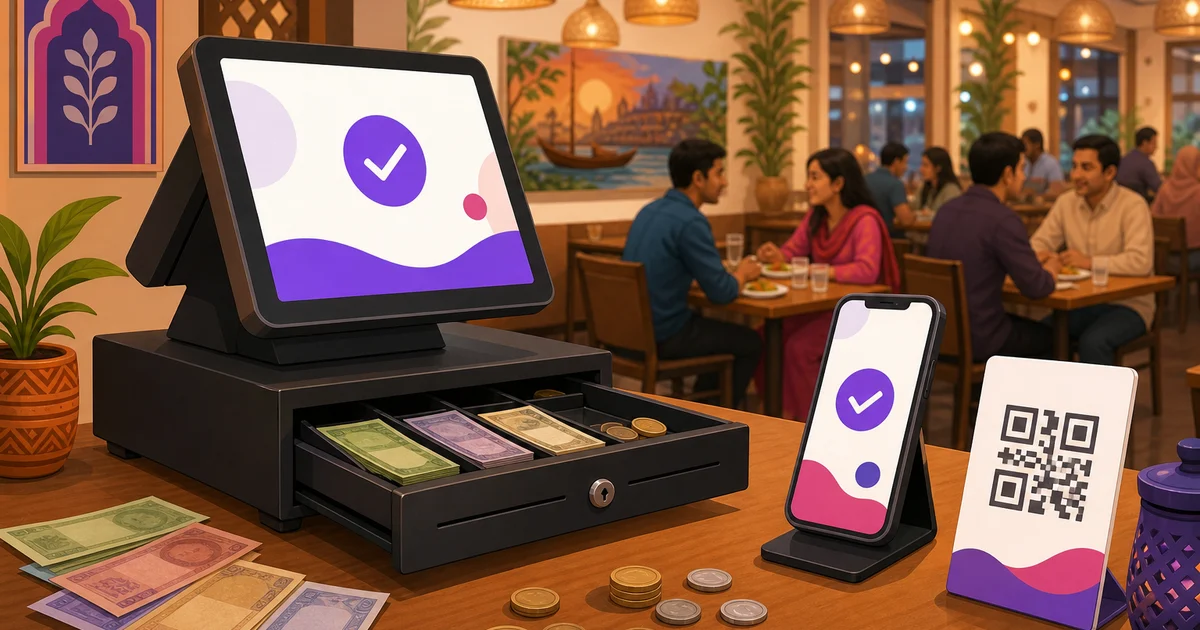
By Rosuii Team8 min read
Share
Restaurant Payment Methods in Bangladesh: Cash, bKash, Nagad and More

Restaurant payment methods in Bangladesh have changed fast. A few years ago the cash drawer did almost all the work. Today a single dinner shift in Dhaka might mix notes, a bKash payment, a Nagad scan, and a cash-on-delivery handoff at the door, all in the same hour. Each method moves money differently, carries its own fees and risks, and needs its own line in your daily reconciliation. This guide walks through the main ways your customers pay, the honest pros and cons of each, and how a point-of-sale system records them so your numbers actually add up at close.

The main restaurant payment methods in Bangladesh

Most restaurants here deal with the same short list every day: cash, the big mobile wallets (bKash and Nagad, with Rocket behind them), debit and credit cards, and cash on delivery for orders that go out the door. Knowing how each behaves at the counter is the difference between a clean day-close and an hour of detective work. We will take them one at a time, then show how a POS ties them together.

1. Cash

Cash is still the backbone for a great many outlets, especially street-side shops, tea stalls and neighbourhood eateries. It settles instantly, there is no transaction fee, and no customer ever has "insufficient balance." The downsides are the old familiar ones. Cash needs counting, it needs safe storage, it invites change errors and short rings during a rush, and it has to be physically banked. It also leaves the weakest paper trail unless every sale is rung up properly. For most restaurants cash will stay a major share for years, so the goal is not to remove it but to record it as tightly as the digital methods.

2. bKash

bKash is the most common mobile wallet at the counter, and for many diners it is the default way to pay. With a merchant account, the customer uses the Payment option, often at no charge to them, and the money settles to your business wallet with a real transaction reference. It is fast, it needs no card machine, and it suits both the counter and online orders. The trade-offs: merchant payments carry a fee the business absorbs, a personal number used instead of a merchant account caps your limits and muddies your books, and a busy cashier can mis-key the amount if the flow is manual. Done with a merchant account and tied to the order, bKash is one of the cleanest methods you can offer.

3. Nagad

Nagad works much like bKash and is widely held, so offering both means almost no customer is stuck without a wallet they already use. A Nagad merchant account gives you a business QR, higher limits and a statement for your accountant. The pros and cons mirror bKash: low friction, a real reference per payment, a merchant fee the business carries, and the same need to use a merchant account rather than a personal number. Most restaurants print a bKash QR and a Nagad QR side by side at the till so the customer picks whichever app they have open.

4. Rocket

Rocket (the mobile wallet from Dutch-Bangla Bank) is less common than bKash and Nagad but still in use, particularly among customers tied to that bank. Offering it costs you little and catches the diners who prefer it. Treat it as a useful third option rather than a primary rail. The pros and cons are again similar to the other wallets, with the main difference being smaller reach, so most outlets lead with bKash and Nagad and keep Rocket available for those who ask.

5. Card (debit and credit)

Cards matter most at higher-end restaurants, hotels and venues serving tourists or corporate diners. A card terminal lets a customer tap or swipe without holding any wallet balance, and for a large bill that convenience counts. The honest picture for Bangladesh: card acceptance needs a separate arrangement with a bank or payment processor, terminals and processing carry their own fees, and settlement timing depends on that provider. For a small neighbourhood eatery, cards are often optional; for a fine-dining room they can be expected. Decide based on who actually walks through your door.

6. Cash on delivery (COD)

For delivery and online orders, cash on delivery is still hugely popular across Bangladesh. The customer orders now and pays the rider in cash at the door, which reassures buyers who are wary of paying online before the food arrives. The cost is operational, not a percentage: riders carry float and cash back, there is reconciliation between what was collected and what was ordered, and the occasional refused or wrong-change order. COD will remain essential for a long time, so the trick is to record each COD order clearly and reconcile collected cash against delivered orders at close.

Pros and cons at a glance

MethodBest forProsCons
CashCounter, every outletInstant, no fee, universalCounting, theft risk, weak trail, banking
bKashCounter and onlineFast, no card machine, real referenceMerchant fee, needs merchant account
NagadCounter and onlineWide reach, business statementMerchant fee, needs merchant account
RocketCounter, specific customersCatches DBBL users, low cost to offerSmaller reach than bKash/Nagad
CardHigher-end venuesConvenient for big billsSeparate bank setup, terminal and fees
Cash on deliveryDelivery and onlineTrusted by buyers, no online stepRider float, collection reconciliation

How Rosuii records each payment method (honestly)

Offering payment options is half the job. The other half is recording each one against the right order so your day-close adds up. Here is exactly what Rosuii does for each method, with no overclaiming.

  • Cash: fully supported. The POS payment modal handles cash with change calculation, so the cashier enters the tendered amount and the system shows the change to give. The sale is recorded as cash against the order.
  • bKash: real integration via bKash Tokenized Checkout. On your online storefront the customer pays through the gateway and the payment is verified automatically against the order. At the counter the cashier can tag bKash on the bill so dine-in and takeaway takings are recorded too.
  • Nagad: real integration via the Nagad Online Payment API, working the same way as bKash, gateway-verified online and taggable at the counter.
  • Rocket: supported as a payment option you can record on the bill.
  • Cash on delivery: fully supported for delivery and online orders, so a COD order is marked and tracked through to collection.
  • Card: here is the honest part. Card in Rosuii is a simulation or placeholder only. It is not a live card processor and does not move real money on a debit or credit card. If you need real card acceptance, that is a separate arrangement with a bank or processor outside the current card option. The working digital rails in Rosuii are bKash, Nagad and cash on delivery.

Whatever the method, the payment is attached to a specific order with a clear breakdown of price, discount, service charge and VAT. That is what turns a pile of mixed payments into a report you can trust. For the step-by-step on going live with mobile money, see how to accept bKash and Nagad at your restaurant.

Per-tenant gateway keys: the money goes to you

One detail protects your cash and deserves attention. Rosuii is not a payment aggregator and does not hold your funds. Each restaurant enters its own bKash and Nagad merchant credentials, and the software uses those keys to take payments on your behalf. Every bKash and Nagad payment settles straight into your own merchant account, not a shared wallet. Your reporting matches what the provider shows, because it is literally your account. There is also a sandbox mode so you can test the whole flow with test money before a real customer ever pays. The deeper walkthrough is in restaurant software with bKash and Nagad.

Which methods should your restaurant offer?

You do not need every method. Match the mix to your customers:

  • Street-side shop or café: cash plus bKash and Nagad covers almost everyone. Add Rocket if regulars ask.
  • Casual dining with delivery: cash, bKash, Nagad and cash on delivery, with your own online storefront taking gateway payments to cut marketplace fees.
  • Fine dining or hotel: all of the above plus real card acceptance through a bank or processor, since higher bills and corporate diners expect it.

Whatever you choose, the rule is the same: take the money the way your customer wants, but record every payment against its order and reconcile nightly. A POS that breaks the day down by payment method turns reconciliation from a spreadsheet evening into a five-minute check. See how payments sit alongside the rest of the system on the Rosuii features page.

The bottom line

The mix of restaurant payment methods in Bangladesh is wider than it used to be, and that is good for your customers and your sales. Cash is not going away, mobile wallets are the everyday default, and cash on delivery keeps online orders flowing. The restaurants that stay clean at close are the ones that record each payment against its order and reconcile every night, with the working rails (bKash, Nagad, cash and COD) tied to the bill and card treated honestly for what it is today. Get that right and the payment mix becomes a strength, not a source of nightly stress.

Want one system that records cash, bKash, Nagad and COD against every order? Create your free Rosuii account, connect your bKash and Nagad merchant keys, and close each day with numbers that reconcile.

Updated:

Frequently asked questions

What are the most common restaurant payment methods in Bangladesh?
Cash, bKash and Nagad cover the vast majority of restaurant payments, with Rocket as a smaller third wallet, cards at higher-end venues, and cash on delivery for online and delivery orders. Most outlets offer cash plus bKash and Nagad at the counter, and add COD for deliveries.
Does Rosuii process real card payments?
No. Card in Rosuii is a simulation or placeholder only and does not move real money on a debit or credit card. The working digital rails are bKash (Tokenized Checkout), Nagad (Online Payment API) and cash on delivery, plus cash at the counter. Real card acceptance needs a separate arrangement with a bank or processor.
How does a POS record bKash and Nagad against an order?
On your online storefront the customer pays through the gateway and the payment is verified automatically against the order. At the counter the cashier tags bKash or Nagad on the bill. Either way the payment is tied to a specific order with the full price, discount, service charge and VAT breakdown, which makes day-close reconciliation fast. Try it at https://rosuii.com/register.
Is cash on delivery still worth offering in Bangladesh?
Yes. Cash on delivery remains very popular because many customers prefer to pay the rider in cash rather than online before the food arrives. The cost is operational, mainly rider float and reconciling collected cash against delivered orders, which a POS handles by marking and tracking each COD order to collection.
Do I need a bKash merchant account or can I use a personal number?
You should use a merchant account. A personal number works for a tiny stall but caps your limits, charges the customer to send, and mixes business and personal money. A merchant account gives higher limits, the no-charge Payment option, and a clean statement. See the full setup in our guide to accepting bKash and Nagad at /blog/accept-bkash-nagad-restaurant.

Run your restaurant on Rosuii

POS, menu, inventory, payroll and more — built for Bangladeshi restaurants.

Start free
Best Restaurant POS Software in Bangladesh: A Buyer's Guide (2026)

Best Restaurant POS Software in Bangladesh: A Buyer's Guide (2026)

The best restaurant POS software in Bangladesh takes bKash and Nagad, calculates VAT and service charge correctly, works in Bangla, and prints clean receipts. Here is the full checklist, plus where Rosuii fits and one honest caveat about offline use.

By Rosuii TeamJun 22, 20267 min read
Best Restaurant Software in Bangladesh: 7 Options Compared (2026)

Best Restaurant Software in Bangladesh: 7 Options Compared (2026)

The best restaurant software in Bangladesh is the one built for how you actually run, with real bKash and Nagad, full Bangla, and BDT pricing. Here are 7 options compared on the criteria that matter, plus a simple way to pick.

By Rosuii TeamJun 22, 20267 min read