Restaurant WhatsApp Ordering: Where It Breaks and What to Do Instead
Taking orders over WhatsApp feels personal and costs nothing to start, but missed messages and manual totals quietly lose you money. Here is where WhatsApp ordering breaks and how to move to a proper ordering page without losing the personal touch.
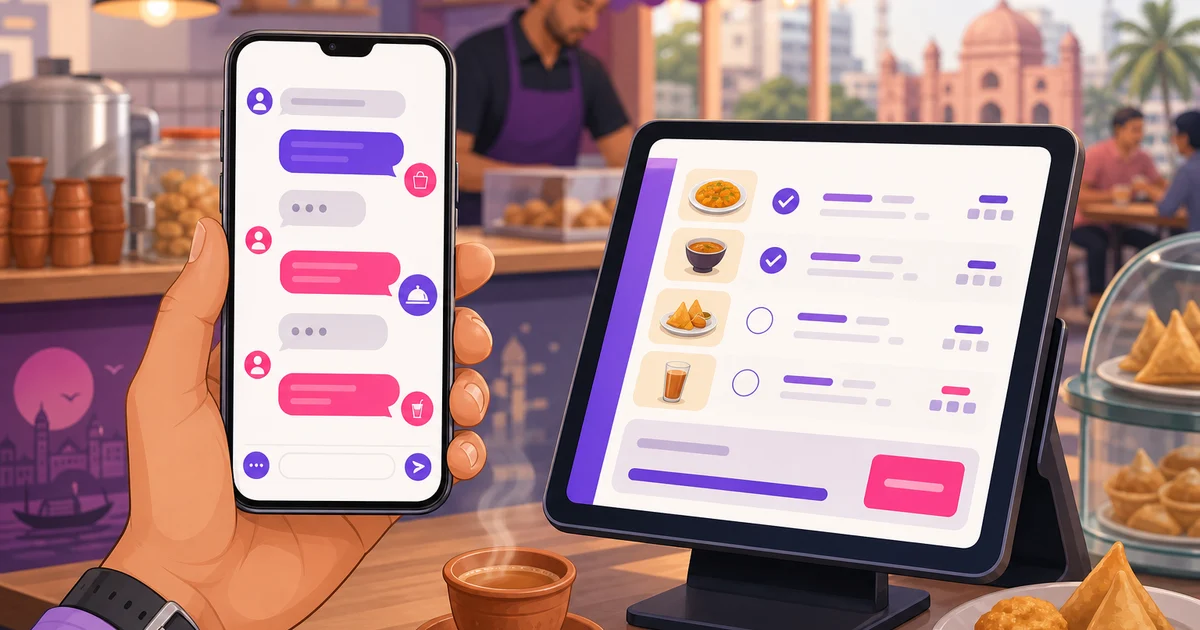
Restaurant WhatsApp ordering is how a lot of small places in Bangladesh first go online. A customer messages your number, you reply, you agree on the order, and they pay by bKash. It costs nothing to set up, it feels personal, and for the first dozen orders a day it works. The trouble starts when you get busy. Messages pile up, a couple slip past unread, you add the total in your head and get it wrong, and the order you thought was confirmed never actually was. This guide is honest about why WhatsApp ordering breaks as you grow, and how to move to a proper online ordering page while keeping the friendly, personal feel that made WhatsApp work in the first place.
Why restaurants start with WhatsApp
There is a good reason WhatsApp ordering is everywhere. Almost every customer already has it, so there is nothing to install. It is free, it is familiar, and a conversation feels warmer than a form. A regular can message "the usual, please" and you know exactly what they mean. For a home kitchen or a brand-new cafe testing demand, WhatsApp is a sensible first step, and nobody should feel bad for starting there.
The point is not that WhatsApp is wrong. It is that a chat thread was never built to be an ordering system, and the cracks show exactly when business is good.
Where restaurant WhatsApp ordering breaks
Once order volume climbs, the same problems appear in every restaurant that relies on chat alone.
- Missed messages. During a dinner rush, messages arrive faster than one person can read them. An order scrolls up, goes unread, and the customer is left waiting with no idea you never saw it. Each missed message is a lost sale and an unhappy customer.
- No structure. A customer might send their order across five messages, change their mind halfway, forget the quantity, or skip the address. You end up scrolling back and forth to assemble one order from a scattered conversation.
- Manual totals. You add the prices by hand, apply a discount in your head, maybe forget the delivery charge or the VAT. Mistakes go both ways: sometimes you undercharge and lose margin, sometimes you overcharge and lose trust.
- No menu in front of them. The customer cannot see your full menu, photos or prices, so they ask "what do you have?" and "how much is that?" again and again, which eats your time and theirs.
- Nothing is recorded properly. The order lives in a chat, not in a system. There is no clean sales report, no order history, no way to see what sold at the end of the night without scrolling through conversations.
- Payment is disconnected. They bKash you separately, you check your wallet, you match it to the right chat by hand. On a busy evening that reconciliation is where money goes missing.
None of these mean your service is bad. They mean a chat app is doing a job it was never designed for, and the busier you get, the more it costs you.
What a proper ordering page fixes
An online ordering page is built for exactly the job WhatsApp struggles with. It gives the customer your full menu with photos and prices, lets them build a structured order with quantities and variations, calculates the total correctly with any discount, service charge and VAT, takes payment, and records everything in one place. The customer self-serves at their own pace, and nothing depends on you reading a message in time.
Here is the part owners worry about, though: this does not have to feel cold. The best setup keeps the human side and removes only the error-prone parts. The customer orders cleanly on the page, and you still greet them, confirm, and look after them like always, just without the missed messages and the mental maths. There is a quiet speed gain too. While the customer browses and builds their order on the page, you are not tied up typing back and forth, so one person can handle far more orders at peak than a single chat thread ever allowed. The order arrives complete, with the address, the items and the right total already on it, so your kitchen starts cooking sooner and your counter stays clear during the busiest part of the evening.
Moving to a Rosuii storefront, without losing the touch
Rosuii gives every restaurant its own online ordering storefront on a branded subdomain. It carries your full menu with photos, prices, variations and add-ons, a cart and checkout, and order tracking by order number so the customer can follow their food without messaging to ask "is it ready?" Payment runs through real bKash and Nagad, or cash on delivery, captured against the order automatically, so there is no separate wallet to reconcile by hand.
Here is how it keeps the personal feel that made WhatsApp work:
- Share the link in chat. When a customer messages you, reply warmly as you always do and send your ordering link. They place the order cleanly on the page, and you have answered them personally. WhatsApp becomes your front door, not your order book.
- Order tracking replaces the "is it ready?" messages. The customer follows their order by number, so they feel informed without either of you typing updates.
- Loyalty rewards your regulars. Built-in loyalty with earn and redeem rates, tied to the customer's phone number, gives your regulars the same recognition a "the usual" message used to, but now it is recorded and rewarded.
- Every order lands in one system. The order joins your dine-in, takeaway and marketplace orders in a single list, fires to the kitchen, and shows up in clean reports. No more building the day's total from chat scrollback.
You keep talking to customers like a small business should. You just stop running your kitchen off a chat thread.
A simple way to make the switch
You do not have to drop WhatsApp overnight. A gentle transition works best:
- Build your menu properly in the system, with clean Bangla and English names, prices, photos and variations.
- Set up your storefront link on your branded subdomain and test a few orders end to end so you trust it.
- Reply to WhatsApp messages with the link. Keep greeting people warmly, then point them to the page to place the order. Add a friendly line like "order here so nothing gets missed and you can track it."
- Promote the link everywhere. Your WhatsApp status, Facebook page, Instagram bio, a sticker at the counter, and a card in delivery bags. The more places it lives, the faster customers switch.
- Keep WhatsApp for conversation, for questions, special requests and the relationship, while the page does the structured ordering.
Within a few weeks most of your orders flow through the page, your totals are right, and nothing slips past unread. Because direct orders on your own page carry no marketplace commission, this also protects your margin, the same advantage we cover in commission-free online ordering. For the wider picture of getting a restaurant online in Bangladesh, see online food ordering in Bangladesh.
The takeaway
WhatsApp is a fine place to start and a great place to keep talking to customers, but a chat thread cannot be your ordering system once you are busy. Missed messages, manual totals and scattered orders quietly cost you sales and margin. A proper ordering page on your own subdomain fixes the structure, the maths and the records, while you keep the warm, personal service that brought customers to your number in the first place. See everything a storefront includes on our features page.
Tired of losing orders in a busy chat? Create your free Rosuii account, set up your ordering page, and send customers a link that never misses an order.
Last updated:
Frequently asked questions
What is wrong with taking restaurant orders on WhatsApp?
Can I move to an ordering page and still use WhatsApp?
Will an ordering page feel less personal than WhatsApp?
How do customers pay on a Rosuii ordering page?
Does moving off WhatsApp cost me marketplace commission?
Run your restaurant on Rosuii
POS, menu, inventory, payroll and more — built for Bangladeshi restaurants.
Start free