Bakery Business Bangladesh Guide: Setup, Costing and Waste Control
Learn how to set up a bakery in Bangladesh, estimate equipment costs, plan daily production, control unsold stock and manage profitable cake pre-orders.
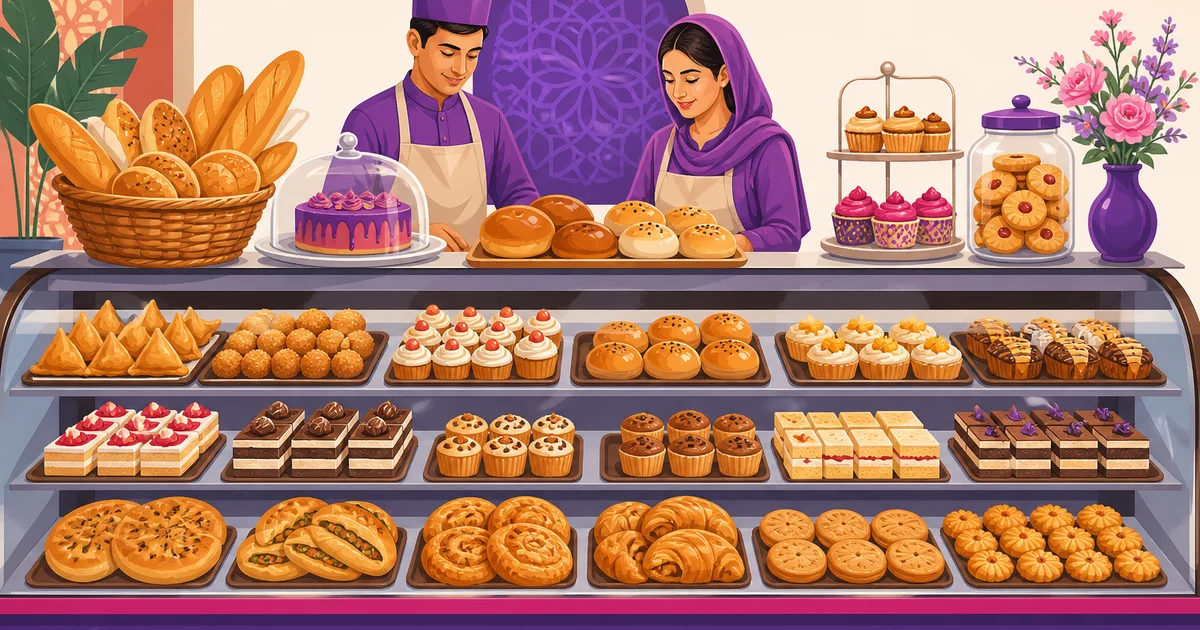
Starting a bakery business Bangladesh customers will trust takes more than buying an oven and finding good recipes. The difficult part is producing the right quantity every day. Bread, pastries, cream cakes and savouries lose value quickly, so a busy display can still hide weak profits. One extra tray produced every morning may become a serious monthly loss.
This guide covers practical setup costs, production planning, shelf-life control, end-of-day markdowns, counter sales, online orders and cake pre-orders. It also explains how production, wastage and item-sales records help bakery owners find the real source of lost profit.
Choose the Right Bakery Business Model
Your equipment, rent, staffing and stock requirements depend on how you plan to sell. A neighbourhood bread shop has different needs from a custom cake studio or a café-style bakery.
- Retail counter bakery: Produces bread, buns, biscuits, pastries and snacks for walk-in customers. It needs a visible location, display counters and disciplined daily forecasting.
- Production kitchen with online delivery: Operates from a lower-rent location and depends on Facebook, a branded ordering site, marketplaces or phone orders. Packaging and delivery reliability become important.
- Custom cake studio: Works mainly against pre-orders. It can keep finished-goods waste low, but decoration labour, delivery risk and last-minute customer changes must be priced carefully.
- Bakery café: Combines baked products with tea, coffee, breakfast or light meals. This can raise the average bill but adds seating, service and more inventory categories.
Many new owners try to launch all four models together. A safer approach is to choose a core range, test demand and expand after four to eight weeks of real sales data. Ten products that sell consistently are more valuable than forty products that make the display look full.
Bakery Business Bangladesh Equipment and Setup Costs
Machinery prices vary widely by capacity, origin, gas or electric configuration, new or used condition, warranty and installation requirements. The following ranges are planning estimates, not supplier quotations. Collect several current quotations in Bangladesh before committing funds.
| Equipment or setup item | Indicative budget | What to check |
|---|---|---|
| Deck oven | ৳80,000 to ৳400,000+ | Tray capacity, temperature consistency, gas or electricity use and local servicing |
| Convection oven | ৳120,000 to ৳600,000+ | Airflow, steam option, power load and spare-parts availability |
| Planetary mixer | ৳45,000 to ৳250,000+ | Bowl size, motor rating and suitability for batter, cream or light dough |
| Spiral mixer | ৳90,000 to ৳350,000+ | Dough capacity per batch and continuous operating limits |
| Proofer | ৳50,000 to ৳200,000+ | Humidity control, tray size and recovery time |
| Refrigerator or freezer | ৳60,000 to ৳250,000+ | Food-safe temperature range, electricity use and backup plan |
| Refrigerated display | ৳80,000 to ৳300,000+ | Temperature stability, glass heating, lighting and compressor warranty |
| Tables, racks, trays and tools | ৳50,000 to ৳200,000+ | Food-grade surfaces, tray standardisation and cleaning access |
| Electrical, gas and ventilation work | ৳50,000 to ৳300,000+ | Approved load, safe lines, exhaust and professional installation |
A small home-based or pre-order operation may begin with much less equipment. A fitted retail bakery with commercial production, display and refrigeration can require ৳800,000 to ৳3,000,000 or more before rent deposit, interior work and opening stock. Do not spend the full budget on machines. Keep working capital for ingredients, salaries, packaging, utilities, repairs and at least the first few months of operation.
Before opening, confirm trade licence, food-safety, fire-safety, VAT or BIN and local authority requirements for your location and business size. Requirements can change, so consult the relevant authority and your VAT circle rather than relying on a generic checklist.
Cost Every Product Before Setting the Selling Price
Ingredient cost alone is not the cost of a cake, loaf or pastry. A useful product costing should include flour, sugar, eggs, butter or oil, cream, chocolate, filling, toppings, packaging and the normal production loss. Labour, gas, electricity, rent, marketplace commission and delivery support must also be covered by the selling margin.
For example, suppose one batch costs ৳1,800 in ingredients and packaging and produces 60 saleable buns. The direct cost is ৳30 per bun. If four buns are damaged or remain unsold, only 56 units generate revenue. The effective direct cost of each sold bun becomes about ৳32.14, before labour and overhead. Repeated across several products every day, this difference can remove most of the expected profit.
Use these three numbers for every important item:
- Planned batch yield: How many saleable units the standard batch should produce.
- Actual batch yield: How many units came out suitable for sale.
- Sell-through rate: The percentage of available units sold before expiry or markdown.
Custom cakes need a separate costing sheet. Include cake base, filling, cream, board, box, topper, decoration time and delivery handling. Complex designs should carry a design or labour charge. A large cake that occupies one decorator for several hours should not be priced only by weight.
Plan Production Against Next-Day Demand
Bakery production is usually completed before the day's final demand is known. That makes forecasting essential. Start with yesterday's item sales, then compare the same weekday from recent weeks. Adjust for Friday traffic, holidays, Ramadan, Eid, school schedules, weather, local events and confirmed pre-orders.
A simple next-day production formula is:
Expected sales + confirmed orders + small safety stock - usable closing stock = planned production.
Safety stock should not be the same for every item. Fast-moving bread may justify a small buffer. Premium cream pastries with a short shelf life need tighter production. Dry cookies or packaged rusks can carry more stock if storage and quality controls are suitable.
Production should also happen in waves where the process allows it. Instead of placing the full day's pastries in the display at opening, produce a base quantity and schedule a smaller refill batch for the afternoon. This keeps products fresher and reduces the risk of a large closing balance.
The item-sales report is more useful than intuition alone. Review quantity sold by item, day and period. If chocolate croissants regularly sell out by 5 pm while another pastry returns to the kitchen every night, change the next production plan. For more operational guidance, see this guide to restaurant inventory management.
Unsold Stock Is the Main Bakery Profit Leak
Unsold bakery stock has already consumed ingredients, labour, oven time, electricity or gas, packaging space and display capacity. If it expires, none of those costs are recovered. This is why revenue can look healthy while cash remains tight.
Record wastage by item, quantity, approximate cost, time and reason. Useful reasons include overproduction, expired stock, damaged decoration, failed batch, incorrect order, handling damage and customer return. Avoid using one general label such as “waste.” It does not tell the manager what to fix.
Patterns quickly become visible. Morning overproduction requires a forecasting change. Repeated failed sponge batches point to process, training or oven calibration. Damaged products may require better racks or packaging. Wrong custom cakes suggest that order specifications are not being confirmed properly.
Review waste as both a taka amount and a percentage of production value. A small number of premium cakes may cost more than a full tray of inexpensive buns. For a wider control checklist, read how to reduce food wastage in a restaurant.
Use Shelf Life and Markdown Rules Consistently
Set an internal shelf-life rule for each product based on its ingredients, storage conditions, packaging and food-safety requirements. Do not extend a product's display time simply because it did not sell. Cream, custard, meat fillings and other temperature-sensitive products need particularly careful control.
End-of-day markdowns can recover part of the cost, but they need rules. Decide which products qualify, when the discount begins and the maximum reduction. Record the sale as a discount rather than quietly changing the price. This allows you to compare full-price sales, markdown sales and actual waste.
Markdowns should not become the normal sales strategy. If customers learn that every item is heavily discounted at closing time, some will delay purchases. Use limited bundles, selected-item offers or controlled staff sales instead of reducing the entire display every night.
Balance Counter Display, Online Orders and Cake Pre-Orders
A full counter attracts customers, but every extra display unit carries expiry risk. Use smaller trays, vertical presentation and frequent replenishment to create an attractive counter without producing excessive stock. Display samples or photographs can also help sell custom cakes without keeping finished cakes ready.
Online ordering adds demand beyond the shop's immediate area. It also creates different operational pressures: menu availability must be accurate, packaging must protect the product, and the kitchen needs to recognise online orders promptly. If a product sells out, remove or mark it unavailable rather than accepting an order that cannot be fulfilled.
Cake pre-orders are one of the strongest ways to reduce finished-goods risk because production is tied to known demand. Use a standard order form covering size, flavour, filling, design reference, message, allergy information supplied by the customer, pickup or delivery time, delivery address and contact number. Confirm what design changes are possible and set a clear cancellation policy.
For high-value or heavily customised cakes, consider taking an advance under a written policy. Confirm the final specification before production begins and assign a collection or dispatch time. Keep pre-order production separate from speculative counter stock so staff do not accidentally sell a reserved cake.
How Rosuii Helps Track Production and Waste
Rosuii gives bakeries one system for sales, stock and operational records. Its Productions feature records finished goods made from raw materials. A manager can enter the materials used and the finished quantity produced, creating a clearer record of what the kitchen made. This is production recording, not automatic ingredient deduction from a menu recipe every time an item is sold.
When products expire, fail quality checks or are damaged, staff can enter a wastage record instead of letting the quantity disappear without explanation. The Item Sales report then shows which products customers are actually buying. Comparing production, item sales and recorded waste helps identify low sell-through items and oversized batches.
Rosuii also supports counter POS, bilingual menus, variations, add-ons, online ordering, customer records and order reporting. Cake shops can keep customer details against orders, while the branded storefront can accept online orders. Real bKash and Nagad payments are available where the appropriate payment setup is configured, alongside cash on delivery. Learn more in the guide to bakery POS software.
During an internet outage, the Rosuii POS can continue billing after menu and customer data have been synced to the device using the offline-data action. Orders queue locally and sync when connectivity returns. Online payment confirmation and real-time communication with other devices or kitchen displays still require an internet connection.
A Practical Opening and Control Checklist
- Select a focused product range and define the shelf life of each item.
- Collect current equipment quotations and verify power, gas, ventilation and servicing requirements.
- Prepare standard batch sizes, expected yields and product costing sheets.
- Set daily opening, refill, markdown and disposal times.
- Record production output, failed batches and every wastage event.
- Review item sales by weekday before planning the next day's quantities.
- Create a written cake pre-order, advance, change and cancellation process.
- Compare production, sales, markdowns and waste every week, then adjust batch sizes.
The bakery that controls production usually protects its margin better than the bakery with the biggest display. Start with measured batches, record what remains and expand only when the sales pattern supports it.
Rosuii is free to start, works from a phone, tablet or laptop, and gives each restaurant its own branded subdomain and isolated database. To organise bakery sales, production and wastage records in one bilingual system, register for Rosuii today.
Last updated:
Frequently asked questions
How much does it cost to start a bakery business in Bangladesh?
How can a bakery reduce unsold stock at the end of the day?
What details should be recorded for a custom cake pre-order?
Should bakery products be discounted at the end of every day?
How does Rosuii help a bakery track production and wastage?
Run your restaurant on Rosuii
POS, menu, inventory, payroll and more — built for Bangladeshi restaurants.
Start free