Foodpanda Menu Optimization Bangladesh: 7-Step Audit
A practical audit for making a delivery menu accurate, profitable, easy to choose and reliable in the kitchen.
Last verified: 2026-08-28
Foodpanda menu optimization starts with availability and contribution margin, then improves naming, photos, modifiers, packaging and preparation reliability. foodpanda's own partner guidance recommends clear organization, strong dish photos, signature items and cost control.
The goal is not to publish every dine-in item. A delivery menu should contain dishes that travel well, can be produced at peak time and still contribute after channel costs.
Seven checks in the right order
| Check | Question | Action |
|---|---|---|
| Availability | Can staff sell it now? | Pause sold-out items |
| Margin | What remains after channel costs? | Cost every item |
| Travel | Will quality survive delivery? | Test at realistic time |
| Name | Can a new customer understand it? | Use clear dish names |
| Photo | Does it show the actual portion? | Use current honest images |
| Modifiers | Can the kitchen fulfil choices? | Remove invalid combinations |
| Prep | Can it leave on time? | Set realistic preparation |
Start with profitable availability
A visible item that is repeatedly unavailable creates cancellations and support work. Assign one person per shift to review stock-sensitive menu items before opening and after the rush.
Calculate contribution using the contract rate, packaging and recipe cost. High sales do not rescue a negative-contribution dish. Reprice, re-portion, bundle or remove it.
Write for a first-time customer
Use the familiar dish name first, then a short description of protein, preparation, portion or accompaniments. Avoid unexplained internal kitchen names. State important choices through modifiers rather than long notes.
Organize categories around how people choose: meals, rice and biryani, burgers, sides, drinks and bundles. Keep signature and dependable items easy to find without making unsupported best-seller claims.
Photo and packaging audit
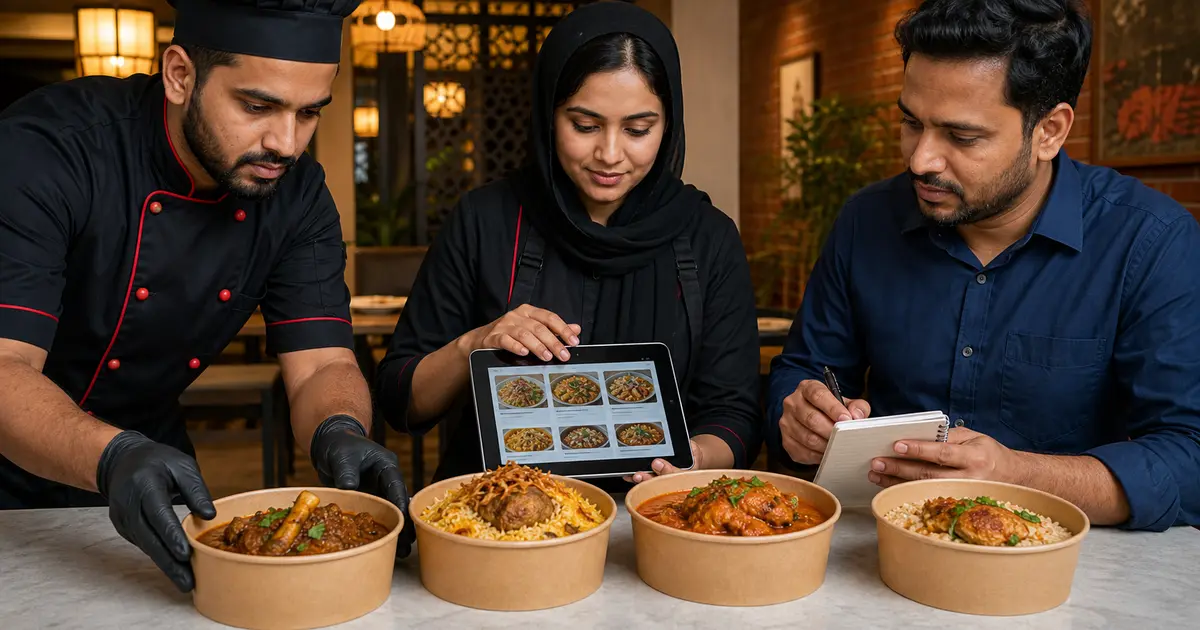
Photograph the portion that will actually be delivered, in clean natural light, without props that are not included. Replace a photo when the recipe, garnish or packaging changes.
Run a travel test at the longest normal delivery time. Check leaks, steam damage, crispness and temperature. Separate wet and crisp components when practical, and include packaging in the item contribution calculation.
Reduce modifier and preparation errors
- Allow only choices the kitchen can distinguish
- Set required modifiers where an answer is essential
- Limit free-text requests
- Use the same item name on the kitchen ticket
- Pause a busy store or extend preparation through official tools when needed
- Review cancellation and complaint reasons weekly
Measure a four-week test
Change one group at a time and record availability, completed orders, average order value, item contribution, cancellation reason and preparation delay. Do not claim that a photo or title caused growth when several prices and promotions changed together.
Keep a dated change log. After four comparable weeks, retain changes that improve contribution and fulfilment, not only clicks or gross order count.
Optimize from verified order and menu evidence
Use the restaurant's current foodpanda merchant view, reports, agreement and support guidance. Platform fields and ranking behaviour can change, so this guide does not promise placement or sales. Start with menu accuracy and operational fulfilment before changing names for keywords.
Record the baseline period, branch, available hours, item status, orders, cancellations, refunds and promotion state. Do not compare a campaign week with a closed or stockout week without context.
Item audit scorecard
Correct misleading or unavailable items before merchandising. A highly viewed item that is repeatedly cancelled is not optimized.
| Element | Check | Operational evidence |
|---|---|---|
| Name | Recognizable and specific | Matches actual dish |
| Description | Core ingredients/portion clear | Recipe and service truth |
| Price | Current and approved | Menu source/agreement |
| Modifiers | Required choices are executable | KOT test |
| Image | Actual representative item | Approved current photo |
| Availability | Can be produced in stated hours | Branch stock/capacity |
| Packaging | Arrives as described | Controlled handover test |
Category and choice architecture
Use categories customers recognize and keep high-intent choices discoverable without duplicating the same item into confusing versions. Distinguish size, meal, add-on and variant in a way the kitchen ticket preserves. Show included items and price effect before add-to-cart.
Limit modifiers to real choices. An operational instruction that should always happen belongs in the recipe or kitchen process, not as a customer checkbox.
Controlled four-week test design
Platform traffic and competitor activity are outside the restaurant's control, so treat the result as branch evidence rather than a universal causal claim. Preserve the old menu version and exact change time.
- State one hypothesis
- Choose item or category scope
- Record baseline and comparable hours
- Change one primary variable
- Keep price/promotion changes visible
- Monitor availability and cancellations
- Review contribution, not gross sales alone
- Inspect support and refund evidence
- Decide keep, revise or revert
Settlement-aware menu review
For completed orders, reconcile realized item revenue, restaurant-funded discounts, platform charges, packaging, ingredient cost and order-specific adjustment under the current agreement. An item can attract orders but contribute poorly after promotion, waste or remakes.
Do not hard-code one commission percentage. Use the applicable statement and contract, assign unresolved differences and review the menu only after source data matches. Publish no performance claim without permission and method.
Keep a menu-change log with item ID, old and new customer text, price, modifiers, image, availability scope, approver, publish time and rollback. After publication, open the live listing from a customer view and place a controlled order where permitted. Compare the merchant alert and kitchen ticket. Check cached or branch-specific variants and remove expired campaign assets. If a support intervention changes the listing, capture the case and verify the final state rather than relying on a confirmation message.
A strong Foodpanda menu is smaller, clearer and more dependable than a copied dine-in menu. Cost every item, show the real portion, control modifiers and remove anything the kitchen cannot deliver profitably.
Related guides
- Foodpanda Commission Rate in Bangladesh
- Restaurant Menu Pricing Strategy
- Restaurant Menu Design in Bangladesh
- Compare restaurant management software
See this workflow in Rosuii: Organize menus, modifiers and availability in Rosuii
Sources checked
Last updated:
Frequently asked questions
How do I optimize a Foodpanda menu?
Should every dine-in item be listed?
What makes a good delivery menu photo?
How should sold-out items be handled?
Which metric matters most?
How do I optimize a foodpanda menu?
Do keywords guarantee higher foodpanda ranking?
What metric should a restaurant review?
Should an item be duplicated into several categories?
Run your restaurant on Rosuii
POS, menu, inventory, payroll and more — built for Bangladeshi restaurants.
Start free