Restaurant Facebook Page: The Setup and Posting Guide That Wins Customers in Bangladesh
Set up and manage a restaurant Facebook page that attracts nearby customers, answers their questions, and turns food posts into measurable orders.
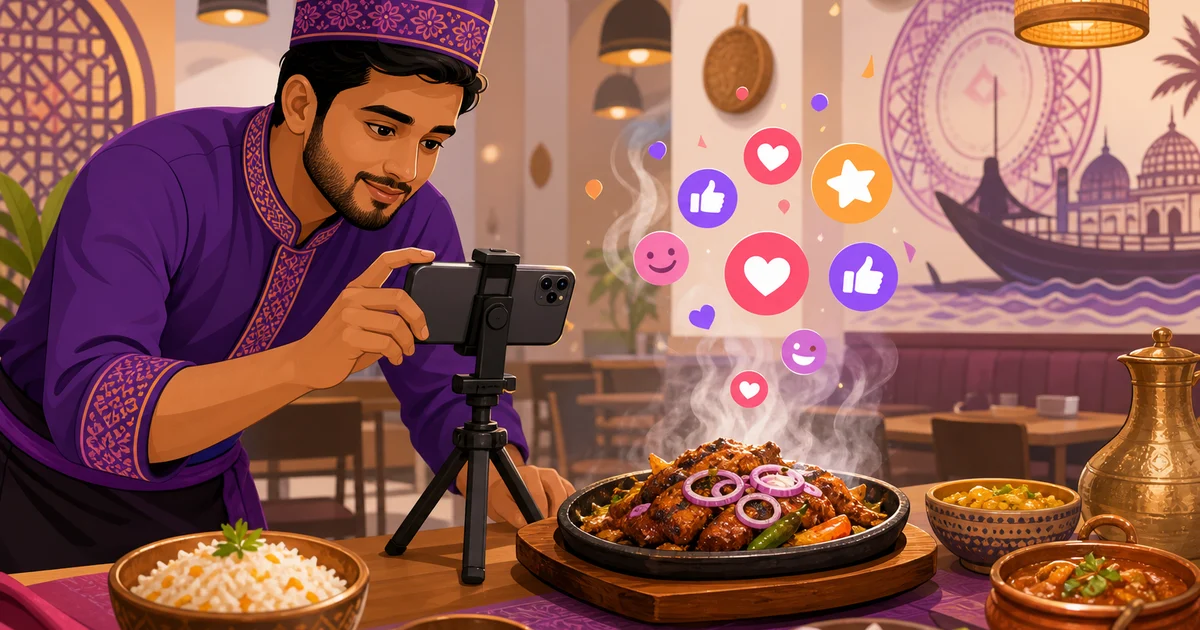
For many diners in Bangladesh, a restaurant Facebook page is the first place they check before ordering or visiting. They look at food photos, prices, opening hours, location, reviews, recent offers, and how quickly the restaurant replies. A well-managed Page can turn that attention into dine-in visits, takeaway calls, and direct online orders. A neglected one creates doubt.
You do not need to post all day or spend heavily on advertising. You need accurate information, appetising content, fast responses, and a clear route from the post to the order. This guide shows how to build that system.
Set up your restaurant Facebook page correctly
Page setup affects whether customers can recognise, trust, and contact your restaurant. Complete the essentials before thinking about followers or boosted posts.
Use the exact restaurant name
Create the Page with the name displayed on your signboard, packaging, receipts, and Google Business Profile. Avoid adding unnecessary phrases such as “Best Restaurant in Dhaka” to the name. If your brand is called Shad Ghor, use Shad Ghor consistently instead of switching between Shad Ghor Restaurant, ShadGhor, and Shad Ghor BD.
Consistency makes the business easier to find and helps customers know they have reached the official Page.
Select the Restaurant category
Choose Restaurant as the main category. Add a more specific secondary category if it accurately describes the business, such as Cafe, Fast Food Restaurant, or Bengali Restaurant. Categories should explain what you are, not list every item you sell.
Choose recognisable profile and cover photos
Use your logo as the profile photo. Keep it simple enough to remain clear in the small circular display used beside posts and comments. If the logo contains tiny phone numbers or long taglines, prepare a cleaner social version.
For the cover, choose one excellent food or dining photo that represents the experience. A close-up of a signature biryani, burger, platter, or dessert often works better than a banner crowded with prices, phone numbers, and multiple offers. Text-heavy banners become difficult to read on mobile screens and quickly become outdated.
For more help creating a consistent visual identity, read the restaurant branding guide for Bangladesh.
Complete the About section
Fill in the address, phone number, business hours, price range, website, and short description. The address, phone, and hours should match the information on Google. If Friday hours, Ramadan hours, or Eid closures are different, update both channels.
Write the description in plain language. Mention your food type, location, service options, and one meaningful reason to choose you. For example: “Family restaurant in Mirpur serving Bangla, Chinese, and grilled dishes. Dine-in, takeaway, and home delivery available.” A bilingual English and Bangla description can help customers understand the Page quickly.
Add an Order now button and WhatsApp
Set the main action button to Order now and link it to your own online menu or ordering storefront. This gives interested customers a direct next step instead of making them search through old posts for a number. Test the button from another phone while logged out of the Page.
Connect the restaurant's WhatsApp number as well. Use a number that staff actually monitor during opening hours. Prepare short saved replies for common questions about delivery areas, opening times, reservations, and menu prices, but personalise the final response.
Pin the information customers need most
Create one strong post containing your menu link, phone number, address, opening hours, delivery information, and current offer. Pin it to the top of the Page. Review it whenever prices, hours, or offers change. The pinned post should reduce questions, not create confusion with an expired promotion.
A practical restaurant Facebook page posting system
A useful starting rhythm is three to four posts per week. This is frequent enough to stay visible without forcing your team to create weak content every day. Build the schedule around four repeatable post types.
- Today's special: Feature one available dish, its price, and the ordering link.
- Close-up food photo: Show texture, portion, toppings, steam, or a fresh serving moment.
- Offer post: Explain the discount or bundle, validity period, branch, and conditions clearly.
- Behind the scenes: Show safe food preparation, fresh ingredients, packaging, staff work, or a busy service moment.
A simple weekly plan could be a special on Sunday, a food close-up on Tuesday, a kitchen or team post on Thursday, and a weekend offer on Friday. Adjust the days based on your restaurant's busy periods.
Write short captions that answer buying questions
Most customers do not need a long story before every meal. A practical caption tells them what the food is, why it looks appealing, how much it costs, where it is available, and how to order.
Short Bangla captions often feel natural for a local audience. For example: “আজকের লাঞ্চ স্পেশাল: চিকেন তেহারি ৳২২০। মিরপুর শাখায় দুপুর ১২টা থেকে পাওয়া যাবে। অর্ডার করুন: [menu link]”
Use English, Bangla, or both according to your customers. Keep the call to action direct: order online, call now, reserve a table, or visit the branch. Do not place five competing actions in one post.
Post around hungry hours
Test posts around 12 pm to 1 pm for lunch and 6 pm to 8 pm for dinner. These are useful starting windows in Bangladesh, not fixed rules for every restaurant. An office-area lunch outlet may get stronger results earlier, while a dessert shop may perform better later at night.
Post shortly before customers usually decide what to eat. After several weeks, compare reach, comments, messages, link activity, and orders by posting time. Keep the windows that produce business, not merely reactions.
Make food photos credible
Use natural light where possible, clean the plate edges, remove clutter from the background, and photograph the portion customers will actually receive. Avoid excessive filters that change the colour or make serving size difficult to judge. A real, well-presented dish builds more trust than a generic stock photo.
For more campaign and content ideas, see these restaurant marketing ideas for Bangladesh.
Boost posts without wasting your budget
Do not boost every post. First publish organically and watch its early response. If a food photo or offer earns better comments, shares, saves, messages, or link interest than your normal posts, it is a stronger candidate for paid promotion.
A budget of ৳300 to ৳500 can be a useful local test for a good food photo or clear offer. It is not a guaranteed sales formula. Treat it as a small experiment, then increase spending only when the promotion brings relevant enquiries or orders.
- Target the neighbourhoods or delivery areas you can actually serve.
- Avoid targeting all of Bangladesh for a single local branch.
- Choose an outcome that matches the post, such as website visits or messages.
- State the branch, price, validity period, delivery terms, and ordering method.
- Stop or revise the promotion if it attracts attention but no useful action.
For a restaurant in Dhanmondi, local customers are usually more valuable than thousands of low-intent views from distant districts. If you operate several branches, create branch-specific posts and links where practical.
Turn comments and messages into orders
Fast replies matter because hungry customers often contact several restaurants at once. Assign responsibility for Page and WhatsApp messages during each shift. Staff should have access to the current menu, delivery areas, sold-out items, opening hours, and reservation rules.
Never argue publicly with a customer. If someone complains, acknowledge the issue calmly, ask for the order number or phone number, and move the detailed conversation to a private message. Then investigate before promising a refund, replacement, or other resolution.
Public replies still matter because future customers read them. A short response such as “We are sorry this was your experience. Please send your order number by inbox so our manager can check it today” shows that the restaurant is paying attention without debating personal details in public.
Measure orders, not just likes
Reach and reactions can show whether content attracted attention, but they do not prove that it generated sales. Build a simple measurement habit.
- Ask at billing or checkout: “How did you find us?” Add Facebook as one of the answer options.
- Watch online storefront orders in the hours after publishing a post.
- Use a distinct coupon or offer wording for selected Facebook campaigns.
- Record the post type, date, time, spend, messages, and attributed orders.
- Review results monthly and repeat the formats that lead to profitable orders.
For example, a post may receive fewer likes than a staff video but produce more menu visits and orders because it shows a popular dish, price, and direct link. That is the post worth repeating.
Your own ordering channel also gives customers a direct alternative to marketplace ordering. Learn how this works in the guide to commission-free online ordering.
How Rosuii supports Facebook page setup and ordering
Rosuii's Branding hub includes a Facebook checklist with copy-ready restaurant name, phone, address, and website values. It also provides a bilingual page description, helping the team use consistent information instead of rewriting basic details from memory.
Restaurants using Rosuii's online ordering storefront can place their branded storefront link behind the Facebook Order now button. Customers can browse the menu, add items to the cart, and submit an order without depending on Foodpanda for the ordering link. The storefront is included from the Starter plan, while the Free plan does not include online ordering.
Rosuii also supports bilingual menus, branded subdomains, COD, and working bKash and Nagad payment integrations when configured with the restaurant's gateway credentials. This creates a shorter path from seeing a food post to placing an order.
Your weekly Facebook checklist
- Confirm that phone, hours, address, and menu link are current.
- Prepare three or four posts using real food and restaurant photos.
- Schedule lunch and dinner posts around tested customer decision times.
- Pin the menu link and current offer.
- Reply to comments, inbox messages, and WhatsApp enquiries quickly.
- Boost only a proven post with a clear local audience.
- Record which posts produce orders, not only likes.
A good Facebook Page is not a digital poster. It is a working sales channel with accurate information, appealing food, quick service, and a direct ordering route. Start with the basics, measure customer behaviour, and improve one week at a time.
Ready to connect your Facebook audience to your own restaurant storefront? Register for Rosuii and set up your restaurant management account.
Updated:
Frequently asked questions
How often should a restaurant Facebook page post?
What is the best time to post restaurant content in Bangladesh?
How much should a local restaurant spend on boosting a Facebook post?
Should the Order now button link to Foodpanda or the restaurant's own menu?
How can a restaurant know whether Facebook posts generate orders?
Run your restaurant on Rosuii
POS, menu, inventory, payroll and more — built for Bangladeshi restaurants.
Start free