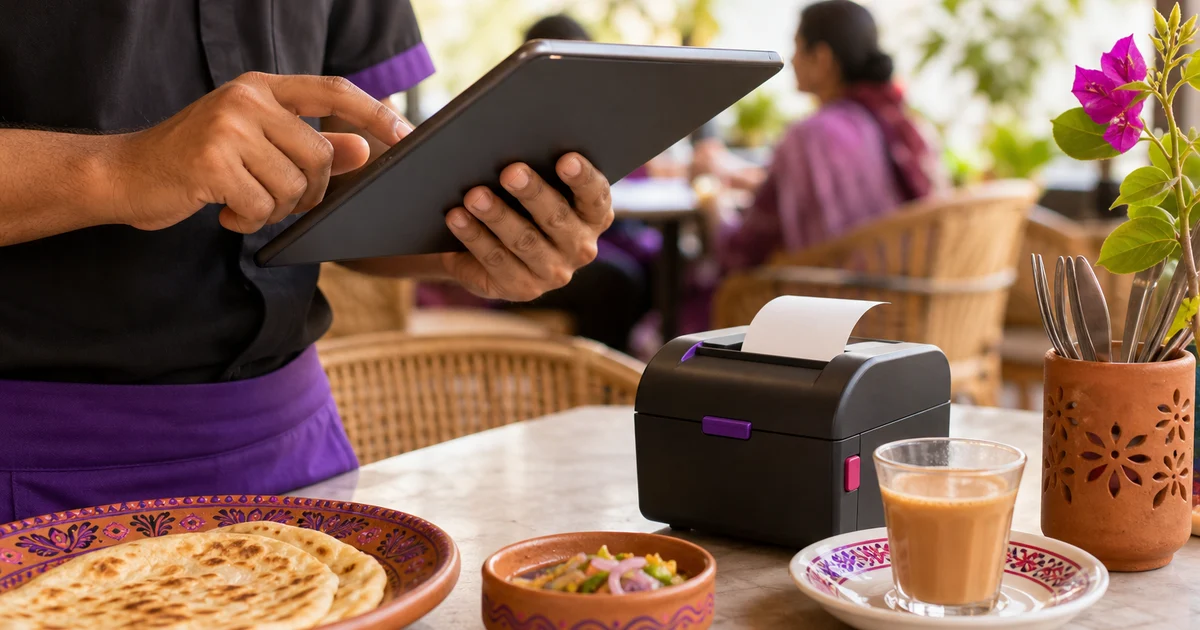
Offline POS for Restaurants in Bangladesh: Keep Billing When the Internet Goes Down
Keep restaurant billing running during load-shedding and broadband outages with an offline POS that queues orders and syncs when internet returns.
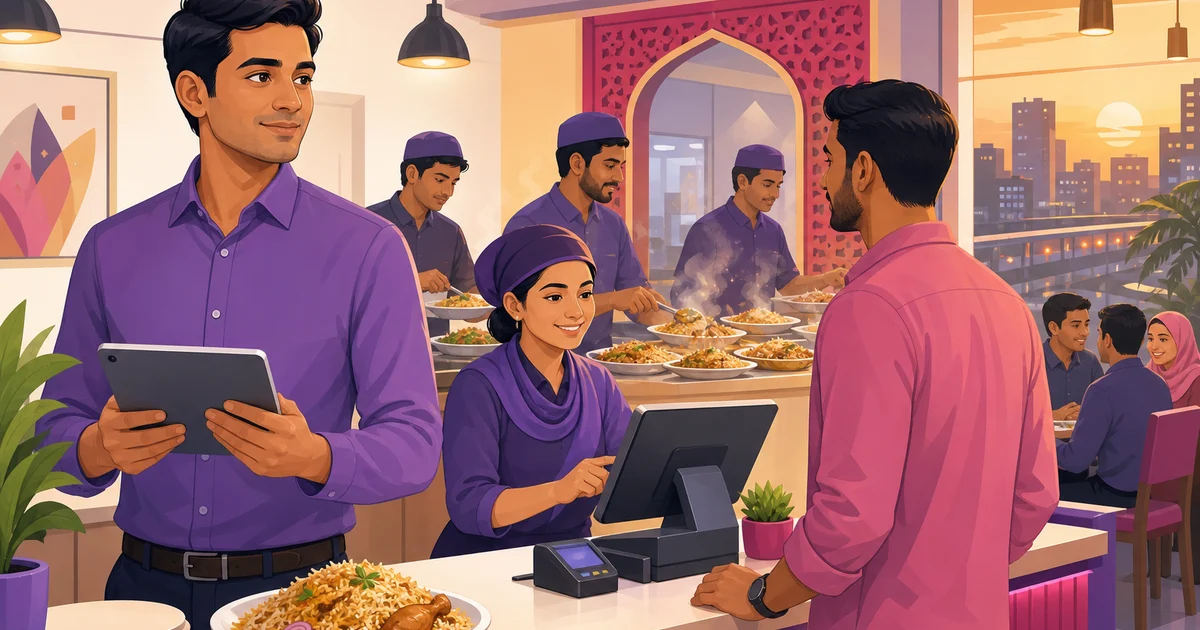
For Bangladeshi restaurants, an offline POS is not a luxury feature. It is a survival feature. Broadband drops during lunch rush. Mobile data becomes weak inside the dining floor. Load-shedding hits just when takeaway orders are piling up. If your cashier cannot create bills, take payments, and print receipts during that time, the whole operation slows down.
Restaurant owners often ask a fair question: if a POS is cloud-based, what happens when the internet goes down? The right answer is not “nothing will ever go wrong.” A more honest answer is: the system should prepare key data on the device, allow cash billing during the outage, queue orders locally, and sync them to the central database as soon as the connection returns.
That is the practical middle ground modern restaurants need in Bangladesh. You get the convenience of cloud reports, multi-branch control, online ordering, and backups, while still keeping the counter moving when the connection fails.
Why offline POS matters for Bangladeshi restaurants
Restaurants in Dhaka, Chattogram, Sylhet, Khulna, Rajshahi, Cox’s Bazar and district towns face a simple problem: the customer does not care why your system is down. They want the bill now. They want their parcel now. Delivery riders will not wait forever. A family at table 7 will not accept “internet nai” as a good reason to delay checkout.
This is especially important for businesses with fast billing pressure:
- Biriyani and kacchi shops with heavy lunch rush.
- Fast food outlets where takeaway and delivery orders move quickly.
- Cafes that need smooth counter billing all day.
- Cloud kitchens handling phone, website, and marketplace-tagged orders.
- Multi-branch restaurants where managers need cloud visibility but branches still need local continuity.
Manual billing during an outage sounds easy until the rush starts. Staff forget modifiers, discounts are applied differently, duplicate order numbers appear, and end-of-day reconciliation becomes painful. A proper offline-capable POS keeps the billing process familiar even when the internet is not available.
How an offline POS actually works
An offline-capable cloud POS is different from both old desktop software and basic online-only billing pages. It uses the browser or device storage to save selected operational data before trouble happens. In Rosuii, the cashier or manager can use a one-tap Sync offline data action from the dashboard. This stores the restaurant’s menu and customer list in the browser’s own local database on that device.
Once that offline data is saved, the POS can continue taking orders if the internet drops. The cashier can still create dine-in, takeaway, and delivery orders from the POS screen using the locally stored menu. Orders are queued on the device during the outage. When the internet comes back, Rosuii shows a Sync now banner so queued orders can be pushed into the central cloud database. The sync also runs automatically when the connection returns, but the banner gives staff a clear prompt to check and act.
The flow is simple:
- Before service, open the Rosuii dashboard on the billing device.
- Tap Sync offline data to save the menu and customers locally.
- If internet drops, continue cash billing from the POS.
- Orders stay queued on that same device.
- When internet returns, use the Sync now banner or allow automatic sync.
- Orders move into the restaurant’s central database for reports and records.
This design is important because it does not pretend the internet is always perfect. It accepts the reality of Bangladeshi connectivity and keeps the most urgent job running: billing.
Offline POS for dine-in, takeaway, and delivery billing
A restaurant outage does not affect only one type of order. A proper offline POS should support the main order flows your team uses every day. With Rosuii, the POS screen handles dine-in, takeaway, and delivery billing in one place, so staff do not need to learn a different offline method.
For dine-in, the cashier can continue creating orders from the available menu items and process cash payment when guests finish. For takeaway, staff can quickly punch in items, apply the correct pricing from the saved menu, and complete the bill. For delivery orders taken by phone, the saved customer list helps identify repeat customers more easily if their details were already synced to the device.
In real operations, the biggest benefit is consistency. The same menu names, prices, variations, add-ons, and combos are used whether the connection is available or not, as long as they were saved during the latest offline data sync. That reduces hand-written mistakes and keeps the day-close process cleaner.
What gets saved on the device before an outage?
Offline billing works only if the POS has the right information already stored on the device. In Rosuii, the one-tap offline sync saves the menu and customer data to the browser’s local database. This local copy lets the cashier keep working even without a live connection to the cloud.
For restaurant owners, the key habit is simple: update offline data after important menu or price changes. If you changed the price of chicken cheese burger in the morning, sync offline data on the billing device before lunch. If you added new add-ons, sync before using them offline. Treat it like preparing cash change before opening the counter.
Good offline preparation checklist
- Sync offline data before peak hours.
- Sync again after menu, price, variation, or add-on changes.
- Use the same billing device if you expect offline operation.
- Train cashiers to watch for the offline state and the sync banner.
- Check synced orders after the internet returns.
This is not complicated, but it needs discipline. A restaurant that prepares before the rush will handle outages much better than one that starts thinking about offline mode after the broadband already failed.
What happens when the internet comes back?
When the internet returns, the POS does not need staff to retype all outage-time bills. Queued orders on the device are pushed into the central database. Rosuii shows a Sync now banner so the cashier can trigger or confirm the sync. This is the moment that reconnects the local billing activity with your cloud records.
After syncing, those orders become part of your normal reporting and order history. Managers can review sales, item movement, waiter or staff performance, expenses and profit reports depending on their plan and feature access. For a restaurant owner, this is the main advantage over a paper fallback system. You do not lose operational data just because the broadband dropped for 25 minutes.
If your business has multiple branches, this also matters for control. Each Rosuii restaurant runs on its own isolated database and branded subdomain, while branch operations can still be managed through the cloud when online. Offline billing protects the branch counter during an outage, then syncs back for central visibility.
Be honest about the limits of offline billing
No restaurant owner benefits from exaggerated software claims. Offline POS is powerful, but it has limits. The goal is to keep billing alive, not to make every internet-dependent service work magically without internet.
Here is what you should expect:
- Cash billing is the offline hero. Your team can keep punching orders and taking cash payments during an outage.
- Online payment confirmation needs internet. Real bKash Tokenized Checkout and Nagad Online Payment API confirmation require a connection. If the internet is down, you should not treat an unconfirmed online payment as completed.
- Live KDS updates need connection. Kitchen Display System screens depend on real-time communication. During an outage, the POS can keep billing, but live multi-device kitchen sync needs internet.
- Multi-device real-time sync needs connection. If two counters are working, they cannot fully coordinate live cloud status without connectivity.
- Offline data must be prepared. The menu and customer list must be synced to the device before the outage for the best experience.
This is why Rosuii positions offline billing as a practical safety net, not a claim that everything works fully offline. For most restaurants, that safety net is exactly what protects revenue during unstable connectivity.
Offline-capable cloud POS vs old desktop POS vs pure cloud POS
Many Bangladeshi restaurants still compare three choices: old desktop POS, pure cloud POS, and offline-capable cloud POS. Each has strengths and trade-offs. The right choice depends on how much you value continuity, reporting, backup, and growth.
| POS type | What works well | Main risk | Best fit |
|---|---|---|---|
| Old desktop POS | Can bill without internet on the local computer | Weak cloud access, backup risk, difficult multi-branch reporting | Very small shops that only need one local counter |
| Pure cloud POS | Good remote access and central reports when online | Billing may stop when internet fails | Restaurants with extremely stable connectivity |
| Offline-capable cloud POS | Keeps cash billing during outages and syncs later to cloud records | Online payments and live device sync still need internet | Most growing Bangladeshi restaurants |
An old desktop system can feel safe because it keeps working locally, but it often creates long-term problems. Backups depend on the computer. If the hard disk fails, data may be lost. Remote owners cannot easily check reports. Adding branches becomes messy. On the other side, a pure cloud system is convenient until the line drops. Then the counter may freeze.
An offline-capable cloud POS gives a more balanced approach. You get day-to-day cloud benefits, but the cashier is not helpless when broadband fails. If you are comparing options more broadly, read Rosuii’s guide on cloud POS vs traditional POS and the practical features to look for in a restaurant POS system.
Why this matters during load-shedding and broadband failures
Load-shedding affects restaurants in different ways. Some have IPS or generator backup for lights and routers. Others can keep one laptop or tablet alive but lose broadband equipment. Sometimes the router stays on, but the ISP line is down. Sometimes mobile hotspot works for a while, then becomes slow during peak usage.
Your POS strategy should assume that the connection can fail at the worst possible time. Friday dinner. Eid shopping season. Office lunch rush. Rainy evening delivery pressure. A restaurant cannot pause billing every time the network becomes unstable.
Offline billing also reduces staff panic. If cashiers know the process, they can calmly continue taking orders instead of calling the owner every five minutes. The manager can focus on food, service, and customer handling. Later, when the connection returns, the queued orders sync into the system.
Where Rosuii fits in the restaurant operation
Rosuii is built for Bangladeshi restaurants that want cloud control without losing practical counter reliability. It is a bilingual English and Bangla platform with BDT pricing, VAT and service charge handling, real bKash and Nagad payment integrations when online, COD support, online ordering, QR table self-ordering, inventory and purchasing, KDS, customer loyalty, payroll, reports, and multi-branch tools depending on the plan.
Every restaurant gets its own branded subdomain and isolated database. That matters for data separation and business identity. The POS runs as a browser-based PWA on phone, tablet, laptop, or desktop, so there is no strict hardware lock-in. You can view current product capabilities on the Rosuii features page.
The offline billing feature is designed around real restaurant use. The device saves menu and customers through one tap. The cashier continues billing if the connection drops. Orders queue locally. When internet returns, the sync banner helps push those records back to the central database.
Practical tips for using offline POS safely
Technology helps, but process matters. A restaurant should create a simple outage routine and train staff before the first busy-day problem happens.
Train the cashier
The cashier should know how to sync offline data, how to identify offline operation, how to continue cash billing, and what to do when the sync banner appears. Do not leave this knowledge only with the owner or manager.
Decide payment rules
During an outage, cash is safest. If a customer wants bKash or Nagad, staff should understand that online confirmation requires connectivity. Do not mark an online payment complete unless the system confirms it after the connection is available.
Keep devices charged
Offline POS cannot help if the billing laptop shuts down. Use a charged laptop, tablet, or backup power for the billing device and receipt printer where possible.
Sync before busy periods
Make offline data sync part of opening duties. For example: cash float, printer paper, menu availability, offline data sync. This habit takes little time and can save a full rush.
Review after sync
After internet returns, check that queued orders have synced. This is especially important after a long outage or high-volume shift.
Who should prioritize offline POS first?
Any restaurant can benefit, but some businesses should treat offline billing as a must-have requirement from day one. If your outlet takes more than a handful of orders per hour, losing the POS for even 15 minutes creates pressure. If you run dine-in and takeaway together, the counter becomes congested quickly. If you depend on accurate daily reports, manual emergency bills create extra work later.
Offline POS is especially valuable for:
- Busy quick-service restaurants.
- Multi-floor dining restaurants where table turnover matters.
- Shops in areas with unstable ISP service.
- Restaurants using laptops or tablets at the counter.
- Owners who manage branches remotely but need billing continuity locally.
If your current system stops billing whenever the internet drops, calculate the real cost. Lost time, angry customers, staff confusion, wrong totals, and missing records often cost more than the monthly price of a better POS.
Final thought: cloud is useful, but billing must not stop
Cloud restaurant software gives owners better visibility and control. But in Bangladesh, a restaurant POS must respect the reality of load-shedding, ISP issues, and weak connectivity. The best setup is not old desktop only and not online-only. It is a cloud POS with honest offline billing support.
Rosuii gives restaurants that practical safety net: sync menu and customers to the device, keep cash billing during outages, queue orders locally, then sync back when internet returns. You stay operational when the line drops and still keep your cloud records when the line comes back.
If you want restaurant billing that keeps moving through internet trouble, start with Rosuii today. Create your Rosuii account and set up your restaurant in minutes.
Last updated:
Frequently asked questions
Can Rosuii POS work without internet?
Do bKash and Nagad payments work offline?
Will KDS and multiple counters update live during an internet outage?
What should my restaurant do before a busy shift?
Is offline-capable cloud POS better than old desktop POS?
Run your restaurant on Rosuii
POS, menu, inventory, payroll and more — built for Bangladeshi restaurants.
Start free