Restaurant POS System: The Complete Guide for 2026
A restaurant POS system is the engine behind every order, ticket and receipt. This guide explains the core features that matter, cloud versus legacy, and what restaurants in Bangladesh specifically need.

A restaurant POS system is far more than a cash register. It is the engine that takes an order, sends it to the kitchen, prices it correctly with VAT and service charge, collects payment by cash or bKash, prints the receipt, and quietly records everything so you can see what sold at the end of the night. Get it right and service feels calm even when the dining room is full. Get it wrong and you are back to shouting orders across the counter and reconciling a paper copybook at midnight.
This guide explains what a restaurant POS system actually does, the features that matter, the difference between cloud and legacy systems, and what restaurants in Bangladesh need that generic global tools miss. We use Rosuii as the running example throughout, described honestly for what it is: a cloud platform that runs in your browser.
What a restaurant POS system is
POS stands for point of sale, the moment and the place where a sale happens. In a restaurant that means the screen where staff build an order, but a real restaurant POS system stretches well beyond billing. It connects the front counter, the kitchen, your menu, your payments and your reports into one flow. The cashier taps in a kacchi and a borhani, adds a customer discount, fires the order to the kitchen, takes a bKash payment, and prints a receipt. Behind that single sequence, the system updated your sales report, your customer history and your day total without anyone writing a thing down.
The difference between a till and a POS is everything that happens around the sale. A till just holds cash. A POS understands tables, order types, kitchen routing, taxes, loyalty and reporting.
Core features of a restaurant POS system
Not every restaurant needs every feature, but these are the parts that separate a real restaurant POS system from a basic billing app.
Dine-in, takeaway and delivery on one screen
Most restaurants serve all three at once. A good POS lets staff start any order type from the same screen, assign a dine-in order to a table and a waiter, mark a takeaway, or tag a delivery to your own rider or a marketplace. In Rosuii these sit side by side, so the cashier never switches apps to handle a walk-in, a phone order and a foodpanda ticket in the same minute. We go deeper on this in our guide to managing dine-in, takeaway and delivery from one POS.
Kitchen tickets (KOT) and a kitchen display
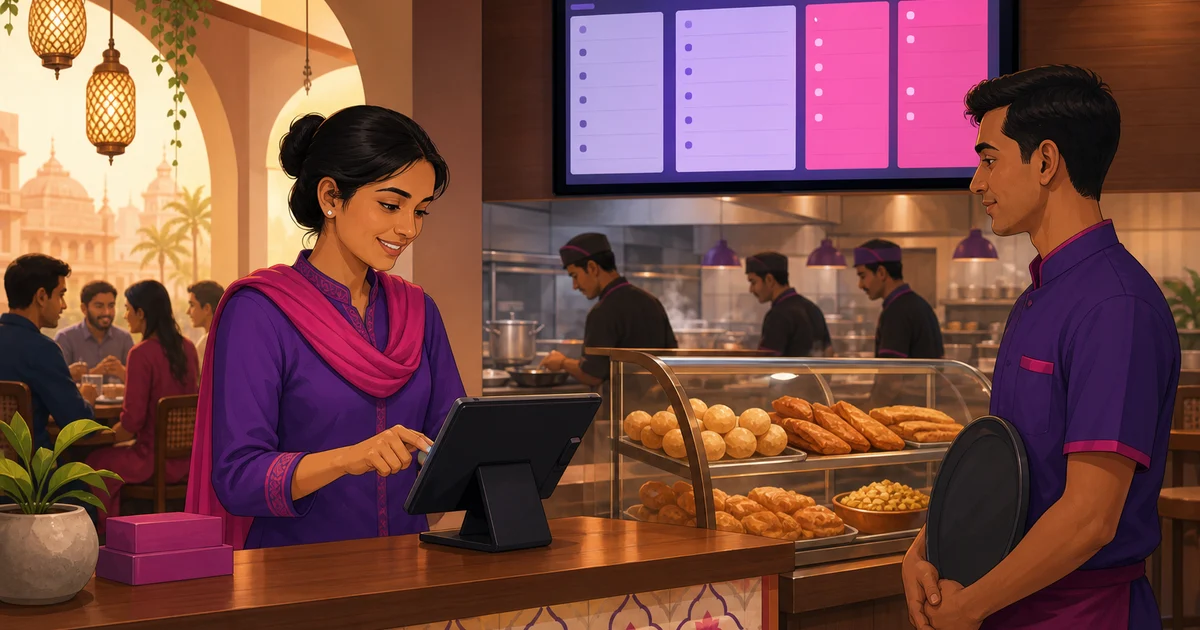
When an order is confirmed, the kitchen needs to know instantly. The POS generates a kitchen order ticket, or KOT, and sends it to the line. Modern systems show it on a kitchen display screen instead of a paper slip, with the items, notes and a timer so nothing sits forgotten. Rosuii routes each item to the right station and shows it on a touch-friendly kitchen display that ages orders from amber to red as they wait. See how this works in our piece on the kitchen display system (KDS).
Payments, including bKash and Nagad
Taking money should be the easy part. A restaurant POS system should handle cash with automatic change calculation and the digital methods your customers actually use. In Bangladesh that means bKash and Nagad, not just card. Rosuii has real, working bKash and Nagad integrations plus cash and cash on delivery, with VAT and service charge applied automatically before payment. Card is offered as a placeholder, so the rails your customers reach for every day are the ones that genuinely work.
Discounts, coupons and loyalty
Promotions drive footfall, but loose discounting at the counter eats profit. A proper POS applies discounts, coupons and loyalty in a controlled order so the final price is never guesswork. Rosuii calculates pricing on the server in a fixed sequence, discount, then coupon, then loyalty, then service charge, then VAT, so a cashier cannot accidentally or deliberately misprice an order. Customers earn and redeem loyalty points tied to their phone number across visits.
VAT and service charge
Restaurants in Bangladesh apply VAT and often a service charge, and these must show correctly on the bill. A good POS builds these into every order automatically with the right rates, and breaks them out on the receipt and in reports. Doing this by hand invites mistakes and disputes; a system removes both.
Receipts and printing
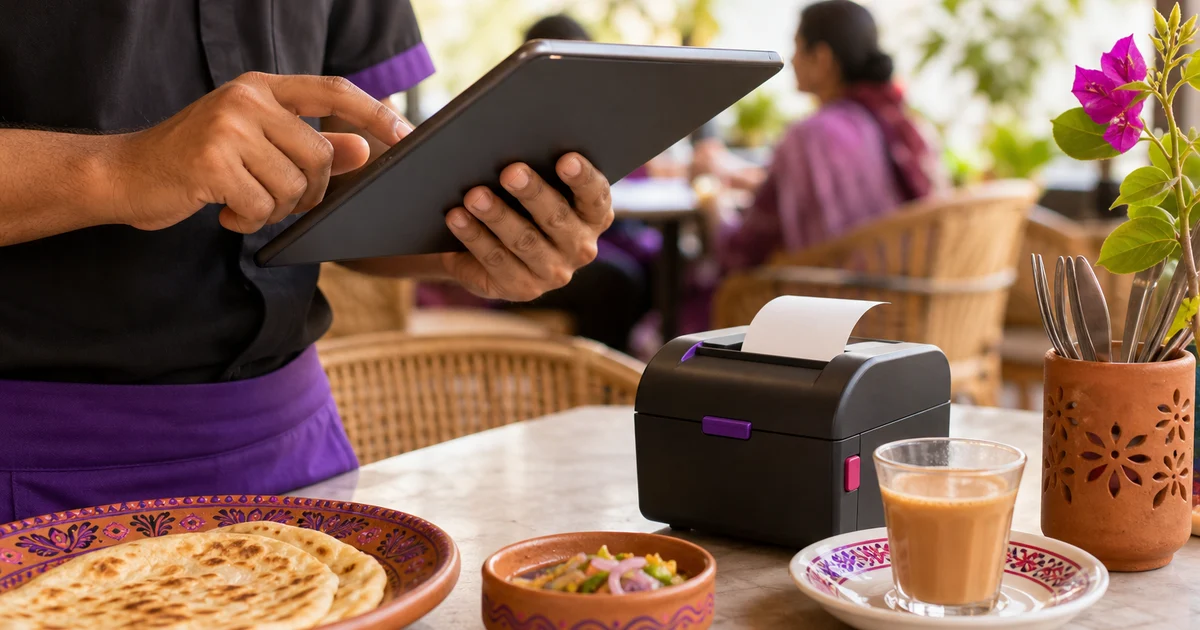
The POS should print a clean receipt with your logo, the itemised order, taxes, and even a QR code, on the thermal printer sizes restaurants actually use. Rosuii supports 58mm, 80mm and A4 receipts with per-branch printer settings, so the counter and the kitchen print what they each need.
Reports and day close
This is where a POS earns back its cost. Instead of guessing, you get a sales report, item sales, staff and waiter performance, expenses and a profit-and-loss view, plus a day close, or Z-report, that totals the day cleanly. Rosuii gives you these with date-range presets and CSV export, on both a single-branch and a multi-branch dashboard, so you stop running the business on gut feel.
Cloud POS versus legacy POS
The biggest decision is not which brand, but which generation. Legacy POS software is installed on a specific machine behind the counter. It works without internet, but your data lives on that one PC, updates are manual and often paid, opening a second branch usually means a fresh licence, and a hard-disk failure can wipe your records.
A cloud POS runs through the internet and stores your data on secure servers. You log in from a phone, tablet or laptop, updates arrive automatically, adding a branch is a setting, and your data is backed up off-site. The old knock on a cloud POS was that it stops the moment the line drops, and that is the part Rosuii fixed. Rosuii is a cloud platform delivered as a browser app, a PWA, so it installs like an app on your device, and it keeps taking orders during an outage: it caches your menu on the device and queues each sale locally, then syncs every order automatically when the connection returns, mark-paid included. Online-payment confirmation through bKash or Nagad and live updates across other devices still need a connection, so it is fair to say Rosuii keeps taking orders offline and catches up when you are back online, not that everything runs fully offline. For most restaurants a basic broadband line and a mobile-data backup, plus the lower cost, automatic backups and freedom from a single fragile PC, make this an easy call. We compare the two in detail in cloud POS versus traditional POS.
What restaurants in Bangladesh specifically need
A POS built for the United States or Europe will miss things that matter here every day. When you choose a restaurant POS system in Bangladesh, look for these:
- Real bKash and Nagad, not just card. Most of your digital payments come through mobile financial services, so the POS must support them as first-class methods.
- Full Bangla and English. Your cashier, waiter and kitchen staff should each work in the language they are comfortable in. Rosuii is fully bilingual across the POS, kitchen display, storefront and reports.
- BDT pricing and built-in VAT and service charge. Taxes and totals should be native to taka, not bolted on.
- Marketplace links. foodpanda, Pathao and others bring real orders, so presets to connect them keep delivery in one place.
- No hardware lock-in. You should not be forced to buy an expensive proprietary terminal. A browser-based POS runs on a phone, tablet or laptop you already own.
- Affordable taka pricing. Pricing should fit a Bangladeshi restaurant's margins. Rosuii is free to start, then ৳500 to ৳2,500 a month with no setup fee.
For a head-to-head of the options available locally, see our roundup of the best restaurant POS software in Bangladesh.
Rosuii as a restaurant POS system
Rosuii pulls all of the above into one platform. The POS handles dine-in, takeaway and delivery on one screen with table and waiter assignment, variations and add-ons, per-line notes, and server-controlled pricing. It sends kitchen tickets to a kitchen display and an order-ready customer display, takes cash, bKash and Nagad, applies VAT and service charge, and prints receipts. Around the counter sit menu management, inventory, payroll, customer loyalty and your own online ordering page, each restaurant on its own isolated database and branded subdomain. It runs in the browser on hardware you already own, so there is nothing proprietary to buy. Explore the full set on our features page.
Choosing the right system
Start from your real needs. A single cafe wants fast billing, clean receipts and simple reports. A growing multi-branch restaurant wants kitchen displays, inventory, loyalty and one dashboard across locations. Whatever your size, insist on the Bangladesh essentials, bKash and Nagad, Bangla and English, taka pricing, and no hardware lock-in, and you will pick a system that helps rather than fights you.
Want to see it in action for your own restaurant? Create your free Rosuii account and set up your menu, POS and online ordering today.
Updated:
Frequently asked questions
What is a restaurant POS system?
Does a restaurant POS system work offline?
Can a restaurant POS accept bKash and Nagad in Bangladesh?
How much does a restaurant POS system cost in Bangladesh?
What is the difference between a KOT and a KDS?
Run your restaurant on Rosuii
POS, menu, inventory, payroll and more — built for Bangladeshi restaurants.
Start free