Restaurant Day Close Z-Report: A Step-by-Step Guide
A restaurant day close z report turns a chaotic night into one clean summary that proves the cash adds up. Here is the end-of-day reconciliation step by step: gross sales, discounts, taxes, net and payment methods.
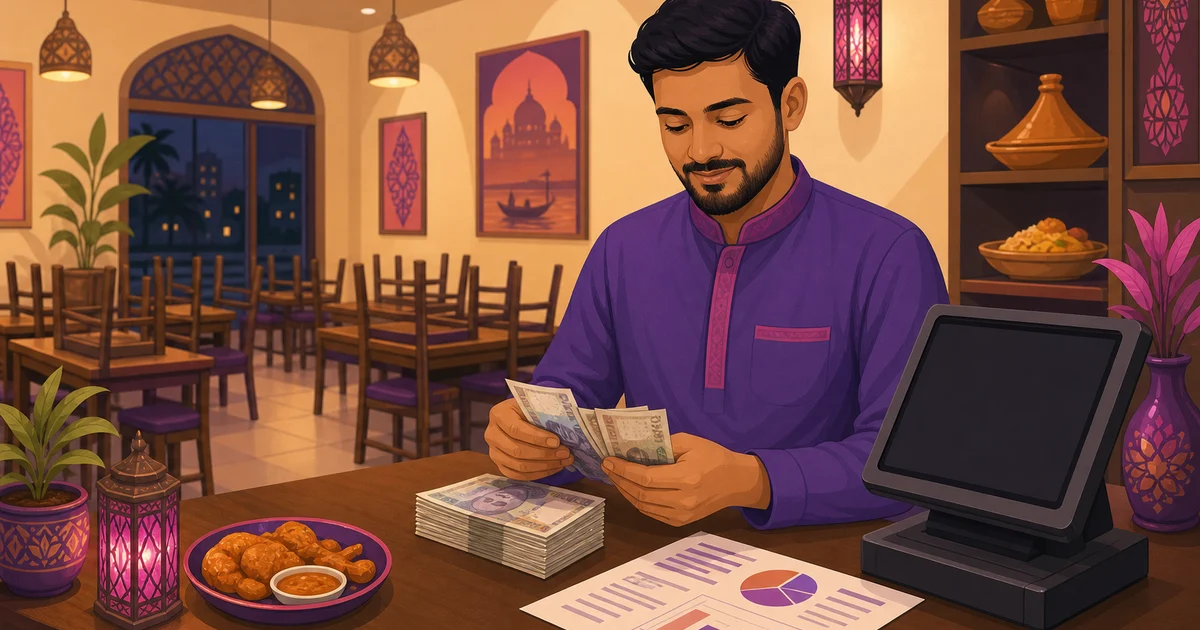
A restaurant day close z report is the few minutes at the end of the night that decide whether you ever truly know your business. Close it properly and you walk out knowing exactly what you sold, what you gave away in discounts, what you owe in VAT, and whether the cash in the drawer matches the system to the taka. Skip it, and the drawer becomes a guess, small leaks go unnoticed for months, and the morning starts with yesterday's question still hanging.
This guide walks through the end-of-day reconciliation step by step, from gross sales down to a clean net figure and the split of takings by payment method. We use Rosuii's Day Close, the Z-report, as the running example. The routine is the same whether you do it on paper or on screen; doing it on screen just means the numbers are already added up and cannot quietly disagree with the receipts.
What a restaurant day close z report actually is
The day close is the act of ending the trading day in the system and producing one summary that totals everything that happened. The Z-report is that summary. The name comes from old cash registers, where the Z reading closed the day and reset the running total back to zero, while an X reading let you peek mid-shift without closing. The idea has not changed. A Z-report is the final, locked picture of one day: gross sales at the top, every deduction in the middle, the net at the bottom, and a breakdown of how customers paid.
Run nightly, it does three jobs at once. It reconciles the cash so theft and honest mistakes surface the same day. It hands the next shift a clean starting point. And it feeds your longer-term reports with accurate daily totals instead of half-remembered figures. If you want the wider picture of how this fits with sales, item and profit reporting, our guide to restaurant reports, sales, P&L and the Z-report covers the full set.
Step 1: Start from gross sales
Gross sales is the total value of everything ordered during the day before any deductions, at full menu price. This is the honest top line, the size of the day before you take anything off. In a system this is simply the sum of every order placed, so it cannot drift from what your staff actually rang up. Reading gross first matters because every later number is a subtraction from it, and a healthy restaurant wants this figure high and its deductions sensible.
Step 2: Subtract discounts, coupons and loyalty
Next come the things you gave away. These are the easiest place for profit to leak, so a Z-report separates them rather than burying them in one lump. Three lines matter:
- Discounts applied by staff at the counter, the manual reductions a cashier or manager grants.
- Coupons redeemed, fixed-amount or percentage offers from a promotion.
- Loyalty redeemed, points customers cashed in for a discount.
Seeing these as their own totals every night is one of the quiet superpowers of a daily close. If discounts are creeping up week on week, you can ask why before they swallow a month of margin. In Rosuii these are not entered by hand at close; the system already tracked every discount, coupon and loyalty redemption as orders were placed, in a fixed pricing order, so the Z-report just reports what genuinely happened.
Step 3: Apply service charge and VAT
After deductions, two additions go on, and the order matters in Bangladesh. Service charge is usually calculated first on the after-discount amount, then VAT applies. Keeping these as separate lines on the Z-report is important for two reasons. Service charge is money you collect and typically pass to staff, so it should never blur into your own revenue. VAT is money you are holding for the government, not income at all, and seeing it totalled daily makes filing far less stressful. For how these two charges differ and the rates that apply, see our guide to restaurant VAT and service charge in Bangladesh.
Step 4: Arrive at net sales
Net sales is the figure after deductions and taxes are accounted for, the number that actually belongs to the business as revenue. This is the line you compare against costs to understand profit, and the one worth trending over time. Because a system calculates each order the same way every time, the path from gross to net on a Z-report is consistent night after night, which makes week-on-week comparison trustworthy rather than an apples-to-oranges guess.
Step 5: Reconcile totals by payment method
This is the heart of the close. The Z-report splits the day's takings by how customers paid: cash, bKash, Nagad, Rocket, card and cash on delivery. The digital totals should match what each gateway recorded, and the cash total is the one you physically verify. Count the drawer, subtract the float you started with, and the result should equal the cash line on the report. A match means the day balanced. A gap means something needs a look, a missed order, a wrong-change error, or worse, and catching it tonight is far easier than reconstructing it next week.
When the cash line does not match, work through it in order rather than panicking. Recount the drawer and recheck the float first, since most gaps are a simple counting slip. Then look for orders settled to the wrong payment method, a bKash sale rung up as cash, or a refund that was never recorded. If a real shortfall remains, the daily habit pays off: a gap on one night is a small, traceable amount, while the same gap left to compound over a month becomes a number nobody can explain. That is the whole case for closing every night rather than once in a while.
A worked example of a day close
Here is how a single evening might read on a Z-report. The numbers are illustrative, but the shape is exactly what you want to see.
| Line | Amount (৳) | What it means |
|---|---|---|
| Gross sales | 52,000 | All orders at full menu price |
| Discounts | -1,800 | Manual reductions by staff |
| Coupons | -1,000 | Promotional offers redeemed |
| Loyalty redeemed | -700 | Points cashed in by customers |
| Service charge | +4,400 | Collected, usually passed to staff |
| VAT | +2,300 | Held for the government |
| Net total | 54,500 | What customers paid in total |
| Cash | 21,000 | Verify against the drawer |
| bKash | 18,500 | Match to gateway record |
| Nagad | 9,000 | Match to gateway record |
| Card / COD | 6,000 | Match to settlement |
Read top to bottom, the story is clear in seconds: a strong gross, sensible giveaways, taxes set aside, and a payment split you can verify line by line.
Rosuii Day Close (Z-report)
In Rosuii the day close is a report you generate rather than a calculation you build. Because the POS prices every order on the server in a fixed sequence, discount, then coupon, then loyalty, then service charge, then VAT, all of those totals already exist by the time you close. The Day-Close Z-report gathers gross sales, each deduction, service charge, VAT, net, and the split by payment method into one view you can read on screen, export to CSV, and keep as the day's record. Run it nightly and you never hand over a drawer on trust, and your sales and profit reports inherit clean daily figures. It works the same on a single counter or across branches. See it alongside the rest on our features page.
Make it a nightly ritual
The value of a day close comes from doing it every single night, not when something feels off. A two-minute close at lockup is the cheapest insurance a restaurant has against slow leaks and end-of-month surprises. Tie it to handover so the person counting the drawer is the person signing off the report, and the next morning starts clean instead of carrying a question.
Want a one-tap day close for your restaurant? Create your free Rosuii account and close every night with gross, deductions, taxes and cash already added up.
Last updated:
Frequently asked questions
What is a Z-report in a restaurant?
What is the difference between an X-report and a Z-report?
How do I reconcile cash at the end of the day?
Does Rosuii calculate the day close automatically?
Why keep service charge and VAT separate on the Z-report?
Run your restaurant on Rosuii
POS, menu, inventory, payroll and more — built for Bangladeshi restaurants.
Start free