Restaurant Purchase Order & Supplier Management Made Simple
A restaurant purchase order brings order to buying. This guide explains how POs work, from approval and payment status to receiving stock, plus keeping supplier records, and how Rosuii handles it.
Most restaurants buy ingredients the loose way: a manager calls the supplier, goods turn up, cash changes hands, and a number gets scribbled in a copybook. It works until it does not. Prices creep up unnoticed, deliveries arrive short, a supplier swears you still owe for last week, and nobody can say what the kitchen actually spends. A restaurant purchase order fixes this by turning every buy into a clear, recorded agreement. This guide explains how purchase orders work, how approval and payment status keep money under control, how receiving stock closes the loop, and how Rosuii handles purchasing and suppliers.
What a restaurant purchase order is
A purchase order, or PO, is a document you raise before goods arrive that states exactly what you are buying: the supplier, the items, the quantities, the agreed prices, and the total. It is a record of intent, created and agreed before the delivery, not a note scribbled after it. That single shift, from buying first and remembering later to agreeing first and checking against it, is what brings discipline to restaurant purchasing.
The value shows up the moment something goes wrong. When a delivery is short, you have the PO to prove what was ordered. When a supplier's invoice does not match, you have the agreed prices in writing. When you want to know your food spend this month, you add up the POs instead of guessing. A purchase order turns buying from a verbal habit into a paper trail you can trust.
The hidden cost of not doing this is slow and easy to miss. A supplier nudges the price of cooking oil up by ten taka a litre and, with no record of what you paid last time, nobody notices for months. A few items get marked delivered that never arrived. Quantities drift upward because no one is checking what the kitchen really uses. None of these is a dramatic theft, but together they bleed a steady leak out of a business that often runs on thin margins to begin with. A purchase order is the cheap discipline that closes that leak.
How a purchase order works, step by step
The flow is the same whether you run a single cafe or a chain, and a good system follows each stage.
1. Raise the order
Someone, usually a manager or storekeeper, creates the PO. They pick the supplier, add the items and quantities, and enter the agreed prices. Often this is triggered by a low-stock alert: rice is down to its minimum level, so a PO goes out to the rice supplier. The order now exists as a record before anything is bought.
2. Approve it
For anything beyond petty amounts, the order should be checked before it is placed. An owner or senior manager reviews the PO and approves it. This one step stops a surprising amount of waste: over-ordering, buying from the wrong supplier, or quietly inflated quantities. Approval is the gate between deciding to buy and actually committing the money.
3. Receive the stock
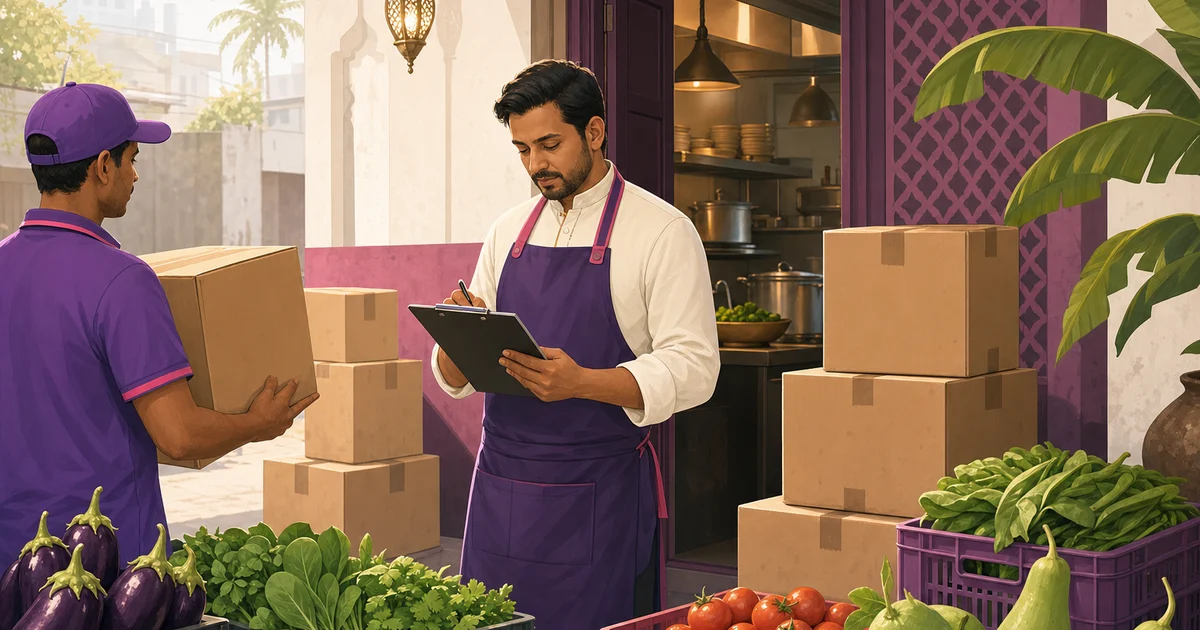
When the delivery arrives, someone checks the goods against the PO, item by item, quantity by quantity. Did all 20 kilos of chicken turn up, or only 18? Is the quality acceptable? Receiving against the order is where shortages and substitutions get caught, before you pay rather than after. Once verified, the stock is recorded as received and your inventory goes up by exactly what came in.
4. Track payment status
Few restaurants pay every supplier on the spot. Some goods are paid immediately, some on credit, some part-paid. The PO carries a payment status so you always know what is settled and what is still owed. This is how you avoid both paying twice and the awkward dispute when a supplier claims an unpaid balance you thought was cleared.
Why supplier records matter
Behind every PO is a supplier, and keeping proper supplier records is half the job. A simple supplier list, with contact details and the items each one provides, saves time on every order and helps you negotiate. When you can see that you bought the same cooking oil from two suppliers at different prices, you know which to call next time. When a supplier's quality slips, a record of your history with them backs the conversation.
Good supplier records also protect you when staff change. If your purchasing lives in one manager's phone contacts and memory, it walks out the door when they leave. Kept in the system, your suppliers, prices and order history stay with the business.
How purchase orders fit into inventory and cost
Purchasing does not stand alone. Every PO feeds two of the most important parts of running a restaurant: your stock and your food cost. When you receive against a PO, your inventory rises by the exact quantity delivered, so stock counts stay honest. And because the PO records what you actually paid, it feeds straight into knowing what your ingredients cost.
That link is everything for margin. If you do not know your true purchase prices, you cannot know your food cost, and if you do not know your food cost, you are pricing the menu blind. Our guide to food cost percentage shows how purchase prices turn into the number that decides whether a dish makes money. And purchasing is one side of the wider job covered in our guide to restaurant inventory management, where receiving, counting and waste all meet.
How Rosuii handles purchase orders and suppliers
Rosuii builds purchasing into the inventory tools, so raising a PO connects directly to your stock rather than living in a separate copybook.
- Supplier records. You keep a list of suppliers in the system. Each stock item can carry its supplier and its cost, so when stock runs low you know who to order from and what you last paid.
- Purchase orders with approval. You raise a PO against a supplier with the items and quantities you need. The PO carries an approval status, so an order can be reviewed and approved before it is committed, keeping a check on what gets bought.
- Payment status. Each PO tracks its payment status, so you always know which orders are settled and which still owe, across every supplier.
- Receiving into stock. When goods arrive, receiving against the order updates your inventory, so your stock levels reflect exactly what came in. Min-stock alerts tell you when it is time to raise the next order.
- Per-branch purchasing. In a multi-branch restaurant, stock and purchasing are tracked per branch, so each outlet's buying stays its own and you can see which kitchen is over-ordering.
Because all of this sits inside the same platform as your POS, menu, reports and finance, a delivery you receive flows through to your stock and your cost figures without anyone re-entering it. See the full inventory and purchasing toolkit on the features page.
Getting purchasing under control
You do not need a procurement department to buy well. Start by listing your regular suppliers and the items each provides. Set min-stock levels on your key ingredients so reorders are triggered by data, not by a cook noticing the rice bin is empty mid-service. Raise a PO for every order above petty cash and require approval, so buying is a decision, not a reflex. Most important, check every delivery against its order before you pay, because the cheapest money you will ever save is the goods you were charged for but never received.
Do these few things and purchasing stops being the murky corner of the business. You will know what you buy, what you pay, who you owe, and exactly how much of it is sitting in your store right now.
Ready to bring order to your buying with purchase orders, suppliers and live stock in one place? Create your free Rosuii account and set up your suppliers and inventory today.
Last updated:
Frequently asked questions
What is a restaurant purchase order?
Why should a purchase order need approval?
How does receiving stock against a purchase order work?
Can Rosuii track which supplier invoices are paid?
How do purchase orders affect my food cost?
Run your restaurant on Rosuii
POS, menu, inventory, payroll and more — built for Bangladeshi restaurants.
Start free