What Does 86 Mean in a Restaurant? The '86' Slang and the 86 List Explained
What does 86 mean in a restaurant? To 86 something means it is sold out or unavailable, so staff stop selling it until it is back. This guide explains the kitchen slang, how it is used, and how a POS marks items unavailable in real time.
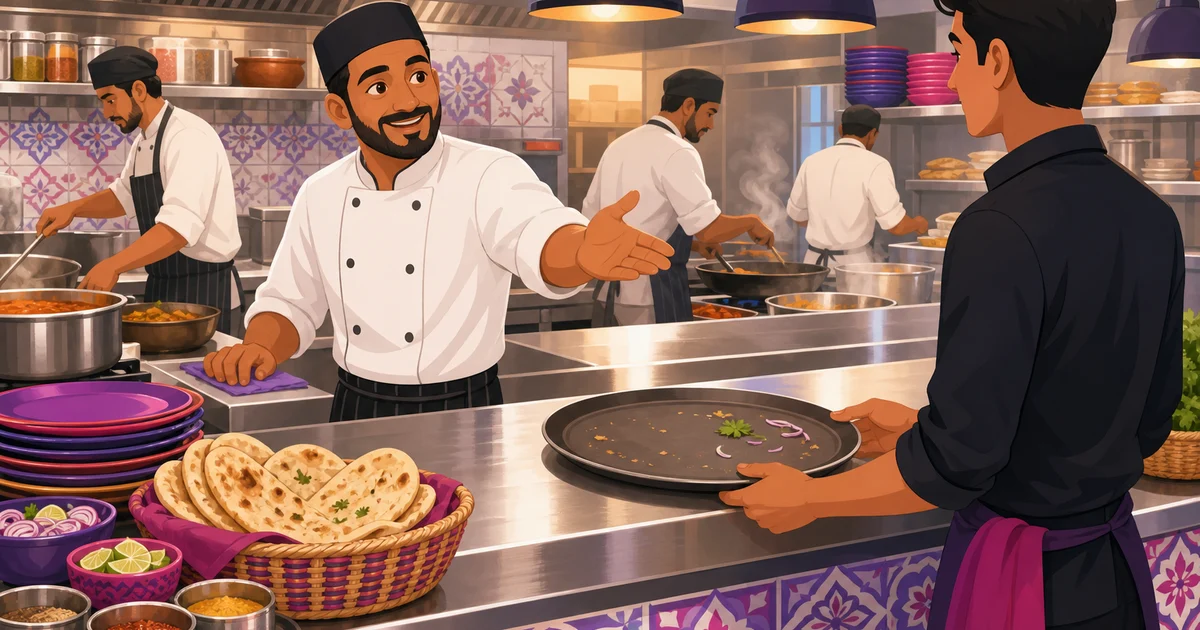
If you have worked a kitchen, you have heard someone shout it across the pass. So what does 86 mean in a restaurant? To 86 an item means it is finished, sold out or otherwise unavailable, so the floor must stop selling it right away. When a chef calls "86 the beef bhuna", every waiter and the cashier need to know that dish is off the menu until further notice. The number is kitchen shorthand for "we are out, do not sell it". It is one of the most useful pieces of slang on a busy line, because it stops a guest from ordering something the kitchen cannot make.
This guide explains exactly what 86 means, where it came from, how staff use it during service, and how a modern POS lets you mark an item unavailable so it disappears from ordering instantly. We use Rosuii as the running example.
What does 86 mean in a restaurant?
In a restaurant, 86 is slang that means an item is no longer available, so stop selling it. Most often it is used for a dish that has sold out: the kitchen has run out of an ingredient or the prepped portions are gone, so the item cannot be made until it is restocked. "We are 86 on prawns" means the prawns are finished. "86 the cheesecake" means the last slice just went.
The word can also cover an item pulled for other reasons: a piece of equipment is down, the quality is not right, or the chef has decided to stop that dish for the night. In all cases the meaning is the same to the floor: do not take any more orders for it. The opposite, putting an item back on once it is restocked, is sometimes called bringing it back or taking it off the 86 list.
Where the term comes from
Nobody is certain where 86 started. The most common story ties it to American diner and soda-fountain slang from the early twentieth century, part of a set of number codes staff used. Over time 86 stuck as the code for "out of it" and spread through kitchens everywhere. The exact origin matters less than the fact that, today, it is understood in restaurant kitchens across the world, including in Bangladesh, as the quick way to say an item is off.
How staff use 86 during service
On a busy night, 86 has to travel fast and reach everyone who takes orders. The flow usually goes like this:
- The kitchen notices an item is about to run out, or has run out, often the popular dishes first, like a special biryani or a limited cut of fish.
- A chef or the expo calls it out: "86 the mutton kacchi."
- The floor staff and cashier acknowledge it and stop offering or accepting that item.
- Anyone updating the menu marks the item unavailable so no new order can include it.
- When stock comes back (a fresh batch is cooked, a delivery arrives), the item is brought back and selling resumes.
The risk in a paper or word-of-mouth system is that the message does not reach everyone in time. A waiter who missed the call takes an order for the 86'd dish, the ticket reaches the kitchen, and now someone has to walk back to the table and apologise. That is the small failure a good system prevents.
Why getting 86 right matters
Marking items off quickly is not just tidiness; it protects the guest experience and the kitchen's rhythm. A guest who orders confidently and is then told the dish is unavailable feels let down, especially if it happens after a wait. Worse is being charged or seeing it on the bill for something that never came. Clear, fast 86s stop both.
There is an operations cost too. Every order for an unavailable item is wasted effort: the waiter takes it, the kitchen flags it, the floor renegotiates with the table. Multiply that across a rush and it slows the whole service. Keeping the available menu honest in real time keeps the line moving and the floor calm.
Finally, what you 86 tells you something. If the same popular dish sells out every Friday by nine, that is a signal about prep quantities and about demand. Tracking which items run out, and how often, feeds back into how much you prepare and how you plan the menu. That ties directly to menu engineering and to keeping the right stock on hand, which is the job of restaurant inventory management.
How a POS marks an item unavailable
So far we have answered what does 86 mean in a restaurant on the floor; the harder part is making sure the message reaches every screen. The reason 86 used to cause chaos is that the menu lived in too many places at once: the printed card, the waiters' memory, the kitchen's head. Mark a dish off in one place and the others still showed it. A POS fixes this by holding one menu that every ordering screen reads from. Turn an item off there, and it is off everywhere at the same moment.
When you mark an item unavailable on the POS, it stops appearing as an option (or is greyed out) on the order screen, so staff cannot add it to a new ticket. If guests order from a QR menu on their phones, the item drops off that menu too, so nobody can pick it. There is no race to tell every waiter, because the system simply will not let the sold-out dish be ordered. When you have stock again, you switch the item back on and it returns to every screen at once.
What to do when you 86 something
Calling 86 is the start, not the end. How the floor handles it next decides whether a guest barely notices or walks away annoyed. A simple routine helps:
- Mark it off immediately. Before telling anyone, switch the item off so no new order can include it. That stops the problem spreading while you deal with the tables already affected.
- Suggest a close alternative. A waiter who says "the kacchi is finished, but the morog polao is excellent today" keeps the sale and the goodwill. A flat "we are out" loses both.
- Tell tables with the item pending. If a ticket already went in before the 86, catch those tables early and offer a swap, rather than letting them wait for a dish that is not coming.
- Note why it ran out. A quick mental or written note (sold out by 9, only prepped 30) is what turns a bad moment into better prep next week.
The worst outcome is a guest who orders, waits, and only then hears the dish is gone. Fast, clear handling of an 86 turns an out-of-stock from an embarrassment into a small, well-managed bump.
When 86ing too often is a warning sign
An occasional 86 is normal; a dish that sells out is usually a popular dish. But the same items going off night after night is a signal to act, not just to apologise. If your best biryani is 86 by nine every weekend, you are turning away guests who came specifically for it, and that is lost revenue, not a badge of popularity. The fix is upstream: prep more of the items that reliably run out, and check your stock and supplier timing so the kitchen is not caught short. Tracking what you 86, and how early, is data that should change next week's prep list. That feedback loop, from sold-out items back to prep and purchasing, is exactly where availability, demand and inventory meet.
How Rosuii handles sold-out items
In Rosuii, each menu item has an availability switch. When the kitchen 86s a dish, whoever manages the menu marks that item unavailable, and it immediately stops being orderable. On the POS, staff can no longer add it to an order. On the branded QR code menu that guests scan at the table, and on the online ordering storefront, the item no longer shows as something a customer can choose. One switch, every channel.
That single source of truth is the practical version of 86. Instead of trusting that a shout reached every member of staff, the menu itself enforces it: a sold-out dish cannot land on a kitchen ticket because it cannot be ordered in the first place. When a fresh batch of biryani is ready or a delivery restocks an ingredient, you flip the item back on and it reappears for dine-in, QR and online orders together.
Because availability lives with the menu, the rest of the system stays consistent. Items that are off do not clutter the order screen, the kitchen never receives a ticket it cannot fulfil, and your reports still reflect only what was actually sold. To see how the menu connects to ordering, the kitchen and billing, read our guide to the restaurant POS system.
Want to mark a sold-out dish off across POS, QR and online ordering with one switch? Create your free Rosuii account and set up your menu and availability today.
Updated:
Frequently asked questions
What does 86 mean in a restaurant?
Why do cooks say 86 instead of sold out?
Does 86 always mean an item ran out of stock?
How does a POS stop staff selling a sold-out item?
Can Rosuii mark an item unavailable everywhere at once?
Run your restaurant on Rosuii
POS, menu, inventory, payroll and more — built for Bangladeshi restaurants.
Start free