Restaurant Running Cost in Bangladesh: Monthly Breakdown
What does it really cost to run a restaurant each month in Bangladesh? A line-by-line breakdown of rent, salaries, food, utilities, marketing and software, plus a sample table and a simple P&L.
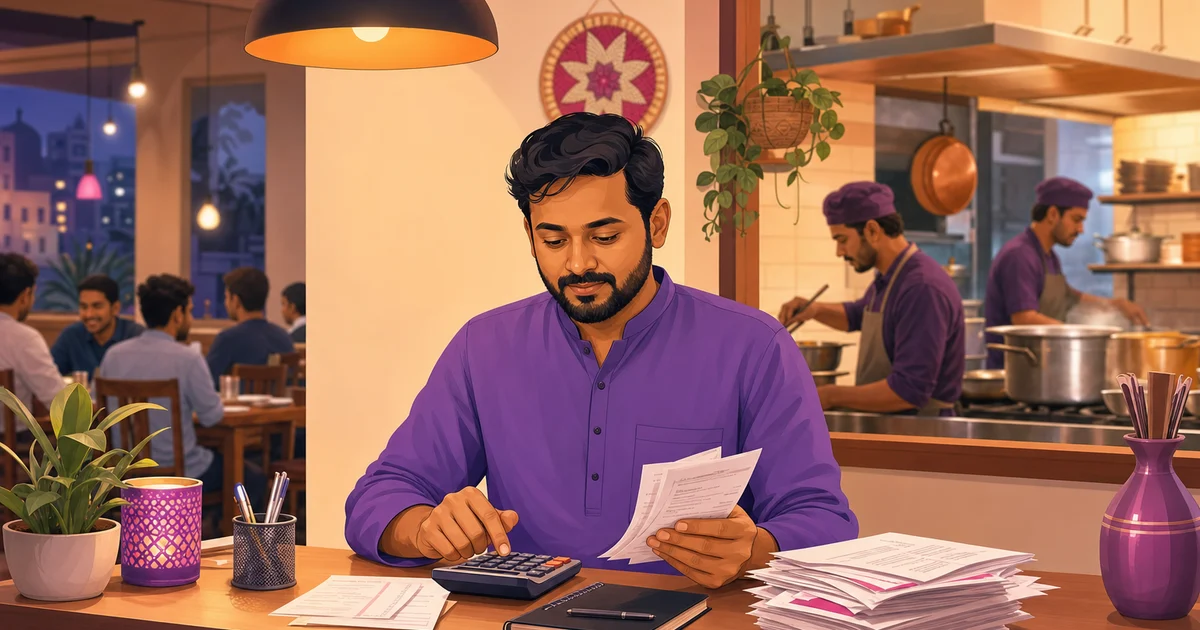
Opening a restaurant gets the attention, but the monthly bills decide whether you survive. Many owners in Dhaka and beyond know their sales to the taka yet have only a fuzzy sense of where the money goes. This guide lays out the real restaurant running cost in Bangladesh, line by line, with a sample monthly table and a simple profit and loss example you can copy for your own outlet.
If you are still at the planning stage, pair this with our guide on how to open a restaurant in Bangladesh, which covers the one-time setup and licences. Here the focus is what leaves your bank account every single month.
The main parts of restaurant running cost in Bangladesh
Almost every taka you spend each month falls into one of six buckets. The first three are the heavyweights, and they decide most of your profit:
- Rent and premises (fixed): the single largest fixed cost for most sit-down outlets.
- Staff salaries (mostly fixed): cooks, helpers, waiters, cashier, manager and cleaner.
- Food and beverage cost, your COGS (variable): the ingredients in every plate you sell.
- Utilities (semi-variable): electricity, gas, water and internet.
- Marketing (variable): from a Facebook boost to marketplace commissions.
- Software and admin (fixed): your POS and management system, plus small recurring fees.
Rent and premises
Rent swings more than any other line. A small cafe in a residential area might pay ৳25,000 to ৳60,000, while a mid-size restaurant in a busy Dhaka commercial spot can run ৳1,00,000 to ৳3,00,000 or more. A useful rule of thumb: try to keep rent under 10 to 15 percent of your monthly sales. If rent eats 25 percent, the maths rarely works no matter how good the food is.
Staff salaries
People are your second big fixed cost. A modest outlet might run a head cook at ৳25,000 to ৳40,000, a couple of assistant cooks at ৳15,000 to ৳20,000 each, two or three waiters at ৳10,000 to ৳14,000, a cashier and a cleaner. Add it up and a small restaurant easily spends ৳1,00,000 to ৳1,80,000 a month on labour. Aim to keep total labour around 20 to 30 percent of sales.
Food and beverage cost (COGS)
This is the cost of the raw ingredients in what you sell, and it moves with how busy you are. Most restaurants in Bangladesh run a food cost percentage of 30 to 40 percent of food sales, higher for meat-heavy menus like biryani, lower for tea and bakery items. This is also where money quietly leaks through over-portioning, spoilage and theft. Our deep dive on food cost percentage and how to control it shows how to measure and tighten this number.
Utilities
Electricity for fridges, air conditioning, lights and equipment is the big one, often ৳15,000 to ৳50,000 a month depending on size and AC load. Add gas for cooking, water, and a business internet line. A power backup like an IPS or generator adds fuel cost during load-shedding.
Marketing
Even word-of-mouth places spend something. A few thousand taka on Facebook and Instagram boosts, occasional printed flyers, and the big one: delivery marketplace commission. foodpanda and Pathao typically take 25 to 30 percent of each order they bring you, which is a real cost even though it never shows as a separate bill. Driving repeat orders through your own channel is the cheapest marketing there is.
Software and admin
Your POS and restaurant management software, accounting help, and small recurring charges sit here. The good news is this is your smallest major line. A modern cloud platform like Rosuii starts free and runs up to ৳2,500 a month in BDT, often a fraction of one percent of sales, while touching almost every other cost above.
Sample monthly running cost table
Here is a realistic snapshot for a small-to-mid restaurant in Dhaka doing roughly ৳8,00,000 in monthly sales. Your numbers will differ, but the shape is typical.
| Cost item | Type | Monthly (৳) | % of sales |
|---|---|---|---|
| Rent and premises | Fixed | 1,10,000 | 13.8% |
| Staff salaries | Fixed | 1,60,000 | 20.0% |
| Food and beverage (COGS) | Variable | 2,80,000 | 35.0% |
| Utilities (power, gas, water, net) | Semi-variable | 45,000 | 5.6% |
| Marketing and commissions | Variable | 55,000 | 6.9% |
| Software and admin | Fixed | 6,000 | 0.8% |
| Other (repairs, packaging, misc.) | Variable | 40,000 | 5.0% |
| Total monthly cost | 6,96,000 | 87.0% |
A simple profit and loss example
Take the same outlet and lay it out as a basic monthly P&L. This is the view that actually tells you whether you are making money.
| Line | Amount (৳) |
|---|---|
| Total sales (revenue) | 8,00,000 |
| Less: food and beverage cost (COGS) | (2,80,000) |
| Gross profit | 5,20,000 |
| Less: rent | (1,10,000) |
| Less: salaries | (1,60,000) |
| Less: utilities | (45,000) |
| Less: marketing and commissions | (55,000) |
| Less: software and admin | (6,000) |
| Less: other | (40,000) |
| Net profit | 1,04,000 |
That is a net margin of about 13 percent, which is healthy for a restaurant in Bangladesh. Many outlets run thinner, in the 5 to 10 percent range, and a few lose money without realising it because they only track cash in the drawer, not these lines. Notice how small the software figure is against the prize it helps protect.
Where software cost fits, and how it pays for itself
The ৳6,000 software line is the easiest cost to justify because it pushes on the three big numbers above. Here is the honest case for it:
- Less food waste: inventory with min-stock alerts, purchase orders and wastage tracking show you exactly what is being thrown away or over-ordered. Trimming food cost from 37 percent to 34 percent on ৳8,00,000 of sales is ৳24,000 saved every month, four times the software bill.
- Better reporting: a proper sales, item-sales and profit-and-loss report tells you which dishes actually make money and which slow night to cut, instead of guessing from a cash count.
- Fewer leaks at the counter: server-authoritative pricing and a day-close, or Z-report, mean discounts and totals are controlled by the system, not improvised by staff.
- Cheaper marketing: a customer directory and loyalty programme bring people back without paying marketplace commission on every visit, and your own online ordering page keeps more of each delivery sale.
Rosuii bundles all of this in one taka-priced platform with real bKash and Nagad payments, so the POS, kitchen displays, inventory, payroll and online ordering all share one set of numbers. It runs in the browser on hardware you already own, so there is no terminal to buy. For a full picture of what software should cost you, see our breakdown of restaurant POS pricing in Bangladesh, and compare plans on our pricing page.
How to keep your running cost under control
Three habits separate restaurants that last from those that quietly bleed out. First, track every line monthly, not just sales. Second, watch your food cost percentage like a hawk, because a few points there outweigh almost any other saving. Third, protect your repeat customers so you depend less on paid reach and commissioned delivery. Get those right and a 10 to 15 percent net margin is realistic even with Dhaka rents.
Want one place to see your sales, costs and stock together? Create your free Rosuii account and set up your reporting in an afternoon.
Last updated:
Frequently asked questions
What is the average monthly running cost of a restaurant in Bangladesh?
What percentage of sales should rent and salaries be?
How much does restaurant software cost per month in Bangladesh?
How does a POS or management system reduce running costs?
What net profit margin is realistic for a restaurant in Bangladesh?
Run your restaurant on Rosuii
POS, menu, inventory, payroll and more — built for Bangladeshi restaurants.
Start free