Roadside Kitchen Business in Bangladesh: From Cart to Small Kitchen
A practical guide to moving from a food cart to a small roadside kitchen, covering setup costs, menu, staffing, sales maths, safety and licences.
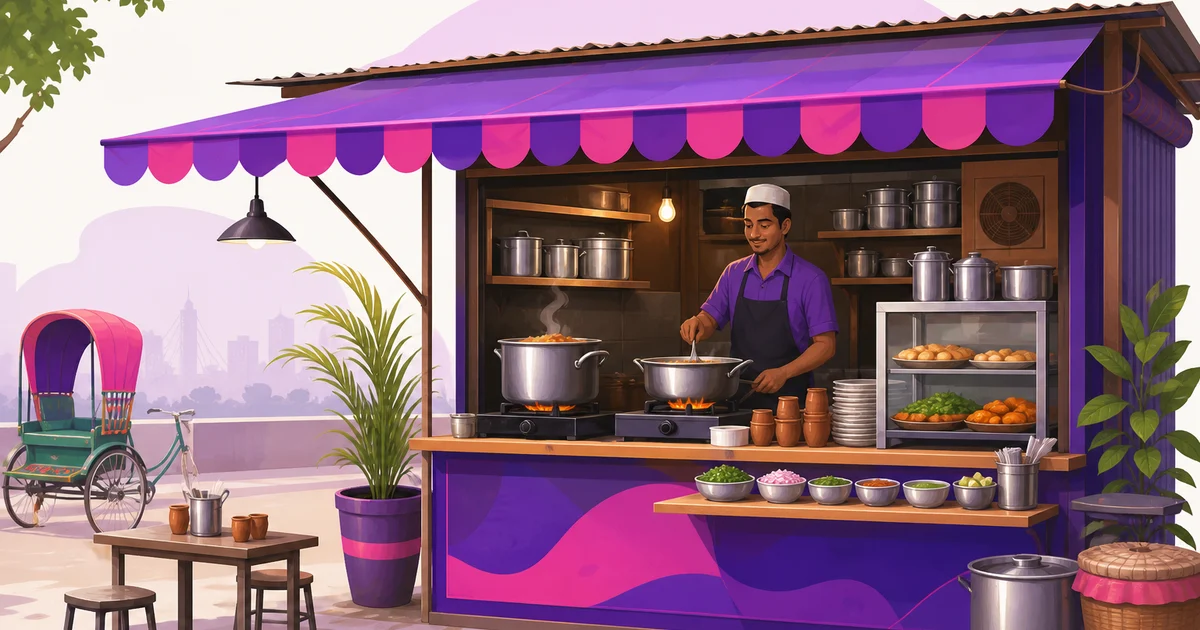
A roadside kitchen business sits between a mobile food cart and a full restaurant. You rent a small fixed space, install a couple of burners, prepare food behind a counter and serve through a window or open frontage. There may be no dining room and only a few stools. For an owner with limited capital, this format can provide better cooking capacity than a cart without taking on the rent, staff and decoration costs of a restaurant.
The tradeoff is responsibility. Once you have a fixed address, rent, food licensing, waste disposal, gas safety and ventilation become harder to ignore. The numbers can work, but only if the menu is tight and the owner remains involved in buying, cooking and cash control.
Is a roadside kitchen business better than a cart?
A cart usually has the lower entry cost. Depending on size, fabrication, wheels, canopy and cooking equipment, a basic cart may cost roughly ৳25,000 to ৳80,000. Market rates move, and custom stainless-steel work can push the cost higher. A cart can also move if foot traffic is weak.
Its limitations appear quickly. Water storage is difficult, prep space is tiny, weather affects sales, and local enforcement may force you to move. Storing ingredients overnight can also be unsafe or inconvenient. A moving cart is largely governed by city corporation or municipality rules, street-use restrictions and, in practice, informal arrangements that vary by location. Paying someone informally does not create a legal right to occupy a pavement.
A small fixed kitchen gives you water, storage, a repeatable address and room for safer preparation. Customers can find you again. Delivery riders can collect orders. The downside is rent even on slow days, plus advance payment and basic fit-out costs.
- Choose a cart when your concept is untested, the menu needs little preparation and you need the lowest possible commitment.
- Choose a fixed kitchen when you already know the selling location, need burners and refrigeration, or want dependable takeaway and delivery operations.
- Delay a dining room until takeaway demand proves that the location and food can support higher rent.
How much capital should you plan?
Prices differ sharply between Dhaka, Chattogram, district towns and upazila markets. The ranges below are planning figures, not supplier quotations. Check several local shops before committing.
- Rent: around ৳6,000 to ৳25,000 a month for a very small roadside or market-adjacent space, depending on frontage and foot traffic.
- Advance and deposits: roughly ৳12,000 to ৳75,000, depending on the landlord and number of months requested.
- Counter, washable wall finish and minor fit-out: around ৳10,000 to ৳40,000.
- Commercial burners and stands: around ৳5,000 to ৳18,000 for a basic setup.
- Safe LPG equipment: roughly ৳7,000 to ৳18,000 for cylinders, regulator, approved hose and related fittings. Refills remain an operating cost.
- Exhaust hood, ducting and fan: around ৳10,000 to ৳35,000, depending on the duct route and fan capacity.
- Pots, pans, knives and utensils: around ৳10,000 to ৳30,000.
- Sink, water line and drainage work: around ৳6,000 to ৳25,000.
- Storage racks, food-grade containers and serving counter: around ৳7,000 to ৳25,000.
- Fire extinguisher and basic safety items: around ৳3,000 to ৳8,000.
- Signboard, menu board and lighting: around ৳3,000 to ৳12,000.
- Opening ingredients and packaging: around ৳6,000 to ৳20,000.
A modest fixed setup can therefore require roughly ৳80,000 to ৳250,000, including a limited rent advance. A difficult exhaust route, refrigerator, larger deposit or major plumbing work can take it beyond that range. Keep another ৳20,000 to ৳60,000 as working capital rather than spending every taka on decoration.
Inspect the premises before paying an advance
A cheap room can become expensive if it cannot release heat or drain wastewater. Visit during the hours when you expect to sell. Count pedestrians, nearby workers, students, transport passengers and competing food sellers. Ask neighbouring shops about water shortages, flooding, electricity and closing-hour restrictions.
Get the landlord's written permission for food preparation, LPG use, signboards, exhaust ducting and customer collection. Confirm where the duct can discharge. Blowing smoke into an upstairs flat or neighbouring shop can end the business quickly. The agreement should state the rent, advance, increase terms, access hours and responsibility for plumbing or electrical repairs.
Gas, ventilation and fire safety are not optional
Do not build the plan around an unauthorised domestic piped-gas connection. Availability and permitted use vary, and an unsafe connection can create legal and life-safety risks. Many small kitchens use commercial LPG obtained through authorised suppliers.
Keep LPG cylinders upright in a ventilated location, away from burners, drains and direct heat. Use a suitable regulator and approved hose, inspect connections regularly and replace damaged parts. Never search for a leak with a flame. Ask a qualified technician to install the system, and confirm local requirements with the building owner, relevant local authority and Fire Service where applicable.
A wall fan alone may not control grease and heat. A hood should capture fumes above the burners and discharge them through a suitable duct. Fresh air must also enter the room. Budget for cleaning the hood, fan and grease deposits because blocked equipment increases both fire risk and cooking discomfort.
Build a menu that two hands can cook
A roadside kitchen should not begin with a restaurant-sized menu. The owner may be taking payment, checking deliveries and cooking while one helper washes, cuts and packs. Every extra item creates another ingredient, container and chance of wastage.
Start with a core of roughly five to nine items that share ingredients and equipment. A rice concept might use one rice base, a small selection of proteins, dal and one vegetable. A snack kitchen might centre on rolls, paratha, eggs and two fillings. A breakfast counter might offer khichuri, eggs and tea. The exact menu should match local demand rather than social-media trends.
- Choose items that can be prepped in batches without unsafe long holding.
- Use overlapping onions, sauces, spices and packaging across several products.
- Keep only one or two slow-cooking products during the opening weeks.
- Offer add-ons such as egg or extra protein only when they are easy to portion.
- Write the selling price, standard portion and approximate ingredient cost for every item.
Avoid a menu that needs frying, grilling, noodles, biryani and tea at the same time. Two burners become a bottleneck, and customers will not wait because the menu looked ambitious.
Staffing: usually the owner and one helper
At this scale, the owner normally needs to run the main cooking station and control cash. One helper can wash ingredients, portion food, clean utensils and pack orders. Depending on city, experience, meals, hours and accommodation, a helper may cost approximately ৳9,000 to ৳18,000 a month. Local wage expectations change, so verify current rates and comply with applicable labour requirements.
Agree on duties, working hours, weekly rest, meals and salary dates before opening. Train the helper on handwashing, raw and cooked food separation, cleaning chemicals, cylinder safety and what to do during a fire. Do not let one person handle cash, raw food and ready-to-eat garnishes without washing hands between tasks.
Daily sales and margin arithmetic you can redo
Revenue is not profit. Use a conservative range based on customer count and average bill. Suppose the kitchen serves 60 to 80 orders a day and the average bill is ৳100 to ৳120. Daily sales would be approximately ৳6,000 to ৳9,600.
If ingredients, cooking fuel directly related to production and packaging consume around 38% to 48% of sales, those variable costs would be roughly ৳2,280 to ৳4,608. That leaves approximately ৳3,120 to ৳5,952 before rent, helper wages, electricity, water, cleaning, repairs, licence costs, spoilage and the owner's income.
Allocated across selling days, those remaining operating costs might total around ৳1,500 to ৳3,000 a day. The possible owner surplus would then be roughly ৳120 to ৳4,452 a day. The wide range is deliberate. A few wasted protein portions, a rainy week or low afternoon traffic can change the result.
Redo the calculation with your own figures:
- Multiply daily orders by average bill.
- Subtract ingredient and packaging costs based on actual purchase records.
- Divide monthly rent, wages and utilities by expected operating days.
- Set aside a range for wastage, repairs, licence renewals and tax obligations.
- Pay yourself only after those costs are recognised.
Track both sales and portions. A busy counter can still lose money if chicken portions vary or cash sales disappear. For a very small operation, a notebook may be enough initially. Rosuii can help when you want phone-based billing, daily sales totals and stock records for a handful of items. Its free plan is suitable for testing basic POS needs, but software cannot fix poor purchasing or an oversized menu.
Licences once you have a fixed address
A fixed kitchen is different from a moving cart because it has identifiable premises. Requirements and forms can vary by city corporation, municipality, category and regulatory updates, so confirm them with the relevant offices rather than relying only on a broker.
Trade licence
A trade licence is generally obtained from the city corporation, municipality or union parishad responsible for the premises. The authority may request the rental agreement, landlord information, identification, photographs, tax-related documents and other papers based on the business category. Read this practical guide to the restaurant trade licence process in Bangladesh.
BFSA food business requirements
Once you operate from fixed food premises, check the Bangladesh Food Safety Authority requirements for food-business registration or licensing applicable to your category. Terminology, fees and submission processes can change, so confirm the current route directly with BFSA or the responsible local office. Our guide to the BFSA food licence for restaurants explains the documents and preparation points.
Other approvals may apply depending on the building, fire risk, signage, employees and local rules. Keep copies of rent papers, purchase invoices, staff details, cleaning records and licences at the shop. A moving cart may not follow the same premises-based process, but it is still subject to local street-use, food-safety and city-corporation controls.
Where beginners lose money
- Paying advance before testing foot traffic: observe the location on weekdays, weekends, lunch periods and evenings.
- Offering too many products: slow-moving ingredients expire while busy items run out.
- Ignoring portion control: even a small extra scoop on every order can remove the day's margin.
- Underpricing packaging and delivery orders: boxes, bags, sauces and marketplace charges must be counted.
- Buying too much fresh stock: purchase for realistic sales, not hoped-for crowds.
- Mixing personal and business cash: record owner withdrawals separately from ingredient purchases.
- Weak hygiene: one complaint about dirty water, stale oil or cross-contamination can damage a roadside brand permanently.
- Skipping maintenance: grease-blocked exhausts, leaking taps and unsafe hoses become expensive emergencies.
Use a written opening and closing routine. Check cylinder connections, water, handwashing supplies, refrigerator temperature where relevant, raw-food storage and the previous day's leftovers. The restaurant food-safety and hygiene checklist provides a useful starting point.
A sensible path from cart to kitchen
Test a narrow menu first, record demand and move into fixed premises only when repeat sales can cover rent. Choose function over decoration. Spend on ventilation, water, storage, safe gas installation and washable surfaces before signs or furniture. Keep enough working capital to survive slower weeks.
Once order volume becomes difficult to track by hand, use simple tools rather than adding unnecessary administration. To try phone-based billing and daily sales records for your growing roadside kitchen, register for Rosuii and start with the free plan.
Last updated:
Frequently asked questions
How much money is needed to start a roadside kitchen business in Bangladesh?
Do I need a trade licence for a small roadside kitchen?
Does a small fixed kitchen need a BFSA food licence?
What menu is best for a roadside kitchen with two burners?
Can a roadside kitchen remain profitable with one helper?
Run your restaurant on Rosuii
POS, menu, inventory, payroll and more — built for Bangladeshi restaurants.
Start free