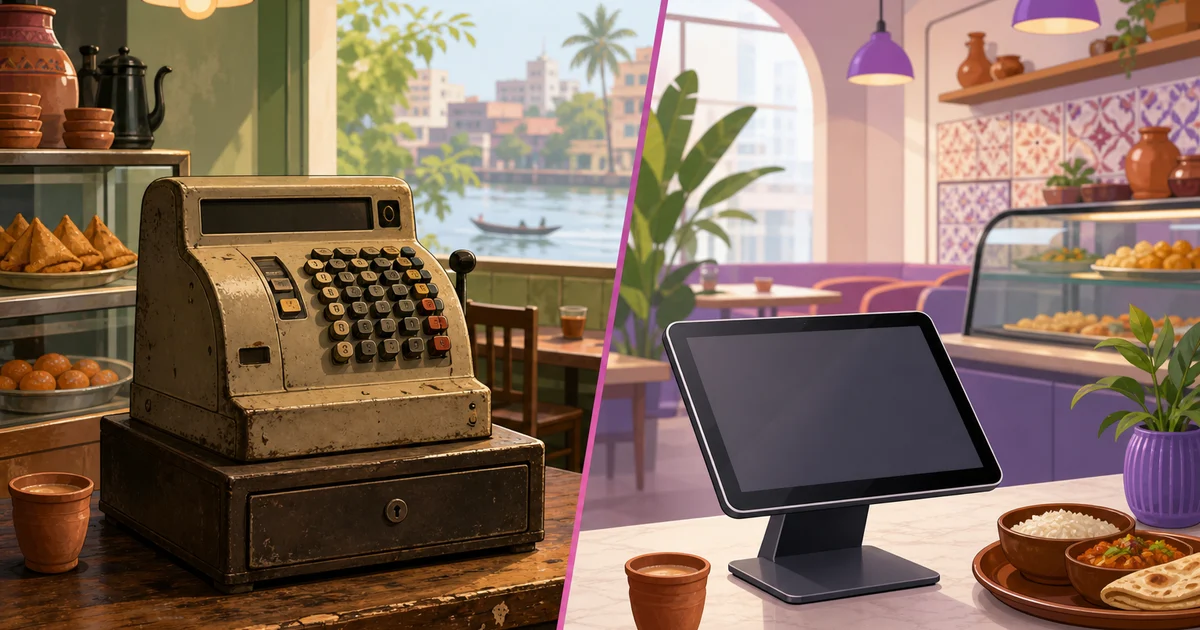
How to Manage Foodpanda & Pathao Orders From One Dashboard
Running Foodpanda, Pathao and your own delivery on separate tablets is slow and error-prone. Here is how a single dashboard tames the chaos and speeds up your kitchen.
Last verified: 2026-08-28
If your restaurant takes delivery orders, you probably know "tablet hell": one screen for Foodpanda, another for Pathao, a phone for direct calls, and your POS off to the side. Every channel beeps, staff re-key orders by hand into the kitchen, and at peak time mistakes pile up. Bringing those channels into one dashboard is one of the highest-leverage operational fixes a busy kitchen can make.
Why separate tablets cost you
Each extra screen adds friction that quietly erodes service and margin:
- Re-keying errors. Staff manually copy each marketplace order into the POS or kitchen — a missed modifier or wrong quantity becomes a remake, a refund, or a bad review.
- Slower tickets. Watching three screens means orders are seen late. Seconds matter when the kitchen is slammed.
- Fragmented numbers. Sales live in three different apps, so your true daily total and channel mix are a manual spreadsheet job.
- Stock blind spots. Marketplace sales do not touch your inventory, so your stock figures drift and you oversell the popular dish.
What "one dashboard" actually means
The goal is a single place where every order — Foodpanda, Pathao Food, your own storefront, and walk-ins — lands, is accepted, and flows to the kitchen with the channel clearly labelled. In practice that gives you:
- One order queue with each ticket tagged by its source, so the kitchen sees everything in one view.
- One menu to maintain — change a price or mark an item sold out once, instead of in three apps.
- Consolidated reporting — total sales and a clear channel breakdown (how much is Foodpanda vs Pathao vs direct) without spreadsheets.
- Accurate stock — every sale, whatever the channel, deducts from the same inventory.
Two ways to consolidate
There are two practical routes, and many restaurants use both:
- Direct API integration with a marketplace pushes its orders straight into your system automatically. It is the smoothest experience but depends on each platform's partner program and approval.
- Manual channel tagging lets you record a marketplace order in your POS in a couple of taps, attributing it to Foodpanda or Pathao. It needs a moment of staff effort but works today, with no integration paperwork — and crucially, it still consolidates your sales, reporting and stock in one place.
The second route is underrated: even without a live API, simply logging every delivery order against the right marketplace inside one POS means your end-of-day numbers, food cost and channel mix are finally correct and in one screen.
How Rosuii brings it together
Rosuii treats delivery marketplaces as first-class order channels. You add Foodpanda, Pathao Food and others as marketplaces, then every delivery order — direct from your own branded storefront or attributed to a marketplace — sits in the same order queue and kitchen flow as your dine-in and takeaway tickets. Because it is one system:
- Your kitchen works a single, clearly-labelled queue instead of scanning three tablets.
- Reports show total sales and a per-marketplace breakdown, so you know what each channel is really worth after its commission.
- Every order draws down the same inventory, keeping stock honest across all channels.
- Your own storefront on yourname.rosuii.com gives you a commission-free channel to push customers toward over time.
The payoff
Consolidating delivery channels is not about fancy technology — it is about removing re-keying, seeing every order in one place, and finally knowing your real numbers. Fewer mistakes at peak, a faster kitchen, accurate stock, and a clear view of which channel actually makes you money. For any restaurant doing real delivery volume in Bangladesh, getting out of tablet hell is one of the fastest operational wins available.
Verify available integrations and current service status
A one-dashboard claim must be tested for the restaurant's current marketplace accounts, country, branch and software plan. An app name on a website does not prove a supported live API, webhook, menu sync, cancellation flow or settlement import. Obtain current vendor documentation and run an authenticated test.
If an official integration is unavailable, use a clearly documented manual operating desk rather than describing copy-and-paste as automatic synchronization. Do not request or store marketplace passwords in an unapproved tool.
Canonical order mapping
Never collapse distinct marketplace states into one vague complete status. Record the original event and mapping so support and finance can reproduce what happened.
| Field | Marketplace source | Restaurant record |
|---|---|---|
| External order ID | Immutable platform identifier | Unique channel reference |
| Branch | Partner outlet | Mapped tenant/location |
| Items | Platform names/modifiers | Internal item/KOT mapping |
| Amount | Order commercial fields | Traceable sales/settlement fields |
| Status | Platform events | Mapped without false equivalence |
| Rider/handover | Platform workflow | Pickup evidence |
| Support | Platform case reference | Internal exception link |
Duplicate and missing-order prevention
Use the marketplace order ID plus outlet scope as an idempotency key. Repeated webhook delivery, page refresh or staff retry must update the same mapped order rather than print twice. Alert on an accepted marketplace order that has no internal kitchen record.
When staff manually enter an order during an outage, mark the channel and external ID. The later automatic event should reconcile with that record, not create a second sale. Define who resolves collisions and how original evidence is preserved.
One-dashboard operations test
Test the actual supported workflows and record gaps. Keep marketplace partner tools available as a controlled fallback where required, and state which system is authoritative for each action.
- Accept one order from each enabled channel
- Map complex modifiers to readable KOTs
- Mark one item unavailable
- Receive a duplicate event safely
- Process customer and restaurant cancellation
- Handle rider arrival before ready
- Simulate dashboard or integration outage
- Match orders to each platform report
- Deactivate a dashboard user
Reconciliation remains channel-specific
A unified operational screen does not make commercial terms identical. Preserve platform order, discount, fee, refund, adjustment and payout fields from the current reports and agreements. Reconcile each channel before combining management summaries.
Review unmatched IDs, duplicated orders, status mismatch, missing KOT and settlement difference. Assign an owner and retain source files. Do not publish commission or savings claims without approved current evidence and a documented calculation.
Create an integration health view that shows last successful event, delayed queue, authentication or permission error, unmapped item, duplicate prevented and manual fallback order. Alert the responsible role without exposing customer or credential data. During recovery, process events idempotently and reconcile the outage window before declaring it complete. Review marketplace and dashboard user access together during offboarding. A technically connected account is not operationally ready until menu, KOT, status, support and settlement tests all pass for the branch.
Related guides
Last updated:
Frequently asked questions
Can Foodpanda and Pathao orders always be managed in one dashboard?
How are duplicate marketplace orders prevented?
Does one dashboard combine marketplace settlements?
Run your restaurant on Rosuii
POS, menu, inventory, payroll and more — built for Bangladeshi restaurants.
Start free