Prime Cost Restaurant Guide: What It Is and Why It Decides Your Profit
Learn how to calculate restaurant prime cost, choose a sensible target, identify cost problems, and use sales, purchasing, wastage and payroll data.
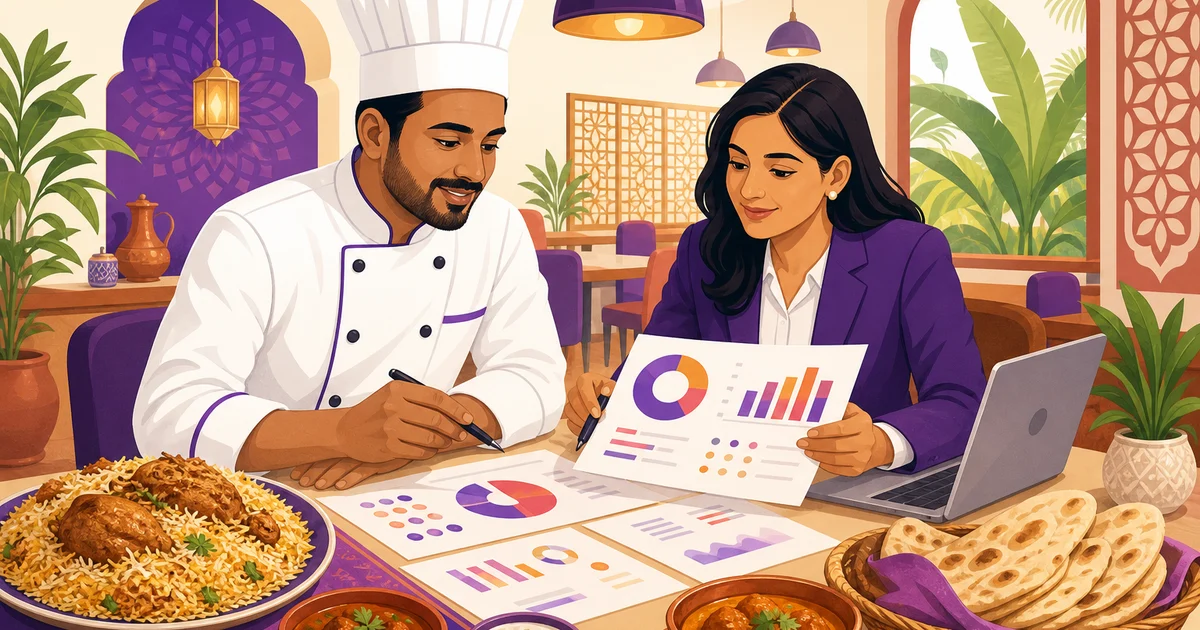
Prime cost restaurant analysis tells you how much of your sales is being consumed by the two biggest controllable costs: food and labour. A restaurant can look busy, produce strong sales and still struggle to keep cash because these costs are too high. That is why experienced owners monitor prime cost regularly instead of waiting for the monthly profit figure. It provides an early warning when purchasing, portions, wastage, scheduling or payroll starts moving in the wrong direction.
What does prime cost mean in a restaurant?
Restaurant prime cost is the total of cost of goods sold and labour cost for a specific period. Cost of goods sold, often shortened to COGS, covers the food and beverages consumed to generate sales. Labour covers the people required to prepare, sell, serve and manage those orders.
The basic formula is:
Prime cost = Cost of goods sold + Total labour cost
To compare different months or branches, calculate it as a percentage of net sales:
Prime cost percentage = Prime cost ÷ Net sales × 100
Use net sales consistently. Sales used in the calculation should normally exclude VAT collected for the government, service charges, refunds and discounts. If you change the definition from one month to another, the trend will become misleading.
COGS should not be confused with purchases. Buying ৳500,000 of ingredients this month does not necessarily mean you consumed ৳500,000. Some of that stock may still be in the storeroom or freezer. The standard calculation is:
COGS = Opening inventory + Purchases - Closing inventory
For labour, include salaries and wages for kitchen, service, counter and relevant management staff, plus overtime, allowances, bonuses and other employment costs that you have decided to track. Keep the treatment of owner salaries and outsourced workers consistent.
Prime cost restaurant calculation with a BDT example
Consider a casual dining restaurant in Dhaka with monthly net sales of ৳1,500,000. Its opening food and beverage inventory was ৳220,000. During the month, it received purchases worth ৳520,000, and the closing physical stock count was ৳180,000.
- Opening inventory: ৳220,000
- Purchases: ৳520,000
- Closing inventory: ৳180,000
- COGS: ৳220,000 + ৳520,000 - ৳180,000 = ৳560,000
The same restaurant recorded salaries, overtime, allowances and other included labour costs of ৳320,000.
- Food and beverage COGS: ৳560,000
- Labour cost: ৳320,000
- Prime cost: ৳880,000
- Prime cost percentage: ৳880,000 ÷ ৳1,500,000 × 100 = 58.7%
This means about ৳58.70 out of every ৳100 in net sales went to ingredients, beverages and labour. The remaining ৳41.30 still has to cover rent, utilities, delivery commissions, software, maintenance, marketing, finance costs and profit.
What is a good restaurant prime cost percentage?
A commonly used operating range is roughly 55% to 65% of net sales. It is a guide, not a universal rule. A quick-service outlet with a compact menu may aim below 60%. A full-service restaurant with more waiters, longer opening hours or premium ingredients may operate closer to 60% to 65%.
Your target should reflect the concept, service model, location and pricing. A biryani takeaway, a café in Banani and a large family restaurant in Chattogram should not be expected to have the same cost structure. The best benchmark is often your own profitable performance, compared consistently by week, month and branch.
A low percentage is not automatically good. Cutting kitchen staff too far can slow service, while buying low-quality ingredients can damage repeat business. The goal is to control waste and unproductive cost without weakening the guest experience.
Why prime cost is the number owners watch closely
Rent matters, but it usually does not change every time an order is placed. Food and labour move with purchasing decisions, sales volume, menu mix, portions and staffing. They are also large enough that a small percentage change can materially affect profit.
In the example above, reducing prime cost from 58.7% to 57.7% would preserve another ৳15,000 at the same monthly sales. Let it rise by four percentage points and the restaurant loses ৳60,000 before considering rent or utilities.
Prime cost also connects several operating areas. A sales drop can push labour percentage up even if salaries remain unchanged. Supplier price increases can raise COGS. Poor receiving, oversized portions, complimentary items and unrecorded wastage can produce the same result. Watching the combined number helps management see the full pressure on gross operating profit.
Prime cost should sit beside the other measures in your restaurant KPI dashboard, including average order value, table turnover, wastage, payroll percentage and branch-level sales.
Prime cost versus food cost percentage
Food cost percentage measures only ingredient and beverage consumption relative to sales. It is essential for purchasing, portion control and pricing. You can learn the detailed calculation in this guide to food cost percentage.
Prime cost adds labour, which changes the management decision. Suppose two restaurants each have a 35% food cost. Restaurant A has a 20% labour cost, giving it a 55% prime cost. Restaurant B has a 30% labour cost, producing a 65% prime cost. Looking at food cost alone would make them appear equally healthy, but Restaurant B has far less room to pay rent and other expenses.
The reverse can happen too. Aggressive staff cuts may make labour percentage look attractive while poor portion control pushes food cost up. Prime cost prevents one side of the operation from hiding the other.
What to do when prime cost runs high
1. Confirm the numbers before cutting costs
Check the sales period, opening and closing stock counts, purchase invoices and payroll dates. Make sure VAT is not included as revenue and that invoices have not been entered twice. A rushed or incomplete physical count can create a false COGS movement.
2. Separate the two halves
Calculate food and beverage cost percentage and labour percentage independently. Then compare them with prior periods and, for multi-branch businesses, with similar branches. This shows whether the pressure comes from inventory, staffing or both.
3. Review high-volume and low-margin items
Item sales reports show what guests are actually buying. Inspect the selling price, current ingredient cost and portion standard of popular products first. A small cost problem on a bestseller usually matters more than a large percentage problem on an item sold twice a month. When supplier prices rise, adjust the portion, negotiate the input price or update the menu price carefully.
4. Tighten receiving, storage and wastage control
Match deliveries to purchase orders and invoices. Check quantity, unit, quality and price before accepting stock. Record spoilage, breakage, preparation loss and complimentary consumption with a reason. Wastage is reflected in actual inventory consumption, so do not add the same wastage again to COGS and double-count it. The wastage log is for finding causes and assigning corrective action.
5. Schedule labour around demand
Compare staffing with sales by day and shift. Quiet weekday afternoons may not need the same roster as Friday dinner. Control unplanned overtime, repeated late attendance and overlapping shifts, but maintain enough trained people to protect order speed, cleanliness and service.
6. Improve sales mix instead of relying only on cuts
Prime cost percentage can improve when guests choose items with a healthier contribution. Train counter and service staff to suggest suitable add-ons, beverages and combos without pressuring customers. Make profitable items easy to find on the menu and online storefront. For a wider view of how costs and pricing affect earnings, read the guide to restaurant profit margin in Bangladesh.
How Rosuii supports prime cost tracking
A trustworthy prime cost calculation depends on reliable operating records. Rosuii helps collect the source data for both halves of the equation in one restaurant management platform.
- Sales and item sales: POS records provide net sales and show which menu items, variations, add-ons and combos are driving volume.
- Purchasing and inventory: Purchase orders, suppliers, item costs and per-branch stock records support the opening inventory, purchases and closing inventory calculation. Physical counts still matter.
- Wastage: Recorded wastages help managers explain stock loss and identify repeated problems by item or branch.
- Productions: Production records can track finished goods made from raw materials, which is useful for central or batch preparation.
- Payroll: Employee, shift, payroll, overtime and advance salary records provide a consistent labour-cost source.
- Reports: Sales, item sales, expenses, profit and loss, staff and export reports make it easier to review periods and prepare management calculations.
Rosuii does not remove the need for disciplined stock counts or correct payroll entry. It reduces the scattered spreadsheets and missing records that make prime cost unreliable. Multi-branch restaurants can also review purchasing, stock, sales and payroll by branch rather than judging the whole business from one combined figure.
Build a simple prime cost review routine
Review an estimated prime cost weekly and close the final calculation after each month-end stock count and payroll period. Compare the result with your target, the previous period and the same branch. Assign every significant variance to an owner, such as the chef, purchasing manager, branch manager or HR lead, and agree on a dated action.
Do not wait for the percentage to become alarming. A rising three-week trend is enough reason to inspect supplier prices, portions, wastage and rosters. Fast action protects cash while the problem is still manageable.
Ready to put your sales, purchasing, wastage and payroll records in one place? Rosuii is built for Bangladeshi restaurants, with BDT reporting, bilingual operation and branch-level controls. Register for Rosuii and start building a clearer view of the costs that decide your profit.
Last updated:
Frequently asked questions
What costs are included in restaurant prime cost?
What is a good prime cost percentage for a restaurant in Bangladesh?
Should VAT and service charge be included in net sales for prime cost?
How often should a restaurant calculate prime cost?
Is wastage added separately to restaurant prime cost?
Run your restaurant on Rosuii
POS, menu, inventory, payroll and more — built for Bangladeshi restaurants.
Start free