Restaurant Billing Software: Fast, Accurate Bills Every Time
Restaurant billing software turns a slow, error-prone counter into fast, accurate bills with VAT, service charge, bKash and Nagad, printed cleanly on thermal receipts. Here is what good billing software does.
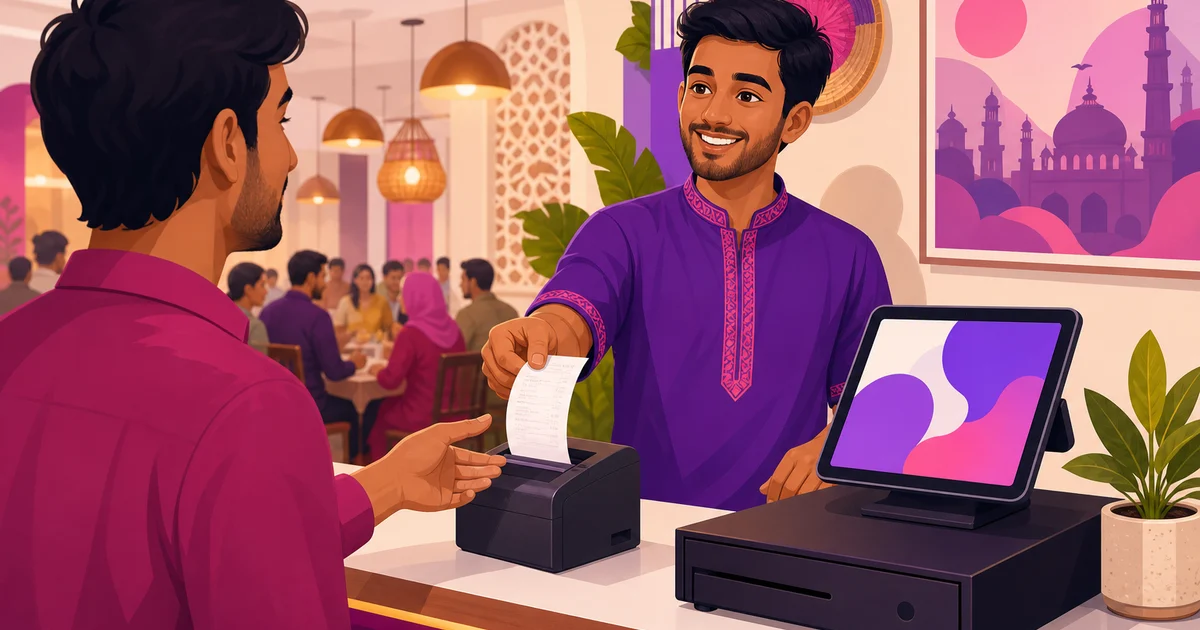
The bill is the last thing a customer sees, and a slow or wrong one sours an otherwise good meal. Restaurant billing software exists to make that moment quick and correct: ring up the order, apply the right discounts, add VAT and service charge, take payment by cash, bKash or Nagad, and print a clean receipt in seconds. Do it well and the counter keeps moving even when a queue forms. Do it on a calculator and a paper pad and you get long waits, maths errors and arguments over the total.
This guide covers what restaurant billing software should do, why each part matters, and what Bangladesh needs specifically. We use Rosuii as the example throughout. Billing sits inside the wider restaurant POS system, so if you want the full picture of orders, kitchen and reporting, start there; this piece focuses on the bill itself.
What restaurant billing software does
At its simplest, billing software replaces the calculator, the carbon-copy bill book and the cash box with one screen that gets the total right and records it automatically. A cashier picks items from your menu, the software adds them up, applies any discount or coupon, calculates VAT and service charge, and shows a final figure that is correct by construction. The customer pays, the receipt prints, and the sale is logged for your reports without anyone writing it down twice.
The gap between this and a paper bill book is not small. Every handwritten total is a chance to mis-add. Every paper bill is a record that has to be re-entered to know your day's sales. Software closes both gaps at once.
Fast bills at the counter
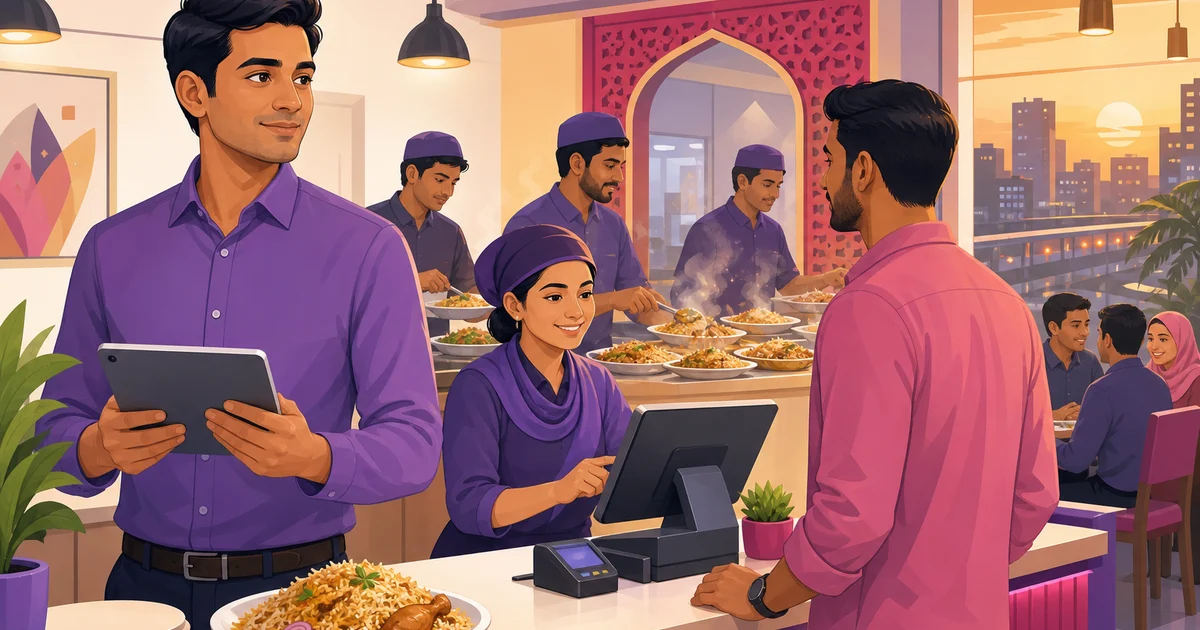
Speed is the whole point at a busy till. Good billing software lets a cashier build an order in a few taps, with your most-sold items easy to reach, variations and add-ons one tap away, and per-line notes for special requests. Rosuii lets staff start a bill, save it as a draft, fire it to the kitchen, and settle it later, so a dine-in table can run an open bill while takeaway customers are billed and gone in seconds. The faster the bill, the shorter the queue and the happier the customer.
Kitchen tickets from the same bill
Billing and the kitchen should not be two separate jobs. When the cashier confirms an order, the software should send a kitchen order ticket, or KOT, to the line at the same moment the bill is built. Rosuii sends each item to the right kitchen station and shows it on a kitchen display, so the food starts cooking the instant the order is taken, not after someone walks a paper slip to the back. The bill and the KOT come from one action, which removes a whole class of mistakes. Our explainer on what a KOT is covers this in detail.
Discounts and coupons, controlled
Discounts at the counter are where profit quietly leaks. A staff member gives a friend ten percent here, rounds a total down there, and by month end the numbers do not match. Good billing software applies discounts, coupons and loyalty in a fixed order so the final price is never improvised. Rosuii calculates pricing on the server in a set sequence, discount, then coupon, then loyalty, then service charge, then VAT, so a cashier cannot misprice a bill by accident or on purpose. You decide the rules once and the software enforces them on every bill.
VAT and service charge on the bill
In Bangladesh a restaurant bill usually carries VAT and often a service charge, and customers expect to see both, broken out clearly. Billing software should apply these at the rates you set on every order, show them as separate lines on the receipt, and feed them into your reports for your own records. Rosuii builds VAT and service charge into the total automatically and itemises them on the bill, so there is no manual maths and no dispute over how the total was reached. Our guide to VAT and service charge explains how the numbers should add up.
bKash, Nagad and cash on one screen
Taking payment is where billing meets the real world of how Bangladeshis pay. Cash is still common, so the software needs a clean cash flow with automatic change calculation. But a growing share of customers pay by bKash and Nagad, and the bill has to handle those without fuss. Rosuii has real, working bKash and Nagad integrations alongside cash and cash on delivery, all from the same payment screen at the moment of billing. Card is offered as a placeholder, so the methods your customers actually reach for are the ones that genuinely settle a bill.
Thermal receipts, 58mm and 80mm
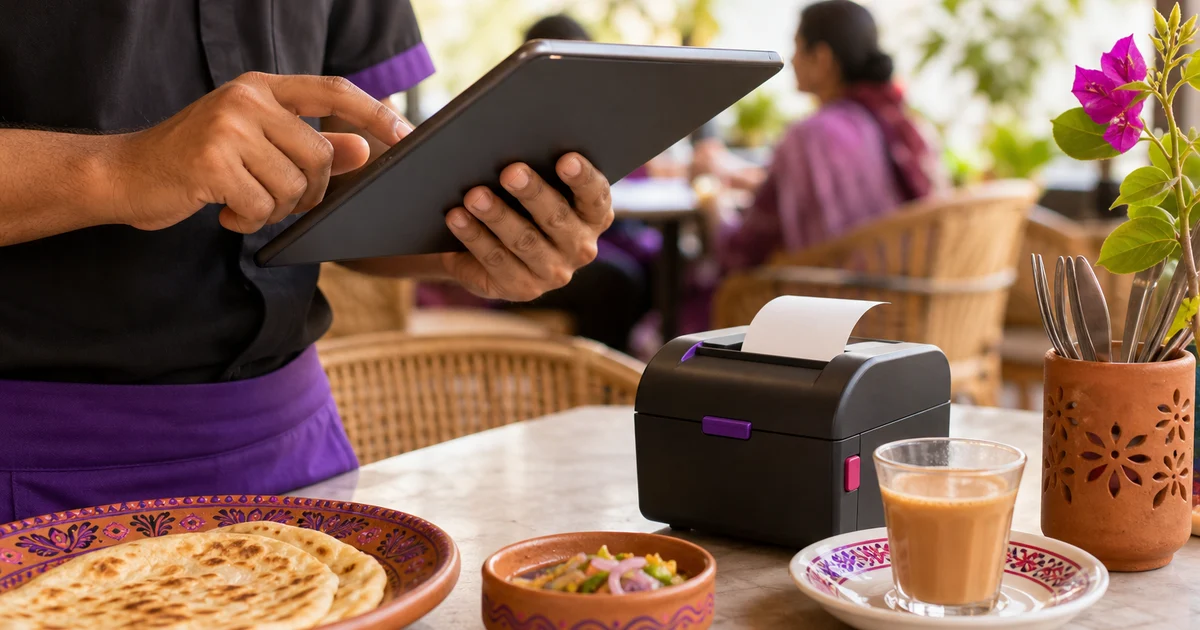
The printed bill still matters, and it has to fit the printer you own. Most restaurants use thermal receipt printers in 58mm or 80mm widths, and billing software should print a clean receipt to either, with your logo, the itemised order, taxes, the total, and even a QR code. Rosuii supports 58mm, 80mm and A4 receipts with per-branch printer settings, so the counter prints the customer bill and the kitchen prints what it needs, each on the right device. If you are setting printers up, our thermal printer setup guide walks through it.
One bill flow for dine-in, takeaway and delivery
A restaurant rarely bills one way. A dine-in table runs an open bill that grows through the meal, a takeaway customer is billed and gone in one go, and a delivery order needs an address and a rider. Good billing software handles all three from the same screen without switching apps. Rosuii lets a cashier start any order type in one place, hold a dine-in bill as a draft while the table eats, and close it when they ask for the cheque, all while takeaway and delivery bills move through quickly alongside. The counter never stalls because one customer is still eating.
Accurate bills end disputes
Most arguments at a restaurant counter come down to a number that does not add up. A handwritten total the customer cannot follow, a discount applied differently than promised, a VAT figure that looks wrong. Billing software removes the doubt because the maths is done the same way every time and printed clearly, line by line, on the receipt. The customer sees the items, the discount, the service charge and the VAT laid out, and the total follows from them. When the numbers are transparent and consistent, disputes mostly disappear, and your staff are not stuck defending a figure they worked out by hand.
Every bill becomes a record
The hidden value of billing software is what happens after the customer leaves. Every bill is automatically a line in your sales report, your item-sales report and your day total. You see which dishes sell, which hours are busy, and what the day added up to, without re-keying a single paper bill. At close you run a day close, or Z-report, and the till reconciles itself. Billing stops being a chore you redo at midnight and becomes the data that runs the business.
What to look for in restaurant billing software
For a restaurant in Bangladesh, insist on fast billing, KOT from the same screen, controlled discounts, automatic VAT and service charge, real bKash and Nagad, and thermal printing in the sizes you use. Make sure it works in Bangla and English so every cashier is comfortable, and that it records each bill into reports so you are not re-entering anything. Rosuii covers all of these in one platform, free to start and from ৳500 a month for the paid tiers, with no proprietary hardware to buy. See the full set on our features page.
Want clean, fast bills with bKash, Nagad and the right taxes every time? Create your free Rosuii account and start billing on a device you already own.
Last updated:
Frequently asked questions
What is restaurant billing software?
Can restaurant billing software handle bKash and Nagad?
Does the software print on 58mm and 80mm thermal printers?
How does billing software apply VAT and service charge?
How much does restaurant billing software cost in Bangladesh?
Run your restaurant on Rosuii
POS, menu, inventory, payroll and more — built for Bangladeshi restaurants.
Start free