
Recipe Yield Percentage Formula for Restaurant Kitchens
Calculate recipe yield percentage from measured input and usable output. Follow a kitchen weighing checklist and apply the result to recipe costs and portion planning.
For a restaurant kitchen, recipe yield percentage = usable output weight ÷ starting input weight × 100. Use the same unit and define the usable finish point before weighing. This guide, dated 1 November 2026, explains how to record the batch and use its measured yield for recipe costing and portion planning.
Key takeaways
- Define the start point and usable finish point before weighing a batch.
- Use the same weight unit for input and output in the formula.
- Keep the preparation yield, the cooking yield and the whole recipe yield all clearly labelled.
- Use measured usable output when allocating batch costs and planning out the portions.
- Record the recipe method and then check the yield when that method or the ingredient specification has changed.
What does recipe yield percentage measure?
Recipe yield percentage is the usable output as a percentage of the starting quantity for a given process. Recipe yield is the amount the batch actually produces, expressed as weight, volume or portions.
For a weight based yield test, write down what "usable" means before starting. A trimmed ingredient ready for cooking is very different to a finished dish ready for portioning in terms of its finish point. The result must be labelled so the next shift knows which stage of the process was measured.
Keep the portion count separate from the weight calculation. Don't divide your portions by kilos and call the result a yield percentage.
Which weights belong in the recipe yield formula?
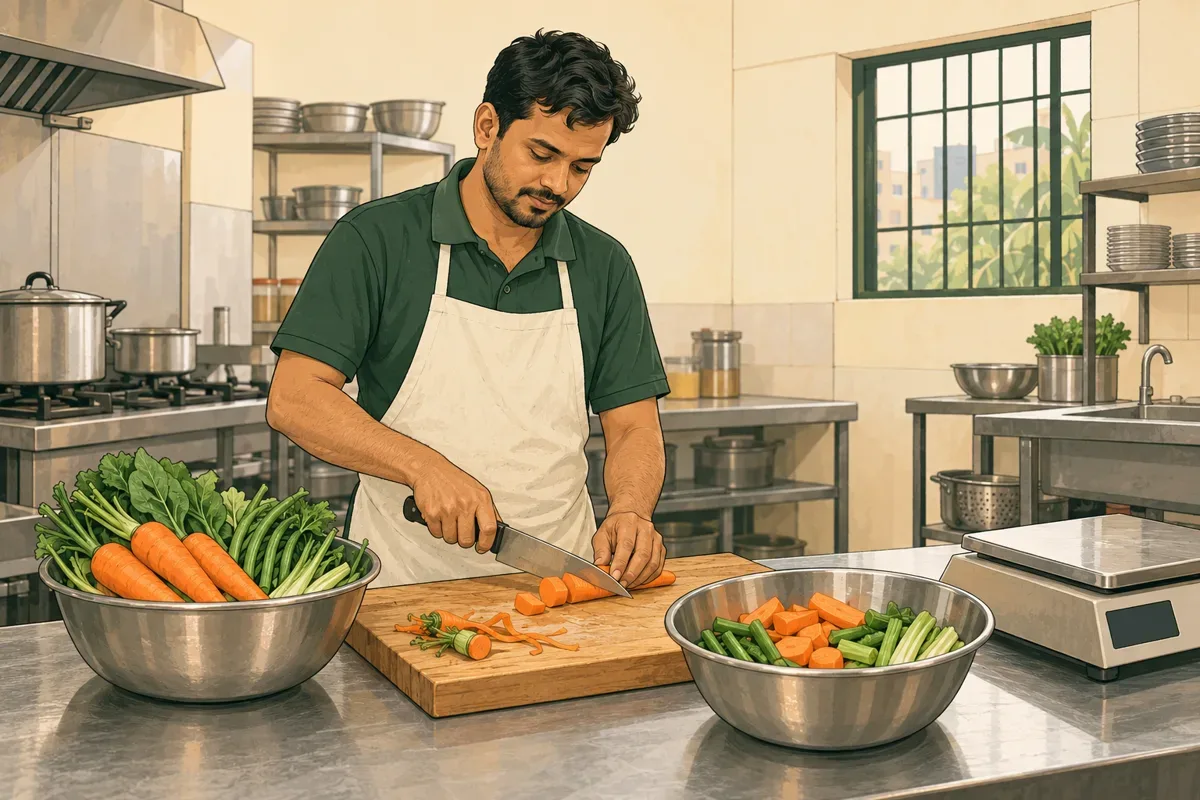
The yield formula requires input and output weights from the same batch and in the same units. You need to pick the process you're measuring before deciding which weights to input.
Choosing the weights for a yield test: 1 November 2026
| Test | Starting weight | Usable output weight | What to record |
|---|---|---|---|
| Preparation yield | Ingredient before the defined preparation step | Ingredient retained after that step | Trimming method and what was removed |
| Cooking-stage yield | Prepared batch entering the cooking stage | Usable batch at the defined finish point | Method, additions and finish point |
| Whole-recipe yield | Total weight of ingredients added to the recipe | Finished usable batch | Included ingredients and portioning basis |
For a whole recipe test you'd include any ingredients added later in the total input weight. For a stage test you'd record any additions and keep that as your basis for all batches. Don't describe the final weight of a mixed dish as the preparation yield of the main ingredient.
Don't include the weight of the packaging and container. If you weigh a full pan without taking the empty pan weight into account then you're going to put the weight of the equipment into your food calculation.
How do you run a yield test in a restaurant kitchen?
A restaurant yield test records the starting quantity and the usable output of a batch made to a stated method. Assign one person to record the weights and another to check the recipe entry before the result is used for costing.
- Name the test. Write the name of the ingredient or dish, the recipe version, the batch date and the stage being measured.
- Prepare the weighing setup. Record the weight of the empty container or use the tare function on the scale to remove the container weight. Make sure you're using the same weighing unit.
- Record the input. Weigh the starting quantity at the agreed stage. For a whole recipe test you'll record every addition of ingredient.
- Follow the recipe method. Note any changes to the preparation, cooking or draining. Record the material which is discarded separately from that which is retained for use in another recipe.
- Record usable output. Weigh the retained batch at the agreed finish point before service portions are taken off.
- Calculate and review. Use the yield formula, keep the original weights and check that the recipe quantity you've recorded is on the same basis.
For a prep to cook handover, write the batch ID on the record so that staff are measuring the same material. Use the guide to organising restaurant kitchen stations when you're assigning the weighing point and the guide to restaurant kitchen roles in Bangladesh when you're naming the record owner.
How should yield inform recipe costing and purchasing?
For recipe costing you take the ingredient cost assigned to the batch you're testing and divide that by its usable output quantity to get the cost per usable unit. For purchasing you take the required usable quantity and divide that by the measured yield (expressed as a decimal) using the same ingredient and process basis.
Cost per usable unit = ingredient cost assigned to the batch ÷ usable output quantity.
Keep the unit visible alongside the result. A cost per unit of purchased ingredient and a cost per unit of prepared ingredient will use different quantities. Follow the restaurant recipe-costing guide when building up your dish cost from those ingredient entries.
To plan portions, divide the finished usable batch quantity by the standard portion quantity (in the same unit). Record any remainder separately rather than treating it as a full portion. Re-check the weights if the result doesn't match the portions actually available for service.
Recipe records in Rosuii
Rosuii's inventory and recipe costing covers recipes, purchasing, suppliers and wastage from Starter. You must check the recipe units, the timing of the deduction and the outlet stock before you apply the measured quantities to your records.
Keep the yield sheet with the recipe review. Note whether the quantity of an ingredient is purchased, prepared or cooked weight and check that the stock unit is the same as the one the recipe is based on.
Service orders in Rosuii
A point of sale (POS) system is the system staff use to enter orders and prepare bills. Rosuii's restaurant POS supports dine-in, takeaway and staff-entered delivery orders.
When you're approving a recipe change, identify the dish that staff will be entering during service and check that the portion quantity used in the costing record for that dish is correct. Keep the kitchen's batch measurement available for that review.
What should you check before accepting a new yield result?
Before you accept a new yield result, check the input spec, weighing method and finish point against the previous test. Investigate a changed result before you replace the recipe quantity used for purchasing or costing.
Yield review checklist
- Confirm that the batch identity and recipe version match the record.
- Check the container weight is excluded and the weighing units are the same.
- Account for the additions, the material that's been discarded and the material that's been retained for another recipe.
- Confirm that the output was weighed at the agreed stage before any portions were taken off.
- Record who looked at the result and which recipe entries need updating.
When you're reporting yield in with the other restaurant performance measures, you must include the test basis and recipe version. The original measurements need to be on hand so the manager can trace a changed percentage back to the batch.
What is the bottom line for a restaurant yield test?
A useful recipe yield percentage is a ratio which takes a measured quantity of the starting ingredient and relates it to a defined amount of usable output. Write the process boundaries next to the formula, retain the batch weights and use that same basis when you're going to update your portion plans and your recipe costs.
Features and plans are as listed on rosuii.com on 1 November 2026; check the pricing page for the current plan.
Last updated:
Frequently asked questions
What is the recipe yield percentage formula for a restaurant kitchen?
What is the difference between recipe yield and yield percentage?
Which weights should be used for preparation and cooking yield?
How do you use yield when calculating recipe costs?
What should staff record during a kitchen yield test?
Run your restaurant on Rosuii
POS, menu, inventory, payroll and more — built for Bangladeshi restaurants.
Start free