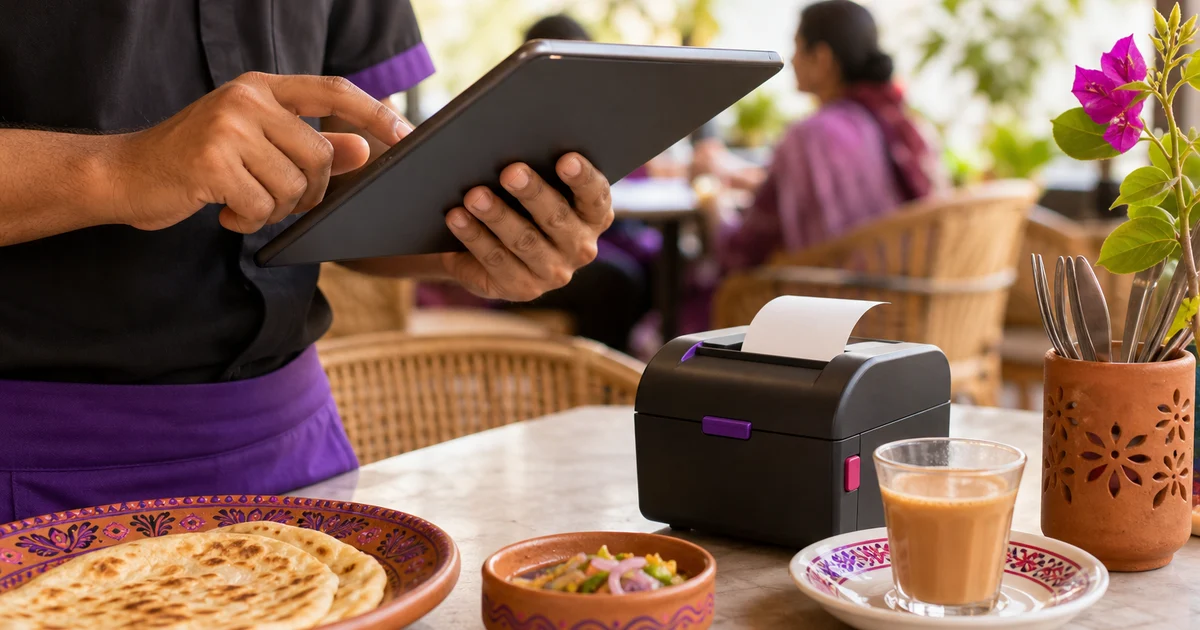
Restaurant Income Tax Bangladesh: A Practical TIN and Filing Guide
A practical guide to restaurant TIN, income tax, VAT differences, business structures, required records and the annual NBR return cycle in Bangladesh.
Understanding restaurant income tax Bangladesh requirements starts with one basic habit: record every sale and expense when it happens. A restaurant may have busy counters, cash payments, bKash receipts, supplier credit, food wastage and owner withdrawals on the same day. If these are not recorded properly, preparing an accurate income tax return months later becomes difficult and risky.
This guide explains the difference between VAT and income tax, why a restaurant needs an e-TIN, how the business structure affects taxation, what records tax authorities may ask for, and how to prepare throughout the annual return cycle. Tax rates, thresholds, forms and filing dates can change. Confirm current requirements through the NBR e-services portal and consult a qualified tax professional before filing. Trade licence fees and local requirements should also be checked with your city corporation or relevant local authority.
Restaurant income tax Bangladesh: VAT and income tax are not the same
Restaurant owners often use the words VAT and tax as if they mean the same thing. They are separate obligations with different calculations, registrations and records.
VAT is generally linked to taxable sales
VAT is an indirect tax associated with the restaurant's taxable supplies. Depending on the restaurant's category, turnover, location and current NBR rules, it may need a Business Identification Number, commonly called a BIN, and may have to charge, report and deposit VAT.
VAT collected from customers is not automatically restaurant income. It should be recorded separately from the restaurant's own sales revenue. The applicable VAT rate and filing process can change, so do not copy a rate from an old invoice or another restaurant. Read the related guide on BIN registration for restaurants in Bangladesh and verify the current position with the NBR.
Income tax is generally based on taxable income
Income tax looks at taxable income after applying the rules for allowable business expenses, adjustments, depreciation, disallowed costs, tax deducted at source and any applicable minimum-tax provisions. Accounting profit and taxable profit are not always identical.
For example, food purchases, staff costs, business rent, utilities and genuine operating expenses may support the calculation of profit when properly documented and allowable under the law. Personal spending by the owner is not converted into a business expense simply because it was paid from the cash counter. A refrigerator or generator may also need capital-allowance treatment rather than being deducted as an ordinary daily expense in full.
A restaurant can have a VAT payment obligation during a period in which its accounting profit is low. It may also have an income tax filing obligation even when no final income tax is payable. VAT returns and income tax returns should therefore be managed as separate compliance tasks.
Why a restaurant business needs a TIN
A Taxpayer Identification Number identifies a taxpayer in the NBR system. In Bangladesh, this is commonly issued as an e-TIN. The correct taxpayer must obtain and use the TIN. A sole proprietor's position is different from that of a partnership firm or limited company.
A TIN may be needed for filing an income tax return and obtaining proof of return submission. Proof of return can also be requested for certain licences, registrations, contracts, loans, property transactions or other services specified by current law. The exact list changes, so check the NBR portal before relying on an old checklist.
Keep these identifiers separate:
- e-TIN: identifies the taxpayer for income tax purposes.
- BIN: identifies a VAT-registered or enlisted business for VAT purposes.
- Trade licence: authorises the business activity through the relevant city corporation, municipality or local authority.
- RJSC registration: applies to registered companies and certain other entities under the relevant company and partnership framework.
Obtaining an e-TIN does not itself prove that tax is payable. Tax depends on the applicable law, taxable income and other rules. However, registration can bring continuing filing or information obligations. Do not create a TIN casually or use the owner's TIN for a separate entity without professional confirmation.
How the legal structure changes the tax position
The name on the signboard does not determine the taxpayer. The legal structure does. Before preparing a return, confirm whether the restaurant operates as a sole proprietorship, partnership or limited company.
Sole proprietorship
A sole proprietorship is not generally treated as a separate legal person from its owner. The restaurant's taxable business income is included in the proprietor's individual tax position along with other relevant sources of income. The owner normally files under the individual's TIN and reports the business results in the appropriate part of the return.
Money taken from the cash drawer for the owner's personal use should be recorded as drawings, not salary or a restaurant expense. Capital introduced by the owner should also be identified separately from sales. Mixing household and business transactions is one of the fastest ways to make the annual return unreliable.
Partnership firm
A partnership firm has its own compliance position and should use the firm's correct registration and TIN details. The partnership agreement, partners' capital, drawings, remuneration, interest and profit shares need consistent records. The firm may have its own return obligation, while each partner may also need to report amounts relevant to the partner's individual return.
Do not divide profit informally at year-end and expect the accounts to match. Record partner contributions and withdrawals throughout the year. Ask a tax practitioner to confirm the current treatment of partnership profit, partner remuneration and any applicable tax already paid by the firm.
Limited company
A limited company is a separate legal and taxable entity. Restaurant sales and expenses belong to the company, not directly to its shareholders or directors. Payments to directors, shareholder loans, salaries, dividends and reimbursements must be supported and classified correctly.
A company normally has formal financial-statement, audit, RJSC and corporate tax responsibilities. The applicable corporate tax rate may depend on the type of company, payment methods and conditions in current law. Never assume that an old headline rate applies to your restaurant. Confirm the current rate, return form and deadline with the NBR and the company's professional adviser.
Records the NBR may expect a restaurant to support
A tax return is not just a total written on a form. The restaurant should be able to explain where its figures came from. Depending on the review, audit or assessment, supporting records may include:
- Daily sales summaries separated by dine-in, takeaway, delivery, online orders and marketplace orders.
- POS receipts, order records, cancelled bills, discounts, coupons, complimentary items and refund evidence.
- Cash counts and reconciliations for each shift or business day.
- Bank statements, bKash and Nagad merchant statements, payment-gateway settlements and cash-on-delivery records.
- Marketplace statements showing gross sales, commission, adjustments, withholding and net settlement.
- Supplier invoices, purchase orders, goods received records and supplier payment evidence.
- Opening and closing inventory records, production records and documented wastage.
- Payroll sheets, attendance, employee payments, advance salaries and applicable withholding records.
- Rent agreements, utility bills, repairs, internet, software and other operating-expense documents.
- Fixed-asset registers for kitchen equipment, furniture, air conditioners, generators, computers and vehicles.
- Loan statements, interest records, owner capital, drawings and partner or director accounts.
- VAT invoices, VAT returns, withholding certificates, treasury challans and proof of tax payments.
- Trade licence, e-TIN, BIN, incorporation or partnership documents and branch information.
Keep original or legally acceptable digital evidence for the retention period required by current law. A handwritten expense note with no supplier name, purpose or supporting document may be questioned. Cash expenses are not automatically disallowed, but they need credible business evidence and must comply with any payment-method restrictions in force.
Daily bookkeeping is easier than reconstructing a year
Many restaurants wait until return season and then try to build twelve months of accounts from bank statements and supplier messages. That approach misses cash sales, owner withdrawals, unpaid purchases, wastage and marketplace deductions. It can also produce a profit figure that does not agree with VAT returns or bank deposits.
A better daily routine is simple:
- Close the POS day and preserve the sales or Z-report.
- Count cash and compare it with recorded cash sales and payments.
- Record every expense under a consistent category.
- Keep the invoice or photograph of the document linked to the transaction.
- Separate VAT, service charge, discounts and marketplace commission from net restaurant revenue.
- Record purchases, credit due to suppliers and stock movements.
- Investigate differences while the shift is still fresh in the manager's mind.
At least monthly, reconcile cash, bank accounts, mobile financial services, marketplace settlements, supplier balances, payroll and inventory. Compare sales reported for income tax accounts with sales reported under VAT rules and document valid timing or classification differences.
For a practical operating routine, see restaurant daily accounting and hisab. Managers should also understand how sales, profit and loss, and Z-reports support month-end review.
The annual income tax return cycle
Income tax work should continue throughout the year, not begin on the filing deadline. A sensible cycle has six stages.
- Set up correctly: confirm the legal entity, TIN, accounting period, bank accounts, branches and opening balances.
- Record daily: capture sales, purchases, expenses, payroll, stock, tax deductions and owner or partner transactions.
- Review monthly: reconcile payment channels, check missing invoices and review unusual discounts, voids or expense spikes.
- Close the year: count inventory, confirm receivables and payables, review fixed assets, and separate personal or unsupported costs.
- Prepare the tax computation: start from reliable accounts, then apply tax adjustments, capital allowances, withholding credits and current legal requirements.
- File and preserve evidence: submit the correct return by the applicable Tax Day or entity deadline, pay any amount due, and retain the acknowledgement, computation and supporting schedules.
Individual, partnership and company deadlines are not necessarily the same. Company deadlines may also depend on the end of the income year. NBR can revise procedures or announce extensions. Check the current deadline and approved filing method on the NBR e-services portal rather than relying on last year's date.
Tax deducted at source should be tracked carefully. A marketplace, bank, customer or other party may deduct tax from a payment to the restaurant. Obtain the proper certificate or evidence and reconcile it with the gross income and net amount received. A deduction is not always the final tax result, and credit may depend on meeting documentation and return requirements.
Use restaurant reports without mistaking them for a tax return
A restaurant management system can create disciplined source records. Rosuii records dine-in, takeaway and delivery orders, VAT and service-charge breakdowns, expenses, payments and branch activity. Sales reports, expense reports, Profit and Loss reports, day-close or Z-reports and CSV exports can give the accountant a cleaner starting point.
These operational reports do not replace professional tax computation. An accountant may still need to adjust depreciation, unsupported expenses, withholding credits, inventory values and transactions involving owners, partners or directors. The benefit is that the calculation starts from recorded daily activity rather than estimates assembled at the last minute.
Final checks before filing
- Make sure the return uses the correct taxpayer's name and TIN.
- Confirm that annual sales agree with POS records, VAT records and payment settlements, or document the reasons for differences.
- Do not deduct personal expenses as restaurant costs.
- Check supplier invoices, payroll support and fixed-asset records.
- Match tax deducted at source with certificates and payment evidence.
- Confirm the current rate, threshold, form, deadline and payment process through NBR e-services.
- Check trade licence renewal fees and documents with the relevant city corporation or local authority. Treat every quoted fee as provisional until confirmed.
Clean records reduce filing stress and help owners understand whether a branch, menu category or delivery channel is actually making money. Start building that record from the next order, not at the end of the tax year.
Ready to organise restaurant sales, expenses and day-close reporting? Rosuii is free to start and works from a phone, tablet or laptop. Register your restaurant with Rosuii and give your accountant cleaner records to work with.
Last updated:
Frequently asked questions
Is a TIN mandatory for every restaurant in Bangladesh?
Does having an e-TIN mean my restaurant must pay income tax?
Can I use my VAT return as my restaurant income tax return?
What is the income tax rate for a restaurant in Bangladesh?
How long should a restaurant keep tax and accounting records?
Run your restaurant on Rosuii
POS, menu, inventory, payroll and more — built for Bangladeshi restaurants.
Start free