BIN Registration for Restaurant Businesses in Bangladesh: Get Your 13-Digit VAT BIN Online
Learn how Bangladeshi restaurants can apply online for a 13-digit VAT BIN, prepare Mushak 2.1, avoid rejection and use the BIN correctly.

BIN registration for restaurant businesses is a key part of VAT compliance in Bangladesh. A Business Identification Number, commonly called a BIN or e-BIN, is the 13-digit VAT identification number issued through the National Board of Revenue's online VAT system. Registered restaurants use it on VAT invoices, official documents and other business records.
Getting a BIN is not simply a matter of filling in one online form. Your trade licence, TIN, business address, bank details, ownership information and expected turnover must be consistent. A mismatch can delay approval or send the application back for correction. This guide explains the practical process, documents and common problems, but you should confirm the latest requirements with your local VAT circle because NBR procedures, thresholds and document checks can change.
What is a 13-digit VAT BIN?
A BIN is the identification number used by the Bangladesh VAT administration to recognise a registered or enlisted business. The current online system issues a 13-digit number and an electronic certificate, often called an e-BIN certificate.
A BIN is different from several other business numbers:
- Trade licence: Permission from the relevant city corporation, municipality or local authority to operate the business.
- e-TIN: The Taxpayer Identification Number used for income tax matters.
- BIN: The business identification number used for VAT or turnover tax administration.
A restaurant may therefore need a trade licence, e-TIN and BIN. One does not automatically replace another. If you are still preparing the basic local-authority paperwork, read our guide to obtaining a restaurant trade licence in Bangladesh.
Who needs BIN registration for restaurant operations?
The need for VAT registration or turnover tax enlistment generally depends on annual turnover, the nature of the supply and any mandatory-registration provision that applies to the business. Under the commonly applied turnover framework, businesses with annual turnover above ৳50 lakh and up to ৳3 crore may fall under turnover tax enlistment, while businesses above ৳3 crore generally fall under VAT registration. Businesses below the lower threshold may not normally be required to register solely because of turnover, although voluntary registration or another mandatory rule may apply.
Do not treat those figures as the only test. Restaurant VAT treatment can depend on the type of establishment, location, services, legal status and current NBR orders. A restaurant may also need a BIN for commercial reasons, such as marketplace onboarding, corporate customer requirements, procurement relationships or formal VAT invoicing.
Before applying, estimate turnover using the restaurant's full taxable sales rather than profit. Include dine-in, takeaway, delivery and online sales where applicable. If you operate through delivery platforms, make sure platform sales are included correctly in your records. For an overview of rates and restaurant categories, see our article on the restaurant VAT rate in Bangladesh. Confirm your actual rate and registration status with your VAT circle or a qualified VAT practitioner.
Documents to prepare before opening the VAT portal
Preparing clean, readable documents is often the fastest way to prevent delays. Exact requirements may differ for a proprietorship, partnership or company, but a restaurant should generally have the following information ready:
- Valid trade licence showing the restaurant's current name and address
- NID of the proprietor, partners, directors or authorised person, as applicable
- e-TIN certificate and accurate income-tax information
- Bank account name, account number, branch and related bank information
- Rent or lease agreement for rented premises
- Proof of ownership if the restaurant premises are owned
- Mobile number and email address accessible to the authorised applicant
- Business constitution documents, such as partnership deed or incorporation documents, where relevant
- Branch addresses and operating details for a multi-branch restaurant
- Estimated annual turnover, business activity and details of taxable supplies
The spelling of the business name should be consistent across the trade licence, TIN, bank account and application. Address variations such as a missing holding number, different road name or old ward number can trigger questions. Scan each document clearly and check that no corner, date, seal or signature has been cut off.
How to apply for a BIN online using Mushak 2.1
VAT registration and turnover tax enlistment applications are generally submitted through the NBR online VAT portal using Mushak 2.1. Portal screens and verification steps may be updated, so use the instructions displayed on the live NBR system.
Step 1: Create an online VAT account
Go to the official NBR VAT online portal and choose the account or registration option. Enter the requested identity, mobile, email and security information. Use contact details controlled by the restaurant owner or a responsible manager. Do not rely only on a former employee's or outside agent's phone number.
Complete any email, mobile or identity verification requested by the portal. Store the username, recovery information and authorised contact details securely.
Step 2: Start the Mushak 2.1 application
After signing in, select the application for VAT registration or turnover tax enlistment. Mushak 2.1 asks for details about the applicant, business constitution, economic activity, address, bank account and turnover.
Select the activity description that most accurately represents the restaurant. If the business also provides catering, bakery production, event services or another material activity, disclose it correctly rather than choosing an unrelated category for convenience.
Step 3: Enter ownership and address details
Provide the proprietor, partner or company information exactly as it appears in the supporting documents. Enter the principal business address and relevant branch information. The VAT authority may use these details to identify the responsible VAT circle and verify the premises.
For rented premises, make sure the rent agreement identifies the same space used by the restaurant. If the trade licence and lease use different floor, shop or holding numbers, resolve the inconsistency or attach a reasonable clarification where the system permits.
Step 4: Add bank and turnover information
Enter an active bank account associated with the business or owner, according to the applicable legal structure and portal requirements. Avoid using an account name that cannot be connected to the applicant.
Provide a realistic turnover estimate. Understating turnover can lead to the wrong registration status and later compliance problems. Overstating it can also create an inappropriate filing position. Use recent POS sales, bank deposits, marketplace statements and management accounts to make a reasonable calculation.
Step 5: Upload documents and submit
Upload the requested supporting files in the accepted format and size. Review every field before submission, especially the TIN, NID, legal name, address, mobile number and bank details. Submit the application and save the acknowledgement or tracking number.
Step 6: Respond to queries and download the e-BIN certificate
The application may be processed electronically or reviewed by the responsible VAT office. An officer may ask for corrections, supporting documents or premises verification. Respond within the stated period and keep copies of everything submitted.
Once approved, sign in to the VAT portal and download the electronic BIN certificate. Check that the 13-digit number, business name, address, legal status and registration or enlistment details are correct. Save a digital copy, print a copy for the premises and restrict access to the portal credentials.
Where should a restaurant use its BIN?
A BIN is not a number to obtain and then forget. It should be used consistently in VAT-related records and customer-facing documents where required.
- Mushak 6.3 invoices: A VAT-registered restaurant's prescribed VAT invoice should show the supplier's BIN and the required transaction details. Learn more in our guide to the Mushak 6.3 VAT challan for restaurants.
- POS receipts: Configure the receipt template to show the restaurant's legal or approved business name, BIN and applicable VAT information. The printed amount should agree with the recorded sale.
- Business premises: Keep the BIN certificate displayed or available as required by the VAT authority. Ask your VAT circle whether the BIN must also appear on a signboard or another visible notice for your restaurant category.
- Delivery marketplaces: Platforms may request a BIN during merchant verification. Foodpanda and other marketplaces can ask for tax and business documents as part of onboarding or account review.
- Commercial records: Purchase, supply and corporate-customer documents may require the restaurant's BIN, depending on the transaction.
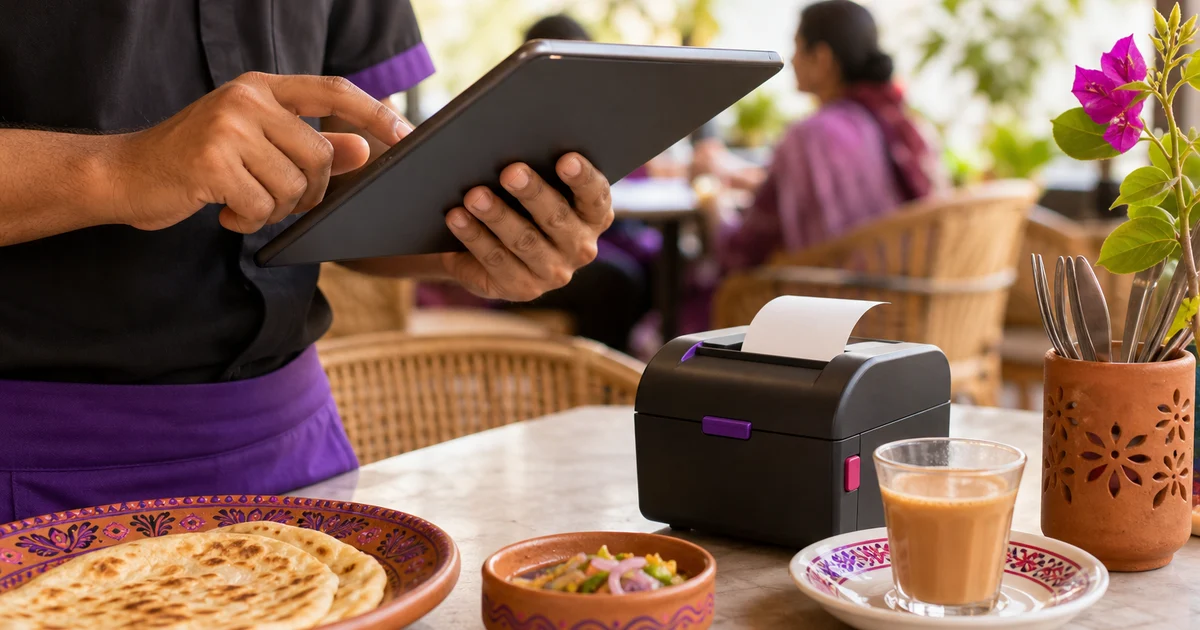
Rosuii receipts can show VAT and service-charge lines separately, helping staff present a clear bill instead of calculating charges manually. When receipt business details are configured correctly, the POS-printed receipt can also carry the restaurant's BIN. Your configured rates must match the treatment approved for your business.
Central versus branch-unit registration
A multi-branch restaurant should decide its VAT structure before submitting several separate applications. Central registration may be available where the same entity conducts the same economic activity through multiple branches and maintains the required accounts centrally. This can place VAT reporting and administration under a central registration structure.
Separate branch or unit registration may be appropriate or required when units maintain separate accounts, operate under different entities, conduct materially different activities or do not satisfy the conditions for central registration. A brand name alone does not prove that all outlets are one legal VAT unit. Franchisees, separately incorporated companies and independently owned outlets usually need to consider their own legal position.
Prepare a branch list showing each outlet's trade licence, lease, bank arrangements, accounting method and ownership. Then ask the relevant VAT circle whether central registration is permitted and how branch addresses should appear on the certificate. Changing the structure after outlets begin trading can create invoice and return complications.
Common reasons a BIN application is rejected or returned
- The business name does not match the trade licence, TIN or bank information.
- The restaurant address is incomplete or inconsistent across the licence, lease and application.
- The trade licence or rent agreement has expired.
- NID, TIN or ownership details are incorrect.
- Uploaded scans are blurred, cropped or missing signatures and seals.
- The selected economic activity does not match the restaurant's actual operation.
- Turnover information appears unrealistic or unsupported.
- The bank account cannot be connected to the applicant.
- Branch information is omitted from a central-registration request.
- The applicant does not respond to an officer's query or verification call.
If an application is returned, read the portal message carefully. Correct the stated issue rather than opening duplicate applications. For a rejection that is unclear, contact the assigned VAT circle with the acknowledgement number and copies of the submitted documents.
What to do after receiving the BIN
Receiving the certificate starts the compliance process. It does not finish it. Update your POS receipt, invoice format, marketplace profile and accounting records. Train cashiers not to remove VAT lines or use an old BIN. Keep sales records by channel and reconcile POS totals with cash, bank, bKash, Nagad and marketplace settlements.
Set a process for issuing the correct invoice, retaining records and submitting applicable VAT returns or turnover tax statements. If you open, close or relocate a branch, ask the VAT circle how to update the registration before using the old certificate at a new address.
Rosuii brings dine-in, takeaway and delivery billing onto one browser-based POS, with configurable VAT and service-charge calculations and clear receipt breakdowns. It also keeps branch sales and reports organised, making it easier to prepare records for your accountant or VAT adviser. Ready to set up cleaner restaurant billing? Register for Rosuii and start free.
Updated:
Frequently asked questions
Is a BIN the same as an e-TIN in Bangladesh?
Does every small restaurant need a 13-digit BIN?
Which form is used for online BIN registration?
Can all outlets of a restaurant chain use one BIN?
Should the BIN appear on a restaurant POS receipt?
Run your restaurant on Rosuii
POS, menu, inventory, payroll and more — built for Bangladeshi restaurants.
Start free