Restaurant VAT Calculation in Bangladesh: Worked Examples on a Real Bill
Follow three realistic restaurant bills to see how discounts, service charge and VAT are calculated in order, with practical guidance for Bangladesh.
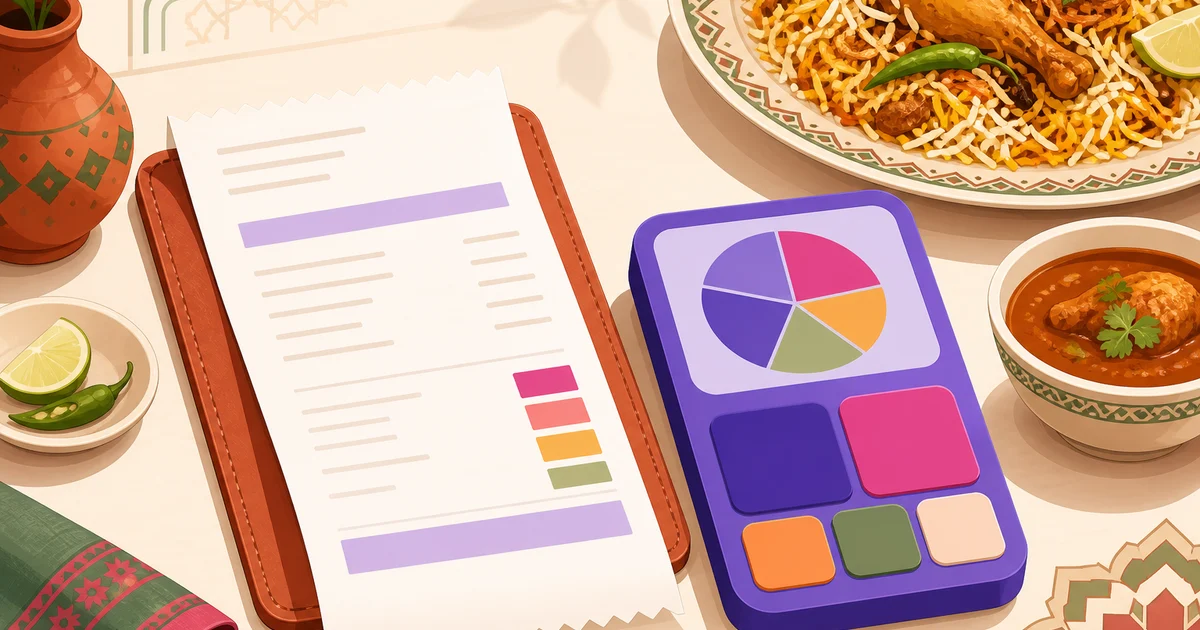
Restaurant VAT calculation becomes much easier when every part of the bill is handled in a fixed order. Start with the item subtotal, subtract applicable discounts, coupons and loyalty redemption, add the service charge if required, and then calculate VAT on the configured taxable amount. The arithmetic is simple, but inconsistent settings or unclear menu prices can quickly create disputes at the counter.
This guide uses three realistic examples: a dine-in bill with service charge, a takeaway order, and a discounted bill. The rates are illustrative, not a statement of the current rate for your restaurant. VAT rates, supplementary rules, registration conditions, local fees and required forms can change. Confirm your current position through the NBR e-services portal and with a qualified VAT adviser. For trade licence and local charges, check with the relevant city corporation or local authority before acting.
Restaurant VAT calculation: the correct order
A restaurant bill may contain several adjustments. The safest operational approach is to define one calculation sequence and use it for every cashier, branch and sales channel. A common sequence is:
- Add the selling prices of all items, variations, add-ons and combos to get the item subtotal.
- Subtract the regular discount, if any.
- Subtract any coupon value that is valid for the order.
- Subtract redeemed loyalty value, subject to the restaurant's redemption rules.
- Add the service charge, if the restaurant applies one to that order type.
- Calculate VAT using the configured taxable base and rate.
- Add the VAT amount to reach the final payable total.
Rosuii applies pricing adjustments on the server in this order: discount, coupon, loyalty, service charge, then VAT. This means the cashier's phone, a counter laptop and another branch do not need separate manual formulas. The same configured rules produce the same bill.
Whether a particular service charge forms part of the VAT base must follow the rules that apply to your business and invoice type. In the examples below, VAT is calculated after service charge and the service charge is included in the taxable base. Confirm that treatment with your VAT circle or adviser rather than copying an example into production.
Example 1: dine-in bill with service charge
Assume a dine-in table orders food worth ৳2,000. For illustration, the restaurant applies a 10% service charge and a 10% VAT rate. No discount, coupon or loyalty redemption is used.
| Step | Calculation | Amount |
|---|---|---|
| Item subtotal | Total of ordered items | ৳2,000 |
| Discounts | None | ৳0 |
| Service charge | ৳2,000 × 10% | ৳200 |
| VAT base | ৳2,000 + ৳200 | ৳2,200 |
| VAT | ৳2,200 × 10% | ৳220 |
| Final total | ৳2,200 + ৳220 | ৳2,420 |
The important point is that VAT is not calculated only on the ৳2,000 item subtotal in this example. Because the configured taxable base includes the service charge, VAT is calculated on ৳2,200. If VAT had been calculated before service charge, the result would be different and the bill would not follow the stated sequence.
Service charge is a restaurant charge, not automatically the same thing as government VAT. It should appear as a separate line so guests can see what they are paying. Read more about the distinction in VAT and service charge on restaurant bills in Bangladesh.
Example 2: takeaway bill without service charge
Now assume a takeaway order has an item subtotal of ৳1,500. The restaurant does not apply service charge to takeaway orders. We again use an illustrative VAT rate of 10%.
| Step | Calculation | Amount |
|---|---|---|
| Item subtotal | Total of takeaway items | ৳1,500 |
| Discounts | None | ৳0 |
| Service charge | Not applied | ৳0 |
| VAT base | ৳1,500 | ৳1,500 |
| VAT | ৳1,500 × 10% | ৳150 |
| Final total | ৳1,500 + ৳150 | ৳1,650 |
Order type matters. A restaurant may configure service charge for dine-in but not for takeaway or delivery. Staff should not add or remove it informally at the counter. The policy should be documented, shown clearly to guests and applied consistently through the billing system.
Do not assume the illustrative 10% rate is correct for your business. Restaurant category, registration status and current NBR instructions can affect the applicable treatment. Review the practical points in restaurant VAT rates in Bangladesh, then verify the current figure through official channels.
Example 3: discounted bill with coupon and loyalty
This example shows why the order of adjustments matters. Assume the original item subtotal is ৳3,000. The guest receives a 10% bill discount, uses a ৳100 coupon and redeems ৳200 in loyalty value. The restaurant then applies an illustrative 10% service charge and 10% VAT.
| Step | Calculation | Amount |
|---|---|---|
| Item subtotal | Total before adjustments | ৳3,000 |
| Bill discount | ৳3,000 × 10% | -৳300 |
| Balance after discount | ৳3,000 - ৳300 | ৳2,700 |
| Coupon | Fixed coupon value | -৳100 |
| Balance after coupon | ৳2,700 - ৳100 | ৳2,600 |
| Loyalty redemption | Redeemed value | -৳200 |
| Net amount before service | ৳2,600 - ৳200 | ৳2,400 |
| Service charge | ৳2,400 × 10% | ৳240 |
| VAT base | ৳2,400 + ৳240 | ৳2,640 |
| VAT | ৳2,640 × 10% | ৳264 |
| Final total | ৳2,640 + ৳264 | ৳2,904 |
If a cashier calculates service charge before subtracting the coupon and loyalty value, both the service charge and subsequent VAT may change. Applying a percentage discount after a fixed coupon can also produce a different amount. That is why the order must be controlled by the billing system rather than remembered by each employee.
The tax treatment of discounts, vouchers and loyalty benefits can depend on how a promotion is structured and documented. A restaurant-funded discount may not always be treated identically to a third-party reimbursement. Ask your VAT adviser how each promotion should appear on the invoice and in your records.
VAT-inclusive versus VAT-exclusive menu pricing
VAT-exclusive pricing means the displayed menu price does not include VAT. VAT is added during billing. If an item is shown as ৳1,000 and the illustrative VAT rate is 10%, the guest pays ৳1,100 before any other applicable charge.
VAT-inclusive pricing means the displayed amount already contains VAT. If the listed price is ৳1,100 at an illustrative 10% VAT rate, the VAT component is not found by taking 10% of ৳1,100. Use the reverse formula:
Price before VAT = VAT-inclusive price ÷ (1 + VAT rate)
Using the example, ৳1,100 ÷ 1.10 = ৳1,000 before VAT. The VAT component is therefore ৳100.
| Pricing method | Displayed amount | VAT treatment | Guest total |
|---|---|---|---|
| VAT-exclusive | ৳1,000 | ৳100 added | ৳1,100 |
| VAT-inclusive | ৳1,100 | ৳100 included | ৳1,100 |
VAT-inclusive menu pricing usually causes less confusion because the displayed item price is closer to what the guest expects to pay. However, any separate service charge or other permitted charge must still be disclosed clearly. VAT-exclusive pricing can work, but the menu, QR ordering page and counter should state plainly that VAT will be added. Hiding that information until payment is a reliable way to create complaints.
Whichever model you choose, use it consistently across printed menus, QR menus, online ordering and marketplace listings. Your wider pricing decision should also account for food cost, packaging, commissions and discounts. See this restaurant menu pricing strategy for Bangladesh for a practical framework.
Rounding and invoice consistency
Small rounding differences become large reconciliation problems when a restaurant processes hundreds of orders. Decide whether calculations round at the line, adjustment or final invoice level according to your approved accounting setup. Then keep the same method everywhere.
For example, a fractional VAT result such as ৳78.455 can produce a different final total depending on when rounding occurs. Do not let one cashier round manually while the POS retains more decimal places. The receipt, order record, day-close report and accounting entry should agree.
A useful bill should show at least the item subtotal, each discount, coupon or loyalty redemption, service charge, VAT amount and final payable total. Clear labels help the guest and make day-end checking easier for the manager.
A practical VAT setup checklist
- Confirm the restaurant's current VAT registration status and applicable rate through NBR sources or a qualified adviser.
- Confirm whether service charge is allowed, how it should be disclosed and whether it belongs in the taxable base.
- Decide whether menu prices are VAT-inclusive or VAT-exclusive.
- Set separate service-charge rules for dine-in, takeaway and delivery if your policy requires them.
- Document the order for discounts, coupons and loyalty redemption.
- Check how marketplace-funded promotions and restaurant-funded discounts should be recorded.
- Use one rounding method across POS, receipts and reports.
- Run test bills before going live and compare the printed receipt with the expected arithmetic.
- Review settings whenever NBR rules, local requirements or your pricing policy change.
Keep copies of relevant registration documents, rate instructions and adviser recommendations. For local trade licence fees or city corporation charges, request the current schedule directly from the responsible authority. Never treat an old fee table, social media post or example bill as final guidance.
Keep every bill consistent with Rosuii
Rosuii handles dine-in, takeaway and delivery from one browser-based POS. Its server-authoritative billing sequence applies discount, coupon, loyalty, service charge and VAT in a fixed order. Receipts can show the VAT and service-charge breakdown, while sales and day-close reports give managers a consistent record of completed orders.
Rosuii is fully bilingual in English and Bangla, uses BDT, and runs on phones, tablets and laptops without hardware lock-in. During an internet outage, the POS can continue billing after menu and customer data have been synced to the device; queued orders sync automatically when the connection returns. Online bKash or Nagad confirmation and real-time multi-device updates still require an internet connection.
Start free, configure your restaurant's approved billing rules, and test the arithmetic before serving guests. Register for Rosuii and create your restaurant POS.
Last updated:
Frequently asked questions
Is VAT calculated before or after service charge on a restaurant bill?
Should VAT be calculated before or after a restaurant discount?
How do I extract VAT from a VAT-inclusive menu price?
Is the same VAT rate used for every restaurant in Bangladesh?
Which menu pricing method is clearer for guests?
Run your restaurant on Rosuii
POS, menu, inventory, payroll and more — built for Bangladeshi restaurants.
Start free