Small Food Business Menu Planning: Why Fewer Items Make More Money
Build a profitable small food menu with shared ingredients, practical startup ranges, repeatable pricing and daily sales arithmetic for Bangladesh.
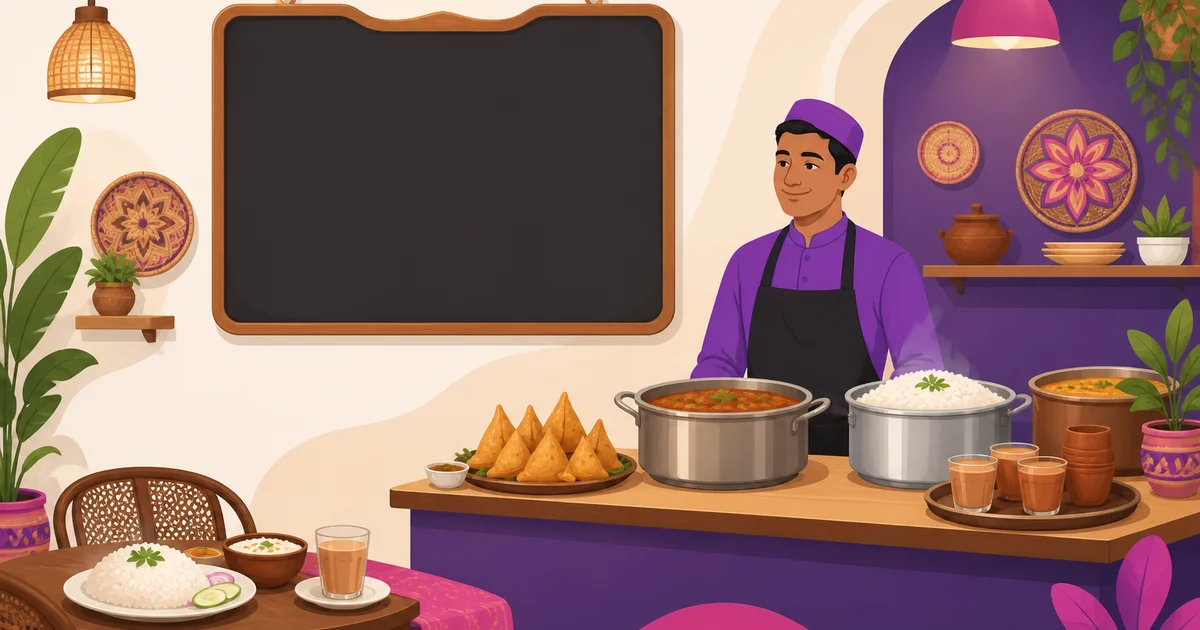
A profitable small food business menu is not the longest list of dishes you can cook. It is a short, controlled system that lets you buy fewer ingredients, prepare faster and serve the same item consistently. That matters when your capital is limited and you will take orders, cook, collect payments and manage stock yourself.
For a cart, home-based takeaway counter or tiny fixed shop in Bangladesh, five dependable items can make more money than fifteen average ones. The aim is not to look large. The aim is to sell quickly, waste little and know what each order contributes after ingredients and packaging.
Why a small food business menu should stay short
Every extra item creates work before it creates revenue. It may require a separate sauce, protein, spice, container or cooking method. You must buy those supplies, find storage space, remember expiry dates and prepare them even when only one customer orders the dish.
A practical opening menu usually has three to six core food items, plus drinks or simple add-ons. A narrow menu gives a self-operated business several advantages:
- Less capital trapped in stock: You buy a smaller range of ingredients and can replenish more frequently.
- Faster preparation: Repeating the same cooking steps reduces order time and mistakes.
- More consistent portions: You can use one scoop, ladle or scale for each component.
- Lower wastage: Popular ingredients move through the kitchen instead of sitting unused.
- Easier purchasing: It is simpler to compare prices and quality across two or three suppliers.
- Clearer sales data: With fewer items, weak sellers become obvious within a few weeks.
A short menu also makes your promise clearer. Customers understand a cart known for chicken wraps and rice bowls faster than one advertising wraps, noodles, burgers, biryani, soup, pizza and coffee from the same small station.
Build the menu around shared ingredients
Cross-utilisation means using one prepared ingredient in several menu items without making every dish taste identical. Suppose your base ingredients are marinated chicken, rice, potatoes, cabbage, cucumber, onion and two sauces. Those can support a chicken wrap, chicken rice bowl, loaded fries and a small salad add-on.
| Ingredient | Possible uses | Control point |
|---|---|---|
| Marinated chicken | Wrap, rice bowl, loaded fries | Use one measured cooked portion |
| Cabbage and cucumber | Wrap filling, bowl garnish, salad | Prepare in small daily batches |
| Two base sauces | All core items | Offer heat or flavour through measured add-ons |
| Potatoes | Fries, loaded fries, side | Avoid too many cuts and seasonings |
| Rice | Regular bowl, larger bowl | Cook according to expected demand |
This structure keeps purchasing manageable while still giving customers choices. Variations should come from portion size, sauce or an add-on, not from maintaining ten unrelated ingredient lists.
Cross-utilisation must not become unsafe reuse. Keep raw and cooked food separate, maintain appropriate temperatures, use clean covered containers and discard food that is no longer safe. Reducing wastage never justifies selling questionable stock.
Count preparation time, not only cooking time
Beginners often estimate how long an item stays on the burner but ignore washing, cutting, marinating, portioning, packing and cleaning. Record the full preparation workload for each item.
For one week, note three numbers: batch preparation minutes, order assembly minutes and cleaning minutes. If an item needs 45 minutes of separate prep each morning but sells only two portions, it is probably consuming more labour than its sales suggest. An item that uses an existing batch and takes three minutes to assemble may be much more valuable.
Also identify your bottleneck. A single fryer, burner or sandwich press can only handle so many orders. If five menu items all compete for that one piece of equipment during the lunch rush, customers wait and you lose potential orders. Design the menu so some items can be assembled while another is cooking.
What you may actually need to buy
The ranges below are planning examples for Bangladesh, not supplier quotations. Market prices move with location, equipment condition, LPG prices, exchange rates and season. Collect current quotations before spending.
| Opening requirement | Indicative range |
|---|---|
| Basic cart, counter or worktable | ৳25,000-৳80,000 |
| Burner or compact cooking equipment | ৳3,000-৳12,000 |
| LPG cylinder, regulator and initial setup | ৳8,000-৳16,000 |
| Pans, knives, boards, utensils and portion tools | ৳5,000-৳18,000 |
| Covered storage, cooler boxes or small refrigeration | ৳4,000-৳25,000 |
| Cleaning, handwashing and food-safety supplies | ৳2,000-৳8,000 |
| Signage, menu board and opening packaging | ৳3,000-৳12,000 |
| Opening ingredients | ৳5,000-৳18,000 |
A basic setup may therefore require roughly ৳55,000-৳190,000 before shop rent, deposits, renovations or major refrigeration. A home-based operation using existing equipment can start lower. A fitted fixed shop can cost much more. Keep a separate cash reserve for at least two to four weeks of ingredient purchases and operating bills. Do not spend every taka on appearance.
For a broader view of premises, equipment and deposits, read restaurant opening costs in Bangladesh. You should also compare your monthly obligations using this guide to restaurant running costs in Bangladesh.
Price a short menu from the portion cost
Start with the cost of one measured portion. Include protein, rice or bread, vegetables, oil, spices, sauces, garnish and packaging. A rough guess based only on the main ingredient will understate your cost.
Suppose one packed chicken bowl costs ৳75-৳90 in ingredients and packaging. If you want those direct costs to represent around 40 percent of the selling price, divide the cost by 0.40. That produces a calculated price range of about ৳188-৳225. A practical listed price might fall around ৳190-৳230 after checking customer demand and competing offers.
This is not automatically profit. The remaining amount must cover LPG or electricity, rent, transport, helper wages, spoilage, licence costs, equipment replacement and your own labour. Delivery-platform commissions also need separate treatment. An online price may have to differ from a direct counter price if the platform agreement permits it.
Recalculate whenever supplier prices or portions change. The detailed method in this food cost percentage guide can help you test each item. If VAT registration or another tax obligation applies to your business, confirm the correct rate and treatment with your VAT circle or a qualified adviser rather than copying another shop.
Daily sales and margin arithmetic you can redo
Do not begin with a promise that you will sell 100 orders daily. A new cart or small counter may initially serve around 20-50 orders on an operating day, depending on location, price, weather, opening hours and repeat customers. Treat that as a scenario range, not a guaranteed result.
Here is one simple example:
- Orders per day: 30
- Average order value: ৳180-৳220
- Daily sales: ৳5,400-৳6,600
- Ingredients and packaging at 35-45 percent: approximately ৳1,890-৳2,970
- Amount left before other operating costs: approximately ৳2,430-৳4,710
If daily LPG, transport, location fees, cleaning, small wastage and allocated equipment costs total ৳1,200-৳2,200, the remainder could be around ৳230-৳3,510. The range is intentionally wide because cost combinations differ. It is not guaranteed net profit, and it does not automatically pay you a fair wage.
Redo the calculation with your own numbers: orders multiplied by average order value equals sales. Subtract actual portion costs, packaging and daily operating costs. Then set aside an owner wage and a reserve for repairs or slow days. This exercise quickly shows why an item with high sales but weak contribution may not be helping.
Which menu items should you drop?
Give a new menu enough time to produce useful data, usually two to four normal trading weeks. Then review each item. Consider removing or changing an item when it has several of these problems:
- It sells rarely despite being visible on the menu.
- Its ingredient and packaging cost leaves little contribution.
- It requires ingredients that no other item uses.
- Its stock spoils before the next purchase cycle.
- It slows the main cooking station during busy periods.
- Customers frequently return it or ask for major changes.
- You cannot produce the same portion and taste consistently.
Do not rely on memory. Owners often remember an unusual large order and overlook the item that quietly sells ten times every day. Keep a daily tally by item, sales value and estimated direct cost. Review totals weekly. Also record items that were unavailable, because low sales caused by repeated stock-outs do not mean low demand.
Add one seasonal item, not another permanent menu
A seasonal item can create interest without expanding the permanent stock list. Add only one at a time and build it mainly from ingredients you already use. During Ramadan, for example, a set or add-on may combine existing portions in a convenient format. In hot weather, a simple drink can work if you can store and serve it safely.
Set a start date, end date and purchase limit. Track its sales separately. If it performs well across several weeks, you can decide whether it deserves a permanent place. If not, remove it without being left with cartons of specialised packaging or slow-moving ingredients.
Where small operators commonly lose money
- Buying too much at wholesale: A lower unit price does not help if vegetables, bread or sauce expire.
- Changing portions by eye: A little extra chicken in every order can erase the expected margin.
- Ignoring packaging: Boxes, cups, tissues, bags and cutlery can materially change direct cost.
- Offering too many discounts: Discount sales may increase activity without producing cash contribution.
- Mixing business and personal cash: You cannot measure performance if household withdrawals are unrecorded.
- Ignoring the owner's time: A business that only works because you labour without pay may not be sustainable.
- Expanding before measuring: A second cart or larger shop multiplies weak controls as easily as it multiplies sales.
Licences and local permission at this scale
A fixed food business generally needs a trade licence from the relevant city corporation, municipality or local authority. Once you operate from a fixed premises, check the applicable Bangladesh Food Safety Authority food business licence or registration requirements and any local food-safety inspection process. Requirements can vary by business type and location, so verify them directly before signing a long lease.
A moving cart is less straightforward. It is largely governed through city-corporation rules, location restrictions and local enforcement, while many operators also encounter informal site arrangements. An informal payment or verbal permission is not a substitute for legal approval. Ask the relevant city corporation or municipality whether vending is allowed at the proposed spot and obtain written permission where available.
Other registrations, including tax or VAT requirements, depend on turnover, structure and current law. Confirm your position with the responsible authority or a qualified adviser. Keep supplier records, cleaning routines and safe food-handling practices even when the operation is very small.
Use simple records before buying complicated systems
A notebook or spreadsheet is enough to start if you consistently record quantity sold, cash collected, mobile payments, purchases and wastage. When manual totals become unreliable, Rosuii can run in a browser on a phone for billing and daily sales reporting. Its free plan suits a small single location within its order limit. Inventory and purchasing are available from the Starter plan, which may become useful for a fixed operation managing a small set of stock items.
Keep the decision practical. Software cannot repair an oversized menu or poor portion control. First make five items profitable and repeatable. Then use accurate records to decide what deserves more investment.
Ready to track your short menu without buying dedicated POS hardware? Start with Rosuii and choose the plan that matches your current operation.
Last updated:
Frequently asked questions
How many items should a small food business menu have?
What is a sensible food cost percentage for a small menu?
How long should I test an item before removing it?
Does a food cart in Bangladesh need a trade licence and BFSA licence?
Do I need restaurant software for a small food cart?
Run your restaurant on Rosuii
POS, menu, inventory, payroll and more — built for Bangladeshi restaurants.
Start free