Small Restaurant Business Bangladesh: Start on a Limited Budget
A practical guide to choosing a restaurant format, controlling setup costs, avoiding common overspending, and starting with proper billing for free.
For many first-time founders, the plan starts with a simple search: small restaurant business Bangladesh. The opportunity is real, but limited capital leaves little room for expensive mistakes. Your first outlet does not need designer furniture, a huge menu or a large team. It needs food people will reorder, disciplined purchasing, accurate billing and enough cash to survive the first few months.
This guide explains how to choose a workable format, where your money is likely to go and what you can postpone until sales become predictable. The figures are planning ranges, not supplier quotations. Rent, equipment and licensing costs vary sharply between Dhaka, Chattogram and smaller cities.
Small Restaurant Business Bangladesh: Choose the Right Format
Your format determines rent, equipment, staffing and service complexity. Choose it before shopping for a location or kitchen machinery.
Small dine-in restaurant
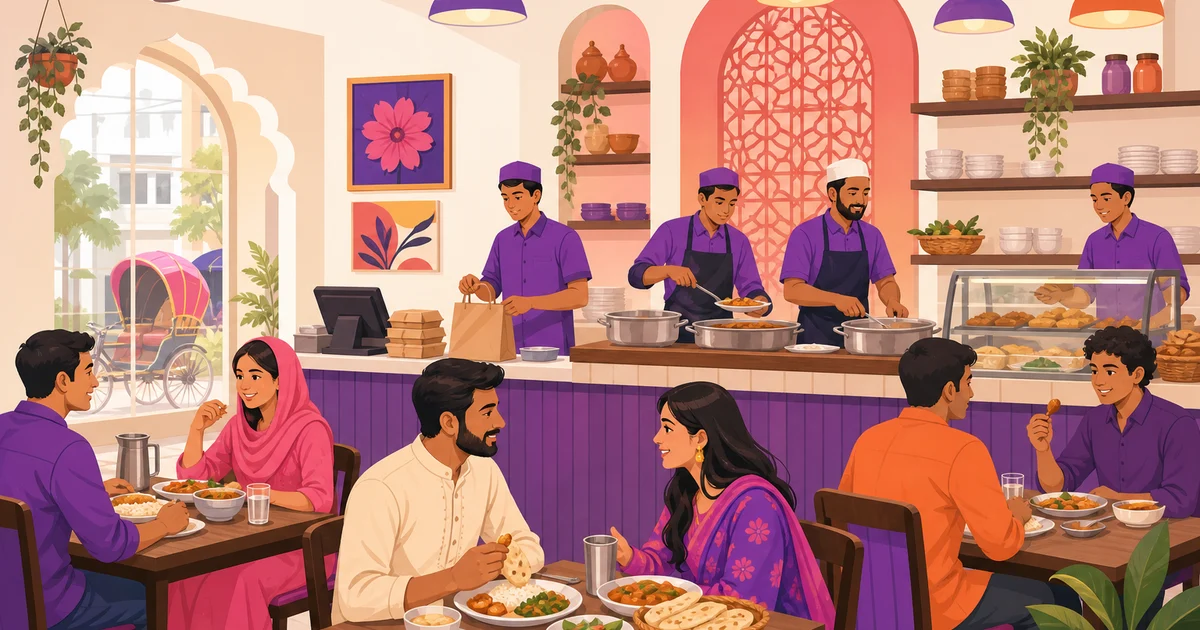
A compact dine-in outlet may suit biryani, rice meals, snacks, café items or family dining. It gives customers a physical experience and can build a neighbourhood following. However, it also requires tables, chairs, wash facilities, service staff and more floor space. Rent and interior work can consume capital before the first order is served.
Keep the first dining room modest. Ten well-managed tables can be more valuable than twenty tables sitting empty while you pay for extra space.
Takeaway counter
A takeaway counter is often the practical middle ground. You get street visibility without paying for a large seating area. Service can be fast, staffing stays lean and packaging becomes part of the product. This format works well for burgers, fried chicken, rolls, tea, desserts, bakery items and focused rice or curry concepts.
Cloud kitchen
A cloud kitchen removes the customer-facing dining area. Orders may come through your own channels or marketplaces such as Foodpanda, Pathao or Shohoz Food. Lower front-of-house costs are attractive, but delivery commissions, packaging, online visibility and order accuracy matter more. Do not assume a cloud kitchen succeeds simply because the rent is lower.
Compare each model using expected daily orders, average bill, rent, delivery costs and the number of staff required. For a deeper opening checklist, read how to open a restaurant in Bangladesh.
What a Low-Capital Restaurant Budget Actually Covers
Most startup budgets have four parts: premises, kitchen capability, opening stock and working capital. First-time owners often calculate equipment and decoration but forget deposits, utility work, packaging, staff wages and slow opening weeks.
The following example is suitable for early planning around a small takeaway-led outlet or very compact dine-in operation. It assumes controlled renovation and locally available equipment.
| Cost area | Illustrative range | Budget note |
|---|---|---|
| Advance rent and first month | ৳45,000 to ৳90,000 | Depends heavily on location and landlord terms |
| Cooking and refrigeration equipment | ৳90,000 to ৳160,000 | Buy for the opening menu, not future expansion |
| Counter, basic furniture and storage | ৳30,000 to ৳70,000 | A cloud kitchen may spend less here |
| Minor renovation and signage | ৳20,000 to ৳50,000 | Prioritise safety, ventilation and cleanable surfaces |
| Licences, deposits and utility preparation | ৳15,000 to ৳35,000 | Requirements and official fees vary |
| Opening ingredients and packaging | ৳25,000 to ৳45,000 | A small menu reduces opening stock |
| Smallwares, uniforms and cleaning supplies | ৳15,000 to ৳30,000 | Include knives, containers and safety items |
| Launch marketing | ৳5,000 to ৳15,000 | Use local pages, signs and targeted offers |
| Contingency reserve | ৳25,000 to ৳45,000 | Do not spend this before opening |
| Illustrative total | ৳270,000 to ৳540,000 | Working capital for later months should be planned separately |
A location needing major exhaust, electrical, gas, plumbing or fire-safety work can exceed this range. Get written estimates before signing a lease. Also check which trade, food-safety, fire, tax or VAT requirements apply to your business and premises. Confirm current obligations with the relevant local authority and your VAT circle. Our guide to restaurant opening costs in Bangladesh provides a broader cost breakdown.
Where First-Time Restaurant Owners Overspend
Interior work before proving demand
A bright, clean and comfortable outlet matters. Imported lights, custom walls and expensive decorative furniture usually do not matter enough at launch. Customers are more likely to remember slow service, an incorrect order or inconsistent food. Spend first on ventilation, hygiene, lighting, kitchen flow and a visible sign.
An oversized menu
A 60-item menu looks impressive but creates hidden costs. You need more ingredients, more storage and more staff training. Slow-moving stock expires, preparation becomes inconsistent and customers wait longer.
Start with a focused menu built around shared ingredients. For example, one chicken preparation might support a rice bowl, wrap and platter without requiring three separate stock lists. Track item sales and remove dishes that do not earn their shelf space.
Too many employees
Hiring for future demand creates a fixed monthly cost before that demand exists. A takeaway-led business may begin with a cook, one kitchen assistant and an owner or cashier covering orders. Add people when queues, preparation times or opening hours justify the payroll.
Do not cut staffing below a safe operating level. Food handling, cleaning and cash control still need clear responsibility, even in a family-run outlet.
Equipment bought for a future menu
Large freezers, specialist ovens and extra display units tie up cash. Buy equipment for the menu you are opening with. Consider reliable used equipment where it can be inspected, but be cautious with refrigeration, electrical safety and items that are difficult to repair locally.
Protect Cash After Opening
Opening the shutter is not the end of startup spending. The restaurant must pay rent, wages, utilities, ingredients and packaging while customer traffic is still developing. Keep a working-capital reserve instead of investing every taka in construction.
Build a basic business plan with three sales cases: weak, expected and strong. For each case, estimate orders per day, average bill and food cost. A practical planning template is available in this restaurant business plan for Bangladesh.
- Review purchases weekly: Buying too much to obtain a small discount can create wastage.
- Count key stock: Monitor expensive proteins, oil, rice, beverages and packaging.
- Separate business cash: Record owner withdrawals instead of taking money informally from the counter.
- Price the full order: Include packaging, marketplace costs, VAT and service charge where applicable.
- Keep the menu editable: Supplier prices change, so contribution margins need regular review.
What Can Wait Until Revenue Arrives?
Some investments are useful but not urgent for a first outlet. You can usually postpone premium décor, a custom mobile app, a second branch, specialist office staff, expensive launch events and equipment for menu categories you have not tested.
Systems should also match operational need. A kitchen display screen may become valuable when order volume and multiple preparation stations make paper kitchen tickets difficult to manage. Payroll and loyalty tools matter more as the team and customer base grow. Delay the hardware, not the habit of recording sales and expenses correctly.
When Restaurant Software Stops Being Optional
A notebook may appear sufficient when friends and family place the first few orders. It becomes risky once several employees handle cash, dine-in and takeaway orders overlap, discounts are given, or the owner cannot stand at the counter all day. Missing order details and unrecorded sales quickly become management problems.
Proper billing should ideally begin with the first paid order. Rosuii makes that possible without adding software cost to a limited opening budget. The Free ৳0 plan supports one branch and approximately 20 orders per day. It includes POS billing for dine-in, takeaway and delivery, menu items and modifiers, table management, customer records and basic reports. There is no setup fee, and the restaurant receives its own branded Rosuii subdomain and isolated database.
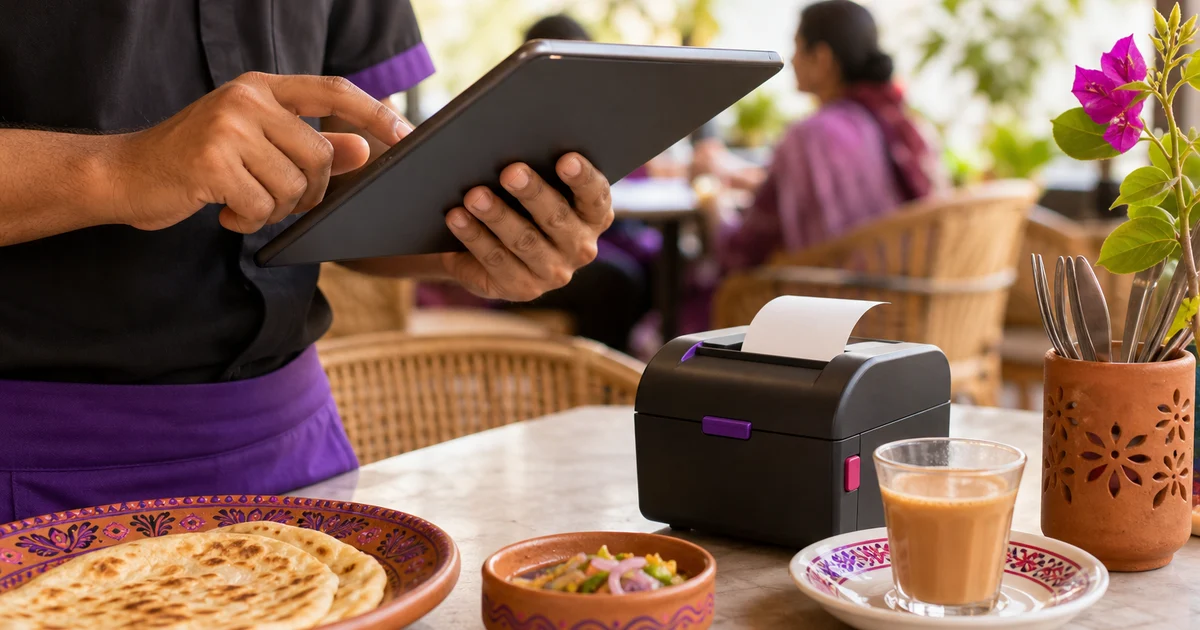
The browser-based POS works on a phone, tablet or laptop, so you are not locked into specialised hardware. You can save drafts, send kitchen order tickets, calculate configured discounts, VAT and service charges, take payment and print receipts. Rosuii supports English and Bangla with BDT pricing.
Internet outages also need a realistic plan. After using the one-tap offline-data sync to save the menu and customers on the device, Rosuii can continue billing during an outage. Orders queue locally and sync automatically when the connection returns. Online bKash or Nagad confirmation and real-time communication with other devices or kitchen displays still require connectivity.
The Free plan does not include an online ordering storefront, inventory and purchasing, or reservations. Those become available from the Starter plan at ৳500 per month. Upgrade when the operation needs them, not merely because they sound impressive.
A Practical First-Month Plan
- Open with a short menu and documented portion sizes.
- Train every employee on order entry, payment handling, cleaning and closing duties.
- Record every sale, discount, expense and wastage from day one.
- Review daily orders and item sales instead of relying on crowd size.
- Ask customers what they would reorder, then improve the strongest products.
- Delay expansion until the first outlet produces repeatable monthly results.
A limited budget is not automatically a weakness. It can force sharper decisions. Choose a format that fits the capital, keep the menu focused and preserve cash for operations. Most importantly, build reliable records before the business becomes too busy to fix bad habits.
Start billing properly without paying for software. Create your restaurant account on Rosuii's Free ৳0 plan at https://rosuii.com/register.
Last updated:
Frequently asked questions
How much money is needed to start a small restaurant in Bangladesh?
Is a cloud kitchen cheaper than a dine-in restaurant?
How many menu items should a new small restaurant offer?
When should a small restaurant start using POS software?
Can Rosuii POS keep billing if the internet goes down?
Run your restaurant on Rosuii
POS, menu, inventory, payroll and more — built for Bangladeshi restaurants.
Start free