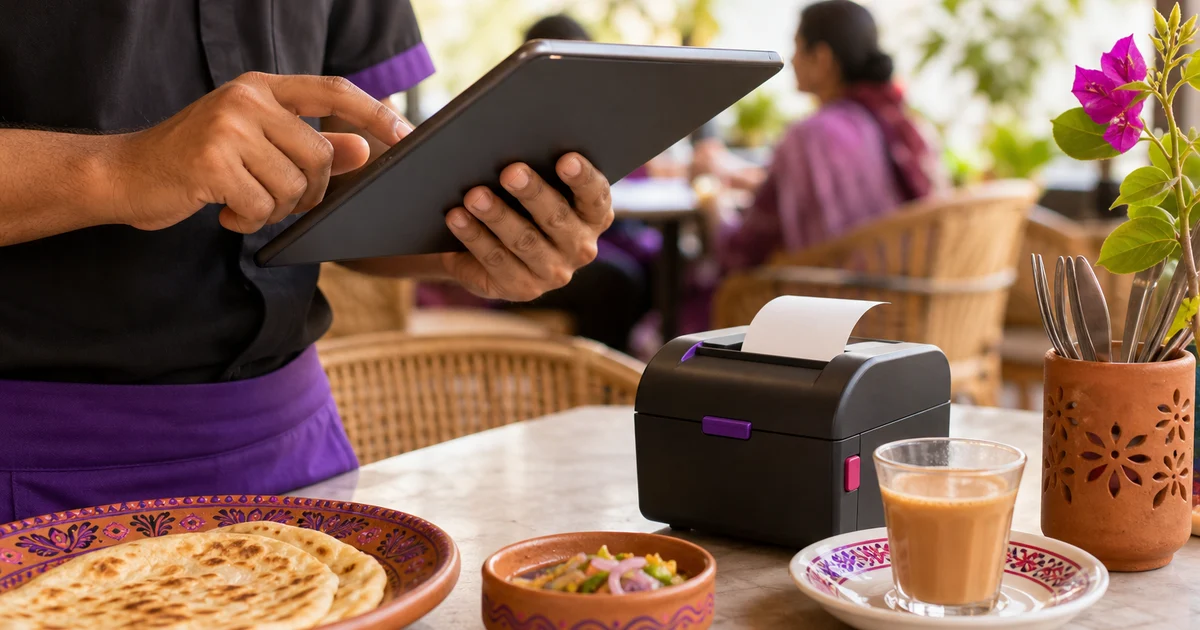
AI Restaurant Marketing: What It Can Actually Do for Your Restaurant in 2026
A practical guide to using AI for restaurant captions, menu descriptions, translations, images and review replies without sacrificing accuracy or trust.
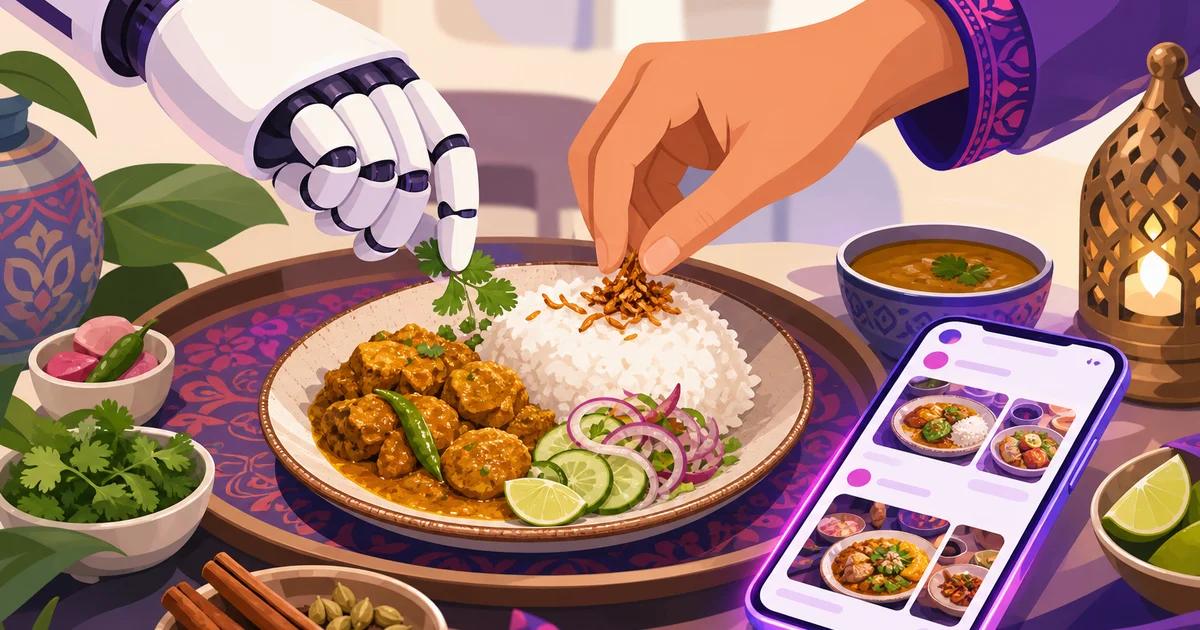
AI restaurant marketing can help a busy restaurant owner produce menu descriptions, Bangla captions, post ideas and review replies in minutes. It cannot inspect your kitchen, confirm your prices or understand your regular customers without accurate information from you. That distinction matters. Used properly, AI saves writing time. Used carelessly, it can publish false offers, awkward translations and food images that create the wrong expectations.
For Bangladeshi restaurants, the sensible goal for 2026 is not to hand marketing over to a machine. It is to use AI as a fast first-draft assistant while an owner or manager remains responsible for every fact and promise.
What AI restaurant marketing actually means
AI marketing tools generate content from instructions, usually called prompts. You can provide a dish name, price, audience and desired tone, then ask for a Facebook caption or menu description. The tool predicts suitable words based on that information. It does not independently know what happens inside your restaurant.
This makes AI useful for repetitive creative work. A small restaurant may need several Facebook posts, offer captions, menu descriptions and review replies every week. Writing each item from a blank page takes time. AI can create multiple drafts at once, leaving you to select, correct and personalise the strongest ones.
Before using any tool, establish your restaurant's basic identity. Our restaurant branding guide for Bangladesh explains how to define a consistent name, visual style and customer promise.
Five marketing tasks AI does well today
1. Writing menu descriptions quickly
Many menus list only a name and price: Chicken Burger, Beef Tehari or Cold Coffee. A short description can help customers understand portion style, key ingredients and flavour. AI can turn verified dish details into concise descriptions for a printed menu, QR menu or online ordering page.
For example, instead of asking, “Write about our burger,” provide facts: “Write a 25-word menu description for a spicy chicken burger with a crispy chicken fillet, lettuce, house sauce and a soft bun. Do not add ingredients.” The last sentence is important. Without it, an AI tool may invent cheese, pickles or another ingredient that is not actually included.
Descriptions still need a human check for ingredients, allergens, portion claims and spelling. If the dish contains nuts, dairy or another ingredient relevant to customers, verify the wording with the kitchen team.
2. Producing social captions and post ideas
AI is particularly effective when you ask for batches. Give it five real menu items and request ten Facebook caption drafts in different styles: short, friendly, offer-led, family-focused or suitable for lunch. This removes the pressure of thinking up a new topic every morning.
It can also turn one idea into several formats. A Friday family meal might become a Facebook post, a short Instagram caption and a one-line message for a promotional graphic. You should then adjust the language to sound like your restaurant rather than a generic advertiser.
For channel setup and posting basics, see our guide to creating a restaurant Facebook page. If you need more campaign topics, these restaurant marketing ideas for Bangladesh can supply the raw ideas that AI helps you develop.
3. Translating between Bangla and English
AI can produce a Bangla version of an English menu description, or convert a Bangla caption into natural English. That is useful when your customers include Bangla-first readers, office workers, tourists and expatriates.
Translation needs review by someone fluent in the target language. Food terms, local expressions and brand names do not always translate literally. Ask for natural Bangladeshi Bangla rather than a word-for-word conversion. Keep dish names consistent across the printed menu, online menu and social pages so customers are not confused.
4. Creating food-style images for posts
Image generators can create food-photography-style artwork for a festival greeting, mood post or concept campaign. They are useful when you need an attractive background or a general visual and do not have time for a full photo shoot.
But an AI image may show food your kitchen never prepared. It may add larger portions, extra meat, unrealistic garnish or incorrect packaging. Do not present a generated picture as an exact photograph of a dish customers will receive. A real phone photo with good daylight is often more trustworthy. If you use generated artwork, treat it as promotional creative and avoid misleading visual claims.
5. Drafting replies to customer reviews
AI can turn a few notes into a calm, professional reply. For a positive review, it can draft a warm thank-you without repeating the same sentence every time. For a complaint, it can acknowledge the concern and invite the guest to contact the restaurant.
Never paste a reply without checking the original review. A complaint about late delivery requires a different response from one about food temperature. Do not ask AI to invent an explanation, refund or investigation. Only promise action that your team is prepared to take.
What AI does not know about your restaurant
An AI tool has no automatic access to your current menu, stock, kitchen or customer records unless you deliberately provide relevant information through an appropriate system. Even then, its output must be reviewed. The practical limits are easy to understand:
| AI may draft | A human must verify |
|---|---|
| A caption for a meal offer | Price, dates, branch availability and conditions |
| A menu description | Ingredients, portion, allergens and preparation method |
| A hygiene-related post | What procedures are actually followed |
| A delivery promotion | Delivery areas, fees, timing and ordering link |
| A review response | What happened and what remedy is authorised |
| A Bangla translation | Meaning, tone, spelling and local phrasing |
AI also does not understand your customers simply because it can write confidently. It cannot know that nearby office workers prefer quick lunch offers, for example, unless you supply real observations or customer data. Treat confident wording as a draft, not evidence.
Never use AI to create fake customer reviews
Generating made-up reviews is dishonest and can violate the rules of review and social platforms. It misleads customers and risks damaging the reputation you are trying to build. Do not create fictional names, ratings, testimonials or customer stories.
AI can help you write a polite message asking genuine customers to share honest feedback. It can also draft responses to reviews that real customers have already posted. Those are legitimate uses. The review itself must come from an actual customer and reflect that person's experience.
A practical starter workflow for a small restaurant
You do not need a large marketing department. One owner or manager can follow a simple weekly process.
- Create a restaurant fact sheet. Record the official restaurant name, branch address, phone number, opening hours, ordering link and delivery areas. Add a list of promoted dishes with current prices, verified ingredients and portion information.
- Choose the week's objective. Decide whether you want to promote lunch, increase direct orders, introduce an item or remind customers about a branch. One clear objective produces stronger drafts than a vague request to “do marketing.”
- Ask for ten captions at once. Include the fact sheet, desired language, audience and tone. Tell the tool not to invent discounts, ingredients or claims. Asking for a batch gives you options without ten separate sessions.
- Select and edit. Remove exaggerated phrases. Correct every price, date, address and link. Add expressions your team genuinely uses. Keep captions readable on a phone.
- Match each caption with an honest visual. Use a real dish photo when the post sells a specific item. Generated artwork can support general themes, but it should not misrepresent the product.
- Schedule across the week. Spread the strongest posts instead of publishing everything together. Leave space for a timely update, customer photo or sold-out notice.
- Check before publishing. Have another staff member verify the final post when it contains a price, offer or operational promise.
A usable prompt might be: “Write ten Facebook captions for [restaurant name] in friendly Bangladeshi English. Promote these three dishes using only the facts below. Include our real ordering link. Keep each caption under 60 words. Do not invent prices, discounts, ingredients, delivery times or hygiene claims.”
For Bangla, add: “Write natural Bangla suitable for customers in Bangladesh. Keep dish names as listed and avoid overly formal wording.” You can then ask for three variations of the best draft rather than restarting from zero.
How to build a useful restaurant fact sheet
The quality of the draft depends heavily on the information supplied. Keep the fact sheet short enough to update but detailed enough to prevent guessing. Include:
- Official English and Bangla restaurant names
- Correct branch addresses and phone numbers
- Opening hours and weekly closing information
- Direct ordering, Facebook or website link
- Dish names, current prices and verified ingredients
- Available service types such as dine-in, takeaway or delivery
- Delivery coverage and fees, if confirmed
- Brand tone, such as family-friendly, casual or premium
- Words or claims the tool must not use
Review this sheet whenever the menu, price or operating hours change. An old fact sheet can make an otherwise well-written post inaccurate.
The real cost benefit: hours saved, not judgement replaced
AI can reduce the time spent staring at an empty caption box. A manager might prepare a week's first drafts in one session instead of writing every post separately. It can also make bilingual publishing more manageable.
The saving is in drafting time. You still need judgement, real photography, offer planning and customer understanding. Someone must confirm that the kitchen can handle a promoted item, the branch is open at the stated time and the order link works. If AI allows that person to spend more time checking the offer and serving customers, it is doing a useful job.
Paid tools may offer higher limits or image features, but a subscription does not guarantee accurate output. Start with a small workflow, measure how much editing time it saves and only pay for tools your team will use consistently.
What Rosuii provides now and what is coming soon
Rosuii already includes a Branding hub with ready bilingual descriptions personalised with your restaurant's real name and ordering link. This helps restaurants use consistent, relevant wording without repeatedly replacing placeholder details.
AI-powered branding is coming soon to Rosuii. The upcoming capability is planned to generate descriptions and social posts automatically from your own menu categories and items. It is not available today, so restaurant owners should not treat it as a current feature. Human review will remain important because even menu-based generation cannot confirm every operational promise or campaign condition.
Rosuii is an all-in-one bilingual restaurant management platform for Bangladesh, with POS, menu management, online ordering on eligible plans, inventory, table QR ordering and reporting. Restaurants receive a branded subdomain and an isolated database. Plans start at ৳0 with no setup fee, so you can organise the operational facts that support more accurate marketing.
A final pre-publish checklist
- Are the dish name, price and ingredients correct?
- Are the offer dates and branch conditions clear?
- Does the ordering link open correctly?
- Is the Bangla or English natural and consistent with your brand?
- Does the image honestly represent what the customer can expect?
- Have you removed invented reviews, guarantees and unsupported claims?
AI should make your restaurant's real story easier to communicate, not manufacture a different one. Build the facts first, use AI to create options, then let an informed person make the final decision.
Ready to organise your menu, ordering and restaurant operations in one bilingual platform? Register for Rosuii and start free.
Updated:
Frequently asked questions
Can AI write Bangla restaurant captions accurately?
Is it acceptable to use AI-generated food images on Facebook?
Can I use AI to generate customer reviews for my restaurant?
What information should I give AI before asking for captions?
Is AI-powered branding already available in Rosuii?
Run your restaurant on Rosuii
POS, menu, inventory, payroll and more — built for Bangladeshi restaurants.
Start free