50000 Taka Business: Food Options, Budgets and Break-Even in Bangladesh
Compare three practical ways to start a food business with ৳50,000, including itemised budgets, working capital, break-even calculations and risks.
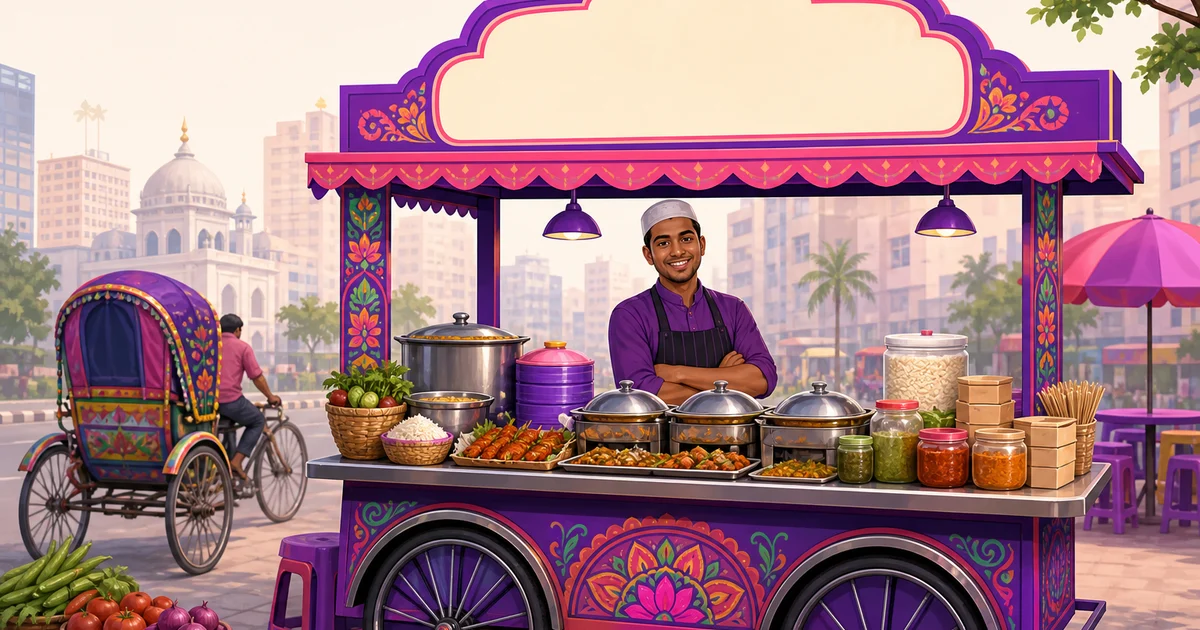
A 50000 taka business is one of the most common starting points for a small food venture in Bangladesh. It can fund a branded food cart, a basic roadside kitchen in a low-rent location, or a home-kitchen delivery operation with proper packaging. It cannot comfortably fund all three, and it leaves little room for expensive mistakes.
The budgets below are planning examples, not fixed market prices. Rent, fabrication, equipment and ingredient costs move by city, season and supplier. Dhaka commercial areas can cost much more than a district town or residential neighbourhood. Collect at least two or three local quotations before spending.
Which 50000 taka business route fits you?
The right choice depends on what you already have. A home kitchen cuts premises costs. A food cart needs a dependable selling point. A roadside kitchen needs affordable rent, utilities and permission to operate at the chosen location.
- Food cart: Good for a short menu, visible cooking and high-footfall snacks. It can recover quickly when the location works.
- Roadside kitchen: Offers the highest operating ceiling of these three routes, but rent and fixed costs create more pressure.
- Home-kitchen delivery: Usually requires the least setup spending and has the lowest operating break-even point. Customer acquisition and delivery costs are the main challenges.
Do not commit the entire ৳50,000 to counters, equipment and decoration. Hold back at least one-fifth, or roughly ৳10,000-৳15,000, as working capital. That reserve pays for ingredient replacement, packaging, gas, transport and a slow opening period.
Route one: a properly built and branded food cart
A cart is suitable for tea, coffee, fuchka, sandwiches, burgers, fried snacks, rolls or a similarly focused menu. The cart must protect food from dust and rain, provide safe storage and leave enough room for preparation. Read this detailed guide to food cart design and cost in Bangladesh before ordering fabrication.
Example food cart budget
- Cart fabrication, roof and counter: ৳17,000-৳20,000
- Burner, cylinder, stove or small cooking equipment: ৳6,000-৳7,000
- Utensils, storage containers and cleaning tools: ৳2,000-৳3,000
- Signboard, menu board and basic branding: ৳1,500-৳2,000
- Fire safety, lighting and weather protection: ৳1,500-৳2,000
- Opening ingredients: ৳3,000-৳4,000
- Packaging and tissues: ৳1,500-৳2,000
- Location setup, transport and small contingencies: ৳500-৳1,500
- Example setup spend: ৳33,000-৳40,000
- Cash left as working capital: ৳10,000-৳17,000
A used cart or equipment can reduce the initial spend, but inspect wheels, welding, gas fittings and food-contact surfaces. A cheap cart that needs rebuilding can cost more than a sound one.
Food cart break-even example
First calculate contribution per sale. This is the amount left after the direct cost of ingredients and packaging, before fixed monthly expenses.
- Assume an average customer bill of ৳100-৳130.
- Subtract ingredients and packaging of approximately ৳55-৳75.
- Planning contribution becomes roughly ৳40-৳60 per sale after allowing for product mix and small losses.
- If fixed operating costs are ৳9,000-৳15,000 per month, divide that range by the contribution range.
- Then divide by around 25-27 trading days. The operating break-even point is approximately 6-15 sales per day.
If a stable cart produces a monthly cash surplus of around ৳10,000-৳16,000, recovering setup spending of ৳33,000-৳40,000 would take roughly 2-4 months. This is an illustration, not an income promise. Poor footfall can make the surplus much smaller or negative.
Route two: a small roadside kitchen with a rented shutter
This route only fits the budget when the shutter is small, the advance is modest and the property needs little renovation. It is generally unrealistic in a prime Dhaka commercial area. District towns, market edges and residential lanes may offer lower entry costs, but demand must be checked before signing.
Review the practical issues in this guide to a roadside kitchen business in Bangladesh, including menu size, site selection and daily operations.
Example roadside kitchen budget
- Advance and first rent payment: ৳8,000-৳9,000
- Cleaning, paint, counter and minor repairs: ৳5,000-৳6,000
- Stove, burner, cylinder and cooking equipment: ৳9,000-৳10,000
- Pots, knives, trays and storage: ৳2,000-৳2,500
- Signboard and printed menu: ৳1,000-৳1,500
- Opening ingredients: ৳3,500-৳4,000
- Packaging: ৳1,500-৳2,000
- Utility connections, cleaning and safety allowance: ৳3,000-৳5,000
- Example setup spend: ৳33,000-৳40,000
- Cash left as working capital: ৳10,000-৳17,000
If the landlord requests a larger advance or the kitchen needs drainage, exhaust work or electrical rewiring, the project can exceed ৳50,000 quickly. Do not take the shutter first and calculate later. Check trade licence, food-safety and local operating requirements with the relevant city corporation, municipality and authorities.
Roadside kitchen break-even example
- Assume an average bill of ৳140-৳180.
- Subtract direct food and packaging costs of around ৳80-৳110.
- Use a cautious contribution range of ৳50-৳75 per bill.
- Estimate rent, gas, electricity, cleaning, transport and other fixed costs at ৳15,000-৳24,000 per month.
- Divide fixed costs by contribution, then by 25-27 operating days. The result is roughly 8-19 bills per day to cover monthly operating costs.
After reaching that operating break-even point, a small kitchen might target a monthly surplus of ৳8,000-৳15,000. Dividing setup spending of ৳33,000-৳40,000 by that surplus gives an illustrative recovery period of about 3-5 months. A slow location may not break even at all.
Route three: a home-kitchen delivery operation
A home kitchen can put more of the budget into food quality, packaging and customer acquisition. It suits lunch boxes, biryani, frozen snacks, cakes, desserts or pre-ordered family meals. Start with a narrow menu that shares ingredients. Too many items increase spoilage and trap cash in stock.
Example home-kitchen budget
- Cooking equipment upgrades: ৳7,000-৳10,000
- Racks, sealed containers and storage: ৳2,000-৳3,000
- Initial packaging stock: ৳5,000-৳7,000
- Labels, menu photography and basic branding: ৳2,000-৳3,000
- Opening ingredients: ৳5,000-৳6,000
- Cleaning, hygiene and delivery setup: ৳2,000-৳3,000
- Launch promotion and samples: ৳2,000-৳3,000
- Example setup spend: ৳25,000-৳35,000
- Cash left as working capital: ৳15,000-৳25,000
Real packaging matters. Test whether containers leak, soften fried food or fail during motorcycle delivery. Buying a large quantity before testing can turn a small packaging mistake into a serious cash loss.
Home-kitchen break-even example
- Assume an average order value of ৳350-৳500.
- Subtract food, packaging, payment charges, discounts and any delivery subsidy totalling ৳230-৳380.
- Use a planning contribution of around ৳100-৳150 per order.
- Estimate recurring fixed expenses at ৳5,000-৳10,000 per month.
- Divide fixed expenses by contribution, then by 25-27 selling days. The operating break-even point is approximately 2-4 orders per day.
With a monthly surplus of around ৳8,000-৳14,000, recovering setup spending of ৳25,000-৳35,000 could take roughly 2-5 months. Delivery commissions, paid promotion or repeated discounts can extend that period.
Which route recovers fastest, and which has the higher ceiling?
The home kitchen usually has the fastest potential recovery because setup spending and fixed monthly costs are lower. A cart can recover nearly as quickly when it has reliable footfall and a fast-moving menu. Neither outcome is automatic.
The roadside kitchen has the higher ceiling among these three options. It can serve takeaway, delivery and limited on-site customers, add equipment and extend its menu as demand grows. It also carries the highest downside because rent, utilities and staff obligations continue during a slow month. For a wider view of premises and equipment costs, see this restaurant opening cost guide for Bangladesh.
What can go wrong with a ৳50,000 food business?
- Bad location: A busy road does not always mean buyers. Observe the site at your intended selling hours before committing.
- Spoilage: Overstocking meat, dairy, bread or vegetables can remove the margin from several good sales days.
- A slow month: Rain, Ramadan timing, exams, political disruption or local competition may reduce demand.
- Illness with no backup: If one person cooks, buys stock and sells, illness can stop revenue completely.
- Underpricing: Counting ingredients but ignoring packaging, gas, delivery and wastage creates false profit.
- Using the reserve too early: Decoration and launch offers should not consume the cash needed to reopen tomorrow.
Keep records before trying to grow
Record daily sales, ingredient purchases, packaging, wastage and cash withdrawals from the first day. A notebook or spreadsheet is enough at the beginning. A small operator can also use Rosuii on a phone for POS sales totals and basic reports, then use inventory tools when a more structured short stock list is needed. Software does not create profit. Location, pricing, food quality and disciplined purchasing do.
Start with one route, a short menu and a protected cash reserve. Replace every example above with quotations from your own area, calculate the contribution on each item, and test demand before expanding.
Ready to organise your daily orders and sales records? Register for Rosuii and start with the free plan.
Last updated:
Frequently asked questions
Is ৳50,000 enough to start a food business in Bangladesh?
How much of the ৳50,000 should remain as working capital?
Which small food business can break even fastest?
How do I calculate break-even orders per day?
Do I need a trade licence for a cart, roadside kitchen or home food business?
Run your restaurant on Rosuii
POS, menu, inventory, payroll and more — built for Bangladeshi restaurants.
Start free