Food Cart Cost in Bangladesh: What to Build and Skip
A practical Bangladesh food cart build guide covering materials, equipment, licences, realistic sales maths, avoidable costs, and profitable upgrades.
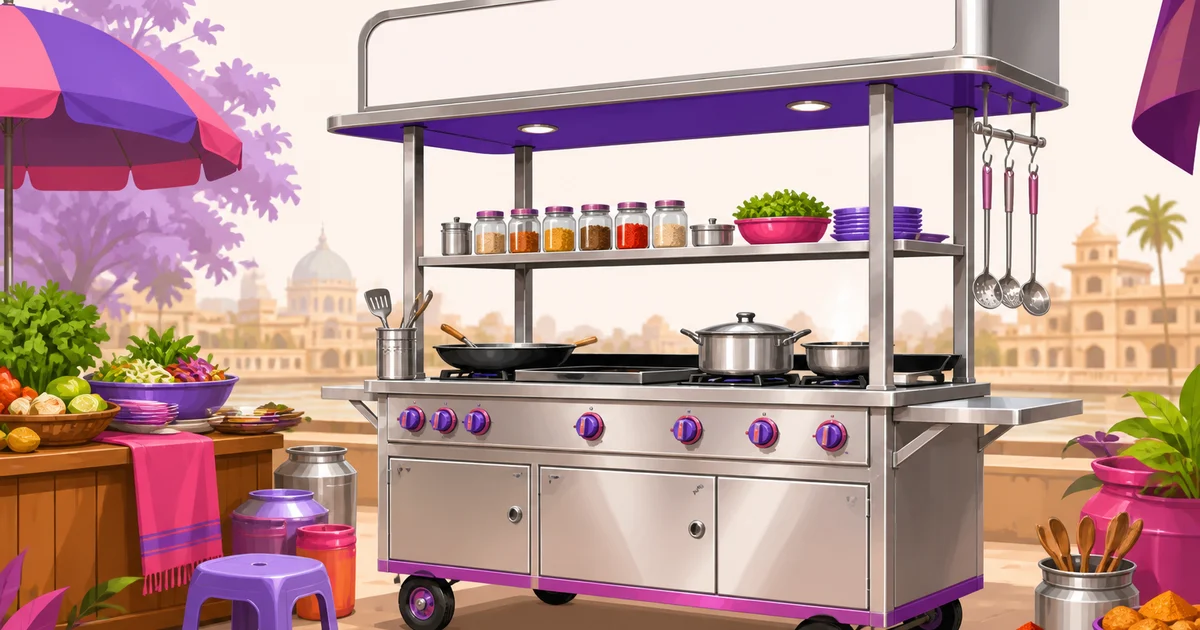
Food cart cost in Bangladesh can start below the price of fitting out a small shop, but a cart becomes expensive quickly when the design is changed halfway through fabrication. For an owner-operated cart with a short menu, a practical custom build usually falls around ৳65,000 to ৳130,000 before working capital. A larger enclosed cart with more equipment may reach ৳130,000 to ৳250,000 or more. These are planning ranges, not quotations. Steel, stainless steel, LPG equipment and labour rates move by city and season.
The smart approach is to build around the food you will actually sell. A fuchka cart, burger cart and tea-and-snacks cart need different heat, water, storage and service layouts. Decide the menu, expected location and daily volume before asking a fabricator for a price.
Food cart cost breakdown for a practical build
The following ranges suit a compact owner-run cart. Dhaka fabricators may quote differently from workshops in Chattogram, Sylhet, Khulna or a district town. Ask for separate material and labour prices so you can compare like for like.
| Item | Planning range | What matters |
|---|---|---|
| MS frame and basic body | ৳20,000 to ৳40,000 | Strong joints, balanced weight and rust protection |
| Stainless-steel worktop and food-area lining | ৳12,000 to ৳30,000 | Use food-suitable stainless steel on contact surfaces |
| Wheels, brakes and support legs | ৳5,000 to ৳12,000 | Match wheel size to broken roads and pavement edges |
| Burner, regulator, hose and gas compartment | ৳6,000 to ৳18,000 | Safe ventilation and an accessible shut-off |
| Water, sink and waste tanks | ৳4,000 to ৳12,000 | Separate clean and wastewater containers |
| Shelves, drawers and ingredient bins | ৳5,000 to ৳15,000 | Easy cleaning and secure travel |
| Canopy or weather cover | ৳5,000 to ৳18,000 | Rain runoff, shade and wind resistance |
| Lighting, wiring and menu signage | ৳5,000 to ৳18,000 | Bright task lighting before decorative lighting |
| Utensils, pans and serving tools | ৳8,000 to ৳25,000 | Buy for the opening menu, not a future menu |
| Fire extinguisher and safety items | ৳2,500 to ৳6,000 | Keep them visible and within reach |
Also keep cash for ingredients, packaging, LPG refills, transport, permissions and repairs. A reserve of roughly two to four weeks of expected operating expenses is safer than spending every taka on the cart. For a wider startup comparison, read the guide to restaurant opening costs in Bangladesh.
Choose the size before choosing the finish
A cart around 5 feet by 2.5 feet can work for tea, coffee, fuchka or a tightly controlled snack menu. Around 6 feet by 3 feet gives one operator better room for a griddle, preparation surface, handwashing and storage. Bigger carts can hold more equipment but become difficult to push, turn, store and transport.
Start with an MS frame because local workshops can fabricate and repair it easily. Protect exposed MS with primer and paint. Use stainless steel for the worktop, splash area and surfaces that repeatedly touch food or water. Full stainless-steel cladding looks impressive, but it adds cost and weight without always improving output.
For wheels, two fixed wheels plus two swivel wheels with effective brakes usually give better control than four free-turning wheels. Add support or levelling legs so the cart does not move when someone leans against it. Tell the fabricator whether the cart will stay at one site, move a few metres daily or travel by pickup. Those are different engineering jobs.
Plan the burner and gas layout around your menu
One reliable burner is enough for many starter menus. Two burners make sense when two items genuinely cook at the same time. Extra burners consume counter space, increase heat and encourage an oversized menu.
The LPG cylinder should sit upright in a ventilated compartment away from direct heat, electrical joints and customer access. The shut-off must remain easy to reach. Use a suitable regulator and gas hose, check connections regularly and keep a correctly rated fire extinguisher nearby. Ask a competent LPG technician to inspect the installation rather than relying only on the cart fabricator.
Put raw preparation on one side, cooking in the middle and packing or handover on the other side. This reduces crossing hands and dropped orders. If your food needs refrigeration, first confirm reliable power. An insulated ice box may be more practical for a very small operation, but temperature-sensitive food still has to be held safely.
Water, waste, storage and display
A practical cart needs a covered clean-water tank, a small sink or handwashing point, liquid soap and a separate wastewater tank. Capacity of roughly 20 to 40 litres may suit a short shift, depending on the menu and cleaning demand. Wastewater capacity should match or exceed the clean-water supply. Do not release oily water onto the road or pavement.
Use lidded, food-grade containers for ingredients. Keep cleaning chemicals away from food and packaging. Shelves should have lips or latches so containers do not slide while the cart moves. A lockable cash and phone drawer is worth adding.
A display can increase impulse sales, but it must protect food from dust, flies, rain and customer contact. A basic covered display often performs better than a large decorative glass cabinet that traps heat and is difficult to clean. If the product does not benefit from being displayed, use that space for preparation or storage.
Weather cover, branding and lighting
Bangladesh weather punishes weak canopies. Your cover needs shade, rain runoff and enough strength for sudden wind. It should not direct rainwater onto the customer queue, burner or electrical connections. Removable side sheets can help during rain, but never enclose an LPG cylinder or cooking area without ventilation.
Branding should answer three questions from a distance: what do you sell, how much does it cost and is the cart clean? A readable name, short menu and clear prices usually work harder than expensive graphics. Warm decorative lights may attract attention, but bright neutral task lighting over food and cash handling should come first. Use protected wiring, proper switches and a safe power source.
Local fabricator or ready-made cart?
Custom fabrication
A local fabricator is usually better when the menu requires a specific burner, sink or display arrangement. Give the workshop a measured drawing showing the cart dimensions, wheel positions, counter height, cylinder compartment, shelves, wiring route and water tanks. Agree on steel thickness and stainless-steel coverage in writing. Pay in stages, inspect the frame before cladding and test the loaded cart before final payment.
Ready-made purchase
Ready-made carts can reduce waiting time and may cost around ৳90,000 to ৳300,000 depending on size and equipment. Check underneath the cart, not just the glossy front. Weak welds, small wheels, thin worktops and poor weight balance are common reasons a visually attractive cart becomes frustrating to operate. Measure every appliance before buying.
Upgrades that pay and upgrades that can wait
Worth paying for:
- A washable stainless-steel worktop and splash area
- Strong wheels, brakes and levelling supports
- Safe LPG installation and a fire extinguisher
- Clean-water and wastewater systems
- Good task lighting and weather protection
- Standard-size pans and containers that are easy to replace
- A clear menu board with visible prices
Usually safe to postpone:
- Full decorative stainless-steel cladding
- Animated signs, oversized LED boards or a television
- Imported appliances without local repair support
- A large battery system before power demand is known
- Extra burners for products not yet tested
- Premium packaging that customers will not pay for
Spend first on food safety, speed, durability and clean presentation. Decorative upgrades should come from proven sales, not opening-day capital.
Daily sales and margin arithmetic you can redo
Daily food-cart sales vary sharply by location, weather, operating hours and menu. A new owner-run cart might serve around 25 to 70 orders a day, with an average bill around ৳80 to ৳180. That gives a broad daily sales range of roughly ৳2,000 to ৳12,600. Treat this as a planning range, not an earnings promise.
Suppose you sell 50 orders at an average of ৳110. Sales are 50 × ৳110 = ৳5,500. If ingredients and packaging take 40 percent, that is ৳2,200. Assume LPG, water and small consumables cost ৳300, the daily location or transport cost is ৳400, and spoilage or discounts cost ৳150. The remaining amount is ৳2,450 before paying for your own labour, cart depreciation, repairs, licences, tax and financing.
Redo the calculation with your numbers:
- Orders per day × average bill = daily sales.
- Subtract ingredient and packaging cost.
- Subtract location, fuel, transport, spoilage and helper wages.
- Set aside money for repairs and cart replacement.
- Divide the balance by your working hours to see what you actually earn.
Track ingredient cost closely because a busy cart can still lose money through oversized portions. The guide to food cost percentage explains how to calculate and control it. Include recurring expenses using this restaurant running cost guide.
Where beginners lose money
- Building before testing the menu: Changes to burner and counter positions cost more after cladding.
- Choosing a cheap location without footfall: Low rent does not help if customers cannot see or stop at the cart.
- Offering too many items: More ingredients mean slower service, more storage and more wastage.
- Ignoring rain and storage: Lost trading days and damaged equipment can erase the saving from a cheap canopy.
- Mixing business cash with household cash: Sales can look healthy while stock money quietly disappears.
- Pricing from competitors only: Calculate your own portion, packaging and operating costs before setting a price.
Licences and local permission
A trade licence is the basic business permission commonly relevant to food operators in Bangladesh. It is normally connected to an address and issued by the applicable city corporation, municipality or union parishad. Ask the local ward or licensing office what it will accept for your operating or preparation address.
Once you have a fixed food premises, kitchen or permanent sales point, check the Bangladesh Food Safety Authority requirements for food-business registration or licensing and comply with the category that applies. Requirements can change, so confirm directly with BFSA and the local authority rather than relying on a fabricator or social-media post.
A genuinely moving cart is often governed in practice by city-corporation rules, public-space controls and local arrangements. Informal permission does not create a legal right to block a pavement or trade anywhere. Confirm the site before investing. Depending on the setup, also ask about LPG and fire-safety conditions. Keep supplier invoices, cleaning routines and ingredient dates organised even when the business is tiny.
Keep operations simple from day one
A notebook can work initially, but record every sale, purchase, wastage and cash withdrawal. If the queue becomes difficult to track, Rosuii can run billing from a phone, show daily sales totals and help monitor a small list of stock items. Start only with the tools that save you time. Software will not fix a weak location, an unprofitable menu or poor portion control.
Build the smallest cart that can produce your tested menu safely and quickly. Protect cash for stock and slow days, then improve the cart after customers show you what matters. If phone billing and simple daily reporting would help your operation, start with Rosuii.
Last updated:
Frequently asked questions
How much does a basic food cart cost in Bangladesh?
Do I need a trade licence for a moving food cart?
When does a food cart need a BFSA food licence?
Is a custom cart better than a ready-made cart?
How many menu items should a new food cart sell?
Run your restaurant on Rosuii
POS, menu, inventory, payroll and more — built for Bangladeshi restaurants.
Start free