Food Cart vs Restaurant: Choosing Your First Step in Bangladesh
Compare the real costs, sales potential, licences, risks and break-even periods of starting a food cart or small restaurant in Bangladesh.
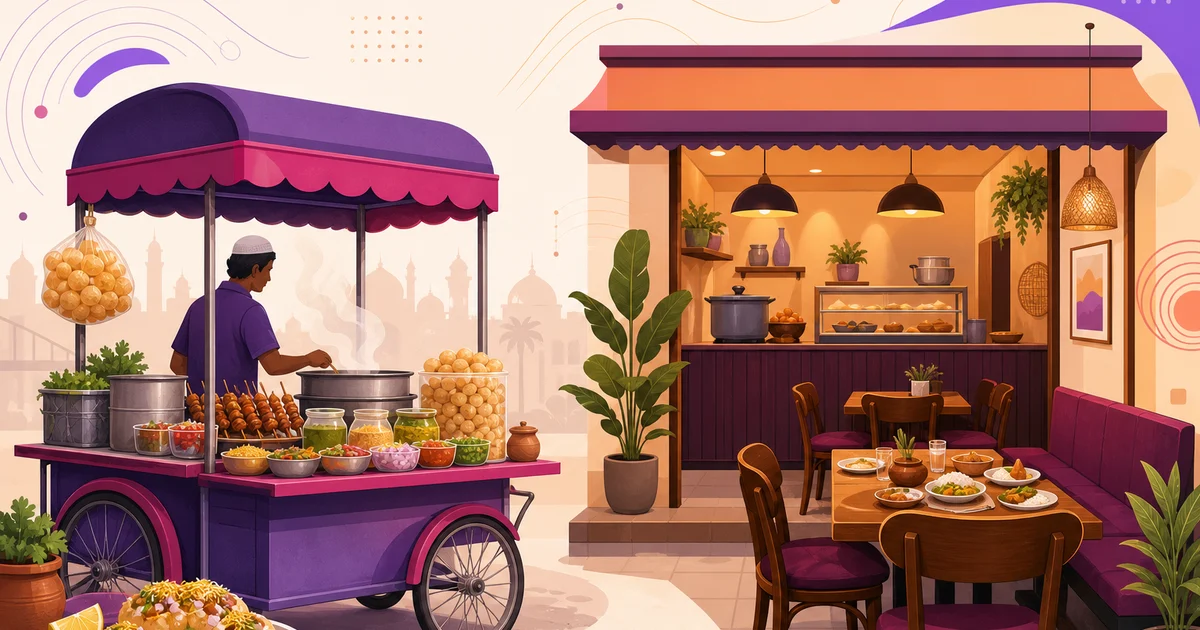
The food cart vs restaurant choice is mainly a decision about fixed cost and risk. A cart lets you test a small menu without carrying a large monthly rent bill. A shop can earn more and build a stronger local brand, but rent, salaries and utilities continue even when sales are weak. For someone with limited capital who plans to run the business personally, the safer first step depends less on ambition and more on how much money can be lost without creating debt.
The taka ranges below are planning estimates, not quotations. Equipment, rent, deposits and licence costs vary widely by city, neighbourhood and season. Check current market prices and speak to the relevant local offices before committing money.
Food cart vs restaurant: the practical difference
A food cart is a testable business. You can begin with three to five products, work a busy evening period and change location or menu if demand is poor. The downside is uncertainty over the selling spot, weather exposure, limited storage and a lower daily production ceiling.
A small restaurant is a fixed operation. Customers can find you again, sit down, order a wider menu and place larger group orders. You can also build delivery and takeaway sales around a permanent address. The trade-off is that the shop starts consuming cash from the day you receive the keys, often before the first customer arrives.
Rent is the dividing line. A cart may have a location fee, storage cost or transport expense, but these are usually easier to reduce than a commercial lease. A restaurant lease may also require several months of advance rent, security money and spending on a property that you do not own.
How much capital do you actually need?
A realistic cart budget
An owner-operated cart commonly needs around ৳80,000 to ৳250,000 to start properly. A simple tea, snack or fuchka setup can sit near the lower end. A fabricated cart with a griddle, fryer, lighting, water arrangement and better branding can reach the upper end.
- Cart fabrication or purchase: roughly ৳40,000 to ৳120,000
- Burner, griddle, fryer or other cooking equipment: ৳15,000 to ৳45,000
- Safe LPG setup, utensils and food containers: ৳10,000 to ৳30,000
- Lighting, signboard, rain cover and basic hygiene supplies: ৳5,000 to ৳20,000
- Opening ingredients and packaging: ৳8,000 to ৳20,000
- Location, transport, storage or permission-related deposits: ৳5,000 to ৳30,000
Do not spend the entire budget on the cart itself. Keep at least four to eight weeks of working cash for ingredients, gas, transport, repairs and slow days. For a fuller setup guide, read how to start a street food cart business in Bangladesh.
A realistic small-shop budget
A very small takeaway shop may open for around ৳350,000 to ৳700,000 if the property needs little work. A modest dine-in restaurant can easily require ৳700,000 to ৳1,500,000 or more.
- Advance rent and security deposit: approximately ৳100,000 to ৳500,000
- Renovation, counter, plumbing and electrical work: ৳80,000 to ৳350,000
- Kitchen equipment, refrigeration and exhaust: ৳100,000 to ৳400,000
- Furniture, crockery and service equipment: ৳40,000 to ৳180,000
- Signboard, licences, opening stock and packaging: ৳30,000 to ৳100,000
A cheap-looking property is not always cheap. Insufficient electrical load, poor drainage or an unusable exhaust route can add a large amount to the fit-out. Inspect these before paying a deposit. The small restaurant business guide for Bangladesh covers the shop-planning process in more detail.
Monthly fixed cost and the pressure created by rent
An owner-run cart might carry ৳10,000 to ৳40,000 in monthly fixed or semi-fixed expenses. This can include a selling-place arrangement, cart storage, transport, phone service, cleaning, minor maintenance and occasional assistance. Ingredients and packaging are variable costs because they rise with sales.
A small restaurant may face ৳60,000 to ৳250,000 a month before buying food. Rent might be ৳20,000 to ৳100,000 or more, depending on the area. Utilities can add ৳8,000 to ৳30,000. Even a small team can cost ৳30,000 to ৳100,000, followed by cleaning, internet, maintenance and local service expenses.
Include a wage for yourself when judging whether the business is truly profitable. If you work twelve hours a day and record your labour as free, the profit figure will make a weak business appear healthy.
Sales and margin arithmetic you can redo
Do not begin with the question, “How much can this business make?” Begin with daily transactions, average bill and contribution margin. Use this formula:
Monthly sales = daily orders × average bill × selling days.
Suppose a cart serves 55 orders per day, the average bill is ৳130, and it trades for 26 days. Monthly sales would be 55 × ৳130 × 26 = ৳185,900.
If ingredients, packaging and sales-related waste consume 45 percent, around ৳102,245 remains after those variable costs. Subtract ৳25,000 of operating expenses and another ৳8,000 for repairs, spoilage and small losses. The result is about ৳69,245 before the owner's wage, tax, debt repayment and reinvestment.
Actual cart sales may range from 30 to 100 transactions a day, with average bills around ৳80 to ৳180, depending on the product and location. These are scenarios, not promised results. Count foot traffic at the exact hours you intend to operate and test what people will actually buy.
Now consider a shop with fixed costs of ৳140,000 per month and a 55 percent contribution margin after food and packaging. Its operating break-even sales are:
৳140,000 ÷ 55 percent = approximately ৳255,000 per month.
Over 26 days, that is roughly ৳9,800 per day just to cover those costs. If your average bill is ৳280, you need about 35 paid orders daily before producing an operating profit. Add your target salary and loan payment to fixed costs for a more honest calculation.
How long could break-even take?
There are two different break-even points. Operating break-even means monthly contribution covers monthly expenses. Capital payback means accumulated profit has also recovered the original startup investment.
A well-located cart with an investment of ৳100,000 to ৳200,000 might reach operating break-even within one to three months and recover its startup money in roughly four to ten months. Poor weather, an unstable location or low repeat sales can make it much longer.
A small restaurant may need three to nine months to reach stable operating break-even. Recovering the full fit-out and deposit can take around 12 to 24 months, sometimes longer. Some shops never recover their capital because the rent was too high for the available customer demand. Treat these periods as planning ranges, not guarantees.
Licences and location rules at this scale
A fixed restaurant generally needs a trade licence from the relevant city corporation, municipality or local authority. Once you have fixed premises, check the applicable Bangladesh Food Safety Authority food business licence or registration for your category. Depending on the premises and business structure, local sanitary, fire-safety, signboard and VAT or BIN requirements may also apply. Confirm the current requirements with your ward or zonal office, BFSA and tax adviser rather than relying on an old checklist.
A moving cart occupies a less predictable regulatory position. Street use is largely controlled by the relevant city corporation or local authority, and rules differ by location. Informal arrangements with a market, property owner or local party do not create permanent legal permission to occupy a footpath or road. Ask the local authority whether the activity and proposed spot are permitted. A trade licence may also require an address and a clearly stated business activity.
Never assume that being small makes food-safety duties optional. Use safe water, covered ingredients, clean utensils, proper waste disposal and safe LPG equipment from the first day.
Where beginners usually lose money
Beginners often lose money through several connected decisions: building a menu that is too large, buying equipment before testing demand, underpricing delivery and packaging, accepting high rent because the road looks busy, and failing to record wastage. A road can have heavy traffic but very few people willing or able to stop.
Another common mistake is confusing cash in the drawer with profit. Money needed for tomorrow's ingredients, gas, supplier payments and rent is not personal income. Keep business cash separate and close the day by recording sales, purchases, wastage and withdrawals.
For a cart with a handful of products, a notebook or spreadsheet may be enough at first. If order volume grows, Rosuii can run billing from a phone browser and show daily sales totals. Inventory and purchasing tools become more useful when the operation moves toward a shop. Software should reduce missed records, not become an unnecessary early expense.
The honest verdict: cart or shop?
Start with a cart if losing ৳100,000 to ৳200,000 would hurt but remain manageable, you can personally cook or serve, your menu works with three to five fast items, and you still need proof that local customers will buy regularly. A cart is especially sensible when most of your available money would otherwise disappear into shop advance and decoration.
Start with a shop if you already have evidence of demand, access to enough capital for setup plus at least three to six months of expenses, and a menu that genuinely benefits from seating, delivery, refrigeration or a fixed kitchen. A shop also makes more sense when you have dependable group orders, an existing online audience or repeat customers from catering or home-based sales.
If you are still exploring the concept, review these restaurant business ideas suitable for Bangladesh before committing to a lease.
A sensible cart-to-shop upgrade path
- Launch three to five items and track daily orders, average bill, food cost and wastage for at least eight to twelve weeks.
- Remove products that sell slowly or require ingredients used nowhere else.
- Build repeat demand through consistent taste, a visible phone number and simple preorder collection.
- Save the cart's profit instead of immediately expanding the menu or buying decorative equipment.
- Map where repeat customers live or work. Select a shop around proven customer geography, not personal preference.
- Before signing a lease, calculate the daily sales needed to cover rent, staff, utilities, your wage and any loan payment.
The cart should act as paid market research. If it produces repeat customers and reliable margins, the first shop opens with evidence rather than hope. If it fails, you can change the product or location without being trapped in a long lease.
When your operation needs faster phone billing, clear daily totals or better control as it grows, start with Rosuii and choose the plan that fits your order volume.
Last updated:
Frequently asked questions
Is a food cart more profitable than a small restaurant in Bangladesh?
How much money should I keep after buying a food cart?
Does a moving food cart need a trade licence in Bangladesh?
When does BFSA licensing apply to a small food business?
When should I move from a cart to a restaurant?
Run your restaurant on Rosuii
POS, menu, inventory, payroll and more — built for Bangladeshi restaurants.
Start free