Restaurant Delivery Charge in Bangladesh: Zones, Costs and Free-Delivery Math
Learn how to calculate delivery costs, build distance zones, set minimum orders and offer free delivery without quietly sacrificing restaurant margin.
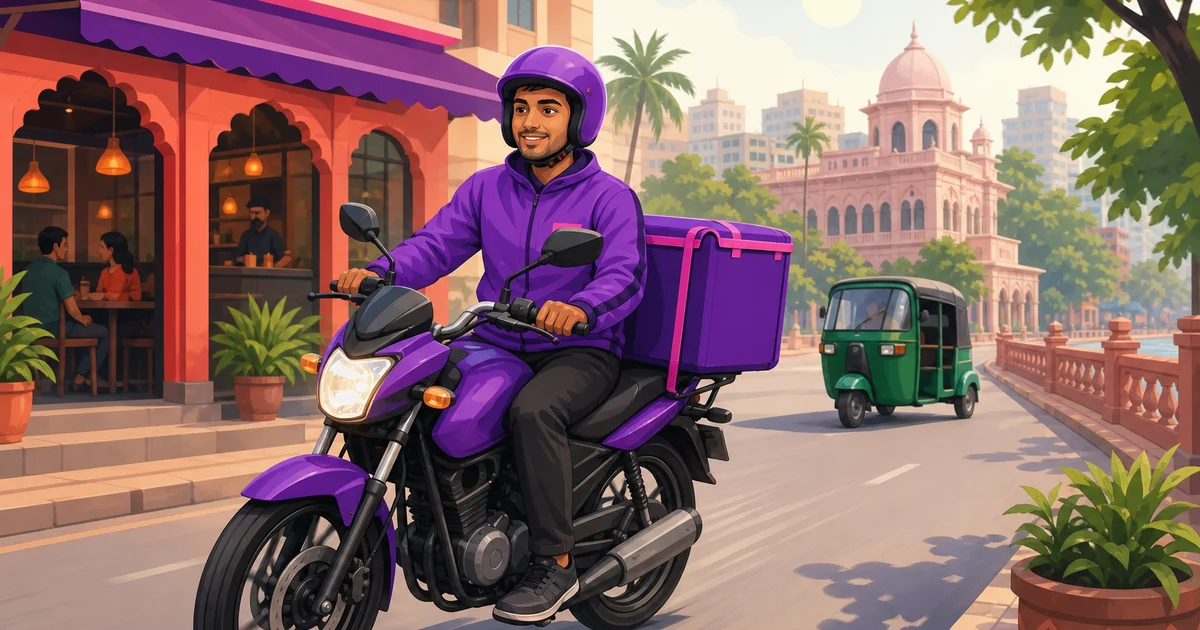
A restaurant delivery charge should recover a sensible share of the cost of sending an order to the customer. It should not be a random ৳50 copied from another restaurant. Traffic, rider wages, fuel, delivery distance, average order value and failed deliveries all affect the real number. If you operate your own riders, the fee must reflect their total cost. If you use a courier or marketplace, it must account for the fees you pay. The goal is simple: keep delivery attractive to customers without allowing it to quietly consume your food margin.
This guide explains how Bangladeshi restaurants can calculate delivery cost, create practical distance zones, set minimum order values and test whether free delivery actually pays for itself.
Start with your real cost per delivery
Before choosing a customer-facing fee, calculate what one completed delivery costs your business. For an own-rider operation, include more than fuel. Rider salary, allowances, mobile data, vehicle support, packaging and unsuccessful trips all belong in the calculation.
A useful monthly formula is:
Cost per completed delivery = total monthly delivery costs ÷ completed deliveries
Your total monthly delivery costs may include:
- Rider salary, overtime and attendance allowances
- Fuel or transport allowance
- Motorbike or bicycle maintenance paid by the restaurant
- Mobile phone and data support
- Delivery bags, rain protection and uniforms
- Extra packaging used only for delivery orders
- Failed deliveries, customer cancellations and return trips
- Any supervisor or dispatch cost directly linked to delivery
Suppose one rider costs ৳20,000 per month in salary and allowances, while fuel, maintenance and mobile support add another ৳8,000. The rider completes 350 successful deliveries. Your direct rider cost is ৳28,000 ÷ 350, or ৳80 per completed delivery. If delivery packaging costs ৳12 more than dine-in packaging, the operational cost becomes ৳92.
This does not mean every customer must pay ৳92. Part of the cost may be treated as a sales expense, especially when delivery generates orders that would not otherwise exist. But you should know the amount before deciding how much to subsidise.
How to set a restaurant delivery charge by zone
A single flat fee is easy to communicate, but it can be unfair to both the restaurant and nearby customers. A customer 800 metres away may cost much less to serve than someone five kilometres away during Dhaka traffic. Distance zones give you more control.
| Example zone | Distance | Possible charge | Operational approach |
|---|---|---|---|
| Zone A | Up to 2 km | ৳40 | Fast local delivery and lower fuel use |
| Zone B | More than 2 km to 4 km | ৳70 | Normal delivery area |
| Zone C | More than 4 km to 6 km | ৳100 | Higher fee or larger minimum order |
| Outside area | Over 6 km | Quoted or unavailable | Use a courier or decline if food quality may suffer |
These figures are examples, not a universal rate card. Test them against your location, average travel time and rider capacity. A kilometre in a dense part of Dhaka may take longer than the same distance in another city. Rain, peak traffic and difficult building access also change the cost.
Keep the structure simple enough for staff and customers to understand. Three zones are often easier to manage than seven. Use clear landmarks or postcode-style service areas where map distance is unreliable. Also define whether the distance is measured by road route or straight line.
A practical delivery policy should state the fee, service boundary, estimated time and minimum order. For more operational guidance, read this guide to restaurant delivery management.
Use minimum order values to protect margin
Small delivery orders are dangerous because the rider cost remains almost the same regardless of the food value. Delivering one ৳180 snack can cost as much as delivering a ৳900 family meal.
Set the minimum order by considering your contribution margin, not only your sales value. Contribution margin is the amount left after food cost, packaging and other costs directly tied to the order. That amount must help cover delivery and fixed business costs.
For example, assume an order has:
- Food sales value: ৳600
- Food and condiment cost: ৳240
- Delivery packaging: ৳30
- Payment or ordering cost: ৳10
The contribution before delivery is ৳320. If the restaurant subsidises ৳50 of an ৳80 delivery cost, ৳270 remains. That may be acceptable. On a ৳250 order with the same delivery subsidy, very little may remain after food and packaging costs.
You can respond in three ways: set a minimum order, charge a higher delivery fee for low-value orders, or limit distant zones to larger baskets. A rule such as “minimum food order ৳500, delivery from ৳40” is easier to understand than several hidden adjustments.
When free delivery pays for itself
Free delivery is not actually free. The restaurant pays the rider or courier, so the offer must create enough additional contribution to cover that expense.
Use this test:
Required free-delivery order value = delivery subsidy ÷ contribution margin percentage
If your average contribution margin before delivery is 50% and a delivery costs ৳80, you need ৳160 of contribution-generating sales just to fund that delivery cost. However, setting free delivery at ৳160 would leave nothing from that order for rent, salaries and profit. The threshold must therefore be much higher.
Suppose your normal order is ৳650 and the customer pays a ৳60 charge. You want to offer free delivery above ৳1,000. If the offer encourages the customer to add ৳350 of food with a 50% contribution margin, the additional contribution is ৳175. That comfortably covers the removed ৳60 charge, assuming the order does not require a longer or second trip.
Free delivery is more likely to work when it:
- Applies only above a profitable minimum basket
- Is restricted to nearby zones
- Runs during quieter periods when riders have spare capacity
- Encourages high-margin add-ons, drinks or family meals
- Is offered through your direct ordering channel rather than combined with a large marketplace commission
Measure the result. Compare average order value, contribution per order and repeat purchase rate before and during the promotion. Higher sales alone do not prove that the offer was profitable.
Worked example: own rider versus marketplace commission
Consider a restaurant receiving a ৳1,000 food order. Its food and direct preparation cost is ৳400, and delivery packaging costs ৳30. The following comparison uses an illustrative marketplace commission of 25%. Actual commissions, campaign contributions, taxes and other charges vary by agreement, so check your own statement.
| Item | Own-rider direct order | Marketplace order |
|---|---|---|
| Food sale | ৳1,000 | ৳1,000 |
| Food and preparation cost | ৳400 | ৳400 |
| Packaging | ৳30 | ৳30 |
| Delivery or commission cost | ৳90 rider cost | ৳250 illustrative commission |
| Customer delivery charge retained | ৳60 | Depends on marketplace terms |
| Amount left before fixed costs | ৳540 | ৳320 |
For the direct order, the calculation is ৳1,000 minus ৳400, minus ৳30, minus ৳90, plus the ৳60 delivery charge. This leaves ৳540 before fixed costs. The marketplace example leaves ৳320 before any additional marketplace charges or promotional contributions.
The difference does not automatically mean you should leave marketplaces. They can provide discovery, customer reach and order volume. The useful question is whether each channel produces enough profit after all channel-specific costs. Many restaurants use marketplaces for reach while building a direct customer base through commission-free online ordering.
Own riders, couriers or a mixed model?
Own riders offer more control over customer experience, cash collection and service area. They become economical when order density is high enough to keep riders productive. The risk is paying salary and fuel during quiet hours.
Third-party couriers convert part of the cost into a per-trip expense. This can suit a restaurant with irregular delivery volume, but long-distance or peak-hour pricing may be higher. Ask how failed attempts, waiting time, cash handling and returns are charged.
A mixed model often works well. Use your rider for nearby high-density zones and call a courier for overflow or distant orders. Record which method handled each order. Otherwise, you cannot compare true cost, delivery time and complaint rate.
Stop delivery from quietly eating margin
Review delivery performance weekly, not only when cash becomes tight. Track:
- Number of delivery orders by zone and channel
- Average food value and delivery fee collected
- Rider or courier cost per successful delivery
- Failed and cancelled delivery cost
- Average dispatch and completion time
- Discount, coupon and loyalty value used on delivery orders
- Contribution left after packaging and delivery
Be careful when stacking promotions. A discounted menu item, coupon, loyalty redemption and free delivery can turn a busy evening into a low-margin evening. Set rules for which offers can be combined and review the full order calculation.
Packaging also deserves attention. Cheap packaging that causes spills, soggy food or refunds is not actually cheap. At the same time, expensive packaging should be assigned to delivery cost rather than disappearing inside general expenses. See our overview of online food ordering in Bangladesh for more direct-order planning.
Manage delivery orders and reporting with Rosuii
Rosuii gives staff a dedicated delivery order type alongside dine-in and takeaway on the POS. Delivery orders follow a clear status workflow, while online customers can place orders through the branded storefront and track their order status. Marketplace tagging also helps identify orders coming from channels such as Foodpanda, Pathao or Shohoz Food.
Sales reports and order-type records make it easier to review delivery separately from dine-in and takeaway. Managers can compare delivery sales, order values and channel activity instead of treating every sale as if it had the same cost. Reports can also be exported to CSV for deeper margin calculations.
When creating a pricing policy, combine these sales figures with rider payroll, courier bills, packaging expenses and failed-delivery records. Rosuii records the orders, but management still needs to review the true operational cost and decide the right zone fee.
Rosuii is free to start and runs in a browser on phones, tablets and laptops, with no setup fee or hardware lock-in. Paid plans range from ৳500 to ৳2,500 per month depending on features and scale.
Set a policy, then improve it with real data
Start with a manageable zone structure, a clear minimum order and a delivery fee based on actual cost. Test free delivery only where larger baskets can fund it. Compare own-rider economics with marketplace or courier charges using the same order value and cost assumptions.
Most importantly, review the numbers regularly. Fuel prices, rider productivity, traffic and customer behaviour change. Your delivery charge should change when the economics change.
Ready to organise delivery, online orders and restaurant reporting in one system? Register for Rosuii and start free.
Last updated:
Frequently asked questions
How much should a restaurant delivery charge be in Bangladesh?
Should I charge the same delivery fee for every location?
What minimum order value should I set for delivery?
When is free delivery profitable for a restaurant?
Is an own rider cheaper than a food marketplace?
Run your restaurant on Rosuii
POS, menu, inventory, payroll and more — built for Bangladeshi restaurants.
Start free