Tong Dokan Business in Bangladesh: The Smallest Food Business That Works
A practical guide to tong construction costs, tea and cigarette margins, daily cash control, permissions and realistic income for a self-run stall.
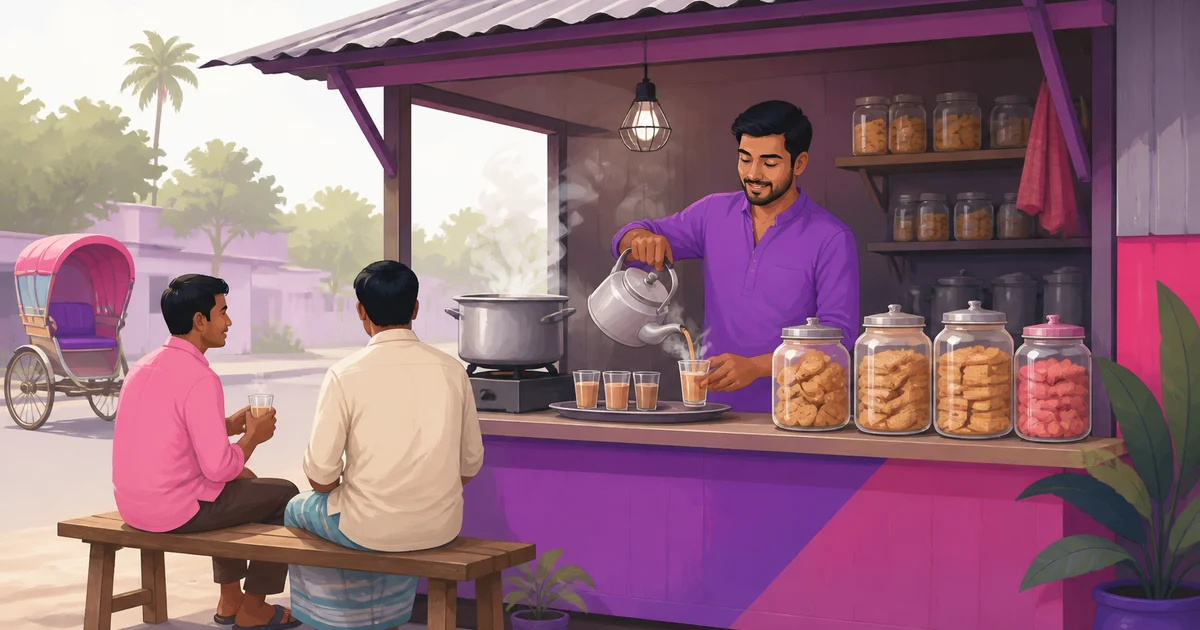
A tong dokan business is one of the smallest food businesses you can start in Bangladesh. It is usually a roadside wooden or tin counter selling tea, biscuits, cigarettes, bananas and a few packaged products. It is smaller and cheaper than a tea-stall cafe, but success still depends on location, disciplined cash handling and enough tea sales. For someone with limited capital who will operate the stall personally, a tong can create an income. It should not be mistaken for effortless profit.
What a tong dokan actually sells
The classic tong works because it serves quick, repeat purchases. Customers may stop several times a day, but they rarely spend much per visit. Your product range should therefore be small and fast-moving.
- Tea: Milk tea, red tea and occasionally lemon tea. Tea normally contributes the strongest gross profit because the selling price is well above the direct cost of tea leaves, sugar, milk, fuel and the cup.
- Biscuits: Packets and loose biscuits have moderate margins and encourage tea purchases. Open jars carefully because moisture, dust and breakage create losses.
- Cigarettes: These can produce a large share of sales revenue, especially near offices, workshops and transport points, but the percentage margin is usually thin. Sell at the applicable price and follow tobacco sale, display and location restrictions.
- Bananas: Easy to display and popular at breakfast, but overbuying causes spoilage.
- Water and packaged snacks: Useful additions where foot traffic is strong, although cold drinks require refrigeration or an ice arrangement.
A beginner often looks at cigarette turnover and assumes it is the main profit source. Usually it is not. Cigarettes bring customers and cash volume. Tea is more likely to carry the gross margin.
How much does a tong dokan business cost?
Market rates differ by district, material quality and whether you use new or reclaimed wood. Check current prices with at least two local carpenters and hardware shops before spending. The following ranges are planning estimates, not quotations.
Cost of building the tong itself
- Basic bamboo, reclaimed wood and corrugated-tin structure: approximately ৳12,000 to ৳30,000.
- Stronger wooden or steel-frame tong with shutters: approximately ৳30,000 to ৳65,000.
- Counter, shelves, lockable storage and small bench: approximately ৳4,000 to ৳15,000, depending on what is included in the structure.
A cheap tong is not cheap if rain enters, the shutter cannot be locked or the counter must be rebuilt after one season. Prioritise a dry roof, stable counter, safe stove area and lockable stock storage. If the structure occupies public land without approval, spending heavily on it is particularly risky.
Equipment and opening stock
- Gas stove, cylinder or another locally permitted heat source: roughly ৳3,000 to ৳9,000.
- Kettles, pots, strainers, spoons and measuring containers: roughly ৳2,000 to ৳6,000.
- Cups, glasses, biscuit jars and trays: roughly ৳2,000 to ৳7,000.
- Water drums, filter or covered storage: roughly ৳1,500 to ৳6,000.
- Lights, wiring, rechargeable lamp and basic electrical work: roughly ৳1,000 to ৳5,000.
- Opening stock of tea, milk, sugar, biscuits, cigarettes, bananas and water: roughly ৳8,000 to ৳25,000.
- Cleaning supplies, waste bin and fire-safety items: roughly ৳1,000 to ৳5,000.
A lean self-run setup may therefore require around ৳30,000 to ৳70,000 if you use a basic structure and control stock tightly. A stronger, better-equipped setup can move towards ৳60,000 to ৳120,000 or more. Advance rent, unofficial location charges, electricity connection and working capital can sit outside these figures. Keep at least one or two weeks of purchasing cash instead of spending every taka on construction.
Realistic daily sales and margin arithmetic
Do not calculate profit by applying one percentage to total sales. Tea, cigarettes and bananas have very different margins. Use your own supplier invoices and count what was actually sold.
Consider this sample day. It is illustrative, and local selling prices and input costs will move.
- Tea: 100 cups sold at an average ৳15 gives ৳1,500 sales. If the direct cost averages ৳7 per cup, gross profit is ৳800.
- Biscuits: 35 portions or packets at an average ৳15 gives ৳525 sales. At an average cost of ৳11, gross profit is ৳140.
- Cigarettes: ৳1,800 of sales at an assumed 4 to 8 percent margin produces only about ৳72 to ৳144 gross profit.
- Bananas: 20 bananas sold at ৳15 gives ৳300 sales. If each costs ৳11 after allowing for some spoilage, gross profit is ৳80.
- Water and other packaged items: ৳300 sales at a 10 to 20 percent margin gives roughly ৳30 to ৳60 gross profit.
Total daily sales in this example are ৳4,425. Gross profit is approximately ৳1,122 to ৳1,224. From that, subtract gas, electricity, transport, cleaning, damaged goods, location cost and any helper wage. If those daily operating costs equal ৳300 to ৳600, the owner may retain around ৳522 to ৳924 before valuing their own labour, replacing equipment, paying taxes or covering closed days.
At 26 trading days, that example implies roughly ৳13,500 to ৳24,000 in monthly owner operating surplus. It is not a promise. A weak location may sell half as much, while an exceptional commuter or factory location may sell considerably more.
Redo the calculation using this formula: quantity sold × selling price, minus quantity sold × unit cost, minus daily overhead. For milk tea, calculate a full batch cost covering tea, milk, sugar, fuel and cups, then divide it by the number of saleable cups.
Location matters more than decoration
A tong needs repeat foot traffic at the hours when people drink tea. Look near workshops, markets, office clusters, construction areas, transport waiting points and worker accommodation. Observe a location on several weekdays before committing. Count people at breakfast, midday, late afternoon and evening.
Also check practical matters: safe water, drainage, rain protection, waste disposal, lighting and whether customers can stand without blocking pedestrians or traffic. Ask who controls the land. A verbal promise from a nearby shopkeeper may not give that person authority to let you occupy a footpath.
If you need mobility because a permanent spot is unavailable, compare the model with a street food cart business in Bangladesh. A cart may reduce construction risk, but moving vendors still face city-corporation rules, enforcement and uncertainty over where trading is allowed.
Permission and licence reality
Rules and enforcement vary between city corporations, municipalities and other local authorities. For a fixed commercial location, a trade licence from the relevant local authority generally applies. The authority may ask for identification, photographs, tenancy or ownership documents, and other location-specific papers. Requirements and fees can change, so confirm them directly before building.
Food businesses with fixed premises should also check the applicable Bangladesh Food Safety Authority food-business registration or licensing requirement for their category. Hygiene, safe water, covered ingredients and clean utensils matter even at the smallest scale. Once you move into a fixed shop, do not assume that being small exempts you from food-safety obligations.
A moving cart or informal roadside tong is often governed in practice by local city-corporation or municipal rules, public-space controls and local arrangements. An informal payment or verbal understanding is not the same as legal permission. It can be stopped without warning. Avoid placing permanent construction on public land until the responsible authority confirms what is allowed.
If you sell tobacco, verify current restrictions concerning sale, advertising, display and permitted locations. Keep tobacco away from food preparation and never treat higher tobacco turnover as a reason to ignore legal or public-health requirements.
Daily cash handling for an owner-run tong
Small cash leaks can consume most of the profit. Start each day with a fixed change float and record it. Keep purchase money separate from personal cash. At closing, count cash and mobile payments, then compare the total with estimated sales and expenses.
- Write down every supplier purchase, including emergency milk or sugar bought during the day.
- Count high-value cigarette stock by pack or stick at opening and closing.
- Record free tea, personal consumption and customer credit. They are still costs.
- Avoid giving open-ended credit to regular customers. Set a small limit and settlement day.
- Deposit or remove surplus cash regularly instead of storing several days of sales in the tong.
A notebook is enough at first. The important part is using it every day. If you later need more formal planning for a fixed food outlet, read these restaurant business ideas for Bangladesh and the guide to starting a small restaurant business in Bangladesh.
Where beginners lose money
- Building before securing the location: The structure becomes worthless if the stall is removed or the landowner changes their mind.
- Confusing sales with profit: Cigarette revenue can make the cash box look busy while producing little gross margin.
- Too much stock: Bananas spoil, biscuits become soft and cash remains trapped in slow brands.
- Unmeasured tea: Random amounts of milk, sugar and tea leaves make cup costs unpredictable.
- Customer credit: A few unpaid daily balances can erase the margin from dozens of cups.
- Poor cleanliness: Dirty glasses, uncovered water and flies quickly drive away repeat customers.
- Ignoring the owner's time: A stall open 14 hours may generate income but still provide a weak return per working hour.
The honest income ceiling
A tong has limited counter space, storage, seating and production capacity. One owner can only make and serve so many cups while handling cash and restocking. You may improve income by adding breakfast items or cold drinks, but each addition increases equipment, hygiene and wastage requirements.
Consider moving to a fixed shop when demand regularly exceeds your ability to serve, customers ask for seating, stock cannot be secured, weather closes the stall, or local permission remains uncertain. A fixed shop costs more in rent and compliance, but it can support a broader menu, refrigeration, staff and longer-term branding.
Do not expand based on one strong week. Keep at least eight to twelve weeks of sales and cost records. Upgrade only when average profit can cover the new rent, utilities, licence costs and a safety reserve.
Should a tong use restaurant software?
Most very small tongs do not need complicated software. A notebook, calculator and daily stock count may be more practical. If you begin taking structured food orders, want billing on a phone, or need daily sales totals and stock records for a handful of items, Rosuii can help without dedicated POS hardware. The free plan is available for a small operation, although internet is still required for live syncing and online payment confirmation.
Start simple, prove the location and know your margin before adding cost. If your tong is becoming a fixed, organised food business, register with Rosuii and test whether phone-based billing and daily sales tracking fit your operation.
Last updated:
Frequently asked questions
How much capital is needed to start a tong dokan in Bangladesh?
Which tong dokan item usually has the highest profit margin?
Does a roadside tong dokan need a trade licence?
When does a tong dokan need a BFSA food licence or registration?
How much can an owner-run tong dokan earn per month?
Run your restaurant on Rosuii
POS, menu, inventory, payroll and more — built for Bangladeshi restaurants.
Start free