
Restaurant Recipes
Beef Burger Patty
A commercial beef burger patty recipe producing 40 consistent 125 g patties, with practical guidance on fat ratio, binding, freezing and griddle service.
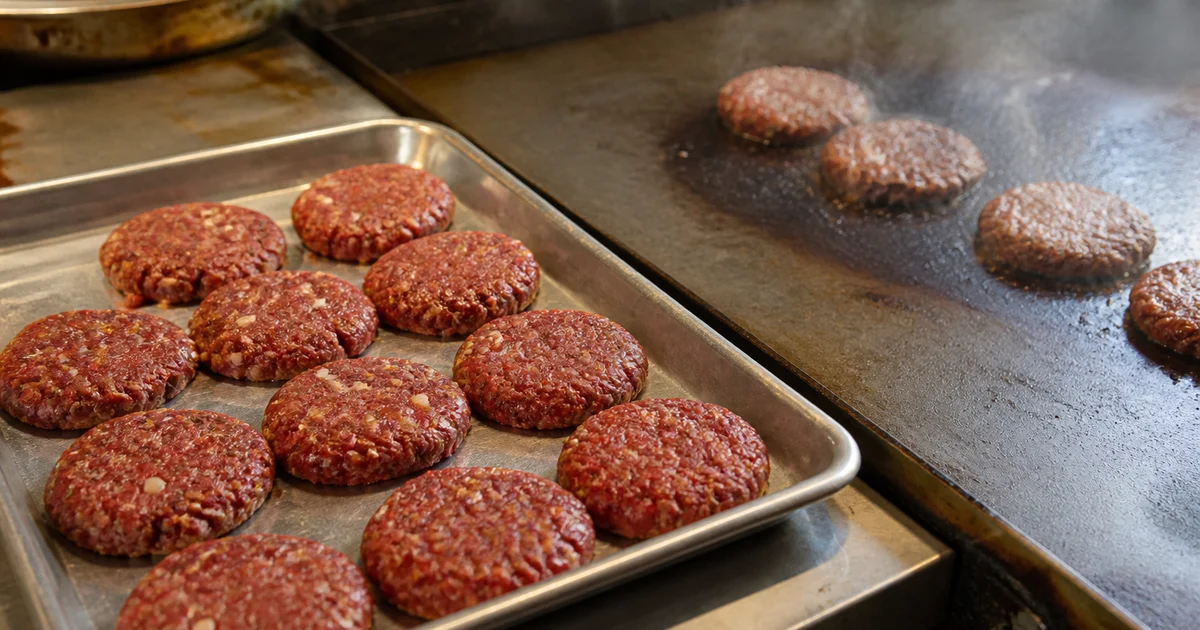
- Prep
- 45 min
- Cook
- 45 min
- Total
- 1 hr 30 min
- Yield
- 40 patties of 125 g raw weight
- Difficulty
- Medium
- Cuisine
- Continental
Method
- 1
Chill the grinding setup
Cool the beef, fat and grinder components to 0°C to 4°C for at least 30 minutes. The fat must feel firm, and no ingredient should exceed 5°C when grinding begins.
- 2
Grind beef and fat
Pass the beef and fat together through an 8 mm plate, followed by a 6 mm plate. Collect the mince in a chilled bowl and stop if the fat begins smearing or the mixture rises above 7°C.
- 3
Combine liquid seasoning
Mix the ice water, Worcestershire sauce and garlic paste until evenly dispersed. Keep the liquid below 5°C and pour it over the ground meat in a wide, even pattern.
- 4
Add dry binding mix
Combine the breadcrumbs, salt, onion powder and black pepper before sprinkling them evenly over the mince. Mix for 60 to 90 seconds, stopping when the mixture becomes slightly tacky and holds together when squeezed.
- 5
Check the seasoning
Fry a 20 to 30 g sample on a 190°C griddle until its centre reaches 71°C. Check salt, beef flavour and binding, then make only measured corrections while the main mixture remains below 5°C.
- 6
Portion and shape patties
Weigh 125 g portions and form them approximately 11 cm wide and 1.2 to 1.5 cm thick. Smooth cracked edges and press a shallow depression into each centre without heavily compacting the meat.
- 7
Separate and chill
Place each patty between food-grade burger papers and chill at 0°C to 5°C for at least 30 minutes. For frozen stock, harden in single layers at -18°C for 2 to 3 hours before stacking, sealing and labelling.
- 8
Preheat the griddle
Heat the flat-top griddle to 190°C to 205°C for at least 15 minutes, then apply a very thin coating of oil. Arrange patties with space between them and avoid loading enough cold meat to pull the surface below 175°C.
- 9
Griddle to safe temperature
Cook chilled patties for approximately 4 to 5 minutes on the first side and 3 to 4 minutes after turning. Do not repeatedly press them, and verify a minimum centre temperature of 71°C with a sanitised probe.
- 10
Hold for service
Serve immediately where possible or hold covered at 60°C or above for no more than 30 minutes for best quality. If reheating properly chilled cooked patties, heat them once to 74°C and serve without returning them to storage.
Notes for your kitchen
This beef burger patty recipe produces 40 consistent patties for restaurant, cafe or food-cart service. The batch is designed around a 125 g raw portion, an 80:20 lean-beef-to-fat meat blend and controlled binding. Patties can be prepared before service, separated with paper and cooked quickly on a flat griddle without requiring a large finishing station.
Why this patty works commercially
A commercial burger patty must cook quickly, stay juicy and deliver the same bun coverage on every order. A 125 g patty shaped to approximately 11 cm gives useful coverage for common medium burger buns after cooking shrinkage. The moderate thickness also allows the centre to reach a safe temperature without burning the outside during busy service.
The recipe includes limited binding rather than a heavy breadcrumb mixture. Salt extracts sticky meat proteins, while a small quantity of fine breadcrumb holds some of the added liquid and rendered fat. This improves handling during stacking, freezing and high-volume cooking without turning the patty into a soft kebab or meatloaf.
One base patty can support cheese, egg, sauce and double-patty menu variations. That lets an operator offer several products while controlling only one core production item.
Ingredient quality matters most in the beef and fat
Clean beef flavour and firm white fat matter more than expensive seasoning. Use boneless chuck, shoulder or similar forequarter meat with visible sinew, glands, bruised tissue and bone fragments removed. Excessively sinewy trim blocks the grinder plate and creates chewy strands in the cooked patty.
The meat phase uses approximately 80% lean beef and 20% beef fat. Very lean mince often becomes dry and tight, while excessive or soft fat causes severe shrinkage, flare-ups and greasy buns. Use clean, chilled beef fat or fatty brisket trim rather than yellow, oxidised or strong-smelling fat. If buying ready mince, request the supplier's fat specification instead of judging only by colour.
Use fine, dry breadcrumb with predictable absorption. Fresh bread, wet onion and hand-squeezed onion paste introduce changing amounts of water and make one batch behave differently from the next. Onion powder is more consistent for production. Worcestershire sauce should be halal-certified and checked for fish allergens where applicable.
Cold grinding protects texture
The meat and grinder must remain below 5°C to produce a distinct, juicy grind. Warm fat smears across the grinder plate instead of cutting cleanly. Smeared fat makes the raw mixture greasy, weakens the structure and renders out early on the griddle.
Chill the cubed beef, fat, grinder head, auger, knife and plates before starting. A coarse first pass distributes the fat, while a second pass through a medium plate gives a patty that holds together without becoming pasty. Stop and rechill the mixture if its temperature rises above 7°C.
Add liquids and dry seasoning evenly rather than dropping everything into one area. Mix only until the mince becomes slightly tacky and holds together when squeezed. This short mixing period develops enough binding. Long mechanical mixing extracts too much protein and produces a springy, sausage-like bite.
Scaling must follow percentages and mixer capacity
Scale every ingredient by batch weight, not by spoon count or estimated handfuls. In the complete mixture, lean beef is approximately 75.2%, added beef fat 18.9%, ice water 2%, breadcrumb 1.2%, salt 1% and the remaining seasoning approximately 1.7%. The lean beef and added fat together maintain an 80:20 meat-phase ratio.
For a half batch, multiply every weight by 0.5. For a double batch, multiply by 2 but divide the mixture into manageable mixer loads. A bowl should generally not be filled beyond about 70% of its working capacity because overloaded mixers blend unevenly and warm the meat. Check the finished mixture temperature after every load and keep it at or below 5°C before shaping.
Always fry a small quality-control sample before forming the whole production. Evaluate salt, aroma, binding and fat loss, then document any authorised correction. Do not adjust a batch by adding unmeasured sauce or breadcrumb.
Portion weight controls yield and bun coverage
A 125 g raw target must be checked on a scale throughout production. This formula makes approximately 5.08 kg of mixture, allowing 5 kg for 40 saleable patties plus a small allowance for the test sample and mixture left on equipment. Weigh every patty during staff training, then check at least the first three and every fifth patty once the process is stable.
Shape each portion to the same diameter and thickness instead of making some patties thick and others wide. Press out trapped air, smooth cracked edges and make a shallow centre depression to reduce doming. Do not compress the meat until it becomes dense.
Raw weight is the production standard. Cooked weight will change with beef moisture, griddle temperature and doneness, commonly making it unsuitable as the main portion-control measurement. Use a documented portion control procedure and investigate short yield as over-portioning, unrecorded samples or avoidable residue.
Paper separation prevents freezing losses
Every patty should be separated with food-grade burger paper before stacking. Place formed patties in a single layer until firm, then stack no more than about 10 patties per pile to prevent lower patties from becoming misshapen. Cover chilled trays so exposed surfaces do not darken or dry out.
For freezing, harden patties in single layers at -18°C until firm, normally 2 to 3 hours depending on freezer airflow. Stack with paper, seal against air and label the production date, batch and patty weight. Maintain -18°C and use within 2 months for best commercial quality. Thaw covered under refrigeration at 0°C to 5°C, never at room temperature.
Griddle control determines service speed
A loaded griddle should cook patties at 190°C to 205°C without falling below approximately 175°C. Preheat the full cooking surface for at least 15 minutes and verify it with an infrared or surface probe thermometer. Loading too many cold patties at once causes steaming, pale colour and longer ticket times.
Divide the surface into loading, turning and finishing zones. Cook in rows and follow the same sequence when turning so every patty receives similar time. Leave space between patties and avoid pressing after the initial placement because pressing forces out rendered fat and moisture.
Cook ground beef to at least 71°C at the centre, checking through the side with a sanitised probe. During rush periods, load only enough patties for the griddle to recover quickly. Record typical batch time for the actual griddle because gas pressure, plate thickness and patty starting temperature all affect output.
Holding and reheating need strict limits
Freshly griddled patties give the best result, while hot holding should be limited to 30 minutes for quality. Hold cooked patties covered at 60°C or above, preferably with only a small amount of their cooking juice. Long holding dries the edges and continues cooking the centre.
Keep raw service stock at 5°C or below and bring out trays of only 8 to 10 patties at a time. If cooked patties must be chilled, cool them from 60°C to 21°C within 2 hours and from 21°C to 5°C within a further 4 hours. Refrigerate for no more than 48 hours in a controlled commercial cold chain, then reheat once to 74°C before serving. A covered griddle finish is better than microwave reheating because it restores surface browning.
Common mistakes directly reduce profit
The most expensive burger mistakes are uncontrolled fat, inconsistent portions and poor temperature management.
- Using unknown mince: Changing fat levels create changing shrinkage, yield and cooking times.
- Adding excess binder: Too much breadcrumb lowers beef flavour and creates a soft, bready centre.
- Mixing warm meat: Fat smearing causes greasy handling and excessive loss on the griddle.
- Estimating portions by hand: An extra 10 g across 40 patties consumes 400 g of sellable mixture.
- Stacking without paper: Frozen patties fuse together, break during separation and create wastage.
- Crowding the griddle: A sudden temperature drop prevents browning and delays service.
- Pressing while cooking: Repeated pressing removes moisture and reduces cooked yield.
Stable cost comes from specifications and records
Beef purchasing and portion accuracy control most of the cost of this patty. Agree on cut, trimming level, fat specification and receiving temperature with the supplier. Compare usable weight after trimming rather than choosing only by the quoted kilogram rate.
Build the standard batch into recipe costing and review the resulting food cost percentage when beef prices, supplier yield or patty size change. Rosuii can record raw materials through inventory and convert them into finished patty stock through its productions feature, while wastage records can capture damaged or rejected patties. Count frozen patties by labelled batch so old stock is used first and unexplained shortages are visible.
What drives the cost
Beef is the dominant cost, with the usable yield, cut selection, trimming level and supplier's fat specification causing the largest movement. Portion weight, griddle shrinkage and patties damaged during freezing also affect the cost per saleable burger.
Ingredient rates move with the market, so this describes what drives the cost rather than quoting a figure.
Questions from kitchens
How do I scale this beef burger patty recipe to 100 patties?
How long can raw patties stay refrigerated?
Can I replace beef fat with vegetable oil?
Can the patties be cooked directly from frozen?
Why did the batch produce fewer than 40 patties?
Related recipes
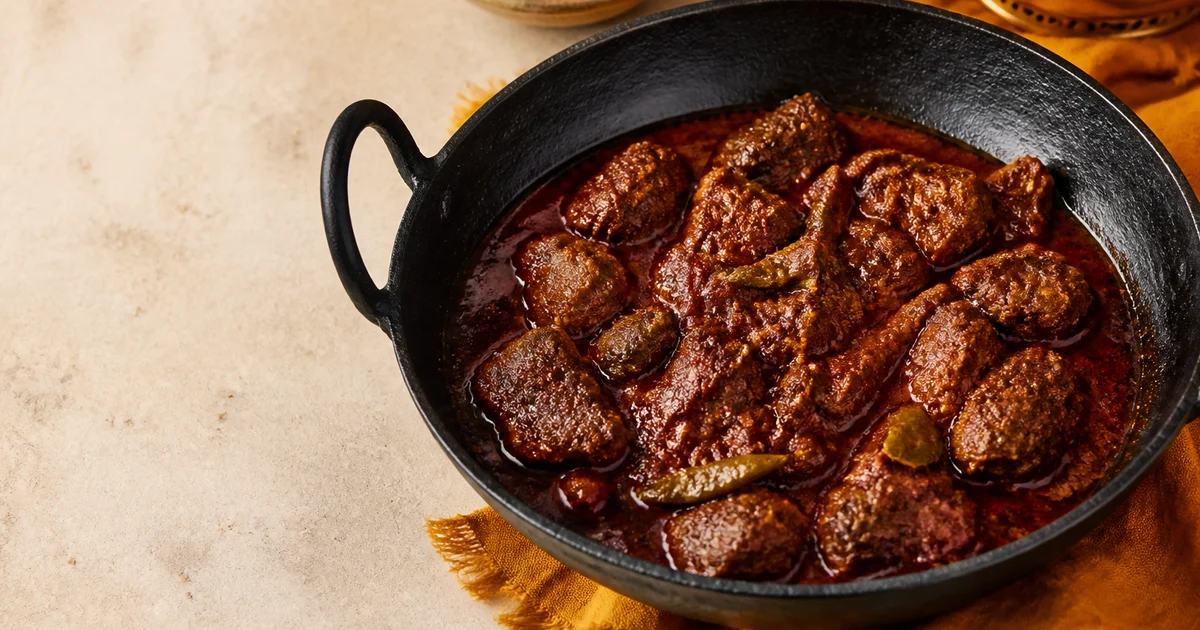
Commercial Beef Bhuna Recipe
A commercial beef bhuna recipe for about 40 plates, with a long bhuna stage, clear oil-separation cues, controlled portions and service-safe reheating.
- Yield:
- about 40 plates
- Total:
- 4 hr 15 min
- Difficulty:
- Medium
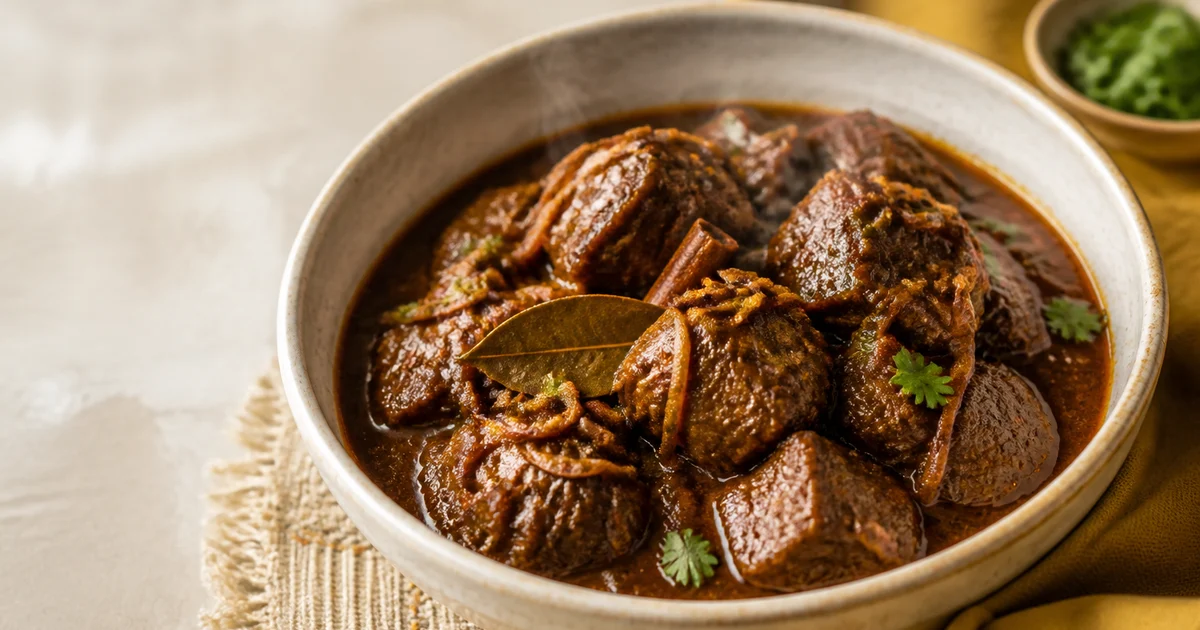
Commercial Beef Kalia Recipe
A commercial beef kalia recipe for about 40 plates, with tender bone-in beef, festive ghee-rich gravy, controlled portions and service guidance.
- Yield:
- about 40 plates
- Total:
- 4 hr
- Difficulty:
- Medium
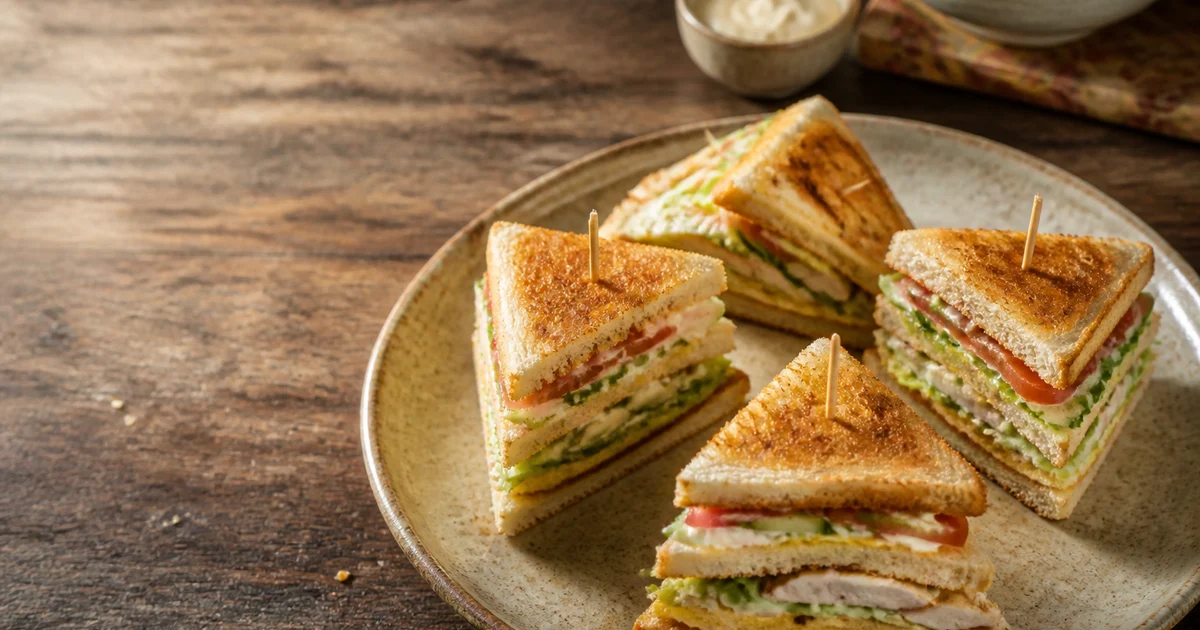
Commercial Club Sandwich Recipe
A commercial club sandwich recipe for 40 plates, with standard portions, advance filling prep, crisp bread handling and fast assembly-line service.
- Yield:
- about 40 plates
- Total:
- 3 hr 30 min
- Difficulty:
- Medium
Run your restaurant on Rosuii
POS, menu, inventory, payroll and more — built for Bangladeshi restaurants.
Start free