Coffee Shop Business in Bangladesh: Setup Cost and Menu
Plan a coffee shop in Bangladesh: compare setup costs, equipment, menu pricing, rent and break-even sales using clearly labelled budgeting examples.
Last verified: 2026-09-23
A small coffee shop business can suit an owner-operator with limited capital, but it should not be treated as a more expensive tea stall. Coffee depends on consistent taste, fast preparation and repeat customers. The espresso machine is visible, yet rent, seating, milk wastage and slow hours often decide whether the shop survives.
The taka ranges below are illustrative budgeting assumptions, not a current supplier survey or quotations. Equipment prices, imported coffee costs, rents and licence fees move by location and exchange rate. Check current supplier prices and local authority requirements before paying a deposit.
Is a Coffee Shop Business Different from a Tea Stall?
A tea stall can serve a broad local audience at a low price with simple equipment. A coffee shop usually serves fewer customers at a higher average bill. Those customers expect a clean setting, a recognisable drink and the same quality on every visit.
This changes the economics. A tea stall may depend on passing traffic and volume. A coffee shop needs enough repeat customers within a small catchment, such as students, office workers or residents. A beautiful shop with weak repeat business can remain busy during opening week and empty afterwards.
Before choosing a location, spend several mornings and evenings counting people. Note nearby offices, coaching centres, universities, hospitals, apartments and competing cafes. Speak to potential customers about what they currently pay. If the area will not support drinks priced around ৳120 to ৳250, an espresso-led shop may be difficult.
If your budget is very small and your customers mainly want quick snacks, compare the model with a street food cart business in Bangladesh. You may also review other restaurant business ideas for Bangladesh before committing to rent.
Choose Manual Brewing or an Espresso Machine
Manual brewing at entry level
Manual methods such as a French press, AeroPress-style brewer, pour-over dripper or moka pot reduce the opening investment. A basic manual setup may require roughly ৳20,000 to ৳80,000 for brewers, a capable grinder, kettle, scale, water treatment and small tools. Prices vary widely by brand and whether equipment is imported.
This model works for a kiosk, cart or tiny takeaway counter selling black coffee, cold coffee and a short snack menu. The disadvantage is speed. Preparing several individual pour-overs during a rush is slow, and customers looking for a cafe-style cappuccino may not accept the result as an equivalent.
Entry-level espresso service
A coffee shop serving espresso, americano, latte and cappuccino needs a machine that can handle repeated orders and steam milk reliably. An entry commercial or serious prosumer machine may cost around ৳180,000 to ৳450,000. A higher-capacity commercial setup can go beyond this range. A suitable espresso grinder may add ৳35,000 to ৳120,000.
Do not select the machine alone. Ask about local servicing, spare parts, voltage stability, water filtration, boiler recovery and how many milk drinks it can produce during a rush. A cheap domestic machine may make acceptable drinks at home but struggle with continuous cafe use.
For a first shop, buying an oversized two-group machine can lock scarce cash into equipment while rent and working capital remain unpaid. Match the machine to expected peak orders, not to social media photos.
What You Actually Need to Buy
A small owner-operated espresso shop should budget for the complete operating setup:
- Espresso machine: approximately ৳180,000 to ৳450,000 for an entry commercial or capable prosumer unit.
- Espresso grinder: around ৳35,000 to ৳120,000. Grind consistency affects every cup, so this is not an optional accessory.
- Manual brew tools: roughly ৳5,000 to ৳25,000 if you offer pour-over or batch alternatives.
- Water filtration: around ৳8,000 to ৳35,000, depending on local water and capacity. Test the water before choosing a system.
- Refrigerator and blender: approximately ৳35,000 to ৳100,000 combined, depending on size and condition.
- Small tools: allow about ৳15,000 to ৳45,000 for scales, tampers, milk pitchers, thermometers, knock box, storage containers and cleaning supplies.
- Counter, sink and electrical work: roughly ৳40,000 to ৳150,000 for a modest premises. Plumbing and electrical upgrades can raise the amount.
- Furniture and signage: around ৳30,000 to ৳150,000. A takeaway-first shop can stay near the lower end.
- Opening stock and packaging: approximately ৳20,000 to ৳60,000 for beans, milk, syrups, cups, lids, tissues and food items.
A lean manual-brew kiosk might open within roughly ৳150,000 to ৳400,000 if the space needs little work. A small espresso shop may require about ৳400,000 to ৳1,200,000 after equipment, deposit, fit-out and working capital. These are broad planning ranges. Used equipment can reduce the purchase price, but only if a technician checks the boiler, pump, seals and grinder burrs.
Bean, Grinder and Milk Economics
Beans should be sourced from a roaster that can provide a stable blend, roast date and repeat supply. Depending on origin, roast quality and order quantity, roasted beans may cost roughly ৳1,200 to ৳3,500 per kilogram. Imported premium lots can cost more.
An espresso dose of 16 to 18 grams gives a theoretical 55 to 62 drinks per kilogram. Real yield is lower because staff adjust the grinder, test shots and occasionally remake drinks. At ৳1,800 per kilogram and 18 grams per drink, the bean cost is about ৳32 before wastage. At ৳3,000 per kilogram, it is about ৳54.
The grinder controls dose and extraction. An inconsistent grinder wastes expensive beans and produces drinks that customers cannot trust. Spending slightly less on decoration and more on a serviceable grinder is often the better decision.
Milk deserves equal attention. If milk costs around ৳100 to ৳140 per litre and a latte uses 180 to 220 millilitres, the milk component may be roughly ৳18 to ৳31. Spillage, over-pouring and expired open packs increase that figure. Measure milk by pitcher size, store it at a safe temperature and track how many litres are opened each day.
Coffee shop price: menu prices versus startup cost
A cup price, an equipment quote and the cost of opening a shop answer different questions. Compare drinks using the same size, hot or iced preparation and included charges. For menu examples and a per-cup worksheet, use our coffee shop price guide for Bangladesh. The budget below is for an owner planning a business.
Keep the Opening Menu Short
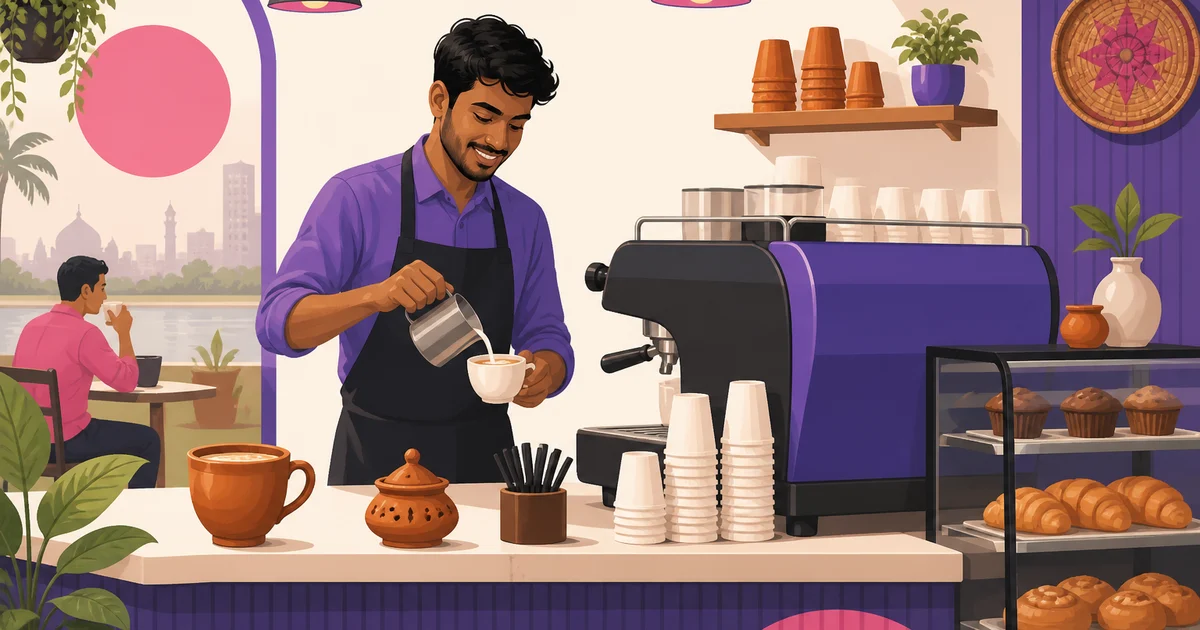
A practical starting menu can include espresso, americano, cappuccino, latte, iced latte, cold coffee, tea, bottled water and two or three simple snacks. Avoid buying ten syrups and stocking a large bakery display before demand is proven.
Price each item from its actual variable cost. Include beans, milk, sugar, syrup, cup, lid, tissue, payment charge and expected wastage. A drink selling for ৳180 is not producing ৳180 of profit.
- Espresso or americano may sell around ৳100 to ৳180.
- Milk-based hot coffee may sell around ৳150 to ৳250.
- Iced or flavoured coffee may sell around ৳180 to ৳300.
- Simple snacks may sell around ৳60 to ৳220.
These are hypothetical menu-planning ranges, not measured market averages or recommended fixed prices. Your neighbourhood, portion size and ingredient quality should determine the final menu.
Realistic Daily Sales and Margin Arithmetic
Use a simple model that you can replace with your own numbers. Suppose an owner-operated shop sells 35 orders per day at an average bill of ৳180:
- Daily sales: 35 × ৳180 = ৳6,300.
- Average variable cost: assume ৳70 per order for ingredients, packaging and routine wastage.
- Daily variable cost: 35 × ৳70 = ৳2,450.
- Daily contribution: ৳6,300 minus ৳2,450 = ৳3,850.
Now subtract fixed and operating costs. If daily rent allocation is ৳1,200, utilities are ৳300 and cleaning or minor wastage is ৳150, about ৳2,200 remains. That is before equipment depreciation, repairs, licences, taxes, financing and a salary for your own labour.
To calculate break-even orders, divide daily fixed costs by contribution per order. If fixed costs are ৳2,500 and each ৳180 order contributes ৳110 after variable cost, you need about 23 orders per day just to cover those fixed costs. Add the income you need as an owner before deciding that the business is profitable.
Daily sales can vary sharply. A weak site may struggle below 15 to 20 orders, while a well-matched neighbourhood shop may reach 40 to 80 or more. Do not build your rent commitment around the best weekend. Use conservative weekday sales.
Rent and Seating Are Often the Real Burden
A shop that pays ৳25,000 to ৳80,000 monthly rent may also need an advance or security deposit equal to several months. Prime Dhaka locations can be substantially higher. Fit-out spending is difficult to recover if the location fails.
Seating creates longer visits, cleaning work, air-conditioning costs and pressure for a better washroom and interior. Eight carefully planned seats may produce a healthier business than twenty seats in an expensive space. Takeaway service and a narrow counter can reduce both rent and furniture costs.
Read the tenancy agreement carefully. Confirm permission for food service, signage, exhaust or ventilation, electrical load, water access, operating hours and delivery rider collection. For a broader premises checklist, see this guide to a small restaurant business in Bangladesh.
Licences for a Small Coffee Shop in Bangladesh
A fixed coffee shop generally needs a trade licence from the relevant city corporation, municipality or union parishad. The category and fee depend on the premises and local authority. Keep the tenancy agreement, owner permission, identification and other requested documents ready.
Once you operate from a fixed food premises, check the Bangladesh Food Safety Authority requirements for the applicable food establishment licence or registration. Requirements and implementation can change, so confirm directly with BFSA and your local office rather than relying only on a broker.
A moving cart is less straightforward. It is commonly governed by city-corporation rules, designated vending areas, local permissions and, in practice, informal arrangements. An informal payment or verbal understanding is not a legal licence. Ask the relevant local authority whether vending is permitted at your intended spot before buying the cart.
TIN, VAT registration, fire-safety approval and other permissions may apply depending on turnover, premises, building and business structure. Confirm your VAT obligations with your VAT circle and take professional advice if the shop grows.
Where Beginners Lose Money
- Paying too much rent: optimistic sales forecasts cannot rescue a weak location with a heavy monthly commitment.
- Buying the machine but underfunding the grinder: inconsistent grinding causes slow service, wasted shots and uneven taste.
- Opening with a large menu: extra syrups, bakery items and ingredients expire before demand develops.
- Ignoring milk wastage: over-pouring a little milk into every cup becomes a large monthly cost.
- Mixing personal and shop cash: the owner withdraws money without recording it and then cannot explain why stock is gone.
- Depending on first-time visitors: promotions may create a crowd, but regular customers pay the rent.
- Having no repair reserve: one failed pump, refrigerator or grinder can stop sales.
Build the Business Around Repeat Customers
Record what regulars drink, keep opening hours dependable and make the same beverage the same way every time. A simple prepaid offer or loyalty points can encourage return visits, but discounts should not hide poor coffee or slow service.
Learn customers' names, ask for direct feedback and track how many people return within a week. Local office delivery, student bundles and morning commuter service can create predictable demand. One customer buying three times a week is usually more valuable than a one-time visitor attracted by an expensive launch campaign.
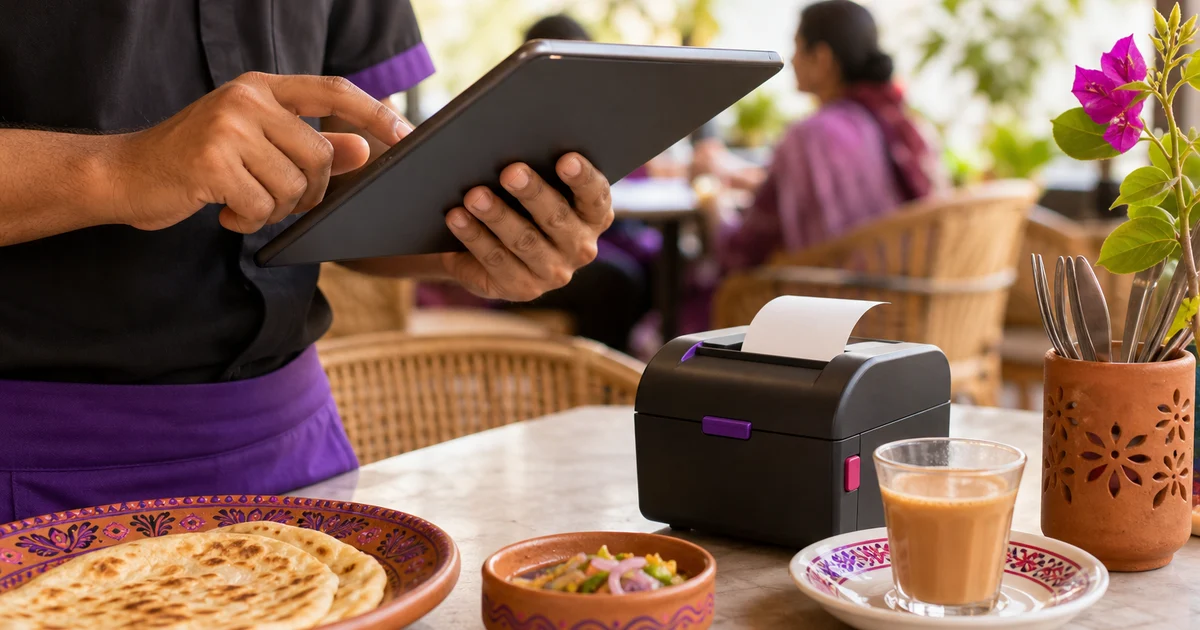
For a very small operation, a notebook or spreadsheet may be enough initially. Once orders become hard to track, Rosuii can run billing on a phone, tablet or laptop, show daily sales totals and organise menu items. Inventory and purchasing start on the Starter plan. The Free plan supports one branch and up to 20 orders a day, so there is no reason to buy complex hardware at the start.
Begin with the smallest format that can prove demand. Track every cup, litre of milk and taka of rent for at least several weeks, then invest based on evidence. To try simple phone-based billing and daily reporting, register for Rosuii.
Related guides
Last updated:
Frequently asked questions
How much capital is needed to start a small coffee shop in Bangladesh?
Can I start a coffee shop without an espresso machine?
How many cups must a small coffee shop sell each day to break even?
Which licences does a small coffee shop need in Bangladesh?
What is the biggest financial risk for a first coffee shop?
Run your restaurant on Rosuii
POS, menu, inventory, payroll and more — built for Bangladeshi restaurants.
Start free