Restaurant Stock: Definition, Examples and Stock Count
Understand restaurant stock, see ingredient and packaging examples, and use a clear stock-count process to measure quantities and investigate differences.

Last verified: 2026-09-23
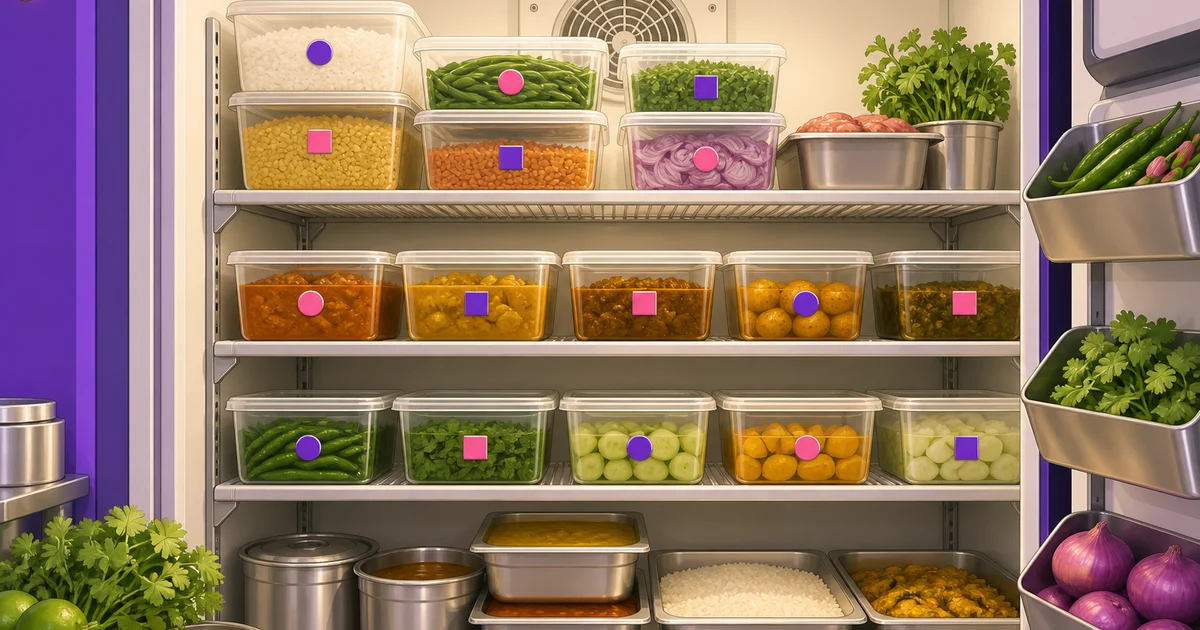
Restaurant stock means the ingredients, drinks, prepared items and supplies a restaurant keeps for its work. Rice, chicken, milk, bottled water and takeaway cups are examples. A stock count measures how much is physically available at a fixed time.
This guide explains the definition of stock in a restaurant, then shows how to count it. A count that differs from your records needs investigation. Common causes include missing delivery entries, unrecorded waste, inconsistent portions and counting mistakes.
Restaurant stock definition: inventory, not cooking stock
In inventory management, stock means goods on hand. In a recipe, stock can also mean a cooking liquid made with vegetables, bones or other ingredients. They are different meanings. Prepared chicken stock can itself be an inventory item when you measure and record the usable litres.
Use one name, one counting unit and one storage location for each item. For the wider process from receiving to usage, see restaurant inventory management. For purchase and ingredient records, explore Rosuii inventory features.
Why physical counts fail to balance
Most count problems begin before anyone enters the storeroom. Staff may count while cooks are taking ingredients, use kilograms for one item and packets for another, or estimate open containers without an agreed method. The finished sheet then mixes quantities from different moments and different units.
Recorded stock can also be wrong because purchases, wastage, production or branch movement were not entered promptly. The physical count exposes these gaps. It cannot explain them by itself, so managers need a repeatable process and supporting records.
For a deeper explanation of the difference between expected and actual stock, read how to investigate restaurant inventory variance.
What to count and how often
Not every item needs the same count frequency. Count expensive, fast-moving and theft-prone products more often. Stable dry goods and low-cost supplies can follow a weekly or monthly cycle. The frequency should reflect the value and risk of the item, not just the convenience of the counting team.
| Item class | Bangladesh restaurant examples | Suggested frequency | Main reason |
|---|---|---|---|
| High-value perishables | Beef, mutton, hilsa, prawns, imported cheese | Daily or at every shift close | High cost, spoilage and portion risk |
| Fast-moving essentials | Chicken, rice, cooking oil, milk, soft drinks | Daily or two to three times weekly | Frequent use can create quick variances |
| Dry and packaged goods | Flour, spices, sauces, noodles, takeaway boxes | Weekly | Lower spoilage but meaningful cumulative value |
| Slow-moving supplies | Cleaning chemicals, spare packaging, small equipment | Monthly | Lower usage and less operational urgency |
This is a starting point, not a fixed rule. A busy biryani restaurant may count rice, meat and oil daily. A coffee shop may focus on beans, milk, syrups and cups. An ABC inventory analysis can help you classify items by value and management importance.
The restaurant stock count rule: freeze movement
A physical count must represent one fixed point in time. If the kitchen removes five kilograms of chicken after one person counts the cold room but before another person counts the kitchen, the final total will be wrong.
Choose a count point such as 11:30 pm after the last order, before opening, or immediately after a shift closes. Then apply these controls:
- Finish receiving deliveries before the count or keep unreceived goods in a clearly marked separate area.
- Pause issuing stock from the storeroom while counting is in progress.
- Complete or record kitchen production before the count.
- Separate damaged, expired and returned goods from usable stock.
- Record any unavoidable movement on the count sheet with the time, item and quantity.
Closing time is usually easiest, but it is not always practical for late-night restaurants. The important point is consistency. Use the same cut-off each time so one period can be compared fairly with another.
Prepare the count before touching the stock
Good preparation makes counting faster and reduces arguments later. Start with a stock list arranged in the same order as the physical storage areas. For example: walk-in freezer, upright chiller, dry store, beverage counter, kitchen line and packaging shelf. Staff should not have to jump between unrelated rows.
- Tidy each area. Keep the same item together and place labels where counters can see them.
- Identify unopened and open stock. A sealed 20-litre oil container should not be mixed with an unlabelled half-filled bottle.
- Prepare equipment. Use a tested weighing scale, calculator, clipboard or device, marker and container reference chart.
- Review recent records. Make sure completed purchases, known wastage and production activity have been recorded up to the count cut-off.
- Assign areas. Give each counter a defined zone. Avoid two teams counting the same shelf unless it is an intentional verification.
Do not print the expected quantity beside the blank count field if it could influence the counter. A blind count often produces a more honest result because staff record what they see rather than trying to match the system.
Count every item in a consistent unit
Each stock item needs one standard counting unit. Chicken may be counted in kilograms, eggs in pieces or trays, beverages in bottles, and takeaway containers in pieces or sleeves. Do not enter one purchase as a carton and the next count as individual packets unless there is a documented conversion.
Suppose one carton contains 24 bottles. If the restaurant has two full cartons and seven loose bottles, record either 55 bottles or 2.292 cartons according to the selected stock unit. Bottles are usually easier to verify. Use the same rule every time.
For partial containers, agree on a method:
- Weigh products such as meat, cheese, coffee beans and open sacks of rice.
- Count individual units for bottles, cans, packets and eggs.
- Use marked volume containers for liquids when weighing is impractical.
- Use standard percentages only when exact measurement would cost more than the item is worth.
Avoid descriptions such as “half bag” unless the bag size is fixed and the conversion is written down. Half of a 25 kg sack means 12.5 kg, while half of an unlabelled kitchen container tells the manager very little.
Use two people for high-value items
For high-value or sensitive stock, use a two-person team. One person physically counts or weighs the item. The second person confirms the item, unit and quantity before recording it. Rotate responsibilities periodically.
This is not an accusation against staff. It is a basic control that catches unit mistakes, skipped shelves and transposed numbers. If the first count creates a large variance, ask a different person to recount the item without seeing the first result.
Sample restaurant stock count sheet
A count sheet should contain enough information to identify the item, location, unit and result. It should also preserve accountability. The following structure works for paper, spreadsheets or a digital workflow.
| Field | Example | Purpose |
|---|---|---|
| Count date and cut-off | 15 June, 11:30 pm | Defines the fixed count point |
| Branch and area | Dhanmondi, walk-in freezer | Prevents stock from different locations being mixed |
| Item and SKU | Boneless chicken, CHK-004 | Identifies the exact stock item |
| Count unit | kg | Keeps quantities comparable |
| Full containers | 3 bags × 5 kg | Shows how the quantity was built |
| Loose quantity | 2.4 kg | Captures open stock |
| Total actual quantity | 17.4 kg | Provides the final physical count |
| Counter and verifier | Initials or names | Creates accountability |
| Notes | One damaged pack separated | Explains unusual conditions |
Number paper sheets before distribution and collect every page, including blank or spoiled pages. Enter results promptly after the count. Waiting until the next afternoon creates confusion when purchases and kitchen usage have already resumed.
Read the variance instead of merely adjusting it
After entering the actual quantities, compare them with the recorded quantities at the same cut-off. Use a consistent formula:
Quantity variance = actual physical quantity − recorded quantity
Variance value = quantity variance × current unit cost
If the record says 20 kg of beef but the count finds 17 kg, the quantity variance is negative 3 kg. At ৳850 per kg, the variance value is negative ৳2,550. A negative variance means stock is missing from the record. A positive variance may mean a purchase was not entered, an earlier count was understated, or the unit conversion is wrong.
Check large variances in this order:
- Recount the item. Confirm that no shelf, freezer or service station was missed.
- Check the unit. Look for carton-to-piece, litre-to-bottle or kilogram-to-packet errors.
- Review purchases. Confirm received quantities, supplier returns and delivery dates.
- Review wastage. Look for spoilage, trimming, breakage, staff meals or damaged packaging that was not recorded.
- Check production activity. Raw materials may have been converted into prepared or finished goods and stored elsewhere.
- Review branch or area movement. Stock may have moved physically without a matching record.
Do not focus only on quantity. A small variance in imported cheese may cost more than a much larger variance in salt. Rank issues by value, frequency and operational risk.
Turn variance findings into action
A manager should assign a reason and an owner to every material variance. The response may be a corrected unit conversion, faster receiving entry, a new wastage rule, better labelling or tighter access to an expensive item.
Track repeated patterns. If cooking oil is short every week, recounting it will not solve the cause. Check measuring practices, container sizes, purchase receipts and disposal records. If soft drinks repeatedly show positive stock, staff may be entering cartons as bottles or missing deliveries in the records.
Set practical investigation thresholds, such as any variance above a chosen taka value or percentage. The right threshold depends on your menu, volume and margins. For a wider operating framework, see this guide to restaurant inventory management.
Use Rosuii to keep branch stock records organised
Rosuii helps restaurants maintain stock items with SKUs, units, costs, suppliers, minimum-stock levels and per-branch quantities. Purchase orders can support receiving records, while wastage entries document damaged, expired or otherwise unusable stock. Production records can show when raw materials are used to make finished goods.
These records give your physical count a clearer reference point. Keep each branch separate, use the same item units consistently and enter wastage when it happens rather than trying to remember it at month-end. Physical counting is still necessary because a system only knows what staff record.
Start with a manageable routine: count high-value items daily, run a wider weekly count and complete a full count at month-end. Review the largest value variances with the chef, storekeeper and branch manager, then document the action agreed.
Ready to organise stock items, branch quantities, purchases and wastage in one restaurant platform? Register for Rosuii and start free.
Last updated:
Frequently asked questions
What is stock in a restaurant?
How often should a restaurant stock count be completed?
Should stock be counted before or after the restaurant closes?
How should open bags, bottles and containers be counted?
What causes a negative restaurant inventory variance?
Can Rosuii replace the physical stock count?
Run your restaurant on Rosuii
POS, menu, inventory, payroll and more — built for Bangladeshi restaurants.
Start free