FIFO Restaurant Inventory: First In, First Out for Safer Kitchens
Learn how to organise shelves, rotate perishable stock, label dates correctly and connect daily FIFO discipline with lower restaurant food wastage.
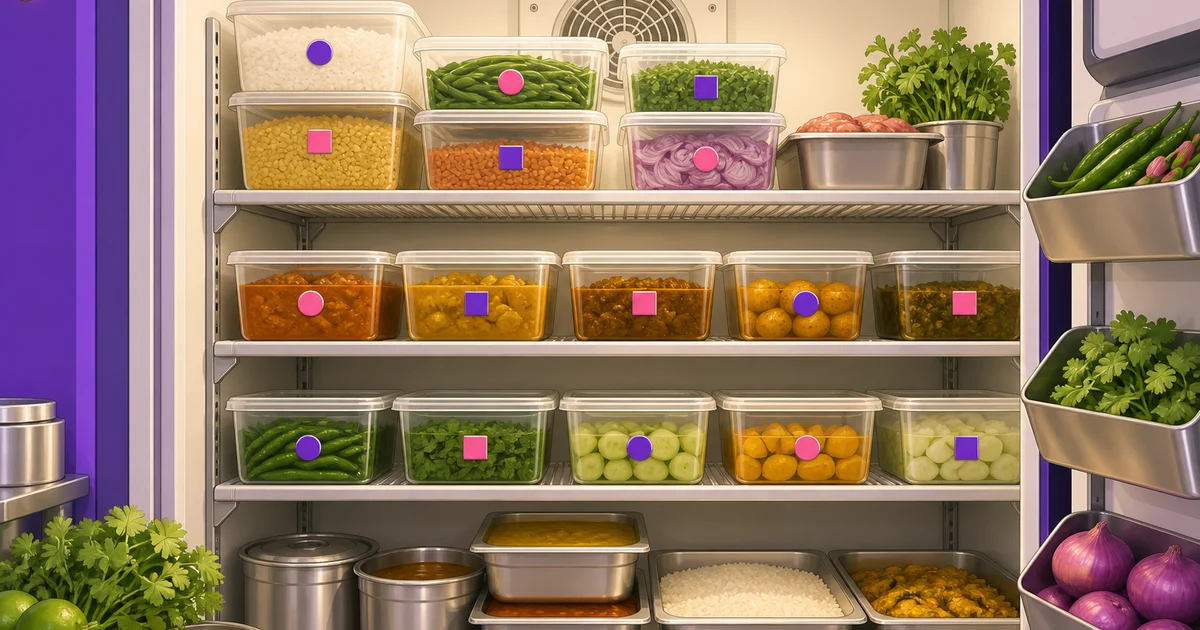
FIFO restaurant inventory means using the oldest suitable stock before newer stock. FIFO stands for First In, First Out. When a delivery arrives, the new stock goes behind the existing stock, while the older stock moves to the front for first use.
This simple rule matters in every restaurant, but it is especially important for meat, fish, dairy, vegetables, sauces and prepared food. Correct rotation reduces spoilage, protects food quality and makes wastage figures more meaningful. It also prevents a common kitchen problem: finding expired products at the back of a crowded fridge after buying the same item again.
What does FIFO mean in a restaurant kitchen?
FIFO is a physical stock-rotation method. The item received, opened or prepared first should normally be used first, provided it is still safe and suitable. It applies in dry stores, chillers, freezers, beverage storage and kitchen preparation areas.
For example, suppose a restaurant has six litres of cooking cream received on 10 May. Another delivery of twelve litres arrives on 13 May. The 10 May stock should remain at the front of the shelf, and the 13 May delivery should be stored behind it. Kitchen staff should take from the front first.
FIFO is not simply an instruction to use anything old. Staff must still inspect packaging, temperature, smell, appearance and expiry information. Damaged, contaminated or temperature-abused food should be isolated and handled under the restaurant's food safety procedure. Never serve an unsafe product just because it came in first.
Why FIFO restaurant inventory matters for perishable stock
Perishable ingredients lose quality and safety over time. A restaurant that does not rotate stock may use the newest delivery while older products remain hidden. This creates unnecessary spoilage even when total purchasing appears reasonable.
- Lower avoidable wastage: Older usable products reach the kitchen before they expire.
- More consistent food quality: Ingredients are less likely to sit forgotten until their flavour, texture or appearance declines.
- Better purchasing decisions: Clear shelf order makes it easier to see what is actually available before placing another order.
- Faster kitchen work: Staff do not need to search through several containers to decide which one to open.
- More reliable stock counts: Organised shelves make quantities easier to count and discrepancies easier to investigate.
FIFO should work together with sensible purchasing levels. If a restaurant repeatedly buys more than it can sell before expiry, rotation alone will not solve the problem. Review demand, supplier lead time and your restaurant inventory par levels.
FIFO, LIFO and FEFO: what is the difference?
| Method | Meaning | Restaurant use |
|---|---|---|
| FIFO | First In, First Out | Older suitable stock is used before newer stock. This is the normal approach for most food inventory. |
| LIFO | Last In, First Out | Newest stock is used first. This can leave older food trapped at the back, so it is generally unsuitable for perishables. |
| FEFO | First Expired, First Out | The product with the earliest expiry or use-by date is used first, even if it arrived later. |
LIFO can happen accidentally when staff place every new delivery at the front of a shelf. It may feel faster during receiving, but it pushes older products backwards. In food service, that behaviour increases expiry risk.
FIFO is the practical default, while FEFO should override it when expiry dates differ. If yoghurt received today expires before yoghurt received yesterday, the earlier-expiring batch should be used first. Check both the receiving date and the manufacturer's date rather than relying on shelf position alone.
How to organise a store and fridge for FIFO
A written FIFO rule is not enough. The physical layout should make correct rotation easier than incorrect rotation. If staff must lift five heavy cartons every time a delivery arrives, shortcuts will eventually appear.
Give every item a fixed location
Assign labelled shelves or zones for rice, flour, oil, spices, beverages, dairy, vegetables and other categories. Avoid keeping the same ingredient in several unrelated places. A fixed location helps staff identify old stock, count quantities and notice over-ordering.
Load from the back and pick from the front
Where shelf access allows, move existing usable stock forward and place new deliveries behind it. For bins, crates or deep shelves, use a simple flow that prevents new cartons from covering old ones. Place labels where they are visible without moving the product.
Do not top up old containers blindly
Pouring a new bag of spice, flour or dry ingredient on top of an old batch hides the age of the remaining stock. Finish the existing batch where appropriate, then clean and dry the food-safe container before refilling it. If batches must remain separate because of expiry, supplier or traceability, use separate labelled containers.
Keep food-safety separation intact
FIFO does not replace safe storage. Raw food, ready-to-eat food, allergens and cleaning chemicals still need appropriate separation. Within each safe category, arrange the earlier stock at the front. Do not move raw meat above ready-to-eat food merely to maintain a FIFO sequence.
Make cold storage easy to inspect
Avoid overfilling refrigerators and freezers. Crowding can hide products, slow stock checks and interfere with airflow. Use clean racks, visible labels and dedicated zones. Monitor storage temperatures according to your food safety plan, especially during hot weather or power interruptions.
A practical date-labelling system
FIFO fails when staff cannot tell which container is older. Every decanted, opened or prepared item should have a clear label based on the restaurant's food safety procedure.
A useful kitchen label can include:
- Product or preparation name
- Date and time received, opened or prepared
- Use-by or discard date and time
- Employee initials or identifier
- Supplier or batch reference when traceability requires it
Write dates in an unambiguous format such as 14 May 2026, 3:00 pm. A numeric date such as 05/06/26 can be misread by different employees. Labels should remain readable in humid, chilled and frozen conditions.
For bilingual teams, use English and Bangla item names where that prevents confusion. Agree on one label colour or format for receiving dates and another for discard dates if staff can apply the system consistently. Colour should support written information, not replace it.
Managers must also define how long house-made sauces, cut vegetables, marinated proteins and other prepared items may be held. Base these limits on the ingredient, process, storage conditions and applicable food safety requirements. When uncertain, consult a qualified food safety professional rather than guessing.
Build FIFO into receiving and daily routines
FIFO starts at the receiving door, not when a cook opens the fridge. Assign responsibility for checking deliveries and rotating them into storage.
- Inspect the delivery: Check item, quantity, condition, temperature where relevant and expiry information against the purchase order.
- Reject or isolate problems: Do not mix leaking, damaged or questionable products with accepted stock.
- Label accepted products: Add the receiving date or internal use-by information required by your procedure.
- Review existing stock: Check whether an older batch is still usable and whether another batch expires sooner.
- Rotate before storing: Bring the stock to be used first forward, then place the new delivery behind it.
- Update inventory records: Record the accepted quantity so the system and physical shelf remain aligned.
Add a short FIFO check to opening or closing duties. A shift supervisor can inspect high-risk and high-value items such as fish, meat, dairy and prepared sauces. A deeper weekly check should cover dry storage, freezers and slow-moving products. These routines form part of effective restaurant inventory management.
How FIFO discipline affects wastage numbers
A lower wastage figure is one of the clearest business benefits of FIFO, but only if waste is recorded accurately. Throwing products away without logging them hides the cause and makes food cost analysis unreliable.
Record at least the item, quantity, unit, estimated cost, date, branch and reason. Useful reason categories include expired, spoiled, overproduced, preparation error, damaged delivery and customer return. Keep the categories consistent so managers can compare periods.
Calculate the direct ingredient cost of waste, not the menu selling price. If five kilograms of chicken costing ৳280 per kilogram are discarded, the recorded ingredient loss is ৳1,400. Additional lost labour or sales opportunity may matter, but mixing those estimates into the basic waste log can make comparisons confusing.
Look for patterns. Repeated expiry suggests poor rotation, excessive par levels or slow sales. Large amounts of prepared-food waste may indicate overproduction. Damaged-delivery waste may point to a supplier or receiving issue. FIFO addresses rotation-related loss, while the waste log shows whether the process is working.
Track waste cost as an amount and as a percentage of food purchases or usage. Compare the same item, branch and period rather than judging one isolated day. For more practical controls, read the guide to reducing food wastage in a restaurant.
Using software without ignoring the physical kitchen
Inventory software can record purchases, stock, suppliers and wastage, but it cannot move an older carton to the front of a fridge. FIFO remains a staff habit supported by clear storage design, labels, checks and accountability.
Rosuii helps restaurants manage per-branch stock items, units, costs, suppliers, purchase orders, minimum-stock alerts, productions and wastage records. Managers can use those records to compare purchasing with physical counts and investigate recurring losses. The kitchen team must still inspect dates and rotate each delivery correctly.
Start with one storage area this week. Assign locations, label open products, rotate every delivery and record every discard for seven days. Then review which items are expiring and adjust purchasing or par levels. Small daily controls produce cleaner data and a calmer kitchen.
Ready to organise purchasing, inventory and wastage in one restaurant system? Register for Rosuii and start building a clearer stock-control routine for your restaurant.
Last updated:
Frequently asked questions
What is FIFO in restaurant inventory?
Should restaurants use FIFO or FEFO?
What information should a restaurant food label contain?
How often should restaurant staff check FIFO rotation?
Can inventory software enforce FIFO automatically?
Run your restaurant on Rosuii
POS, menu, inventory, payroll and more — built for Bangladeshi restaurants.
Start free