Fuchka Business in Bangladesh: Cart, Cost and Daily Profit
A practical guide to starting a fuchka and chotpoti cart in Bangladesh, including setup costs, batch planning, pricing, spoilage and daily profit.
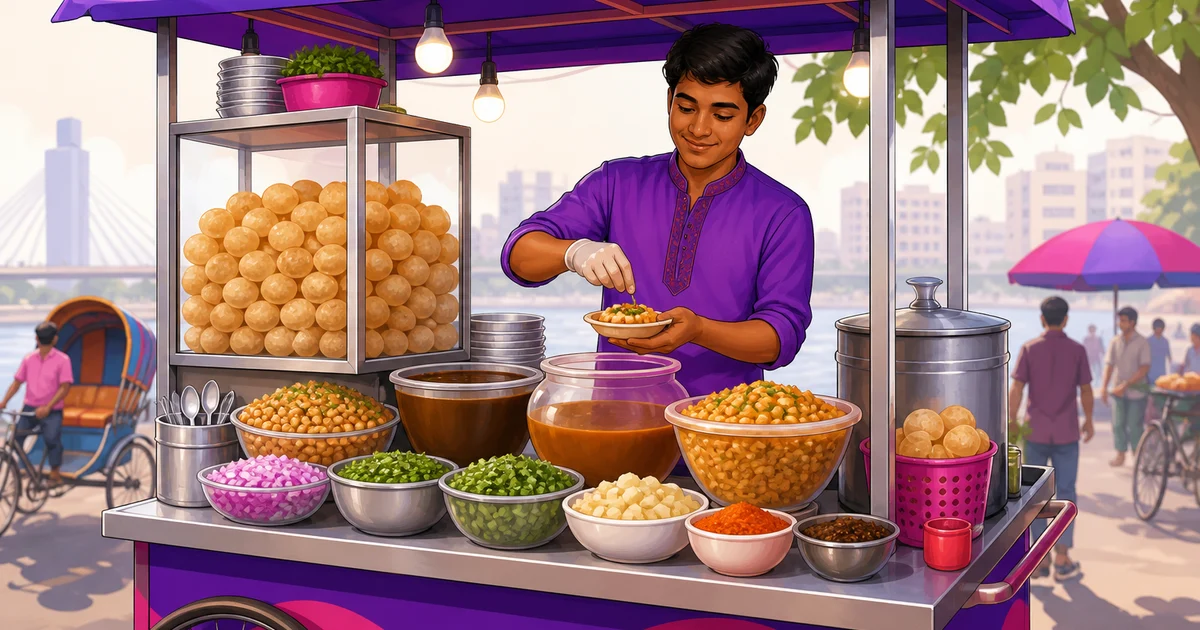
A fuchka business is one of the most accessible food ventures in Bangladesh for an owner with limited capital. You can start with a mobile cart, prepare most items at home and operate without salaried staff. But low entry cost does not guarantee profit. Shell breakage, oversized portions, spoiled potatoes and weak location choices can quickly consume the day's cash.
This guide covers the practical decisions: what to buy, whether to make or purchase shells, how much food to prepare, what to charge and how to estimate daily profit. All taka figures are working market ranges, not fixed quotations. Prices vary by district, season, supplier, cart quality and ingredient market, so collect several current quotes before investing.
A realistic fuchka business setup for limited capital
Start with the smallest setup that allows clean preparation, safe water handling and fast service. A decorative cart can wait. Your first objective is to prove that the location can generate repeat sales.
- Covered cart or serving counter: Approximately ৳18,000-৳45,000 for a basic locally made cart. A larger stainless-steel or branded cart may cost ৳45,000-৳90,000. In some areas, cart rental may be available for around ৳150-৳500 per day.
- Stove, LPG cylinder and regulator: Allow roughly ৳5,000-৳12,000, depending on whether equipment is new or used. Cooking should normally be completed at the preparation location rather than beside customers.
- Pots, bowls, strainers and utensils: Around ৳4,000-৳10,000. Use separate utensils for tamarind water, cooked filling and waste handling.
- Food-grade storage containers: Around ৳2,000-৳6,000 for covered dry and wet storage. Airtight shell storage is particularly important during humid weather.
- Water, handwashing and cleaning setup: Approximately ৳1,500-৳5,000 for covered water containers, a tap container, soap, tissue, waste bin and cleaning supplies.
- Plates, spoons and takeaway packaging: An opening supply may require ৳1,500-৳4,000. Reusable plates reduce packaging cost but increase washing and water requirements.
- Lighting, signboard and menu display: Budget around ৳1,500-৳6,000. Clear prices reduce arguments and speed up ordering.
- Opening ingredients: Around ৳4,000-৳10,000 for shells or shell ingredients, potatoes, chickpeas or peas, tamarind, spices, onions, chillies, coriander and packaging.
A lean owner-operated cart may therefore begin around ৳40,000-৳90,000 if some kitchen equipment is already available. A cleaner custom cart with more storage may take the total toward ৳80,000-৳150,000. Deposits, transport and location payments can sit outside these ranges.
Before buying, spend several evenings observing potential spots. Record pedestrian flow, competing vendors, peak times and whether customers can stand without blocking traffic. For broader planning, read this guide to a street food cart business in Bangladesh.
Should you make fuchka shells or buy them?
This choice affects labour, consistency and working capital. Buying ready shells is usually easier for a beginner. Depending on size, quality and quantity, wholesale shells may work out at roughly ৳1.50-৳3.00 each. Ask the supplier about replacement for heavily broken cartons and inspect a sample before committing.
Making shells can reduce the direct ingredient cost, sometimes toward an estimated ৳0.70-৳1.50 per usable shell. That is not the complete cost. You must count frying oil, fuel, labour, failed batches and storage. Poorly rolled shells may not puff, while overused oil damages taste and customer trust.
Buy shells when:
- You are operating alone and need to reduce preparation time.
- A nearby supplier can provide consistent size and crispness.
- You have not yet mastered rolling and frying.
- Your initial sales are too uncertain to justify dedicated production.
Make shells when:
- You or a family member already has the skill and preparation space.
- You can produce consistent batches without taking time away from selling.
- Your sales volume is high enough to spread fuel and labour costs.
- You can keep fried shells dry, covered and protected from crushing.
Test both options over several days. Calculate the cost per usable shell after breakage, not the price per shell purchased or produced. Even a breakage and rejection rate of around 5%-15% can change the result.
Tamarind water, masala and chotpoti preparation
Customers remember the tamarind water and spice balance more than the cart decoration. Standardise the batch instead of seasoning by instinct every day. Write down the weight or measured quantity of tamarind, salt, roasted spices, chilli, sugar or gur and water used for each batch.
Use safe drinking water for tamarind water, washing herbs and cleaning serving utensils. Keep raw onions, coriander and chillies covered. Prepare garnishes in smaller containers and refill them rather than displaying the entire day's quantity in heat and dust.
For chotpoti, cook peas or chickpeas and potatoes thoroughly, then divide the food into service-sized containers. Reheating one smaller container is safer and usually tastes better than repeatedly warming and cooling a large pot. Do not mix fresh food into an old, partially used batch.
Spice blends can be prepared for several days if they remain dry and sealed. Wet mixtures are different. Tamarind water, chopped garnish and cooked potato filling should be treated as short-life items. Sour smell, bubbling, unusual texture or sliminess means the food should be discarded, not repaired with extra chilli or tamarind.
Daily batch sizing and hot-day spoilage
Beginners often prepare for the sales they hope to make rather than the sales their location has demonstrated. For the first week, plan around a cautious range of roughly 50-90 plates per day. A proven evening location may later handle around 100-200 plates or more, but there is no useful universal target.
Prepare about 60%-75% of the expected wet filling before opening. Keep ingredients for a smaller refill batch ready. Dry shells can be stocked more generously because they carry over better when stored correctly, although humidity and breakage remain risks.
Record opening quantity, quantity sold and closing waste for every component. After several operating days, you will see whether Fridays, rain, school schedules, Ramadan or local events change demand. Increase batches gradually, perhaps within a 10%-20% band, instead of doubling production after one busy evening.
Bangladesh heat makes cooked potato, peas, chopped herbs and tamarind water vulnerable. Keep food covered and away from direct sun. Use insulated or chilled storage where practical, and carry only a small service container on the cart. Do not carry questionable wet filling into the next day. The cost of discarding ৳300-৳700 of unsafe food is smaller than the damage caused by making customers sick.
How to set the price per plate
Price must cover shells, filling, tamarind, garnish, packaging, breakage, spoilage, fuel, transport and any location payment. Copying the cheapest nearby cart without comparing portions is a common mistake.
Depending on the area and portion, an entry-level fuchka plate may sell around ৳40-৳70, while chotpoti may fall around ৳50-৳90. Better locations, larger portions or premium presentation may support approximately ৳70-৳120. These are broad planning ranges. Check at least several direct competitors in your actual selling area.
A standard fuchka plate might contain around 6-8 shells, but consistency matters more than the exact count. Cost the plate using your real serving size. If ingredients and serving materials cost ৳20-৳28 per plate, pricing at ৳40-৳50 may leave too little after waste, transport and fuel. A lower price works only when portions, purchasing and volume support it.
Consider two visible sizes, such as a regular plate and a larger plate. Avoid too many variations at the beginning. A short menu makes stock control easier and keeps the queue moving.
Daily sales and margin arithmetic
Use this formula: daily sales revenue minus ingredient and packaging cost minus daily operating expenses equals cash contribution. That contribution still includes the value of your own labour and must eventually recover the cart investment.
Suppose you sell around 80-100 plates with an average customer bill of ৳50-৳60. Daily revenue would be approximately ৳4,000-৳6,000. If variable food and serving cost is around ৳22-৳28 per plate, the day's variable cost could be roughly ৳1,760-৳2,800.
Transport, fuel, water, cleaning, phone costs and a location payment might add another ৳700-৳1,100. Depending on where your actual figures sit within those ranges, the remaining cash could be very small or around ৳3,500 before counting owner labour, damaged equipment and recovery of startup capital. This wide result is the point: sales alone do not tell you profit.
Redo the calculation with your own numbers each day. Separate cash withdrawn for the household from business profit. Keep enough working money to purchase the next batch. If you want to compare the cart with other low-capital options, review these restaurant business ideas in Bangladesh and the guide to starting a small restaurant business in Bangladesh.
Where beginners lose money
- Preparing too much: Wet filling and garnish have limited useful life, especially in hot weather.
- Ignoring free extras: Repeated tamarind water, extra filling and oversized garnish can add a material cost over a full day.
- Buying the cart before testing the location: A good-looking cart cannot compensate for poor foot traffic or restrictions on vending.
- Mixing household and business cash: This hides whether the cart is generating enough money to restock.
- Not counting breakage: Crushed or soft shells are part of food cost.
- Competing only on price: Clean water, covered food, consistent taste and polite service can justify a better price.
- Offering too many items: Adding drinks, rolls and several chaats creates more stock and spoilage before the core business is stable.
Trade licence and food licence considerations
A trade licence is normally issued by the relevant city corporation, pourashava or union parishad and is commonly tied to a business address or approved place. If you operate from a fixed shop, stall or preparation premises, ask the local authority which trade category and documents apply.
A moving cart sits in a less clear operating environment. Street vending is often governed by local city-corporation rules, location restrictions and informal site arrangements. A trade licence does not automatically give permission to occupy a footpath or road. Speak directly with the local authority or market committee before paying anyone for a spot, and request written receipts for official payments.
Once you have fixed premises, check the applicable Bangladesh Food Safety Authority food business licence or registration requirements. Food safety duties still matter when selling from a cart, even where licensing arrangements for mobile vendors are unclear. LPG use, waste disposal and local fire requirements may also apply depending on the premises and municipality. Requirements change, so verify them with the relevant authority rather than relying only on another vendor's experience.
Simple record keeping for an owner-operated cart
A notebook is enough at first. Record plates sold, cash received, ingredient purchases and waste. Count mobile payments separately from cash. At closing, compare expected sales with money on hand.
If handwritten totals become difficult, Rosuii can run billing from a phone browser and help track daily sales and a small list of stock items. Its Free plan suits a very small operation at roughly 20 orders per day, while busier carts may need a paid plan. Software is optional here. Clean preparation, portion control and a dependable location should come first.
When you are ready to replace manual tallies with phone-based billing and daily sales records, register for Rosuii and start free.
Last updated:
Frequently asked questions
How much capital is needed to start a fuchka business in Bangladesh?
Is it more profitable to make fuchka shells or buy them?
How many plates should a new fuchka cart prepare daily?
What licences are needed for a mobile fuchka cart?
How much can a fuchka cart earn per day?
Run your restaurant on Rosuii
POS, menu, inventory, payroll and more — built for Bangladeshi restaurants.
Start free