Juice Bar Business in Bangladesh: A Practical Shorbot Guide
A practical guide to starting a juice and shorbot business with limited capital, covering equipment, fruit sourcing, food safety, margins and licences.
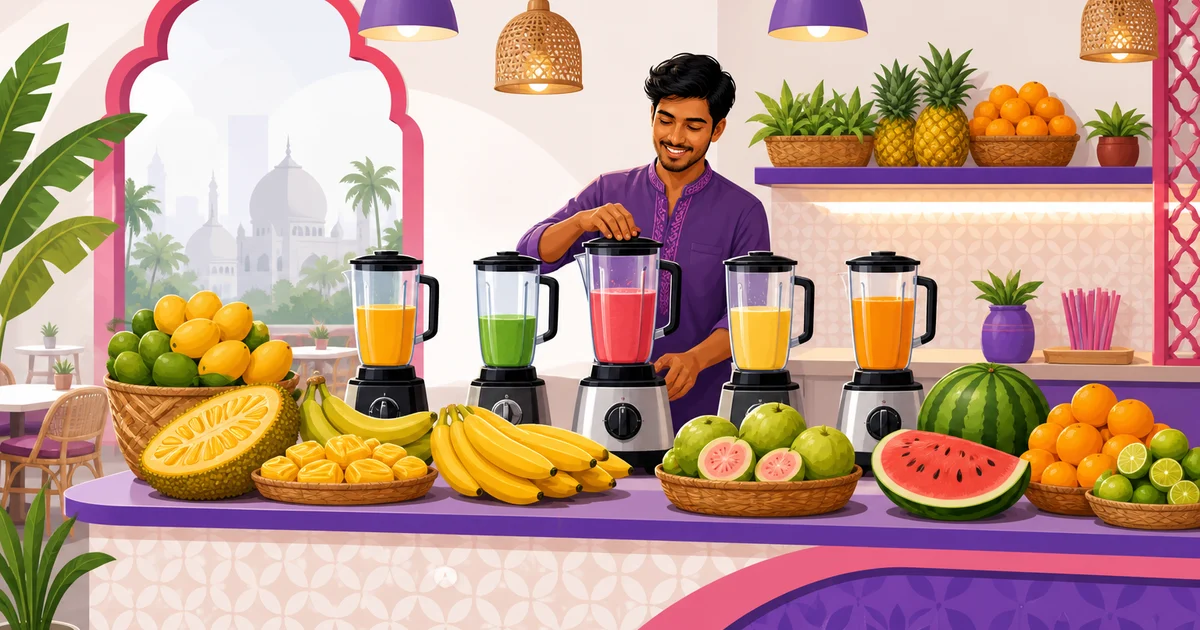
A juice bar business can suit a Bangladeshi owner with limited capital because the menu is simple, customers pay immediately, and one person can run a compact counter. But summer crowds can hide weak costing. Fruit prices change quickly, ice and water need careful handling, and unsold stock becomes waste. The sensible approach is to start with a short menu, test the location, record every cup sold, and let summer profit support the quieter months.
Is a Juice Bar Business Suitable for a Small Owner?
A juice or shorbot counter works best near offices, coaching centres, universities, hospitals, parks, markets and transport points with dependable foot traffic. A visible roadside position is useful, but shade, drainage, access to safe water and permission to operate matter just as much.
Running the counter yourself saves payroll at the beginning. It also lets you learn which drinks sell, how much fruit each cup consumes and when demand peaks. The trade-off is physical work. You will buy fruit early, wash and cut it, serve customers, clean equipment and close the cash at night.
If you are still comparing formats, read these guides to a street food cart business in Bangladesh and restaurant business ideas for Bangladesh. A juice cart is usually simpler than a cooked-food cart, but food safety and location permission still require attention.
Summer Profit Must Carry the Slow Months
Demand normally rises during hot weather and Ramadan, although timing, rain and local customer habits can change the pattern. A counter may sell roughly 70 to 120 cups on a strong hot day but only 25 to 55 cups during rain, cooler weather or weak footfall. These are planning ranges, not promises.
Do not treat every strong-day cash balance as spendable income. Set aside roughly 20% to 30% of the operating surplus for slow months, repairs and fruit-price shocks. Calculate annual rent, licence renewals, equipment maintenance and your minimum owner income. The profitable summer period has to cover part of those costs even when winter sales fall.
A winter menu can help without changing the business completely. Consider lassi, milk-based drinks, tea or a limited snack line only if you can prepare them safely and sell enough volume. Adding too many products creates new equipment, stock and spoilage costs. A focused counter is often healthier than a long menu.
What You Actually Need to Buy
Market rates vary by city, brand, capacity, exchange rate and whether equipment is new or used. Check current quotations before committing capital. Typical starting ranges are:
| Item | Indicative cost range | Buying advice |
|---|---|---|
| Cart or basic counter | ৳25,000 to ৳80,000 | Prioritise washable surfaces, storage, shade and stable wheels if mobile. |
| Commercial blender | ৳8,000 to ৳25,000 | Buy for motor strength, jar availability and local repair support. |
| Centrifugal juicer | ৳12,000 to ৳40,000 | Useful for apple, carrot and similar items, but creates pulp waste. |
| Citrus press | ৳2,500 to ৳12,000 | A manual model may be enough for a small lemon or malta menu. |
| Refrigerator | ৳25,000 to ৳55,000 | Check electricity use, seal condition and service availability. |
| Water filter | ৳5,000 to ৳20,000 | Select it according to the actual source-water problem. |
| Ice box or insulated storage | ৳2,500 to ৳8,000 | Use food-safe containers with lids and drainage. |
| Sink, steel table and shelving | ৳8,000 to ৳30,000 | A fixed shop needs a practical washing and preparation area. |
| Knives, boards, jugs and scales | ৳3,000 to ৳10,000 | Keep separate, washable tools for preparation and serving. |
| Opening packaging stock | ৳3,000 to ৳10,000 | Test cups and lids for leaks before ordering cartons. |
A lean cart may therefore require roughly ৳55,000 to ৳150,000 before working capital. A small fixed counter with deposit, fit-out, refrigerator and plumbing may require roughly ৳120,000 to ৳350,000. These ranges can move sharply, especially in premium Dhaka locations.
Blender or juicer?
A blender keeps more pulp in the drink and handles mango, banana, papaya, lassi and blended shorbot. A centrifugal juicer separates much of the fibre and is useful for carrot, apple or mixed clear juice. Most beginners should buy a dependable blender first. Add a juicer only after customers repeatedly ask for products that need it. Two affordable blender jars can be more practical than one expensive machine because a spare keeps the counter running during washing or minor damage.
Control Seasonal Fruit and Packaging Costs
Fruit should be bought by usable yield, not only by the kilogram price. Weigh a batch, remove skin, seeds and damaged sections, then count how many standard cups it produces. A cheap mango with heavy seed and spoilage may cost more per cup than a better-grade mango.
Visit nearby wholesale and retail markets before opening. Compare prices at different times, ask suppliers about mixed grades, and buy highly perishable fruit in smaller daily batches. Watermelon, pineapple, papaya, lemon, green mango and seasonal ripe mango can each have profitable periods. Do not promise the same price throughout the year if the main fruit price changes substantially.
Cup, lid, straw, tissue and carry-bag cost may total roughly ৳7 to ৳15 per takeaway order, depending on size, material and purchase volume. A lid that leaks also creates refunds and bad reviews. Record packaging as a cost per sale, not as an occasional shopping expense. Washable glasses can reduce packaging use for dine-in customers, but only where proper washing and hygienic storage are available.
Ice and Water Safety Cannot Be Negotiated
Juice is not made safe simply because the fruit looks fresh. Water goes into shorbot, ice touches the drink, and blender jars can transfer contamination between batches. Use potable water from a verified source or an appropriate filtration system. Replace filters on schedule and clean storage tanks.
- Buy food-grade ice from a supplier you can identify. Do not use unknown transport or industrial ice.
- Keep ice covered and use a clean scoop rather than hands or a serving glass.
- Wash whole fruit before cutting. Remove visibly rotten or mouldy pieces instead of blending them.
- Clean blender jars, knives, boards and counters throughout the day.
- Keep milk, cut fruit and prepared mixtures refrigerated. Make smaller batches rather than leaving them warm.
- Provide handwashing facilities and keep cash handling away from ready-to-drink ingredients where possible.
Safe practice may add a little cost, but one illness complaint can damage a small counter permanently.
Daily Sales and Margin Arithmetic You Can Redo
Start with contribution per cup: selling price minus fruit, sugar, milk or flavouring, ice, water, packaging and expected wastage. Then subtract daily fixed costs such as rent allocation, electricity, transport and paid labour.
Consider a cautious day of 45 cups. If the average selling price is ৳100 to ৳110, revenue is ৳4,500 to ৳4,950. If variable cost is ৳52 to ৳58 per cup, total variable cost is ৳2,340 to ৳2,610. Contribution is therefore roughly ৳1,890 to ৳2,610. After daily fixed costs of around ৳900 to ৳1,300, the operating surplus is roughly ৳590 to ৳1,710 before paying the owner or setting aside tax and replacement money.
On a busy summer day of 90 cups, an average selling price of ৳110 to ৳125 gives revenue of ৳9,900 to ৳11,250. Variable cost of ৳55 to ৳62 per cup gives a total of ৳4,950 to ৳5,580. Contribution is roughly ৳4,320 to ৳6,300. After fixed daily costs of roughly ৳1,100 to ৳1,700, the operating surplus may be around ৳2,620 to ৳5,200.
These examples are not earnings guarantees. Replace every assumption with your own supplier price, cup size, sales count and rent. Include a wage for yourself when deciding whether the business is genuinely worthwhile. For more planning context, see the guide to starting a small restaurant business in Bangladesh.
Where Beginners Usually Lose Money
- Too many menu items: Slow-moving fruit spoils before it sells.
- No standard cup or scoop: Staff or the owner pours different quantities each time, so costing becomes unreliable.
- Ignoring wastage: Peels, seeds, damaged fruit, leftover mixtures and free replacements all cost money.
- Buying only on price: Poor fruit yield, weak blenders and leaking cups can erase the apparent saving.
- Confusing cash with profit: Supplier bills, rent, electricity, repairs and the owner's labour still have to be deducted.
- Giving uncontrolled discounts or credit: Small margins cannot support frequent free drinks and unpaid tabs.
- Depending on one season: A good April or May does not guarantee enough cash for rain and winter.
Licences and Local Permission
A fixed juice shop or counter should obtain a trade licence from the relevant city corporation, pourashava or other local authority. Once you have fixed premises, check the applicable Bangladesh Food Safety Authority food-business registration or licence requirements and complete the category that applies to your operation. Keep tenancy documents and identification ready, as the issuing offices may ask for supporting papers.
A moving cart is less clear-cut. In practice, it is largely governed by local city-corporation rules, street-use restrictions and informal site arrangements. An informal payment or a shopkeeper's verbal permission is not the same as legal permission. Ask the relevant ward or zonal office where vending is allowed and whether a trade-licence category or written approval is available. Rules and enforcement differ by location.
Fresh drinks made and sold directly are different from manufacturing packaged, labelled beverages. If you later bottle products for wider retail sale, additional food-safety, labelling and possibly standards requirements may apply. Confirm the current position with BFSA, the local licensing office and, where relevant, your VAT circle rather than relying on another vendor's paperwork.
Keep Records Simple at the Start
A notebook or spreadsheet can work if every sale, purchase and wastage entry is recorded consistently. Track cups sold by item, cash received, fruit purchased, packaging used and closing stock. Once handwritten totals become difficult, Rosuii can handle billing on a phone, show daily sales totals and track a small list of stock items. A one-person cart should use software only when it saves time or improves control, not because it looks sophisticated.
Start with four to six drinks, test the location for several weeks, protect water and ice quality, and revise prices when input costs change. Ready to keep phone-based billing and daily sales records as the business grows? Register with Rosuii.
Last updated:
Frequently asked questions
How much capital is needed to start a small juice bar in Bangladesh?
Which machine should a beginner buy first, a blender or a juicer?
What licences does a small juice shop need in Bangladesh?
How can a juice bar manage sales during winter or rainy periods?
How should fruit cost per cup be calculated?
Run your restaurant on Rosuii
POS, menu, inventory, payroll and more — built for Bangladeshi restaurants.
Start free