Restaurant Branding System: From Logo to Guest Experience
A practical brand system that helps guests recognise and remember your restaurant everywhere.
Last verified: 2026-08-28
A logo is one asset; a brand is the pattern guests recognise across every interaction. A useful branding system turns that pattern into choices your team can repeat.
Define the core
Write one sentence for who you serve, what experience you promise and why you are different. Choose a small colour and typography set that supports that promise.
Apply it at every touchpoint
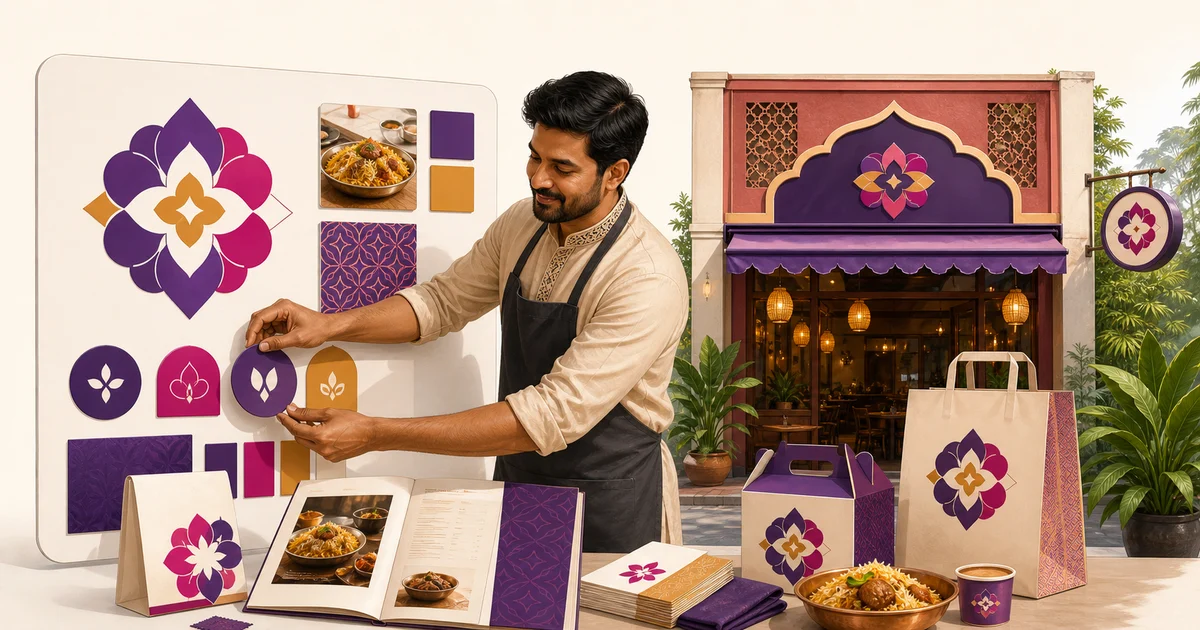
Use the same logo, colours, photo style and tone across signage, menu, receipt, delivery packaging, website and social profile.
- Visual identity
- Voice and bilingual terminology
- Service behaviours
Create one source of truth
Keep approved assets, colour values, descriptions, opening hours and contact details together. Update once and reuse instead of recreating them.
A restaurant brand system is an operating standard
A logo is one asset; a brand system is the set of decisions that keeps the restaurant recognizable and accurate across signs, menus, receipts, packaging, social profiles, delivery listings and online ordering. The system should tell a designer, cashier, branch manager and marketing partner what to use without asking the founder to approve every small choice.
Begin with the restaurant's real positioning: cuisine, service format, location context, price signal, customer occasion and language needs. Do not borrow a luxury voice for a value restaurant or make unverified claims such as best, healthiest or most authentic. A useful system reduces inconsistency while leaving room for campaign-specific creative work.
Core brand-system components
Store exact colour values, font names, spacing rules and downloadable masters instead of relying on screenshots. Include examples of correct and incorrect use. A one-page quick reference can serve daily work, while a longer library contains source files, templates and edge cases.
| Component | Minimum decision | Operational use |
|---|---|---|
| Name | Exact spelling and Bangla form | Directory, receipt and sign consistency |
| Logo | Primary, compact and one-colour versions | Sign, avatar, print and stamp |
| Colour | Primary, support and contrast values | Menu, buttons, packaging and uniforms |
| Type | Readable English and Bangla families | Headings, prices and body copy |
| Photography | Subject, light, crop and edit rules | Menu and campaign quality |
| Voice | Tone, terms and prohibited claims | Captions, replies and order messages |
| Templates | Approved sizes and editable masters | Faster local execution |
| Governance | Owner, version and approval route | Prevent outdated assets |
Create a bilingual naming and typography rule
Decide whether the registered or primary restaurant name has an official Bangla rendering, a transliteration or an English-only form. Record the chosen spelling and do not let every marketplace or branch invent a variation. Customer-facing descriptions can be translated for meaning, but legal names, addresses, product names and allergen information need deliberate review.
Test English and Bangla type together on a small phone, receipt width, menu board and printed menu. A font that looks distinctive in a large English heading may become hard to read in Bangla or at item-description size. Define fallback fonts and line-height, and keep text as text in ordering interfaces so it remains accessible and searchable.
Build the identity for real restaurant surfaces
Validate identity decisions on the surfaces that carry orders. The compact mark must survive a social avatar and browser icon; the one-colour version must print on a receipt or stamp; menu headings need space for bilingual text; packaging needs safe margins around folds, seals and food-contact areas. A beautiful presentation mock-up is not enough if production files fail.
List each surface with size, material, colour mode, supplier specification and responsible owner. Keep master artwork in a controlled location and export delivery files from it. Do not redraw a logo from a low-resolution marketplace image.
Photography and menu-image standard
Define whether images show the actual portion, plating and packaging a customer receives. Record a consistent angle, background, lighting style, crop and minimum resolution. Avoid stock food that misrepresents the menu. If garnishes or serving pieces are illustrative, make the distinction clear rather than creating an expectation the operation cannot meet.
Name files by stable item identifier or approved menu name, keep an original master and create optimized web variants. Review colour and crop on the ordering interface, not only a large editing monitor. Alt text should identify the dish meaningfully instead of repeating promotional keywords.
Voice, claims and service messages
A voice guide should cover menu descriptions, social captions, complaint replies, order confirmations, delay notices and refund communication. Define whether the tone is formal, conversational or playful and provide approved examples in both languages. Operational messages should favour clarity over personality when a customer needs to know an amount, action or timing.
Maintain a prohibited-claims list. Avoid unsupported health, origin, ingredient, certification, price-saving, popularity or performance statements. When a claim is permitted, record its evidence owner and review date. This protects trust and prevents old campaign language from becoming a permanent menu fact.
Template library and source-of-truth workflow
Each template should have an owner, editable master, approved export, version and retirement date when relevant. Local teams can change defined content areas without moving logos, changing type or deleting required terms. Archive replaced assets so staff do not select an old file from a messaging thread.
- Logo masters and approved exports
- English, Bangla and bilingual menu layouts
- Social profile and post sizes
- Offer card with terms and validity fields
- Receipt header and footer copy
- Packaging label and sticker layouts
- Online ordering banners and placeholders
- Complaint, delay and closure messages
- Branch-opening kit and supplier specifications
Brand governance for one or many branches
Assign a brand owner and a practical approval path. Central decisions should cover identity, legal names, core menu naming, claims and reusable templates. A branch can own local hours, availability and location-specific messages inside those rules. Define what requires approval and what can be published immediately during an operational incident.
For multiple branches, use a naming pattern and a structured location record rather than changing the main logo per branch. Review Google profiles, delivery platforms, ordering pages and receipts together so customers see the same name, phone, hours and service status.
Quarterly brand consistency audit
Record discrepancies with an owner and due date. Prioritize errors that can misdirect an order or misstate a price, address, ingredient or operating status before cosmetic variation. The audit is successful when the source is corrected and redistributed, not when a screenshot is collected.
| Surface | Check | Evidence |
|---|---|---|
| Storefront | Name, logo, colour and current hours | Dated branch photo |
| Menu | Names, prices, language and images | Published menu export |
| Ordering | Domain, identity, contact and availability | Live-page review |
| Marketplace | Name, logo, descriptions and links | Listing screenshots |
| Social | Avatar, bio, URL and response tone | Profile review |
| Receipt and packaging asset versions | Physical sample | |
| Files | Masters, permissions and archive | Library inventory |
A practical 30-day rollout
In week one, inventory existing assets and confirm the exact name, positioning and language rules. In week two, finalize core logo variants, colours, typography and voice. In week three, build the highest-use menu, ordering, social and print templates. In week four, replace live assets, train owners, archive old versions and run a cross-surface audit.
Do not replace every surface blindly on one day. Test exports and links, keep rollback copies and coordinate menu or price changes with operations. Record the system version and next review date so the brand library remains an operating tool rather than a launch document that immediately becomes stale.
Consistency builds memory and trust. Start with a small system your team can actually follow, then improve it with guest feedback.
Related guides
- Restaurant Branding Checklist
- Branded Online Ordering Storefront
- Restaurant Branding Guide Bangladesh
- Compare restaurant management software
See this workflow in Rosuii: Explore restaurant branding
Updated:
Frequently asked questions
Is restaurant branding only a logo?
How many brand colours should a restaurant use?
What is included in a restaurant brand system?
Does a small restaurant need brand guidelines?
How should a restaurant manage English and Bangla branding?
How often should a restaurant brand be audited?
Run your restaurant on Rosuii
POS, menu, inventory, payroll and more — built for Bangladeshi restaurants.
Start free