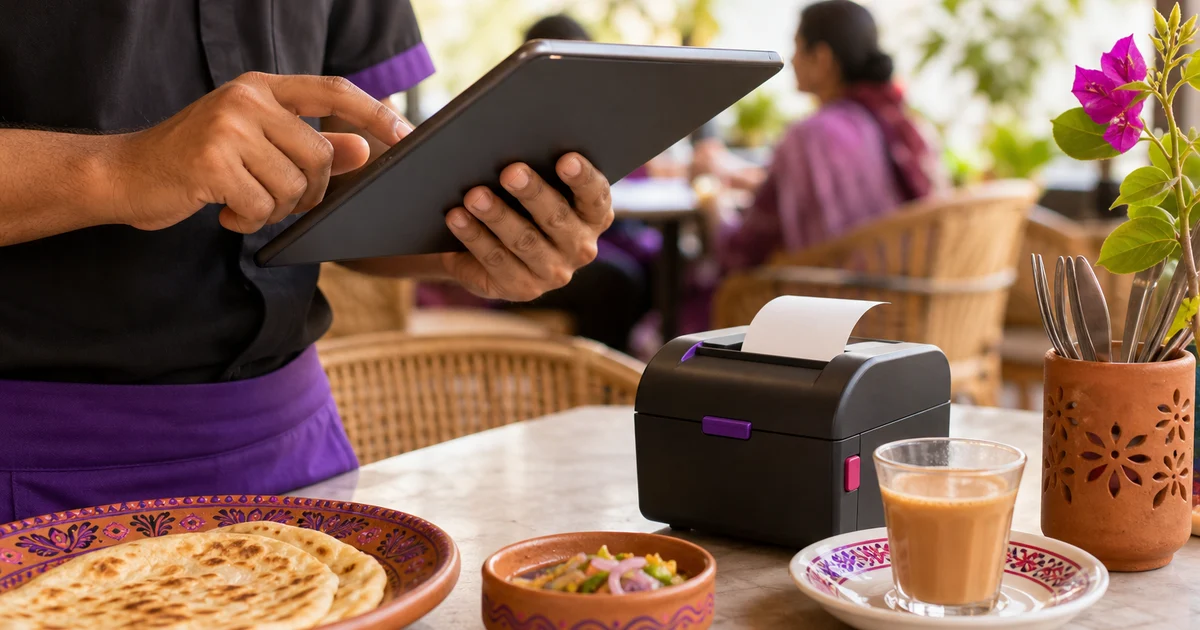
Restaurant Manager Duties and Responsibilities: Complete Guide
What a restaurant manager must own before, during and after service—and how an owner can measure the role fairly.
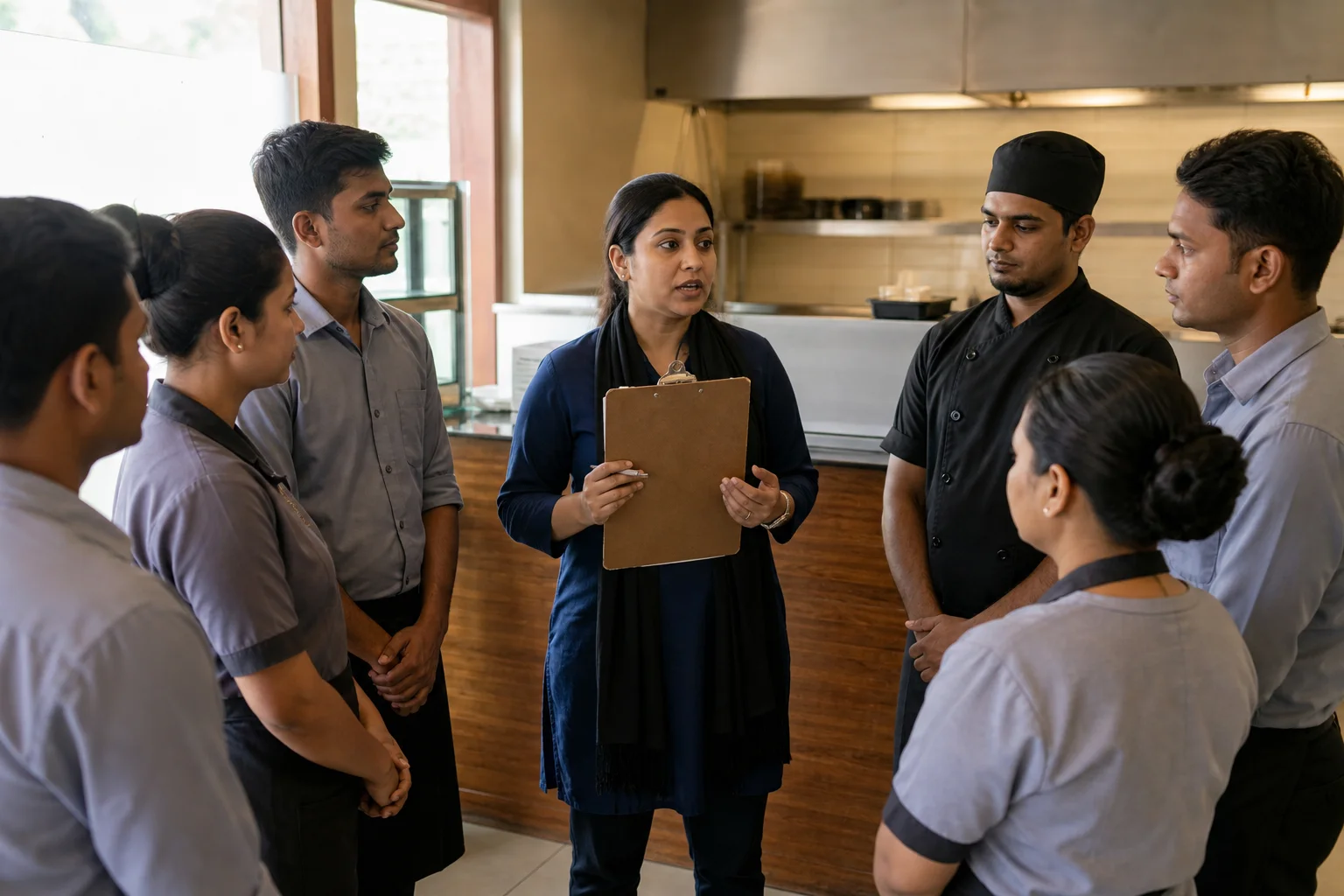
A restaurant manager is responsible for turning the owner’s standards into a safe, profitable and consistent shift. The role coordinates people, orders, guests, kitchen, stock, cash and information; it is not simply watching the floor or solving complaints.
A clear job description prevents two common failures: the manager becomes a senior waiter with no authority, or receives responsibility for every result without access to the numbers and decisions needed to change it. Use this guide to define the role, daily checklist and performance measures.
Restaurant manager responsibilities at a glance
The manager owns shift readiness, service execution, team leadership, guest recovery, order and payment control, operational stock, compliance routines, closing reconciliation and accurate handover. The owner still owns strategy, investment and major policy unless these are explicitly delegated.
- Open the outlet ready and on time
- Brief and deploy the shift team
- Maintain order accuracy, speed and hospitality
- Coordinate floor, counter and kitchen
- Approve exceptions within a written limit
- Protect cash, stock and company assets
- Close, report and hand over unresolved work
Before service: make the shift ready
Arrive early enough to inspect, not merely unlock. Review reservation and demand signals, attendance, cleaning, equipment, opening cash, menu availability, prep, critical stock and online-ordering status. Reassign work before guests arrive if a person, ingredient or machine is missing.
Brief the team on expected volume, large tables, sold-out items, promotions, service risks, section ownership and escalation rules. Ask the kitchen lead to confirm capacity, not only ingredients.
During service: control flow, not every movement
The manager should see the whole queue: new orders, delayed tickets, tables waiting to order, ready food, pending bills and delivery pickups. Work at a bottleneck when necessary, but avoid staying trapped at one station until the rest of the shift becomes invisible.
Use exception thresholds. For example, a waiter can correct an order before it is sent, a shift lead can resolve a small service recovery, and only the manager can approve a large discount, void or refund. Role-based access keeps authority aligned with accountability.
Lead staff with clear expectations
Confirm attendance, breaks, station changes and handover. Coach specific behavior—such as repeating modifiers or checking a table after food delivery—instead of saying someone must ‘be more careful’. Document repeated issues and recognize strong performance with the same consistency.
A manager should never use public humiliation, withheld tips or arbitrary roster changes as discipline. Set a fair process for warnings, training and escalation, and follow the restaurant’s employment obligations and written policies.
Own guest experience and service recovery
Listen without arguing, confirm the problem, protect food safety, offer an authorized remedy and record what happened. A refund or replacement may solve the guest’s immediate issue; the manager’s responsibility is also to remove the cause from the process.
Classify complaints—wrong item, delay, temperature, taste, cleanliness, staff conduct or payment—and review repeated patterns. Contact details should only be used with appropriate permission and access.
Protect cash, payments and stock
The manager verifies opening cash, controls till access, checks payment-method selection, records expenses, approves discounts and voids, and witnesses the close. They should not share credentials or allow one generic cashier login for everyone.
For stock, the manager checks high-risk receiving, critical item counts, waste reasons, transfers and stock-outs. Purchasing authority needs a limit: who can request, approve, receive and pay should be clear enough to reduce both delay and fraud.
Close and report the shift
Before leaving, complete open orders, reconcile cash and digital payments, review refunds, voids and discounts, record expenses, confirm equipment and security checks, and write the handover. Never conceal a variance to make a report look clean.
The shift report should be short enough to read: sales, order count, average bill, exceptional payments, complaints, stock-outs, staff issues, maintenance problems and actions that need an owner or deadline.
KPIs for a restaurant manager
Measure outcomes the manager can influence and pair each number with context. Sales alone can rise because of season or marketing; service can still be poor. Compare a balanced set over time and avoid ranking staff from one noisy day.
- Order accuracy and cancellation rate
- Average order time and delayed tickets
- Guest complaints and recovery completion
- Cash variance, void and discount pattern
- Waste, stock variance and stock-out frequency
- Labour deployment against demand
- Checklist and handover completion
Skills and authority the role needs
A capable manager needs calm communication, prioritization, basic commercial maths, coaching, conflict handling, food-safety awareness and confidence with the POS and reports. More importantly, the manager needs written authority that matches the job.
Provide access to relevant reports, approved discount/refund limits, supplier and maintenance contacts, escalation rules and training time. Review the role after 30, 60 and 90 days using observed outcomes rather than personality alone.
Use a manager evidence and escalation log
A shift log should capture only what the next decision needs: staffing exceptions, food-safety or equipment risk, stock-out, supplier issue, large complaint or recovery, cash or payment exception, maintenance request and an unresolved order. Link the order, expense or report reference where available; avoid vague notes that cannot be verified.
Give each issue an owner, priority, action taken and next review time. Define what the manager may solve, what needs owner approval and what requires immediate external or professional help. The log is not a substitute for emergency procedures, legal reporting or confidential HR records; sensitive details need appropriate access.
Review recurring entries weekly. Repeated stock-out, late close, unauthorized discount or equipment failure indicates a process problem, not merely a difficult shift. Measure whether agreed actions close the issue and whether the team had the authority, training and tools required to carry them out. Retain the review date and decision owner.
The best restaurant manager makes standards visible, catches exceptions early and leaves a reliable record for the owner and next shift. Define the job around readiness, flow, people, guest recovery, assets and reporting—then give the authority and data required to deliver it.
Related guides
- How to Manage Restaurant Staff
- Restaurant Staff Roles and Permissions
- Restaurant KPIs Every Owner Should Track
See this workflow in Rosuii: See Rosuii staff, order and reporting tools
Updated:
Frequently asked questions
What are the main duties of a restaurant manager?
What should a restaurant manager do every morning?
Can a restaurant manager approve discounts and refunds?
How should a restaurant manager be evaluated?
What is the difference between an owner and a restaurant manager?
Run your restaurant on Rosuii
POS, menu, inventory, payroll and more — built for Bangladeshi restaurants.
Start free