Restaurant Opening Timeline Bangladesh: 12-Week Plan
A dependency-based 12-week model that separates authority timing from work the team controls.
Last verified: 2026-08-28
A restaurant opening timeline in Bangladesh can be planned as a 12-week working model, but the actual date depends on premises readiness, design, utility, equipment and the relevant authorities. Do not announce an opening date before the critical permissions and building work have credible paths.
Run licenses, menu costing, supplier selection, systems and recruitment in parallel where safe. The sequence below is a planning template, not an approval guarantee.
12-week model
| Weeks | Primary work | Gate |
|---|---|---|
| 1–2 | Concept, entity, site due diligence, budget | Premises and owner decision |
| 2–4 | Layout, utility, authority mapping, applications | Approved design and document pack |
| 3–8 | Fit-out, equipment, supplier and menu costing | Safe installed kitchen |
| 6–9 | Recruitment, recipes, SOP, POS and inventory | Team and system ready |
| 9–10 | Testing, training, inspection follow-up | Critical issues closed |
| 11 | Friends-and-family or controlled soft launch | Capacity verified |
| 12 | Public launch with limited risk | Opening sign-off |
Weeks 1–4: decisions and permissions
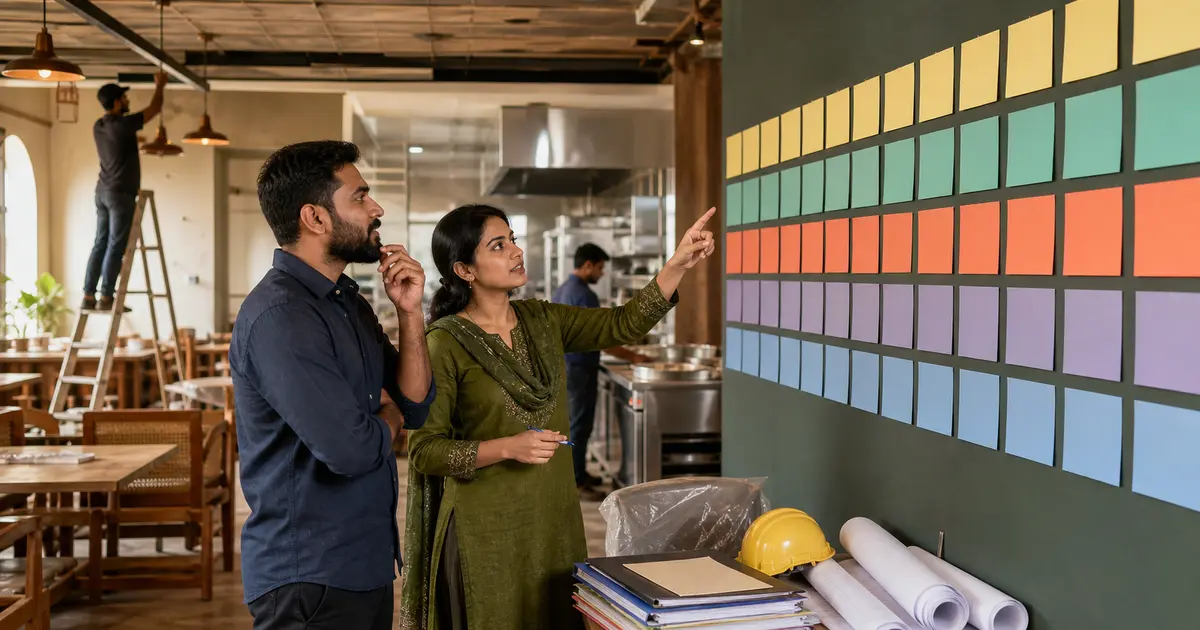
Verify tenancy, allowed use, utilities, ventilation, drainage, waste route, fire access and local authority before committing. Prepare the trade-license path and identify food-safety, fire, tax and entity requirements.
Authority timing differs. DNCC's targets apply only to its own complete process; build contingency and do not let a contractor promise approvals.
Weeks 3–8: build and buy
Freeze the menu and production flow before final equipment placement. Confirm electrical load, gas or fuel, exhaust, water, cold storage, handwashing, receiving and waste.
Order long-lead equipment first, but release payment against specifications, installation responsibility, warranty and test criteria.
Weeks 6–10: people and systems
Hire leaders first, then station staff from the operating model. Build recipe cards, opening and closing SOPs, food-safety checks, purchasing, stock count, cash control, complaint handling and shift handover.
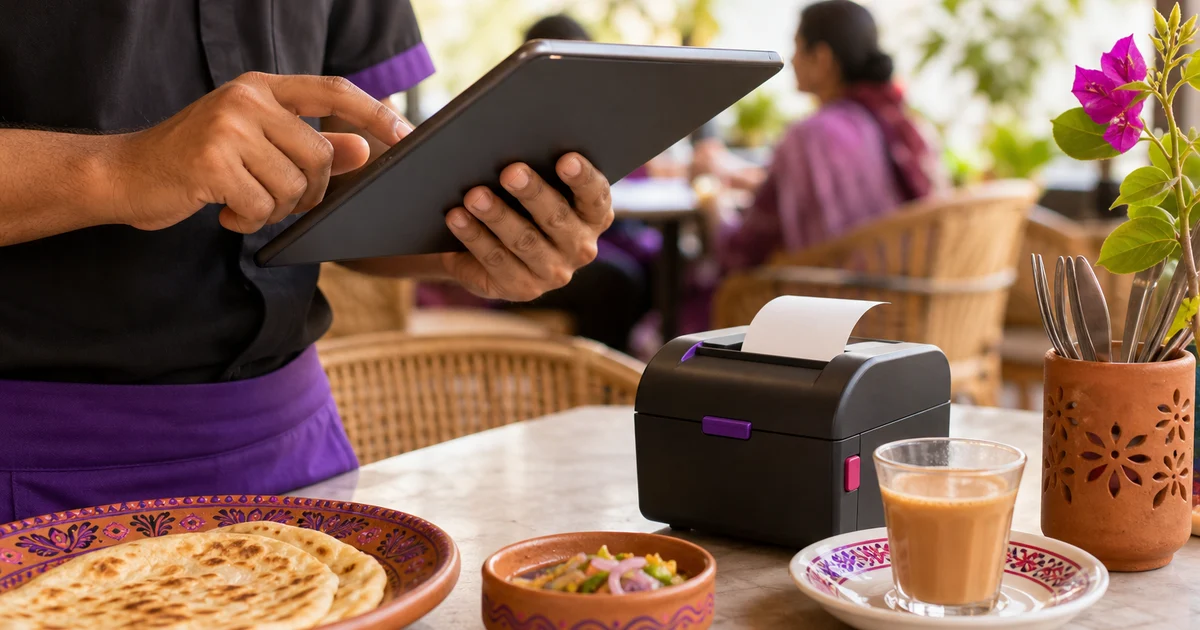
Configure POS, menu modifiers, taxes after verification, printers or KDS, online ordering and user permissions. Test full order-to-kitchen-to-payment flows.
Soft-launch gate
- Required approvals and safe premises
- Every menu item costed and tested
- Suppliers and backup ingredients
- Staff can run opening and close
- Payments and receipts verified
- Fire and food-safety controls working
- Complaint and refund decision owner
- Cash and stock reconciliation
Do not rush the public date
A controlled soft launch reveals ticket bottlenecks, portion errors, stock-outs and unclear roles with limited customer impact. Reduce the menu or hours if capacity is not stable.
Track each critical dependency with owner, due date, evidence and blocker. The opening date should follow sign-off, not drive unsafe sign-off.
Use dependency gates, not a guaranteed opening date
The article's week labels are a planning model, not a promise that permits, construction, utility, equipment or hiring will finish in that time. Build a dependency map and publish a customer date only after the critical opening gates have evidence. Local authority and property requirements must be verified for the actual site.
Identify the decision that releases each non-refundable commitment. For example, confirm site feasibility and required approvals before ordering site-specific equipment or printing a large dated campaign.
Opening workstream register
Give every gate an owner, evidence link, target, current status and blocker. Percent-complete reporting hides a missing critical approval; gate reporting makes the launch risk visible.
| Workstream | Gate evidence | Downstream dependency |
|---|---|---|
| Entity/site | Approved structure and premises documents | Applications and contracts |
| Permissions | Current authority requirements and status | Public operation |
| Design/build | Approved scope and inspection record | Equipment installation |
| Utilities | Capacity, safety and live test | Kitchen and POS |
| Menu/supply | Costed recipes and approved suppliers | Training and stock |
| People | Roles, hiring and training completion | Service readiness |
| Systems | Menu, devices, users and test orders | Billing and production |
| Launch | Soft-open issues resolved | Public promotion |
Procurement and installation sequence
Finalize menu and production flow before locking equipment capacity and placement. Verify dimensions, utility load, ventilation, drainage, service access, warranty and delivery responsibility from current supplier documents. Record dependencies between civil work, utility readiness, equipment arrival and commissioning.
Do not accept delivery as proof of readiness. Inspect model and condition, record serial and warranty, install through the appropriate process, test under realistic load and train responsible staff. Keep acceptance exceptions and supplier follow-up visible.
Systems and data readiness
Run complete orders from menu to production, payment, receipt, void, refund and close. Use the real devices and network. Correct the source configuration and repeat the failed scenario before sign-off.
- Approved item, price and modifier master
- English and Bangla customer fields reviewed
- Branch, tax and receipt configuration checked
- Cashier, kitchen and manager roles tested
- Printer and KDS routing tested
- Payment success and failure paths tested
- Opening stock and supplier records loaded
- Backup, offline and incident steps documented
- Daily close and reporting rehearsal complete
Soft-opening evidence and go/no-go meeting
A controlled soft opening should test demand intake, preparation capacity, food-safety process, service, billing, payment, handover, cleaning, close and incident escalation. Capture defects by severity and owner. Do not use invited guests as proof that peak public service will be identical.
The go/no-go review should consider unresolved safety, permission, utility, payment, food availability and staffing risks. Delay or reduce scope when a critical gate fails. Record the decision, temporary limitations and next review rather than forcing the public date because marketing has already begun.
After a go decision, keep a stabilization log for opening days. Review stockouts, preparation bottlenecks, payment failures, customer complaints, safety deviations, staffing gaps and cash-close exceptions each day. Limit menu or service scope when that is the safest controlled response. Assign one change owner and confirm that menus, ordering channels, staff instructions and customer messages receive the same update. Do not publish sales or customer-count claims from the launch without tenant approval, a defined method and verified source data.
Treat 12 weeks as a coordinated model, not a promise. The critical path is legal premises, safe kitchen, trained team and a tested order and cash flow.
Related guides
- How to Open a Restaurant in Bangladesh
- Restaurant Opening Cost Bangladesh
- Trade License Document Checklist
- Compare restaurant management software
See this workflow in Rosuii: Set up menu, branch, staff and operations in Rosuii
Sources checked
Last updated:
Frequently asked questions
How long does it take to open a restaurant in Bangladesh?
What should start first?
Can licensing and fit-out run together?
When should staff be hired?
Why use a soft launch?
Can a restaurant always open in twelve weeks?
What should block a public opening?
Why run a soft opening?
When should the opening date be announced?
Run your restaurant on Rosuii
POS, menu, inventory, payroll and more — built for Bangladeshi restaurants.
Start free