Restaurant Theft Prevention Without Accusing Your Staff
Reduce restaurant theft and shrinkage through clear billing, cash, discount, receiving and stock controls that protect both the business and honest staff.
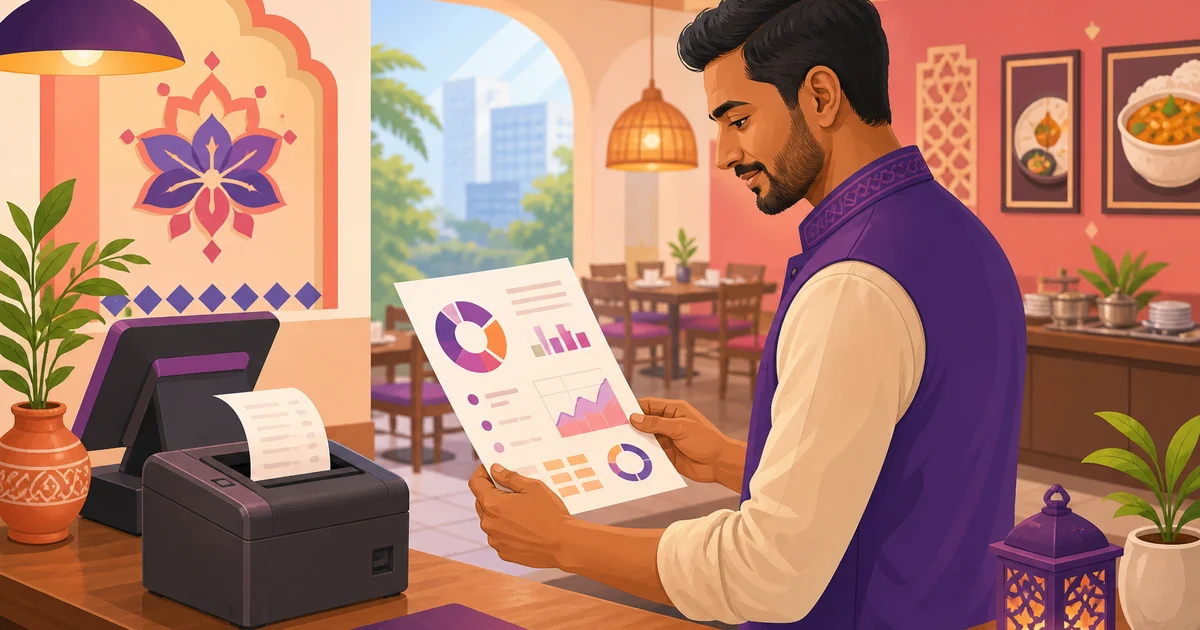
Restaurant theft prevention should not begin with suspicion, secret accusations or blaming the cashier whenever numbers do not match. It should begin with a system. Restaurant leakage often comes from weak processes: an order reaches the kitchen without being billed, a paid bill is voided later, a discount has no explanation, or a supplier delivers less than the quantity invoiced. Good controls make these events visible while also protecting honest employees from unfair blame.
The goal is not to treat every team member as a potential thief. It is to ensure that every sale, adjustment, cash movement and stock delivery leaves a clear record. When responsibility is defined and managers review exceptions consistently, both deliberate theft and innocent mistakes become easier to identify.
Restaurant theft prevention starts with identifying leakage points
Shrinkage is the difference between what the restaurant should have earned or held and what it can actually account for. It can involve cash, food, packaging, beverages, discounts or supplier deliveries. A single discrepancy may be small, but repeated leakage can materially reduce profit.
| Leakage point | What can happen | Useful control |
|---|---|---|
| Unbilled orders | Food is prepared and cash is collected without a matching POS order. | Require every kitchen order to originate from the POS or approved QR ordering flow. |
| Voids after payment | A genuine sale is removed or reduced after the guest has paid. | Keep the original transaction record and require authorised voids with reasons. |
| Discount or comp abuse | Staff apply an unnecessary discount and keep part of the collected amount. | Restrict discount access and review adjustment records by employee. |
| Short billing on cash | The guest pays for the full order, but fewer or cheaper items are entered. | Match KOTs, receipts, cash totals and item-sales reports. |
| Stock walking out | Ingredients, drinks or packaging leave without an approved issue or wastage record. | Control store access and conduct periodic physical counts. |
| Supplier short delivery | The invoice says 20 kg, while the restaurant receives 18 kg. | Count or weigh deliveries before accepting them. |
These controls work together. A perfect stock count will not reveal who applied an unjustified discount, while a detailed sales report cannot prove whether the supplier delivered the full quantity. Each risk needs its own evidence.
Keep sequential bills and never erase the trail
Every order should have a unique, sequential reference generated by the billing system. Managers should be able to move from a receipt to its order details, payment method, waiter or cashier, table and time. Missing numbers or unexplained gaps deserve review.
A cancelled transaction should not simply disappear. The safer approach is to preserve the original order and record what changed, who changed it, when it happened and why. This matters because a legitimate void is common. A guest may cancel an item before cooking, the kitchen may be unable to serve it, or an employee may enter the wrong variation. The control is not a ban on corrections. The control is traceability.
Kitchen discipline is equally important. If cooks accept handwritten or verbal orders outside the approved process, unbilled food can leave the kitchen without appearing in sales. Set a practical rule: preparation begins from a valid KOT, except for a documented emergency approved by the duty manager. Rosuii can send POS orders to the kitchen workflow, and table QR self-orders land in the POS or KDS tagged to the correct table.
Separate voids, comps and discounts
These adjustments are not interchangeable. A void removes an item or transaction because it should not proceed. A comp makes an item free, often to resolve a service problem or as an approved courtesy. A discount reduces the selling price according to a promotion or management decision.
Each adjustment should require a meaningful reason. Labels such as manager approved or mistake are too vague when used repeatedly. Better reasons include duplicate item entered, guest cancelled before preparation, kitchen quality complaint or approved staff meal. For a practical adjustment policy, read the guide to void, comp and discount controls in a restaurant.
Permissions should follow job responsibilities. A waiter may need to request a cancellation, but a supervisor can approve it. A cashier may accept payment without being allowed to create unrestricted discounts. Owners should keep sensitive configuration and high-value adjustment rights for a small number of trusted roles.
Rosuii supports role-based access control so restaurants can limit sensitive actions by role. Its order and billing records also give managers a trail for reviewing voids, comps and discounts instead of relying on memory. Review the number and value of adjustments by employee, shift, branch and reason. One unusual event may be valid. A repeated pattern is what needs investigation.
Reconcile cash at every day close
Cash theft and cash mistakes often look identical at first. A wrong change amount, an unrecorded paid-out, a duplicate payment entry or a deliberate short deposit can all create a drawer difference. That is why managers should reconcile before accusing anyone.
At the end of a shift or business day, calculate expected cash using a consistent formula:
Opening float + recorded cash sales - authorised cash refunds - documented cash paid-outs = expected cash.
Then count the physical cash and compare it with the expected amount. Record both shortages and overages. An overage is not automatically good news; it may mean a guest was given too little change or a sale was entered incorrectly.
Reconcile each payment method separately. Cash should match cash. bKash and Nagad should be checked against their payment records, while COD or marketplace orders should follow the restaurant's settlement process. Do not use an electronic payment total to hide a cash difference.
Rosuii's Day-Close or Z report helps management review sales, payment totals, discounts, VAT, service charge and other daily figures in one closing process. Sales, item-sales, staff, expense and profit reports provide supporting detail when a number needs investigation. See the full restaurant Day-Close and Z-report checklist for a repeatable closing routine.
The closing person should sign or confirm the result, and another responsible person should review material differences. Set a reasonable investigation threshold based on your restaurant's volume, but keep a record of smaller differences too. Several small shortages assigned to the same shift may reveal a training problem or a pattern.
Control stock without claiming that every variance is theft
Food stock can disappear through theft, but also through over-portioning, spoilage, unrecorded staff meals, production loss, counting mistakes and incorrect units. If the system says five litres while the storeroom has three, investigate the movement before deciding the cause.
Start with high-risk items such as meat, seafood, cooking oil, imported ingredients, bottled drinks and takeaway packaging. Count them daily or several times a week. Lower-value dry goods may be counted weekly or monthly. Use the same unit each time and count at a consistent point, preferably before receiving new deliveries or after closing.
- Restrict storeroom access and define who can issue stock.
- Record purchases against the correct supplier and branch.
- Document wastage when it happens, not several days later.
- Record production when raw materials are converted into prepared or finished goods.
- Investigate large variances item by item.
- Occasionally use a blind count, where the counter cannot see the expected quantity.
Rosuii supports per-branch stock items, units, costs, minimum-stock alerts, suppliers, purchase orders, productions and wastage records. Physical counts and disciplined entries are still necessary. The system supplies evidence, but it cannot correct an inaccurate count or an unrecorded movement. The article on restaurant inventory variance explains how to separate counting, purchasing, wastage and operational causes.
Check supplier deliveries before acceptance
Supplier leakage is easy to overlook because the invoice may appear correct. The restaurant might be billed for ten cartons but receive nine, or pay for 20 kg when the actual weight is lower. Quality can also differ from what was ordered.
Separate ordering, receiving and payment approval where staffing permits. The receiving employee should compare the purchase order, delivery note and physical goods. Count cartons, weigh variable-weight products, inspect quality and confirm units. Record shortages or rejected items immediately and ask the supplier to correct the document or issue the appropriate adjustment.
Do not let a rushed delivery driver dictate the receiving process. A two-minute check at the door is cheaper than discovering the shortage during a stock count. For expensive deliveries, a second employee or camera-covered receiving area can provide useful evidence without turning the process into a confrontation.
Build controls that protect honest staff
A fair control system helps good employees. If cash is counted at handover, the incoming cashier cannot be blamed for an earlier shortage. If every void has an employee, timestamp and reason, a waiter can show that the manager approved a genuine guest complaint. If deliveries are weighed, the storekeeper is not automatically held responsible for stock that never arrived.
Publish the rules and apply them consistently. Train new employees on billing, discounts, KOTs, cash handover, wastage and receiving before giving them access. Avoid changing procedures only after money goes missing. Sudden enforcement feels personal; routine enforcement feels professional.
Managers should also protect access credentials. Each employee should use their own account rather than sharing a supervisor login. Remove access promptly when someone changes role or leaves. Role permissions lose their value if everyone knows the manager's password.
A practical control routine for Bangladeshi restaurants
- Every order: Enter it in the POS and send an approved KOT before preparation.
- Every adjustment: Record the void, comp or discount with a specific reason and authorised employee.
- Every shift handover: Count cash with both employees present and document the amount.
- Every day close: Compare cash, bKash, Nagad, COD and other payment records with the Z report.
- Every delivery: Match the purchase order, invoice and physical quantity before acceptance.
- Every count cycle: Count high-risk stock, record variance and investigate unusual movements.
- Every week: Review adjustment values, repeated reasons, cashier differences and high-wastage items.
Keep the process proportionate. A single-branch café does not need the same approval hierarchy as a large restaurant group, but it still needs individual logins, recorded adjustments, cash reconciliation and stock checks. Multi-branch operators should compare branches using the same definitions and closing rules.
The strongest restaurant theft prevention policy is a set of ordinary controls performed every day. Rosuii brings POS billing, role permissions, adjustment records, inventory, purchasing and Day-Close reporting into one cloud platform built for Bangladesh. It is free to start, works in English and Bangla, and runs through a browser on phones, tablets and laptops. Create your restaurant account at https://rosuii.com/register and begin building a clearer, fairer control process.
Last updated:
Frequently asked questions
What is the first step in restaurant theft prevention?
Should every void or discount require manager approval?
How often should a restaurant conduct physical stock counts?
What should be checked in a restaurant Day-Close report?
Can Rosuii prevent all restaurant theft automatically?
Run your restaurant on Rosuii
POS, menu, inventory, payroll and more — built for Bangladeshi restaurants.
Start free