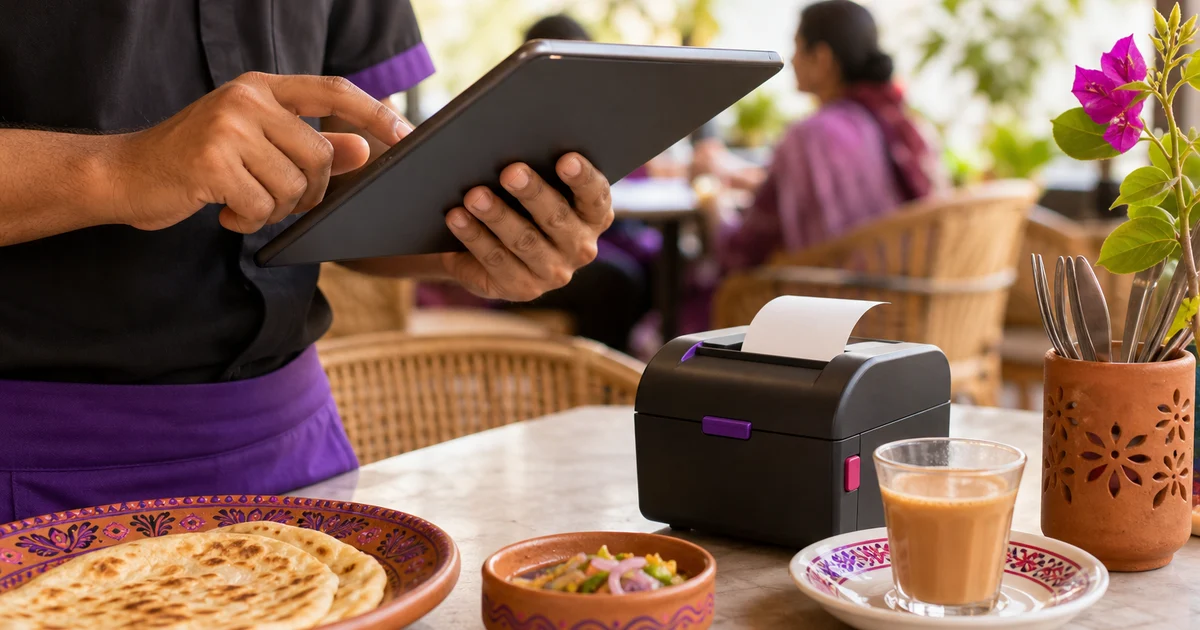
Restaurant Waiter Training Checklist Bangladesh: From First Shift to Sign-off
A role-based training plan with demonstration, supervised practice and observable sign-off instead of attendance-only training.

Last verified: 2026-08-31
A restaurant waiter training checklist should show what the employee can do safely and accurately, not only which slides they attended. Train in short modules, demonstrate the task, supervise practice and record an observable sign-off by a named trainer.
The waiter connects guest request, POS, kitchen, bill and payment. A small misunderstanding in modifier, allergy note, table or order status can move across the whole operation, so training must follow the real workflow.
Training map
Set trainer, due date, attempt count and result for each module. Do not sign all rows on the employee's first day.
Provide training in a language the employee understands and keep the current SOP version with the record.
| Module | Demonstration | Pass evidence |
|---|---|---|
| Orientation | Premises, role, conduct and escalation | Can locate people/areas |
| Menu | Items, variations, add-ons and unavailable items | Answers sampled questions |
| Safety | Hygiene, allergens, spill/fire/emergency route | Follows scenario |
| Service | Greeting, order confirmation and table sequence | Observed table |
| POS/KOT | Create, review, send, change and cancel request | Test orders |
| Billing | Bill review and payment handoff | Correct scenario |
| Complaint | Listen, record and escalate | Role-play |
| Close | Section handover and side work | Checklist sign-off |
Menu knowledge without guessing
Teach included components, portion/size, variations, paid add-ons, unavailable-item process and the difference between a guest preference and a food-safety concern. Test with real menu scenarios.
Waiters should never invent ingredient or allergen information. They should pause, check the approved source and involve the designated trained person.
POS and KOT practice
Use a training environment or clearly marked test orders. Never create fake live sales that affect stock, kitchen or accounts.
| Task | Pass standard |
|---|---|
| Choose table/order type | Correct branch, floor, table or delivery |
| Select customer | Minimum necessary data and correct walk-in use |
| Add item | Variation, add-on and quantity correct |
| Add note | Clear, factual and routed appropriately |
| Review | Reads order back before send |
| Send KOT | Correct station and acknowledges status |
| Change/cancel | Uses linked request and approval, no silent deletion |
Table-service sequence
Train greeting, seating support, water/menu, order timing, confirmation, course awareness, table observation, clearing, bill request and farewell according to the restaurant concept.
Avoid rigid scripts that prevent listening. Define non-negotiable controls and let service language remain natural and respectful.
Payment and bill boundaries
Teach the waiter when to request a bill, how to verify table/order, where payment is taken and who may handle cash or digital confirmation. Never ask staff to confirm an online payment from a screenshot alone outside policy.
Explain discount, comp, void and refund as separate controlled actions. The waiter requests; authorised roles approve according to policy.
Complaint and recovery role-play
Record scenario result and coaching point. A friendly tone is not enough if the employee bypasses the safety or approval step.
| Scenario | Expected behaviour |
|---|---|
| Wrong item | Acknowledge, preserve order facts, escalate |
| Long wait | Check real status, give factual update |
| Quality concern | Stop service of affected item and involve manager |
| Allergy concern | Escalate immediately under safety procedure |
| Bill dispute | Do not argue or edit; call authorised person |
| Harassment/threat | Prioritise safety and follow escalation |
Hygiene and premises safety
Cover hand hygiene, clean uniform, illness reporting under current policy, safe carrying, broken glass, spills, hot plates, escape routes and incident reporting. Align content to the BFSA context and premises plan.
The trainer must know when an employee should stop a task and obtain manager or competent guidance.
Sources for this section: BFSA restaurant grading evaluation form
Supervised-shift observation
- Arrives and prepares correctly
- Confirms menu availability
- Takes accurate order
- Uses POS/KOT correctly
- Communicates with kitchen
- Follows safety and payment controls
- Completes handover
Training record and refreshers
Keep employee, module, SOP version, trainer, language, training date, practice result, observed result, coaching and next review. Employee acknowledgement confirms receipt, not waiver of rights.
Use error and complaint trends to schedule refreshers. Apply employment and disciplinary processes consistently with current law and restaurant rules.
Sources for this section: DIFE Bangladesh labour laws index
How we calculated and verified this
DIFE and BFSA sources establish the local labour and restaurant-safety context. The module sequence, observations and sign-off are an operator training template.
Training must match the restaurant's employment rules, menu, premises, food-safety plan and current authority requirements. Passing this checklist is not a government certification.
Waiter training is complete when the employee can perform the real workflow under observation. Keep sign-off specific, fair and tied to the current SOP.
Rosuii can support POS and KOT practice; the restaurant remains responsible for lawful employment, safety and supervision.
Related guides
- Restaurant Waiter Job Description
- Restaurant Waiter Ordering App
- Restaurant Staff Onboarding Checklist
See this workflow in Rosuii: Train waiters on Rosuii POS, tables, customers and kitchen order flow
Sources checked
Last updated:
Frequently asked questions
What should waiter training include?
How should a waiter be tested?
Should waiters answer allergen questions from memory?
Can waiters approve discounts or refunds?
How often should training be refreshed?
Run your restaurant on Rosuii
POS, menu, inventory, payroll and more — built for Bangladeshi restaurants.
Start free