Average Order Value Restaurant Guide: What Is AOV and How Do You Raise It?
Learn how to calculate restaurant AOV, judge it by service format, and increase each bill with profitable combos, add-ons, upselling and delivery rules.
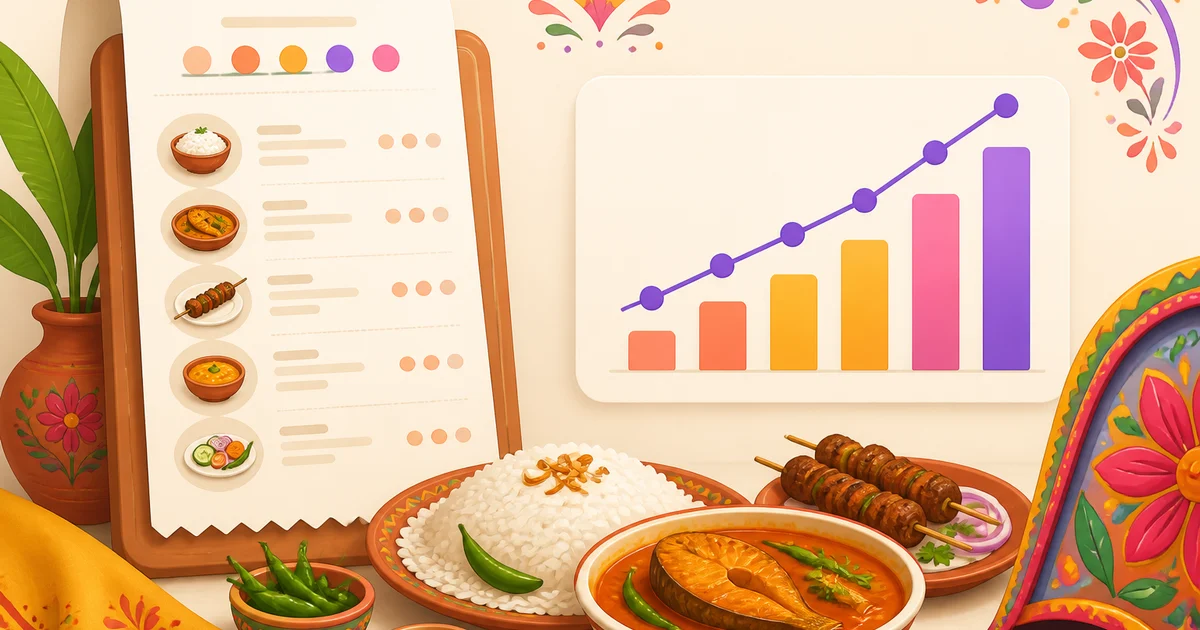
Average order value restaurant operators track, usually shortened to AOV, tells you how much revenue the average completed order generates. It is one of the simplest restaurant metrics to calculate, but it can reveal more than total sales alone. AOV shows whether customers are buying only a main item or adding drinks, sides, desserts and upgrades. It also helps you judge whether combos, menu changes, counter prompts and delivery minimums are working.
For a restaurant in Bangladesh, even a modest increase of ৳30 or ৳50 per order can become meaningful when repeated across hundreds or thousands of monthly bills. The key is to raise AOV profitably, without pressuring guests or relying on discounts that weaken your margin.
What Is the Average Order Value Restaurant Formula?
The basic calculation is:
Average order value = Order revenue ÷ Number of completed orders
Suppose your restaurant records ৳96,000 in order revenue from 120 completed orders during one day. Your AOV is:
৳96,000 ÷ 120 = ৳800
The average completed bill was therefore ৳800. This does not mean every customer spent ৳800. One family might have spent ৳2,400 while a takeaway customer spent ৳250. AOV compresses all those transactions into one useful directional figure.
Decide what counts as order revenue before comparing periods. A practical approach is to use net food and beverage sales after discounts, while excluding cancelled orders, refunds, VAT, service charges and delivery fees. If your reporting method includes some of those amounts, that is acceptable as long as you use the same method every week. Consistency matters more than choosing a complicated formula.
AOV also differs from average spend per guest. A dine-in table with four people may create one ৳2,000 order, giving an AOV of ৳2,000 but a per-guest spend of ৳500. Track both when covers are available. For a wider view of sales, margins, table use and labour performance, read this guide to restaurant KPIs.
A Worked AOV Comparison
Imagine a casual restaurant comparing two Fridays:
| Measure | Friday 1 | Friday 2 |
|---|---|---|
| Completed orders | 120 | 125 |
| Net order revenue | ৳96,000 | ৳106,250 |
| AOV | ৳800 | ৳850 |
Order volume increased by only five, but AOV rose by ৳50. The higher average produced an additional ৳6,250 in revenue compared with what 125 orders would have generated at the old ৳800 AOV. The manager can now investigate why. Perhaps more guests selected a rice-and-kebab combo, staff offered bottled drinks consistently, or a better menu layout made side dishes easier to notice.
Do not stop at revenue. Check whether the added items contributed enough gross profit. Selling more heavily discounted food can lift AOV while leaving little extra money after food cost, packaging and marketplace commission.
Why AOV Is More Actionable Than Total Sales Alone
Total sales tells you what happened, but it often hides the reason. Sales can rise because you received more orders, charged higher prices, increased average basket size or had an unusually busy event. AOV separates basket value from order volume.
That makes it useful for answering operational questions:
- Are customers adding drinks, sides and desserts?
- Did a new combo increase the value of each transaction?
- Are counter staff making relevant upsell suggestions?
- Does the online menu encourage complete meals or single-item orders?
- Is a delivery channel attracting enough revenue per order to cover its extra costs?
- Did a broad discount increase orders but reduce the average bill?
AOV is also easier for a shift manager to influence than monthly sales. The team cannot create Friday-level traffic on a quiet Tuesday, but it can present sensible add-ons, keep high-margin items visible and make ordering a complete meal easy.
Use AOV alongside order count and contribution margin. If AOV rises while order count falls sharply, a price increase may have discouraged guests. If AOV rises because every bill receives an excessive discount-funded combo, profit may not improve. No single KPI should run the restaurant by itself.
What Does a Healthy Restaurant AOV Look Like?
There is no reliable universal AOV target in Bangladesh. A tea shop, premium steakhouse, biryani takeaway and family dining restaurant operate at very different price points. Location, portion size, customer mix, dine-in group size and delivery channel all affect the number.
A healthy AOV should support your food cost, labour, rent, packaging, payment costs, marketplace commission and desired profit. It should also grow without reducing repeat visits. Compare each channel with its own historical baseline rather than copying another restaurant's headline number.
| Restaurant format | Useful interpretation | Healthy sign |
|---|---|---|
| Quick service or takeaway | Compare AOV with the price of one core meal. | Customers regularly add a drink, side or useful upgrade without slowing service. |
| Café or bakery | Track whether beverage-only orders gain a snack, pastry or dessert. | Attach rates improve while waste and discounting remain controlled. |
| Casual or family dine-in | Review AOV with party size and average spend per guest. | Tables order a balanced mix of mains, drinks, sides and desserts. |
| Delivery-focused restaurant | Compare AOV with packaging, delivery support and channel commission. | The average basket clears your profitable delivery threshold. |
| Premium dining | Review AOV by meal period and covers, not only by table. | Guests choose suitable starters, beverages and desserts without aggressive selling. |
Set an internal target using your own data. For example, if the last eight weeks show a stable AOV of ৳620, a first target of ৳650 may be more useful than an arbitrary ৳1,000 goal. Then identify which profitable item or upgrade could reasonably close the ৳30 gap.
Five Practical Ways to Increase Restaurant AOV
1. Build combos around real ordering behaviour
A combo reduces decision effort by grouping items that customers already buy together. A burger, fries and drink bundle is easier to understand than three separate choices. For Bangladeshi menus, the same principle can work with biryani and borhani, rice and kebab, khichuri and egg, or pizza with drinks.
Price the combo carefully. The guest should see value, but the discount should not remove the profit from the additional items. Start with high-popularity mains and add products with manageable food cost. Compare combo sales, AOV and contribution before making the offer permanent.
2. Offer relevant add-ons and upgrades
Add-ons work when they match the selected product. Useful choices might include extra cheese, additional chicken, egg, sauce, salad, rice, a larger drink or premium packaging where appropriate. Avoid showing a long, unrelated list that makes ordering harder.
Variations can also raise basket value. A guest choosing between regular and large sizes may pay more for the larger option when the difference is clear. Add-on names and prices should appear consistently at the counter and in online ordering. Learn how modifiers, add-ons and combos in a restaurant POS can make these choices easier to manage.
3. Give counter staff specific upsell prompts
“Anything else?” is easy to reject. A short, relevant question works better: “Would you like borhani with the biryani?” or “You can make that a meal with fries and a drink for ৳120 more.”
Choose one or two prompts for each popular main item and train staff to use them naturally. The aim is to help the guest complete the meal, not to pressure them. Measure item attachment and AOV by shift or period, while checking that service time and customer experience remain acceptable.
4. Improve the menu layout
Customers cannot order what they do not notice. Group related items, use plain category names and place profitable popular choices where they are easy to find. Display combo contents and savings clearly. On a digital menu, show relevant add-ons after the main selection rather than forcing guests to search another category.
Do not assume the most expensive item deserves the most attention. The best item to promote is often one with strong demand and a healthy contribution margin. This is the central idea behind restaurant menu engineering.
5. Set a sensible minimum order value for delivery
Small delivery orders can be costly after packaging, gateway charges, discounts and marketplace commission. A minimum order value can move customers toward an economical basket. For example, a customer at ৳430 may add a drink or side to reach a ৳500 minimum.
Base the threshold on your actual delivery economics. Setting it too high can reduce completed checkouts, especially for solo diners. Consider different economics for direct orders and marketplace orders, then monitor checkout completion, AOV and profit by channel. Never judge the threshold by AOV alone.
How to Track AOV With Rosuii
Rosuii records dine-in, takeaway and delivery orders through one browser-based POS. Use the Sales report to review sales and completed order totals for a selected period, then divide the relevant revenue by completed orders using a consistent definition. Compare daily, weekly and monthly figures instead of reacting to one unusually large catering or family order.
The Item Sales report helps explain movement in AOV. You can check whether particular drinks, sides or desserts are selling more often after a menu or staff change. Rosuii also supports menu variations, add-ons and combos, so the options discussed in this article can be configured directly in the ordering flow. For multi-branch restaurants, compare branches carefully because menu mix, neighbourhood demand and dine-in party size may differ.
Rosuii applies pricing on the server in a defined sequence covering discount, coupon, loyalty, service charge and VAT. This helps keep bill calculations controlled across the POS. Restaurant owners should still confirm applicable VAT rates and invoicing requirements with their VAT circle or professional adviser.
A Simple 30-Day AOV Improvement Plan
- Week 1: Calculate baseline AOV by day and, where possible, by dine-in, takeaway and delivery. Identify the ten best-selling main items.
- Week 2: Select one profitable add-on for each leading item. Create one or two clear combos rather than changing the whole menu.
- Week 3: Train counter staff on short prompts and improve the placement of drinks, sides and upgrades in the menu.
- Week 4: Compare AOV, order count, item sales, discounts and estimated contribution with the baseline. Keep the changes that improved both customer value and restaurant economics.
Run controlled tests where possible. If you change prices, launch five combos and introduce a delivery minimum on the same day, you will not know which action caused the result.
Common AOV Mistakes to Avoid
- Chasing AOV at any cost: A larger bill with poor margin is not automatically better.
- Comparing unlike channels: Dine-in table orders naturally differ from single-person takeaway orders.
- Ignoring order count: A higher minimum or price may lift AOV while reducing total completed orders.
- Using inconsistent revenue: Including VAT one month and excluding it the next creates a false trend.
- Overloading the menu: Too many modifiers and combo choices can slow decisions and frustrate guests.
- Rewarding aggressive selling: Upselling should be relevant, clear and respectful.
AOV becomes valuable when it leads to a specific decision. Review it regularly, connect changes to item-level sales and protect contribution margin. Small improvements, repeated across many genuine orders, can produce healthier growth than depending only on more traffic.
Rosuii gives Bangladeshi restaurants POS billing, sales and item reports, menu variations, add-ons, combos, online ordering and multi-branch tools in English and Bangla. Plans start free, with paid plans from ৳500 per month and no setup fee. Register for Rosuii and start measuring each order more clearly.
Last updated:
Frequently asked questions
How often should a restaurant calculate AOV?
Should VAT and service charge be included in restaurant AOV?
What is the difference between AOV and average spend per customer?
Can discount combos increase AOV but reduce profit?
How should a Bangladeshi restaurant choose a delivery minimum order value?
Run your restaurant on Rosuii
POS, menu, inventory, payroll and more — built for Bangladeshi restaurants.
Start free