
Restaurant Recipes
Commercial Chapli Kebab Recipe
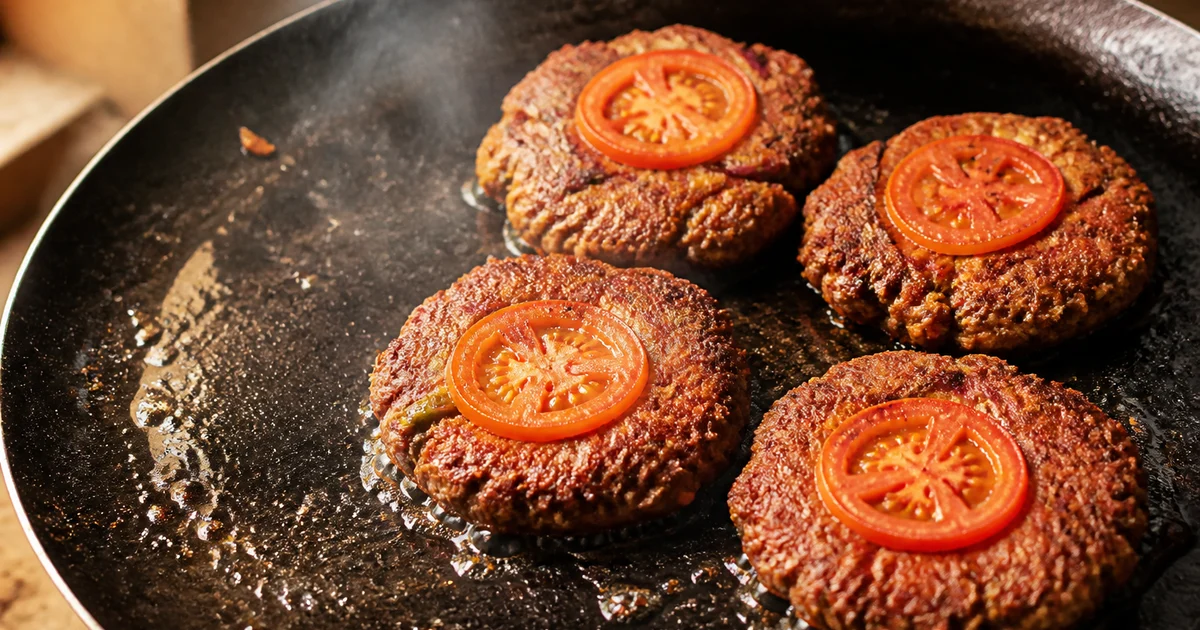
A commercial chapli kebab recipe producing 80 flat beef kebabs for 40 plates, with controlled portions, batch frying, holding and reheating guidance.
- Prep
- 1 hr
- Cook
- 1 hr 15 min
- Total
- 2 hr 15 min
- Yield
- about 40 plates or 80 kebabs
- Difficulty
- Medium
- Cuisine
- Pakistani
Method
- 1
Toast and crush spices
Toast the coriander and cumin seeds in a dry pan over medium heat for 3 to 4 minutes until aromatic but not dark. Cool completely, then crush coarsely so visible fragments remain.
- 2
Prepare the wet vegetables
Chop the onion, squeeze it firmly and drain for 10 minutes. Deseed and dice the tomatoes, then hold them below 5°C in a perforated tray until required; both vegetables should look moist but must not drip water.
- 3
Mix the seasoned mince
Keep the beef mince below 5°C and combine it with salt, ginger, garlic, toasted spices, chilli flakes, black pepper and anardana. Mix by hand or on low mixer speed for 3 to 4 minutes, stopping when the mass looks evenly seasoned and slightly tacky.
- 4
Add binder and herbs
Fold in the cooled maize flour, beaten eggs, drained onion, coriander and green chilli for about 2 minutes. Do not add the tomato yet; the mixture should hold a rough ball without leaking liquid.
- 5
Chill the kebab mixture
Spread the mixture in shallow covered trays and refrigerate at 0 to 5°C for 30 minutes. After chilling, it should feel firm enough to portion while retaining a visibly coarse texture.
- 6
Add tomato in rounds
Move only enough mixture for 15 to 20 minutes of frying to the shaping station. Fold in the matching share of diced tomato for 30 to 45 seconds, stopping as soon as it is evenly visible.
- 7
Weigh and flatten portions
Weigh 105 g for each kebab and flatten it to 10 to 12 cm across and 8 to 10 mm thick. Keep the centre slightly thinner, repair cracked edges gently and return shaped trays below 5°C if they will wait longer than 10 minutes.
- 8
Heat the frying station
Heat 5 to 8 mm of oil in heavy pans to 170 to 175°C. Test with one kebab; the oil should bubble steadily around the edge without smoking or violently splashing.
- 9
Shallow fry each batch
Place kebabs with at least 2 cm of space between them and fry the first side for 3 to 4 minutes until a dark reddish-brown crust forms. Turn once and cook for another 2 to 3 minutes until the centre reaches at least 71°C.
- 10
Drain and dispatch safely
Drain cooked kebabs on wire racks for 2 to 3 minutes without stacking. Serve promptly, or hold above 60°C for no more than 30 minutes for best quality; filter burnt particles from the oil between rounds.
Notes for your kitchen
Why this chapli kebab recipe works commercially
This commercial chapli kebab recipe produces about 80 kebabs, enough for 40 main-course plates at two kebabs per plate. Each kebab starts at 105 g raw weight and should finish at approximately 82 to 88 g, depending on meat fat, frying temperature and cooking time. The batch is large enough for a busy food cart or restaurant service without requiring industrial mixing equipment.
Chapli kebab suits fast service because the mixture can be prepared ahead, weighed into portions and fried in controlled rounds. Its wide, thin shape cooks faster than a thick seekh or burger patty. The visible tomato, dhonia pata, green chilli and crushed coriander also give the kebab a recognisable appearance without requiring expensive garnish.
The main operational risk is moisture. Onion, tomato, salt and overmixed meat can release water, making the patties difficult to shape and expensive to fry. The process therefore separates wet preparation, chilling, tomato addition and final shaping rather than treating everything as one mixing step.
Ingredient selection and quality
Coarse beef mince with controlled fat is the most important ingredient in a profitable chapli kebab. Ask for an 8 to 10 mm grind rather than fine keema. Fine mince becomes dense and rubbery, while very lean meat produces a dry kebab that breaks at the edge. A practical target is 20 to 25 percent fat, distributed through the mince rather than added as large loose pieces.
Use beef from one approved supplier and record the delivered weight, visible fat level and trimming condition. A change in fat or water content changes cooked yield even when the raw portion remains 105 g. Do not accept wet, previously thawed mince unless it has been declared and handled under proper cold-chain conditions.
Tomato and fresh coriander define the character of the kebab, but both need preparation control. Use firm, ripe tomatoes with dense flesh. Remove the watery seed pockets and cut the flesh into small, even dice so the pieces remain visible without creating holes. Dhonia pata should smell fresh and should be washed, fully drained and chopped with the tender stems. Wet coriander adds avoidable water.
Whole coriander and cumin should be lightly toasted and crushed, not reduced to fine powder. Coarse particles release aroma during frying and give the surface its traditional speckled appearance. Fresh green chilli supplies flavour as well as heat, so standardise the variety or adjust the quantity after testing each delivery.
Mixing and shaping technique
A chapli kebab should be mixed until cohesive but shaped with minimal compression. Salt and mixing dissolve meat proteins, helping the mixture bind, but excessive mechanical mixing creates a springy sausage texture. Mix only until the meat becomes slightly tacky and the seasonings are evenly distributed, then fold in the drained vegetables and binder.
Keep the mixture at 5°C or below during preparation. If the kitchen is hot, divide it between shallow food-grade trays rather than leaving one deep tub beside the stove. Chilling for 30 minutes allows the maize flour to absorb surface moisture and makes portions easier to flatten.
Add diced tomato to smaller working batches shortly before shaping. Tomato held in salted mince for several hours softens and releases liquid. During a long service, keep the main mixture refrigerated and combine tomato with only enough mixture for the next 15 to 20 minutes of frying.
Weigh every portion before flattening. Shape each piece between lightly oiled hands into a disc 10 to 12 cm across and 8 to 10 mm thick. Keep the centre slightly thinner than the outer area because the centre contracts and rises during frying. Cracked edges can be pressed together gently, but heavily compressed patties lose the open, coarse texture.
Shallow frying at volume
Stable oil temperature and uncrowded pans produce faster service and lower oil absorption. Maintain the frying medium at 170 to 175°C and use a shallow oil depth of approximately 5 to 8 mm. When cold patties are added, the temperature will drop, but it should recover above 165°C quickly. If it remains low, reduce the number of kebabs per pan.
Use two or more heavy flat pans or a commercial griddle with a raised edge. Leave at least 2 cm between patties so steam can escape and staff can turn them without tearing adjacent kebabs. Turn once after the first side has formed a dark reddish-brown crust. Repeated turning slows browning and increases breakage.
Filter loose onion, spice and tomato particles from the oil between rounds. Burnt sediment makes later batches bitter and dark before the centres are cooked. Replenish oil in measured amounts rather than pouring directly from a large container, and replace it when it smells stale, foams persistently or colours food too quickly.
Scaling the batch
Scale every ingredient by weight and keep the patty thickness unchanged. For a half batch, divide all quantities by two and target 40 portions at 105 g each. For a double batch, multiply the ingredients by two but mix in two separate tubs. One oversized batch warms quickly, is difficult to season evenly and encourages staff to overmix.
Cooking capacity must scale with mixture volume. Doubling the mince without adding pan space doubles queue time and leaves tomato-containing mixture waiting too long. Calculate the number of patties each pan can hold without crowding, the minutes per frying round and the expected orders during peak service before increasing production.
Holding and reheating for service
Fresh frying gives the best chapli kebab, but short hot holding is workable when demand is predictable. Hold cooked kebabs above 60°C on a rack or perforated tray for no more than 30 minutes for best texture. Avoid deep covered pans because trapped steam softens the crust and causes the kebabs to sit in rendered fat.
For slower service, cook smaller rounds rather than filling the hot cabinet. If advance cooking is unavoidable, cool the kebabs quickly in a single layer, refrigerate below 5°C and reheat on a lightly oiled griddle or in a 190°C oven until the centre reaches 74°C. Reheat once only. A microwave warms the centre but makes the crust soft, so it is unsuitable as the main restaurant method.
Portioning and yield control
Yield control starts with one raw weight, one plate specification and routine cooked-weight checks. This batch targets 80 kebabs at 105 g raw, served as 40 plates of two. Train staff to use a digital scale rather than judging portions by hand. Even small excess portions repeated across 80 pieces reduce the number of complete plates available for sale.
Record the total mixed weight before portioning, the number of acceptable kebabs and any mixture left behind in bowls or on trays. Check several cooked pieces from each new meat delivery. A higher-than-normal cooking loss may indicate lean meat, added water, excessive frying time or holding that is too long. A written portion control standard should include raw weight, diameter, thickness, cooked appearance and kebabs per plate.
Common mistakes that cost money
The most expensive mistakes are wet mixture, oversized portions, overcrowded pans and uncontrolled cooking loss. Failing to squeeze onion or drain tomato leads staff to add extra binder, which weakens the meat flavour and changes the texture. Putting patties into cool oil increases absorption and can make them break during turning.
- Do not use fine mince as a shortcut; it produces dense kebabs and hides poor fat distribution.
- Do not mix all the tomato into a batch intended to sit through a long service.
- Do not flatten portions by eye because diameter and thickness will drift between cooks.
- Do not stack freshly fried kebabs in deep containers because steam destroys the crust.
- Do not serve broken or undersized pieces without recording them as wastage or an approved staff-use item.
Keeping food cost stable
Stable cost depends on meat specification, measured portions and recorded production yield. Beef dominates the batch cost, while seasonal movement in tomato, coriander, green chilli and frying oil creates smaller variations. Compare supplier deliveries by usable quality and cooked yield, not purchase weight alone.
Maintain a batch sheet and review actual kebabs produced against the planned 80 pieces. Use recipe costing when supplier pack sizes or meat specifications change, and monitor the resulting food cost percentage rather than reducing portion size without updating the menu specification. Rosuii can record raw materials as a production converted into a finished kebab batch, helping the kitchen compare planned output with actual output without claiming automatic deduction for every menu sale.
What drives the cost
Beef is the main cost driver, and its fat level, trimming quality, supplier specification and cooking loss have the largest effect on cost per plate. Frying oil and seasonal prices for tomato, coriander and green chilli create smaller movements, while inaccurate portions increase cost immediately.
Ingredient rates move with the market, so this describes what drives the cost rather than quoting a figure.
Questions from kitchens
Can this chapli kebab recipe be doubled for a large event?
How long can cooked chapli kebabs be hot-held?
Can maize flour be replaced with gram flour?
What is the refrigerated shelf life of the mixture?
Why did the batch produce fewer than 80 kebabs?
Related recipes
Commercial Chicken Jhal Fry Recipe
A commercial chicken jhal fry recipe for about 40 plates, using a fully cooked chicken base and a fast, spicy high-heat finish for each order.
- Yield:
- about 40 plates
- Total:
- 1 hr 15 min
- Difficulty:
- Medium
Commercial Chicken Manchurian Recipe
A 40-plate chicken Manchurian recipe with measured balls, a service-ready gravy base, controlled frying and practical holding guidance.
- Yield:
- about 40 plates
- Total:
- 2 hr
- Difficulty:
- Medium
Commercial Chilli Chicken Recipe
A commercial chilli chicken recipe for about 40 plates, using double-fried chicken, a bulk sauce base and controlled dry or gravy finishing methods.
- Yield:
- about 40 main-course plates
- Total:
- 1 hr 35 min
- Difficulty:
- Medium
Run your restaurant on Rosuii
POS, menu, inventory, payroll and more — built for Bangladeshi restaurants.
Start free