Cloud Restaurant Management Software: A Practical Guide
Cloud restaurant management software runs in your browser and stores your data on managed servers, so you can check sales from any device, get automatic updates and off-site backups. Here are the real benefits, the honest trade-off about internet, and how Rosuii is built.

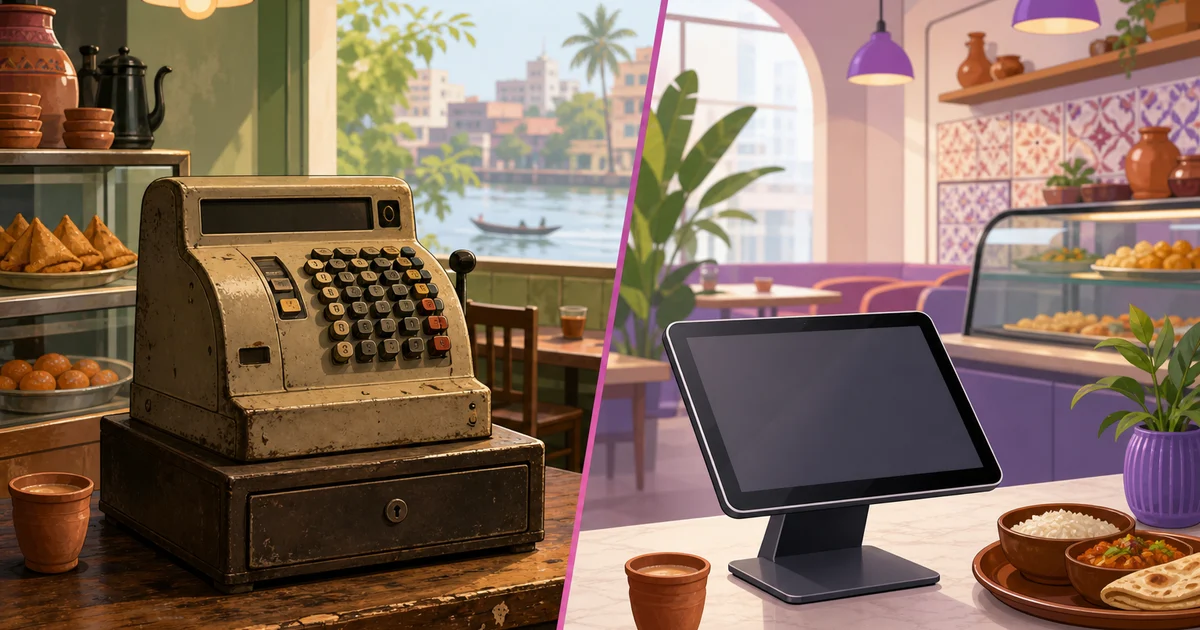
Cloud restaurant management software runs through the internet instead of being installed on one PC behind your counter. You log in from a phone, a tablet or a laptop, your data lives on managed servers, updates arrive on their own, and backups happen off-site. The practical upshot is that you can see what your restaurant is doing from anywhere, the software keeps improving without you reinstalling anything, and a dead hard disk at the counter no longer threatens your records. This guide explains the real benefits of cloud restaurant management software, the one honest trade-off you should plan for, and how Rosuii is built as a cloud platform.
If you are weighing cloud against an installed system at the till level, our piece on cloud POS versus traditional POS goes deep on that single comparison. This page steps back to the whole management platform, and assumes you already know the basics from our guide to restaurant management software.
What cloud means for a restaurant
The word cloud just means your software and data sit on servers reached over the internet, rather than on a machine you own and maintain. For a restaurant, that changes a few everyday realities. You are no longer tied to the one computer that has the software installed. You are not responsible for backing up a database or applying a patch. And opening a second outlet does not mean buying and configuring another copy of everything. The same login, from any device, shows you the same up-to-date business.
Cloud software is also why a small restaurant can run the same class of tools a large chain uses. There is no server to buy, no IT person to keep it alive, and the cost is a monthly fee in taka rather than a large purchase upfront.
The real benefits
Access from anywhere
This is the headline. You can check today's sales from home, approve an expense between meetings, or watch a Friday rush from another branch, all from a phone. The owner who used to be chained to the counter to know anything can now see the business in real time wherever they are. Rosuii runs in any modern browser and installs as an app (a PWA) on your phone, tablet or laptop, so the manager on the floor and the owner at home see the same numbers.
Automatic updates
With installed software, new features and fixes mean someone has to download and apply an update, often for a fee, and sometimes the version on each PC drifts out of sync. Cloud software updates centrally. You log in and the latest version is simply there, the same across every device and every branch, at no extra cost.
Off-site backups
A restaurant's data is its history: every sale, every customer, every report. On a single PC, one hardware failure or one theft can erase all of it. Cloud software keeps your data on managed servers with backups held off-site, so a spilled drink or a stolen laptop is an inconvenience, not a catastrophe.
Multi-branch oversight
This is where cloud earns its keep for a growing business. Because every outlet reports to the same place, you get one dashboard across branches: compare today's sales, spot the slow location, and watch item performance everywhere without visiting each one or collecting separate books. Rosuii gives single-branch and multi-branch dashboards, with each restaurant kept on its own isolated database. We cover the operational side in multi-branch restaurant management.
Lower upfront cost
There is no server to buy and no large one-time licence. You pay a monthly fee and can add branches as a setting. For a Bangladeshi restaurant watching margins, starting free and paying ৳500 to ৳2,500 a month with no setup fee is easier to plan around than a big purchase and surprise charges for updates and extra outlets.
The honest trade-off: some things still need internet
Cloud software has one real cost, and pretending otherwise would not help you. Older cloud tools stopped taking orders the moment the line dropped, but that is no longer how a good one behaves. Rosuii is a cloud platform delivered as a browser app, and it caches your menu on the device so the POS keeps taking orders during an outage, queuing each one locally and syncing it automatically when the connection returns, mark-paid included. What still needs a live connection is online-payment confirmation through bKash and Nagad and real-time sync across several devices, so it is not a full offline system. We say this plainly because some vendors imply everything works offline, and that gap matters during a Friday dinner rush.
The practical answer is the same one most restaurants already use for card machines and digital payments: a primary broadband line with a mobile-data backup. A cheap router with a SIM, or a phone's hotspot kept ready, covers most needs, and a brief outage no longer stops the till because orders queue on the device and sync once you are back online. For the lower cost, automatic backups, anywhere-access and freedom from a fragile PC, most owners find that a fair trade.
Cloud versus installed, at a glance
| Factor | Cloud software | Installed software |
|---|---|---|
| Where data lives | Managed servers, backed up off-site | One PC behind the counter |
| Access | Any device, anywhere | The machine it is installed on |
| Updates | Automatic, central, no extra cost | Manual, often paid |
| Adding a branch | A setting | Another licence and install |
| Upfront cost | Low, monthly fee | Higher, one-time licence |
| Works without internet | Takes orders offline and syncs when back; payments and live multi-device sync need a connection | Yes, fully |
How Rosuii is built as cloud software
Rosuii is cloud-native, designed around the benefits above with two choices worth calling out. First, every restaurant gets its own isolated database, not a shared table with other businesses' rows mixed in. Your sales, customers and reports are walled off in your own database, which keeps your data separate and yours. Second, each restaurant gets a branded subdomain the moment you sign up, with no DNS or hosting to configure, so your storefront and panel are live without technical setup.
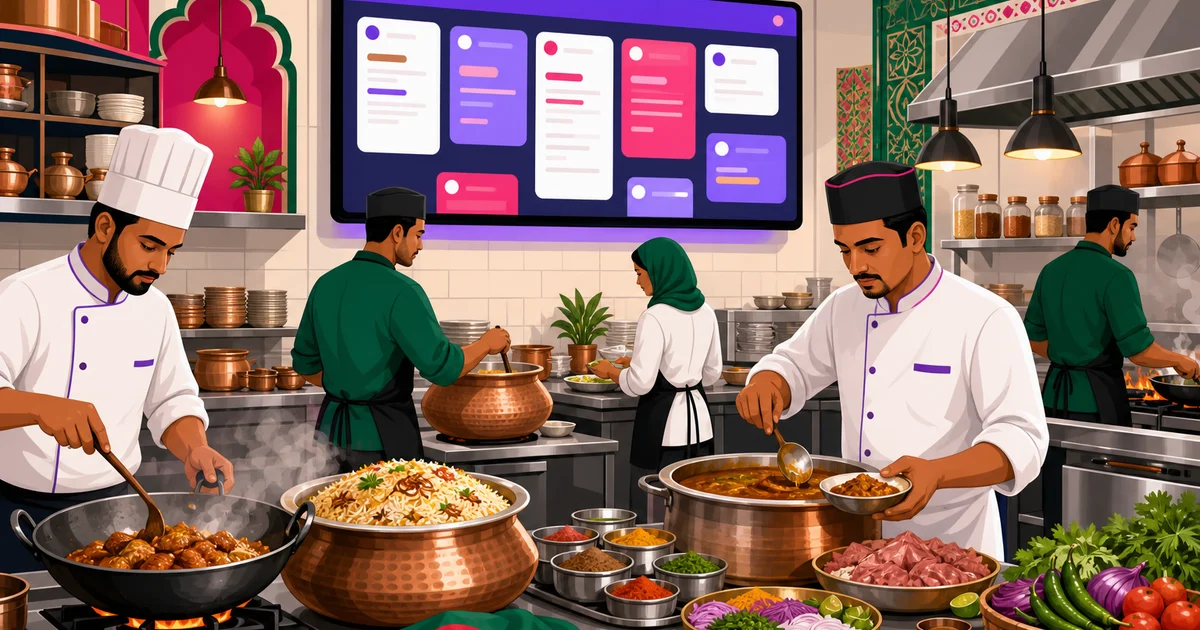
On top of that sits the full platform: POS for dine-in, takeaway and delivery; a kitchen display and customer display; menu, inventory, payroll, CRM and loyalty; your own online ordering page; and reporting on single-branch and multi-branch dashboards. It is fully bilingual in Bangla and English, prices in taka, and takes real bKash and Nagad payments alongside cash and cash on delivery (card is a placeholder). It runs in the browser on hardware you already own. See the full set on the features page, and what each plan includes on pricing.
Who benefits most from cloud restaurant management software
Some restaurants gain more from the cloud model than others. An owner who runs more than one outlet, or plans to, gets the biggest return, because the alternative is managing a separate installed system at each location with no shared view. A manager who is often away from the counter benefits too, since the whole business sits in their pocket. And any restaurant that has lost data to a dead PC or a stolen laptop will value off-site backups the first time the old fear does not apply.
The model also suits owners who would rather not employ or hire IT help. There is no server to maintain, no patches to apply, and no backup routine to remember, because the platform handles all of it. For a small team focused on food and service, that is one less thing to manage. The flip side, again, is that some functions lean on a connection: order-taking carries on offline and syncs when the line returns, but payment confirmation and live multi-device sync need internet, so a reliable connection with a data backup is still worth getting right before you commit.
Is cloud right for your restaurant?
For most restaurants in Bangladesh on a basic broadband line, yes. The anywhere-access, automatic backups, central updates and per-branch oversight outweigh the need to keep a data SIM as backup. The clearest fit is a growing business: a single café that plans a second outlet, or a small chain that wants one view across locations without collecting separate books. If you run a single fixed counter with truly no internet option, weigh an installed system instead.
Want to try cloud restaurant management software on your own menu? Create your free Rosuii account, get your branded subdomain in minutes, and check your sales from your phone tonight.
Last updated:
Frequently asked questions
What is cloud restaurant management software?
Does cloud restaurant management software work offline?
Is cloud restaurant software safe for my data?
Can cloud software manage multiple restaurant branches?
How much does cloud restaurant management software cost in Bangladesh?
Run your restaurant on Rosuii
POS, menu, inventory, payroll and more — built for Bangladeshi restaurants.
Start free