EFD Machine for Restaurants in Bangladesh: NBR's EFD/SDC Rule
What an EFD machine is, how the NBR's EFD/SDC rule for restaurants in Bangladesh works, which restaurants are being brought into the net, and how a POS system relates to the fiscal device.

If you run a restaurant in Bangladesh, you have probably heard about the EFD machine the NBR wants in shops and eateries. EFD stands for Electronic Fiscal Device, and alongside it sits the SDC, the Sales Data Controller. Both are tools the National Board of Revenue (NBR) uses to capture VAT at the point of sale and report it back to the tax authority in close to real time. This guide explains what an EFD machine is, how the EFD/SDC rule applies to restaurants, which businesses are being brought in, and how your point-of-sale software relates to the device. It is general guidance, not legal advice; confirm your exact obligation with the NBR (nbr.gov.bd) or a VAT consultant.
What is an EFD machine?
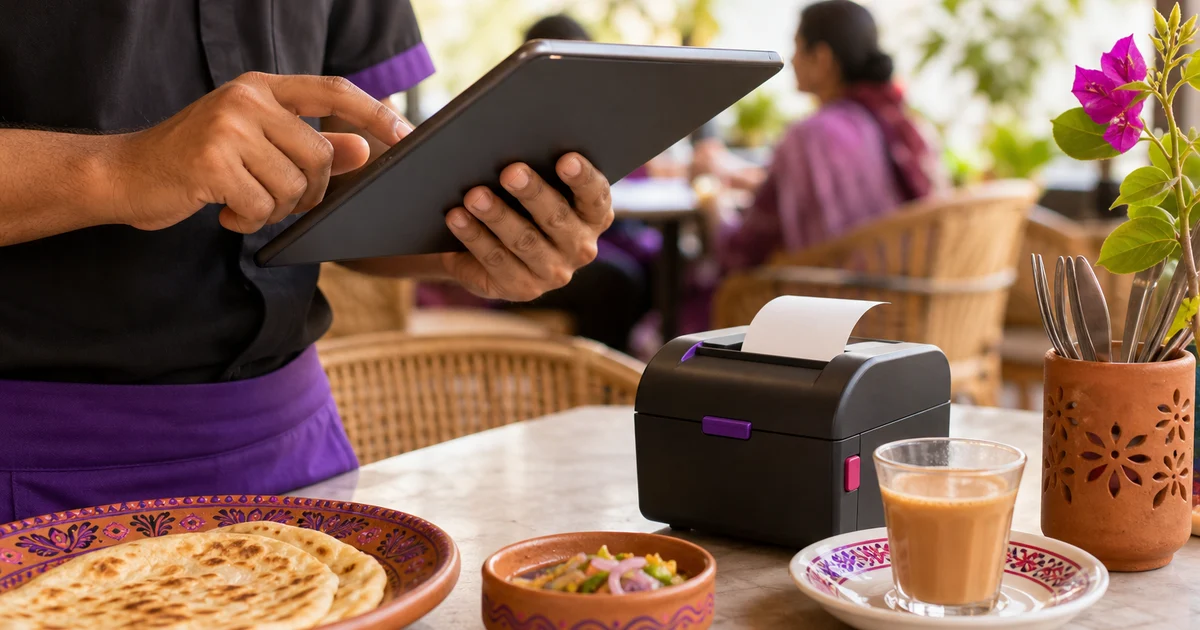
An EFD machine is a fiscal device that records each sale, prints a VAT invoice for the customer, and stores the transaction in a way the NBR can read. Think of it as a till that the tax authority can see into. When a sale is rung up, the EFD generates the receipt and keeps a secure record of the VAT charged, so the amount collected is captured at the moment of the sale rather than reconstructed later from a copybook.
The SDC, or Sales Data Controller, is the related piece for businesses that already run their own billing software or POS. Instead of replacing your system with a standalone EFD terminal, an SDC connects to your existing setup, takes the sales data it produces, fiscalises it, and relays it to the NBR. So the two serve the same goal by different routes: the EFD is the all-in-one device, the SDC is the bridge for a restaurant that already has software.
Why the NBR pushes EFD and SDC
The problem the NBR is trying to solve is simple to state. VAT is collected from the customer on every taxable sale, but if a restaurant under-reports its sales, the VAT never reaches the treasury. Consumers have complained for years that they pay VAT on a bill yet have no confidence it is deposited. An EFD or SDC closes that gap by capturing the sale at source. For the honest operator, that is not a threat; it is a level playing field, since a competitor down the road can no longer win on price by quietly skipping VAT.
The EFD/SDC rule for restaurants
The NBR has been expanding fiscal-device coverage in stages, and restaurants are squarely in scope. A few points are worth knowing, while remembering that timelines and the exact list of covered businesses are set by the NBR and change:
- Under the VAT framework, fiscal-device use has been made mandatory for a defined set of business types, and restaurants are among the categories named.
- The NBR has specifically pushed mandatory installation at hotels and restaurants located on highways, after complaints that highway eateries were not issuing electronic VAT invoices.
- Your NBR VAT registration and BIN come first; the fiscal device sits on top of being a VAT-registered business.
- One business keeps a single BIN even when it runs several devices; the NBR assigns a code to each device so individual machines can be told apart.
Because the rollout has moved in phases and the rules are periodically updated, do not assume your specific restaurant is or is not required to have a device based on a forum post or a competitor's setup. Ask your local VAT office or your consultant what currently applies to your category and location.
EFD vs SDC: which fits a restaurant?
For a small outlet with no billing software, a standalone EFD machine can be the whole solution: it is the till and the fiscal recorder in one box. For a restaurant already running a POS, the SDC route usually makes more sense, because it lets the software you already use keep doing the work while the SDC handles the fiscal reporting to the NBR.
| Aspect | EFD (Electronic Fiscal Device) | SDC (Sales Data Controller) |
|---|---|---|
| What it is | An all-in-one fiscal till and receipt printer | A controller that connects to your existing POS/billing software |
| Best for | Small shops or eateries with no POS | Restaurants already using billing software |
| Where sales are entered | On the device itself | In your POS, then passed to the SDC |
| What it does with VAT | Captures and reports it at sale | Fiscalises your POS data and relays it |
The right choice depends on how you already work and on what the NBR specifies for your case. This is a decision to make with your VAT consultant, not from a blog table alone.
How POS software relates to an EFD or SDC
This is where owners get confused, so let us be precise. A POS (point-of-sale) system and a fiscal device do different jobs. The POS is where you build the order, manage the menu, route tickets to the kitchen, take payment and run reports. The EFD or SDC is the part the NBR uses to capture the fiscal record of the sale. In an SDC setup, your POS keeps running the restaurant while the SDC handles the tax authority's side.
What a good POS contributes, regardless of the device, is a clean, structured sales record. If your software already calculates VAT correctly on every bill, prints an itemised receipt and keeps the totals in reports, then you are starting from organised data rather than a messy copybook. Organised sales data is exactly what makes any fiscal-reporting arrangement, and any VAT return, less painful. For the wider picture of what a point-of-sale system does, see our guide to restaurant POS software and to restaurant billing software.
What software cannot do for you
Be wary of any claim that a piece of software is, by itself, an NBR-certified fiscal device or that it submits your VAT to the NBR automatically. Fiscalisation is a regulated function handled through the EFD or SDC and the NBR's own systems. Software helps you keep accurate records and print compliant bills; it does not turn itself into a government-approved fiscal recorder unless it is specifically certified and connected as one. Treat strong claims here with caution and verify them with the NBR.
How Rosuii fits alongside the fiscal-device requirement
Rosuii is restaurant management and POS software. It is not, and does not claim to be, an EFD machine or an NBR-certified fiscal device, and it does not submit VAT to the NBR for you. What it does is give you the clean, accurate sales record that sits underneath any fiscal-reporting setup.
Concretely, Rosuii:
- Records every sale across dine-in, takeaway, delivery and your online storefront, in one place.
- Applies VAT to each bill in a fixed order, after discount, coupon, loyalty and service charge, and prints an itemised receipt that shows VAT as its own line with your business name and BIN. See the Mushak 6.3 VAT challan for what a compliant invoice needs.
- Carries the same VAT breakdown into your reports and day-close Z-report, so the VAT you collected is a number you can read, not rebuild.
If the NBR requires a fiscal device for your restaurant, you arrange that through the approved channel, and your POS keeps doing what it does best: running the floor and keeping the sales data tidy. Getting your VAT rate right on those bills starts with our guide to the restaurant VAT rate in Bangladesh, and the bill itself is covered in restaurant VAT and service charge.
This article is general guidance, not legal or tax advice. EFD/SDC rules, timelines and the list of covered businesses are set by the NBR and change. Always confirm what applies to your restaurant with the NBR (nbr.gov.bd) or a qualified VAT consultant.
Want a POS that records every sale and prints a clean, VAT-itemised bill? Create your free Rosuii account and set your rates once.
Last updated:
Frequently asked questions
What is an EFD machine?
What is the difference between EFD and SDC?
Do all restaurants in Bangladesh need an EFD machine?
Is Rosuii an EFD or NBR-certified fiscal device?
How does POS software relate to a fiscal device?
Run your restaurant on Rosuii
POS, menu, inventory, payroll and more — built for Bangladeshi restaurants.
Start free