What Is a Restaurant POS System? Orders, Inventory and Payroll
Understand restaurant POS systems for Bangladesh: orders, payments, inventory and payroll. Compare cloud options and use practical checks before buying.

Last verified: 2026-09-23
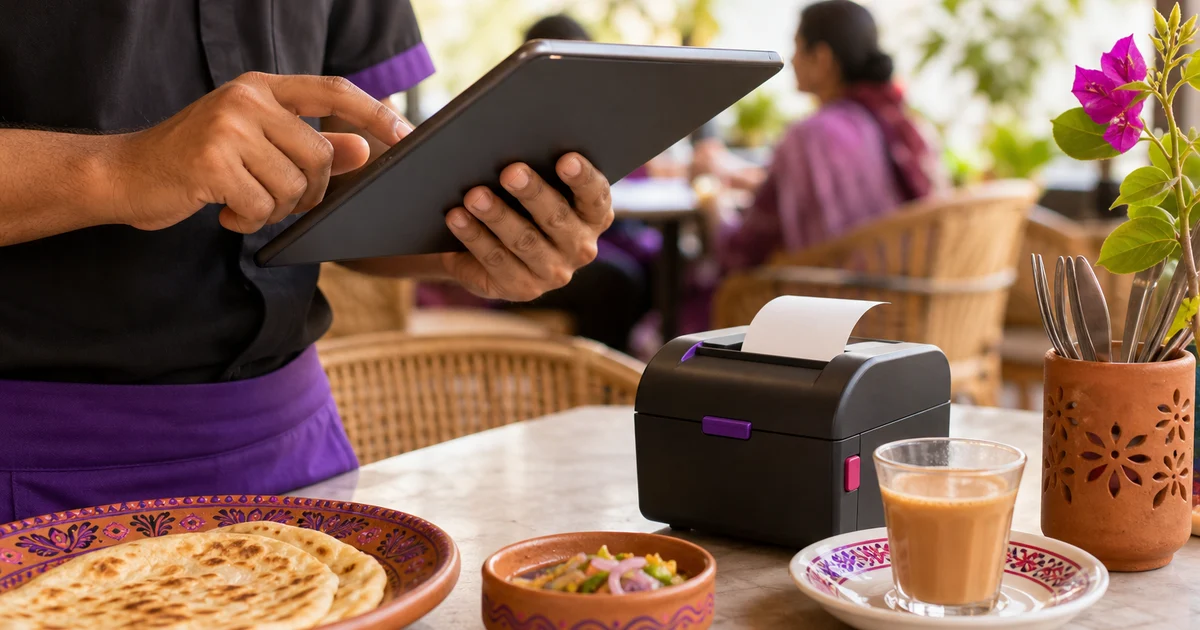
A restaurant POS system is the software and equipment used to take orders, calculate bills, record payments and keep sales records. Restaurant POS software adds menu choices, preparation notes and table or takeaway details to that checkout process.
Choosing software for your own counter? Use the Rosuii restaurant POS overview for the product, management workflow guide for the wider operation, and current plans for price and limits.
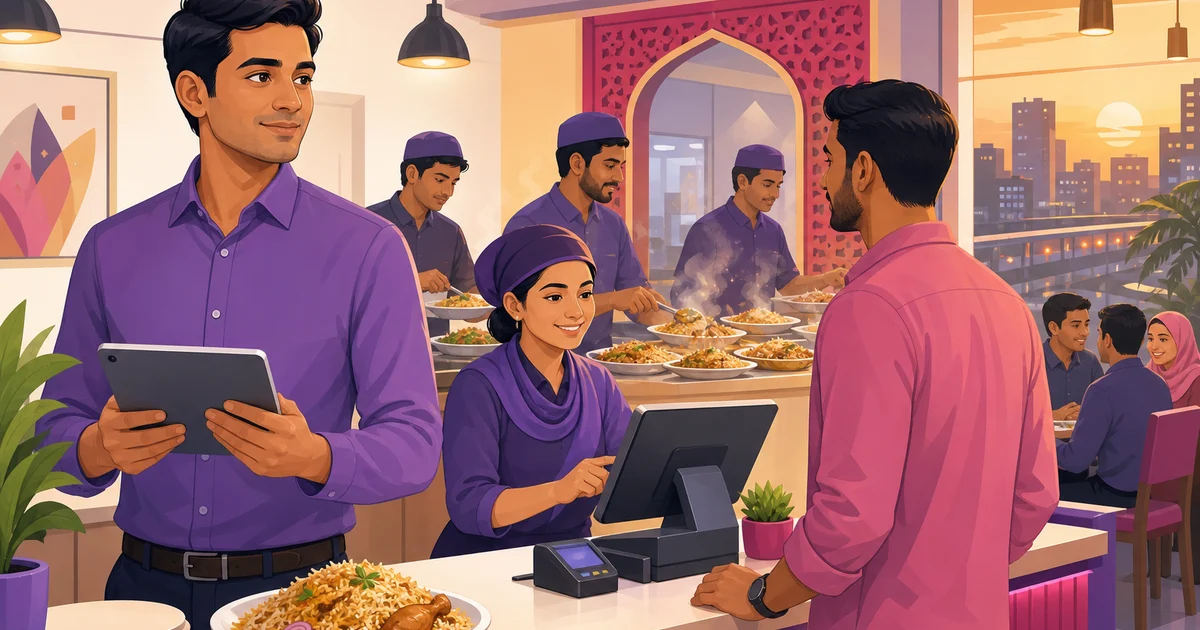
If you are asking what is a restaurant POS system, start with one order rather than a feature list. Follow it from the cashier to the kitchen, then to the bill, payment and report. Each step should preserve the items, amounts and reference needed by the next person.
How a restaurant POS system works
- Choose the service type. Start a dine-in, takeaway or delivery order.
- Add menu items. Select sizes, modifiers and special notes.
- Send preparation details. Use the configured kitchen ticket or display workflow.
- Prepare the bill. Check quantities, discounts and configured charges.
- Record or process payments. Follow the supported cash, card-terminal or mobile payment workflow.
- Review the result. Find the sale, its payment record and any stock effect in the relevant reports.
Some restaurants collect payment before preparation, while table-service outlets may leave a bill open. Ask the vendor to demonstrate the required sequence. A table label or kitchen screen alone does not establish every open-bill or routing rule.
For the physical components, see POS machine definition and hardware examples. For the wider system concept, read the restaurant POS system guide.
A quick service restaurant example
At a takeaway counter in Dhaka, a cashier might enter two burgers, one extra cheese portion and a no-onion note. A restaurant POS should preserve those choices in the kitchen instruction and bill, then show the recorded payment in the day's report.
For dine-in, add the table and keep track of later items. For delivery, check contact details and the order source. A staff-entered delivery order and a customer placing an order on your website are different workflows; confirm the plan for each.
Cloud-based and installed software
Cloud-based POS systems use an online service to store or synchronise records. They can support access from multiple authorised devices, but the exact offline functions, access rules and backup arrangements depend on the product.
Installed software runs on a local device or server. It may suit a particular network and hardware setup. Ask who maintains it, how backups are restored and what happens when the main computer fails. Neither model removes the need for a recovery plan.
Rosuii runs in a compatible browser/PWA and provides an isolated database and branded subdomain per restaurant. Eligible orders can be queued on a previously synced device during an outage. Online-payment confirmation and live multi-device or KDS updates need connectivity. Compare the trade-offs in cloud versus traditional POS.
Menu items, modifiers and the floor plan
Try the menu staff actually sell: a small and large drink, a burger with an add-on, and a note such as “no onion”. The price on the order, receipt and report should follow the selected choices. Bilingual names should remain readable for the cashier and kitchen.
For dine-in service, check the floor plan or table board, table identification and staff assignment. If you need table transfer, merge or separate guest bills, ask to see those exact actions. They should not be inferred from a floor-plan screenshot.
Kitchen order tickets (KOT) and kitchen displays (KDS)
A kitchen ticket communicates the order's preparation details. A kitchen display system adds a visible queue and status workflow. Check notes, quantities and what each station can see, then test adding an item after the first send.
Ask what staff do when a printer fails and whether a repeat print is distinguishable from a new order. Our KDS guide explains the display role. Test your intended hardware and workflow in the demo.
Payments: recording is different from processing
A payment method label records how the customer paid. A live payment integration communicates with a payment provider. For a credit card paid on a separate terminal, the POS may only record the result. Ask which component authorises the charge and how staff verify it.
Rosuii records cash, card and configured mobile methods. Card and Rocket are recording options, not live gateways. Online bKash and Nagad checkout is available on Pro with the restaurant's own merchant approval and credentials; provider charges apply.
Several amount-based payments can be recorded against an order. The till also supports equal-share collection on that same order, with one receipt. Separate item/seat bills and per-guest receipts are not offered.
VAT and service-charge settings apply the values configured by the restaurant. They do not determine the restaurant's legal tax obligations. Use the restaurant payment-method guide to plan staff procedures.
Check Rosuii’s payment methods and merchant setup before enabling checkout. Subscription payments for the software and your guests’ restaurant payments are separate arrangements.
Inventory management and payroll
Inventory management links stock records, purchases and usage. A basic item quantity is not the same as recipe-based ingredient consumption. Ask the vendor to receive ingredients, sell a recipe item and show the resulting stock record in the same demonstration.
Payroll belongs to the staff and salary workflow. A sales report by waiter is not payroll. Check employee records, salary periods, advances and approvals using a sample employee, then confirm the output your accountant needs.
For a buying scorecard, read how to choose the best restaurant POS for inventory and payroll. For the daily process, use the stock definition and count guide and restaurant payroll guide.
Inventory and payroll: what should a buyer verify?
| Decision | Ask for this demonstration | Why it matters |
|---|---|---|
| Purchasing and receiving | Create a supplier order, receive part of it and check the remaining quantity. | A purchase order should not be mistaken for stock already delivered. |
| Recipe consumption | Set the ingredient unit and recipe, place an order and inspect the stock movement. | An item count does not explain which ingredients were consumed. |
| Wastage | Record a damaged ingredient with quantity, reason and date. | Waste and ingredients used for sales need distinguishable records. |
| Payroll | Review a salary period, an advance and a payment record with your accountant. | Staff sales reports do not establish salary calculations or payment to a bank. |
| Controls and reporting | Ask which staff can change a record and trace a correction into the report. | Buying decisions need evidence about corrections as well as normal entry. |
A small ingredient calculation to take to a demo
Suppose your test recipe uses 0.15 kg of chicken per portion. With 5 kg opening stock, two portions consume 2 × 0.15 = 0.30 kg, leaving 4.70 kg before other movements. These are illustrative quantities, not a Rosuii customer result.
In Rosuii, enable recipe deduction and save the item or size recipe first. Consumption is triggered by order placement, not simply by collecting payment. Without the setting and recipe, that deduction is not automatic.
Run this stock check in an authorized test restaurant. Rosuii's shared public demo does not post recipe consumption.
Use the ingredient's stock unit: enter 0.15 kg when stock is held in kilograms. Do not enter 150 and assume a gram-to-kilogram conversion. Confirm the stock location and starting balance before checking the result.
Ask whether wastage, recipe yield, sub-recipes and cost history meet your needs. Rosuii's recipe setup does not provide automatic unit conversion, sub-recipes or yield/preparation-loss factors. Read the inventory scope and payroll prerequisites before the demonstration.
Loyalty programs and delivery channels
Loyalty programs can record points and redemptions. Test how a redemption changes the bill and what the customer record shows. Set rules staff can explain before announcing an offer.
A delivery channel label and a delivery-platform integration are different. Rosuii's marketplace presets record and tag orders; they do not establish automatic Foodpanda or Pathao order import, menu synchronisation or settlement reconciliation. Its own ordering storefront is a separate sales channel.
Marketplace order tagging is available on Starter and Pro; Growth excludes it. Check this exception instead of assuming each plan includes everything in the previous plan.
Which plan covers which work?
| Need | Rosuii starting point | What to confirm |
|---|---|---|
| Basic POS and menu | Free | Branch, item and daily-order limits |
| Inventory, purchasing, KDS/CDS and online ordering | Starter | The workflow and relevant limits |
| Payroll, loyalty and CSV report export | Growth | Employee and reporting requirements |
| Online bKash/Nagad gateway | Pro | Merchant credentials and provider charges |
See the current prices and plan limits before purchasing. A branded subdomain is not the same as online-ordering entitlement: online ordering starts on Starter. Separate software fees from hardware, payment-provider costs and staff training.
Test restaurant operations before deciding
Bring ten real menu items, one recipe, a sample table and two payment methods to the demo. Have a cashier create an order and a manager find it in reports. Try a corrected item, an interrupted connection and a failed print using safe test transactions.
Record each result as working, needing configuration, or not supported. Choose the smallest setup that meets your current service and back-office needs. Explore Rosuii restaurant POS features or start with the Free plan to test basic billing and menu setup.
Last updated:
Frequently asked questions
What is a restaurant POS system?
Is POS software the same as a payment terminal?
Does inventory support include recipe deduction?
Can a quick-service restaurant use cloud POS?
Does every Rosuii plan include online ordering?
Run your restaurant on Rosuii
POS, menu, inventory, payroll and more — built for Bangladeshi restaurants.
Start free