Front of House vs Back of House in a Restaurant
Front of house vs back of house splits a restaurant into the guest side and the kitchen side. This guide explains the roles on each side, how they hand off an order, and how a POS and kitchen display keep the two in sync.
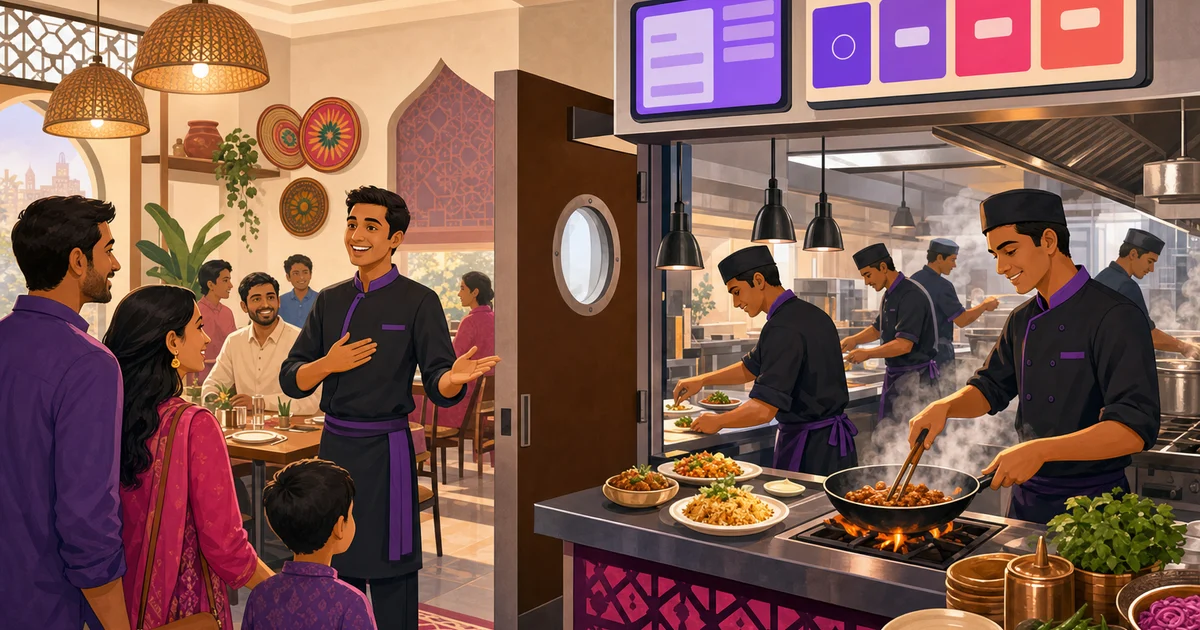
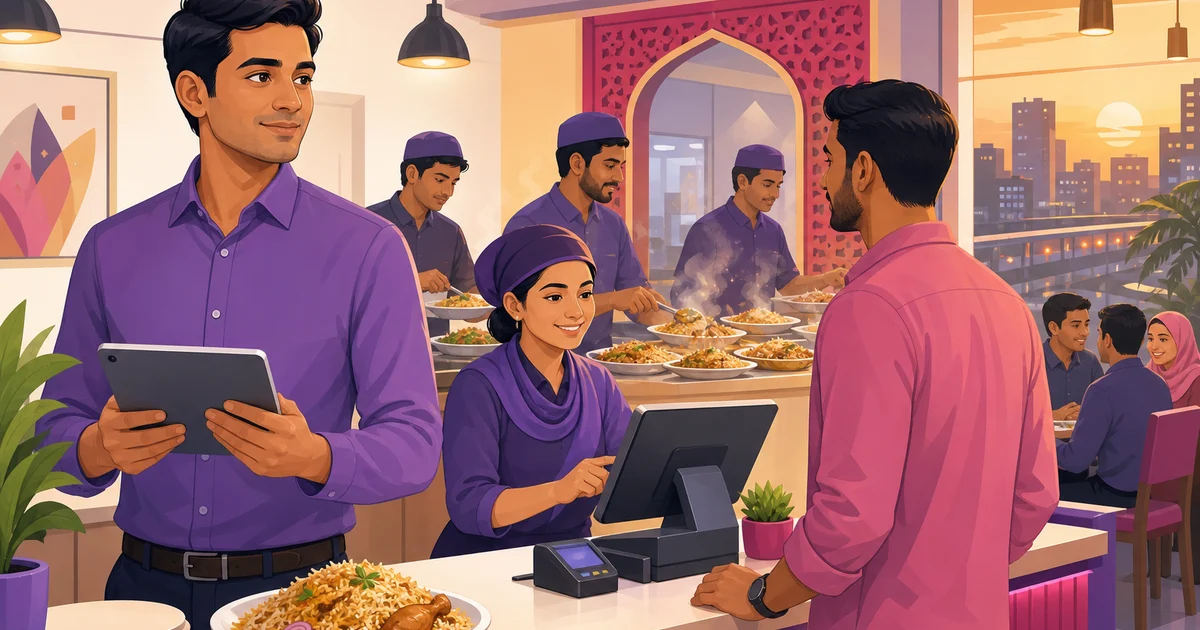
Front of house vs back of house is the basic divide that runs through every restaurant. The front of house, often shortened to FOH, is everything the guest sees and touches: the dining room, the host, the waiters, the cashier, the counter. The back of house, or BOH, is everything they do not: the kitchen, the cooks, the prep area, the store, the wash-up. One side takes care of the guest; the other makes the food. Get the handoff between them right and service feels smooth. Get it wrong and the whole night drags.
This guide explains what front of house and back of house each cover, the roles that sit on each side, where they meet, and how a POS and a kitchen display keep the two talking without shouting across a pass. The split sounds obvious, but the join between the two is where most service problems actually start.
Front of house vs back of house: the basic split
The simplest way to think about it is a line drawn at the kitchen door. Everything on the guest side of that door is front of house. Everything on the cooking side is back of house. Each side has its own job, its own pace, and its own kind of pressure.
| Aspect | Front of house (FOH) | Back of house (BOH) |
|---|---|---|
| Who is there | Host, waiters, cashier, manager on the floor | Head chef, cooks, prep, kitchen porters |
| Main job | Greet, seat, take orders, serve, take payment | Prep, cook, plate, send food out |
| Guest sees them? | Yes, constantly | Rarely or never |
| Measures success by | Service speed, friendliness, accuracy, the bill | Food quality, speed of the line, consistency, waste |
| Tools | POS, table board, payment, receipts | Kitchen display or printer, stations, prep lists |
Neither side works alone. A brilliant kitchen with slow, confused service still sends out a bad night. Warm, quick service in front of a kitchen that cannot keep up does the same. The restaurant only works when both sides are good and the handoff between them is clean. That is the real lesson of front of house vs back of house: the two are not rivals, they are two halves of one service.
Front of house roles
Front of house is the guest-facing team. In a small restaurant or cafe in Bangladesh, one person might wear several of these hats; in a larger place they are separate jobs.
- Host or greeter. Welcomes guests, manages the waiting list, and seats parties. In a busy place, good seating decisions keep tables turning and queues short.
- Waiters and servers. Take orders, answer questions about the menu, carry food, check on tables, and handle small requests. They are the main link between guest and kitchen.
- Cashier. Builds and settles the bill, takes payment, handles change, and applies any coupon or loyalty. Often the same person who runs the POS.
- Floor manager. Watches the whole room, steps in on complaints, balances sections, and keeps service moving at the peak.
What ties FOH together is the POS. It is where the order is taken, where the table and waiter are assigned, where the bill is built, and where payment happens. The smoother that tool, the smoother the whole front of house.
Back of house roles
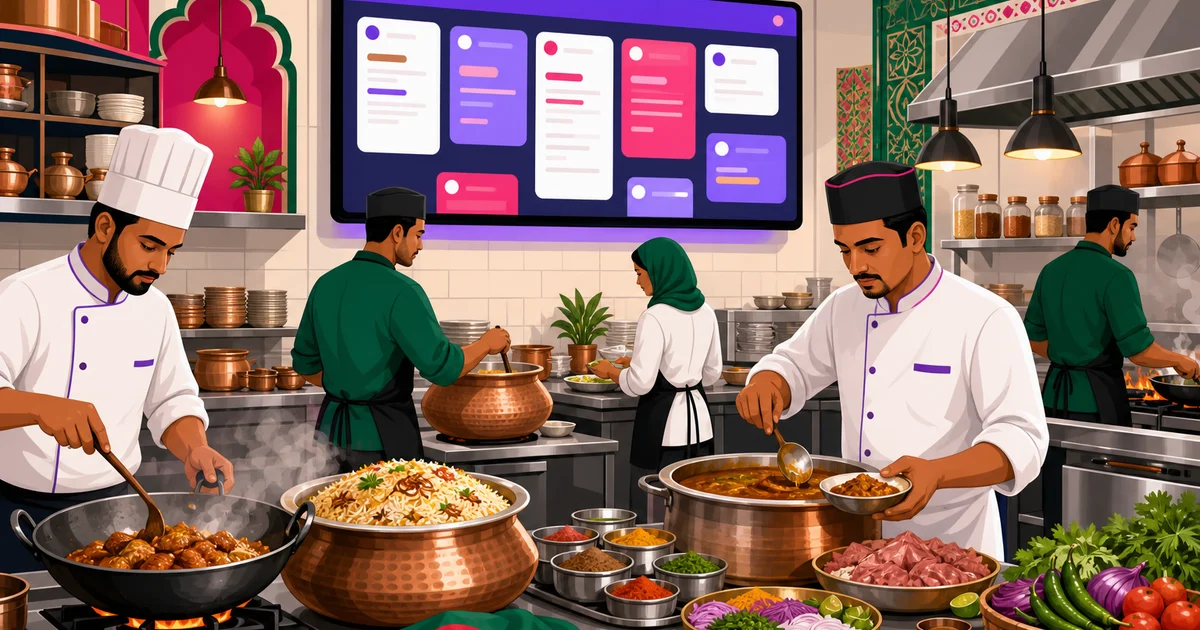
Back of house is the production team. It is hotter, faster and hidden from the guest, but it decides whether the food that reaches the table is any good.
- Head chef or kitchen in-charge. Runs the line, sets the pace, calls out tickets, and keeps quality and timing consistent across the kitchen.
- Line cooks. Each works a station, grill, curry, fry, drinks, cooking their part of every order as tickets come in.
- Prep staff. Do the cutting, marinating and batching before service so the line is not starting from scratch during a rush.
- Kitchen porters and dishwashers. Keep the kitchen clean and the plates and pots flowing, which sounds minor until it stops.
The back of house also reaches into stock and cost. What the kitchen uses ties back to restaurant inventory management, and turning raw materials into finished items like sauces or sweets is what Rosuii calls a production. The kitchen is not just cooking; it is also where a lot of your food cost is won or lost.
Where FOH and BOH meet: the handoff
The most important point in the whole front-of-house-versus-back-of-house question is not either side on its own. It is the join. An order is taken at the front, then has to reach the kitchen accurately and quickly, and the finished food has to come back out to the right table. That handoff is where service lives or dies.
In the old way, the handoff was a person and a piece of paper. A waiter wrote a chit, walked it to the kitchen, and called the order across the pass. That works until it is busy. Then handwriting gets misread, slips get lost, the order they arrive in is not the order they get cooked, and the front and back start blaming each other. Every restaurant has lived through a rush where the kitchen swears it never got a ticket the waiter swears they sent.
The fix is to make the handoff digital and automatic, so the order goes from the front to the back without a second copy and without a walk. That is exactly what a POS and a kitchen display do together.
How a POS and KDS connect front and back
A POS sits in the front of house; a kitchen display sits in the back. Together they replace the paper chit and the shout across the pass with a clean digital handoff. Here is the flow:
- A waiter builds the order on the POS at the front: items, variations, add-ons, notes like less spicy, and the table.
- They send it to the kitchen with one tap. No second handwriting, no walking the slip over.
- The order becomes a kitchen order ticket (KOT) and is routed to the right station, grill items to the grill, drinks to the drinks station.
- It appears on the kitchen display system (KDS) as a clear card with items, notes, table number and a timer, so the back of house sees exactly what to cook and how long it has been waiting.
- Cooks tap the ticket forward as it moves from new to preparing, and the food goes back out to the table.
The key idea is that the order is entered once at the front and travels to the back on its own. The front of house never re-explains it; the back of house never decodes handwriting. And because the same order also drives the bill, the cashier never re-enters anything at the end. One entry, two sides, no copying.
How Rosuii joins the two sides
Rosuii is built around this handoff. On the POS, front-of-house staff pick items, set variations and add-ons, add per-line notes, and attach a table and waiter or a walk-in customer. They can Save Draft to hold an order, or tap Send to Kitchen to fire it. That action routes each item to its assigned station and pushes the ticket to the kitchen display.
In the back of house, the kitchen display shows each ticket as a card on a simple board that moves from new to preparing. Tickets age from amber at around eight minutes to red at fifteen, so the kitchen in-charge can see at a glance which order has waited too long. Big touch buttons mean cooks with busy hands can still tap a ticket forward, and a chime and fullscreen mode suit a screen mounted on the kitchen wall. When food is ready, a customer-facing display can call the token number so the front of house and the guest both know to collect.
Because both sides share one order, the front-of-house bill is calculated on the server with discount, coupon, loyalty, service charge and VAT applied in a fixed order, while the back of house worked from a clean ticket with no prices on it. The two jobs stay separate, but the information flows as one. For the wider picture of how this fits a full setup, see our guide to the restaurant POS system.
Getting the FOH and BOH balance right
A good restaurant respects both sides equally. The front of house can be charming and quick, but if the kitchen is overwhelmed, guests still wait. The kitchen can be excellent, but if orders reach it late or garbled, the food suffers anyway. The real skill is in the handoff: keeping the order moving cleanly from the guest side to the cooking side and back, at the speed a busy night demands.
For a restaurant in Bangladesh running dine-in, takeaway and delivery at once, that handoff carries even more weight, because three channels all feed the same kitchen. A walk-in, a phone order and a foodpanda order should all land on the same kitchen display as tickets, so the back of house works one queue instead of three. Get the join between front and back right, and the divide between them stops being a source of friction and becomes simply how the restaurant runs.
Want orders to flow from your floor to your kitchen with one tap, no paper and no shouting? Create your free Rosuii account and set up your menu, stations and kitchen display today.
Updated:
Frequently asked questions
What is the difference between front of house and back of house?
What roles are in the front of house?
What roles are in the back of house?
How do a POS and a kitchen display connect FOH and BOH?
How does Rosuii keep front and back of house in sync?
Run your restaurant on Rosuii
POS, menu, inventory, payroll and more — built for Bangladeshi restaurants.
Start free