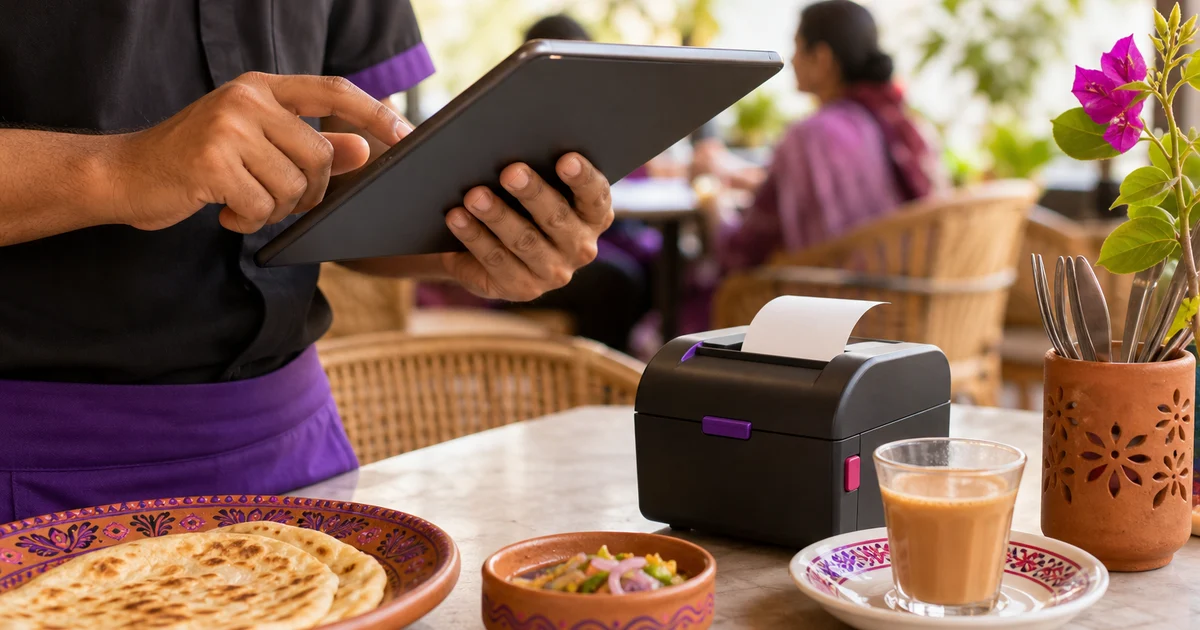
Packaged-Snack Inventory for Cafés: SKUs, Bundles and Stock Counts
A step-by-step stock-count workflow for cafés selling packaged products: clear SKUs, purchase units, bundles and an explainable closing balance.
Last verified: 2026-09-07
If the cashier sells individual packs but the stock sheet counts cartons, the numbers will not reconcile for long. Packaged-snack inventory starts with one clear sellable unit, distinct product identities and a record of every movement. Counting more often cannot repair an undefined unit.
This workflow is for cafés and restaurants that sell sealed snacks alongside prepared food. It covers receiving, counter replenishment, bundles, authorised internal use and physical counts. The examples are hypothetical teaching examples, not customer results or product specifications.
1. Give every distinct pack a clear identity
A product record should identify what one customer receives. Use the brand, product type, named flavour and pack size where those details distinguish one line from another. Do not combine a single-serving pack and a larger sharing pack just because their front designs look similar.
A useful comparison exercise is to open the nemahBites chocolate-wafer collection and notice how similar product names appear with different pack sizes. Use a retailer catalogue to identify questions for the supplier, not as a substitute for checking the actual pack you receive. Current prices and stock can change.
Related-business disclosure: nemahBites and Rosuii share an owner. This link is an affiliated catalogue example, not an independent supplier recommendation, a wholesale offer or evidence that the shop runs on Rosuii.
Assign an internal SKU or an equally clear identifier. Keep its meaning stable. A barcode may help identify an item, but your staff still need to understand the selling unit and the pack variant. Avoid renaming a stock line midway through a count without recording what changed.
2. Keep purchase units and selling units separate
A supplier invoice can describe cases, while your counter sells individual retail packs. Record the purchase format, the verified contents and the number of sellable units received. Do not silently treat the invoice quantity as the count available for sale.
Suppose, purely for illustration, one case contains twelve sealed retail packs. Receiving two cases adds twenty-four packs to a stock record measured in packs. Selling one pack removes one, not one case. Check the actual case contents before applying the conversion; twelve is not a universal packaging rule.
Where software does not convert units automatically, document and verify the conversion before entry. Keep the supplier document available so the receiving quantity can be checked later. A short manual step is safer than an automatic-looking number based on an assumption.
3. Separate shelf location from ownership of stock
Moving products from a back-room shelf to the counter does not create a sale. If both locations belong to the same counting scope, the total is unchanged. Record the movement only where your location-tracking process needs it, and make sure neither location counts the same packs twice.
At count time, decide whether the counter and store room are counted together or separately. Mark which area has been completed. Include products held for an unresolved delivery problem separately from sellable stock. Their physical presence does not mean the cashier should offer them to customers.
4. Use a movement sheet before investigating a difference
| Movement | Evidence | Counting treatment |
|---|---|---|
| Supplier receipt | Checked receiving record and purchase document | Add confirmed sellable units |
| Customer sale | Recorded order and item quantity | Subtract the corresponding units |
| Drink-and-snack offer | Order showing the snack component | Include the snack movement once |
| Authorised sample or staff use | Approved internal-use note | Record separately from customer sales |
| Damaged or otherwise withdrawn pack | Reason and review record | Move out of sellable stock according to your process |
Do not hide internal use inside sales or leave it undocumented. Equally, do not assume every count difference is theft. A receiving mistake, duplicated entry, wrong unit or missed bundle component can produce a discrepancy. Establish the record before assigning a cause.
5. Calculate an expected closing balance
For a simple scope with no transfers or customer returns, use: opening units + confirmed receipts − sold units − documented withdrawals = expected closing units. Add other movement types explicitly if your business uses them. Never force the formula to fit by quietly changing the opening balance.
Hypothetical example: eighteen opening packs plus ten received, minus seven sold and one documented withdrawal, leaves twenty expected packs. If the physical count is nineteen, the difference is one pack. That result tells you what to investigate; it does not tell you why the difference happened.
Recount the physical area, then check the unit convention, receiving record, order quantities and authorised withdrawals. Keep the original count and the correction together. An unexplained overwrite removes the trail the next reviewer needs.
6. Keep bundles and kitchen ingredients distinct
A sealed snack sold with a drink remains a physical item that must appear in the stock movement. Decide whether the offer is represented by separate order lines or by a configured component workflow, then test that one order reduces the intended quantity once.
Do not treat a sealed retail snack and a bulk ingredient as the same stock line merely because both contain chocolate. Their purchase format, usage unit and customer-facing description differ. If the kitchen opens a pack for a controlled purpose, record that use through your documented process instead of allowing it to disappear between departments.
7. Know what Rosuii records and what needs a separate worksheet
Rosuii has inventory items, units, suppliers, per-branch stock, purchasing and wastage workflows. With recipe-wise deduction enabled and configured, mapped quantities are deducted in the inventory item's own unit. Test the menu-to-stock relationship on your actual account; adding a menu item alone does not establish a deduction rule.
Rosuii does not provide automatic unit conversion, batch-expiry allocation or a theoretical-versus-actual variance report. Keep the lot/date details and your expected-versus-counted calculation in a separate worksheet where necessary. Do not claim the software tracks information simply because your staff record it manually elsewhere.
Use the inventory feature page to evaluate current limits. If you need automated lot allocation or a specialised retail workflow, demonstrate that requirement before choosing a system.
8. Finish with a handover someone else can follow
Record the count time, included locations, person responsible, expected balance, physical balance and unresolved differences. Note whether service continued during the count. If sales happened while one area was being counted, account for those movements instead of mixing two different moments.
A reliable closing record lets the next shift start from an explainable number. Once that process works, review what sold and plan the next purchase. Expanding the range before the basic count reconciles usually creates more work, not more clarity.
How we calculated and verified this
This is an editorial operating checklist, not an independent retailer ranking, customer case study or legal/food-safety advice. NemahBites destinations were checked on 7 September 2026. No retailer prices, wholesale relationship, stock guarantees or measured revenue gains are claimed. Product capabilities were checked against Rosuii’s feature registry and implementation. Numerical examples are explicitly hypothetical.
Related guides
- Launch a small packaged-snack range
- Restaurant stock-count process
- What is a SKU in restaurant inventory?
See this workflow in Rosuii: Explore Rosuii inventory workflows and limits
Frequently asked questions
Should snack stock be counted in packs or cartons?
Does a stock difference prove theft?
Does moving stock to the counter count as a sale?
Does Rosuii automatically allocate stock by batch expiry?
Run your restaurant on Rosuii
POS, menu, inventory, payroll and more — built for Bangladeshi restaurants.
Start free