What Is an SKU in Restaurant Inventory? A Practical Setup Guide
Learn how to create practical restaurant SKU codes, choose counting units, set minimum stock, manage suppliers, and calculate more reliable plate costs.
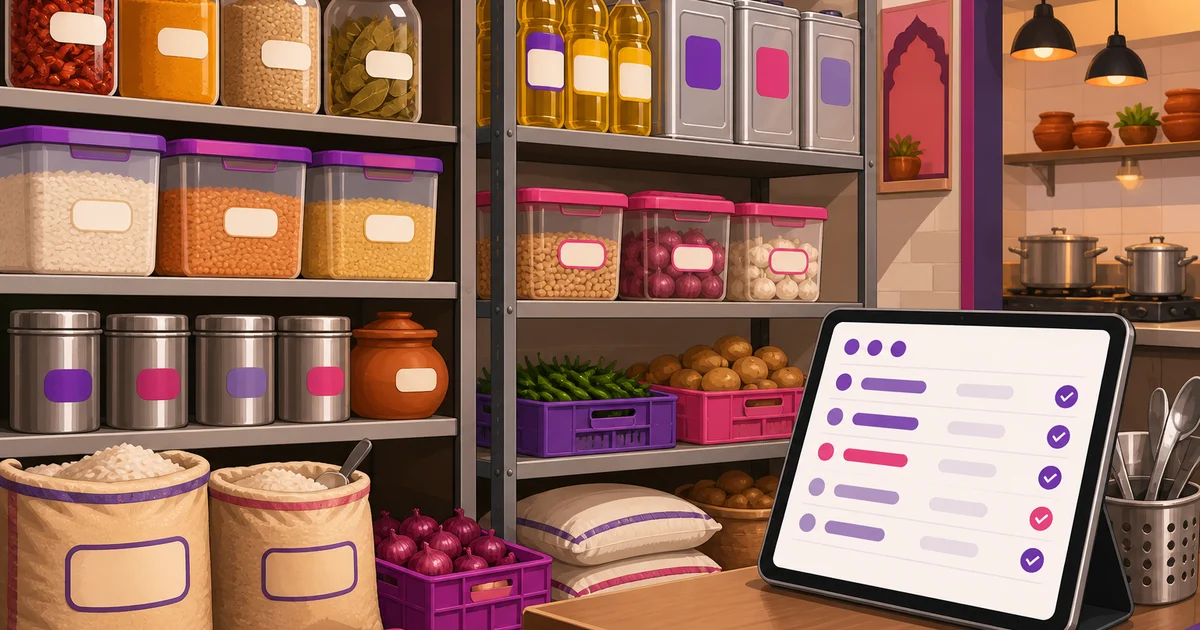
An SKU in restaurant inventory is a unique code for one stock item in one defined unit. It identifies the ingredients, packaging or supplies that your restaurant buys and counts. It does not normally identify the dish shown on your menu. For example, chicken breast measured in kilograms can be an SKU. Chicken curry is a menu item, not an inventory SKU.
A clear SKU system helps your team order the right products, count stock consistently and compare costs over time. It also prevents confusion when a storekeeper, chef or purchasing officer leaves and a new employee takes over.
What Does SKU Mean in Restaurant Inventory?
SKU stands for stock keeping unit. Each code represents a particular stock item with a particular form, size or counting unit. The code acts as a stable identity across purchase orders, receiving, stock counts, wastage records and costing sheets.
Consider soyabean oil. A 5-litre tin and a 1-litre bottle should be two SKUs because the package, purchase price and counting unit are different:
- OIL-SOY-5L-TIN: Soyabean oil, counted by 5-litre tin
- OIL-SOY-1L-BTL: Soyabean oil, counted by 1-litre bottle
The same principle applies to chicken. Whole chicken and boneless chicken breast are separate SKUs even if both are counted in kilograms. They have different purchase costs, yields and kitchen uses:
- CHK-WHOLE-KG: Whole dressed chicken, counted in kilograms
- CHK-BRST-KG: Boneless chicken breast, counted in kilograms
Chicken curry, however, is the dish sold to the guest. Its cost may be calculated from chicken, oil, onion, spices and other stock items, but the dish itself should not replace those ingredient SKUs.
Why an SKU in Restaurant Inventory Matters
Without standard SKUs, the same product can appear under several names. One employee enters “Soy Oil 5L,” another writes “Oil Tin,” and a third records a supplier's brand name. The records look like three products even though the kitchen treats them as one.
This creates practical problems. Purchase history becomes fragmented, the stock count does not match the item list, minimum-stock alerts become unreliable and managers struggle to identify the latest cost. A consistent SKU gives everyone one reference point.
SKU discipline is one part of a wider restaurant inventory management process. It will not fix poor receiving or irregular counts by itself, but it gives those processes a dependable structure.
Build SKU Codes That Survive Staff Changes
A useful SKU code should be short, readable and based on product facts. Someone who joins next year should be able to understand it without asking who created it.
Use a repeatable format
A practical structure is:
Category - Item - Specification - Unit or Pack
Examples include:
- RICE-BASMATI-KG
- OIL-SOY-5L-TIN
- CHK-BRST-KG
- BEV-COLA-250ML-CAN
- PACK-BOX-BURGER-PC
Choose standard abbreviations and document them. If chicken is written as CHK, do not alternate between CHK, CHKN and CKN. Keep the product name in English and Bangla where that helps staff, but keep the SKU code itself consistent and easy to type.
Keep unstable information out of the code
Do not include the current price, employee initials or purchase date. These details change, while the SKU should remain stable. Supplier names should also be avoided unless the supplier's product is genuinely different and must be tracked separately.
For example, OIL-SOY-5L-TIN can remain the same if you change suppliers next month. A code such as RAHIM-OIL-900 becomes misleading when Rahim Traders changes its price or you buy from another wholesaler.
Choose the Correct Counting Unit
The counting unit should reflect how the item is purchased, received and physically counted. If chicken breast is bought by kilogram, use kilograms. If takeaway boxes are bought and counted by piece, use pieces. If soyabean oil arrives as individual 5-litre tins, the tin can be the purchasing and stock-count unit for that SKU.
A common source of errors is receiving an item in cases, issuing it in bottles and counting it in pieces without a documented conversion. The records may show one case while the storekeeper sees twelve bottles. Decide the unit before creating the SKU and write down any conversion your team needs.
- Weight: kilogram or gram for meat, fish, rice and vegetables
- Volume: litre or millilitre for milk, sauces and some oils
- Piece: eggs, cans, bottles, boxes and packaging
- Pack: only when the pack size is fixed and staff count complete packs
Open packages need a consistent rule. If oil is stored in 5-litre tins, staff might count unopened tins and estimate the remaining fraction of the open tin. Alternatively, a restaurant may use litres as its base unit and apply a documented 5-litre conversion at receiving. Pick one method and use it every time.
Set Minimum-Stock Alerts From Real Usage
The minimum-stock level is the point at which your team should prepare to reorder. It is not simply a number copied from another branch. It should reflect average usage, supplier lead time, delivery reliability and a reasonable safety allowance.
A simple starting formula is:
Minimum stock = average daily usage × supplier lead time + safety stock
If a branch uses two 5-litre oil tins per day, the supplier takes two days to deliver, and you want two extra tins as protection, the minimum level is six tins. When available stock reaches that level, the item needs attention.
Review the figure after Ramadan, Eid campaigns, menu changes or major price movements. Each branch may need a different level because sales volume and storage capacity differ. For a deeper method, read the guide to setting restaurant par levels.
Connect SKUs to Suppliers and Purchase Orders
Every purchase order line should identify the SKU, description, unit, quantity and agreed price. This removes ambiguity. “Oil, 10” is unclear. “OIL-SOY-5L-TIN, 10 tins” tells the supplier, receiver and accounts team exactly what was ordered.
Keep a preferred supplier and suitable alternatives for important items. Record the latest purchase cost, normal pack size and expected lead time. When goods arrive, receive them against the same SKU used on the purchase order. This makes shortages, substitutions and price changes easier to spot.
For multi-branch restaurants, keep the SKU structure consistent across branches while tracking stock separately by location. Otherwise, head office cannot compare usage or consolidate purchasing properly.
How SKUs Support Recipe and Plate Costing
A plate cost should be built from the actual purchase cost of its ingredients, not from a chef's rough memory. SKUs provide the cost and unit foundation for that calculation.
Suppose a 5-litre tin of soyabean oil costs ৳900. It contains 5,000 millilitres, so the cost is ৳0.18 per millilitre. If one portion of chicken curry uses 30 millilitres, its oil cost is ৳5.40.
If chicken breast costs ৳330 per kilogram, the cost is ৳0.33 per gram. A 180-gram portion costs ৳59.40. If onion, spices, gravy and garnish add another ৳22, the estimated raw ingredient cost becomes ৳86.80 before considering wastage, yield differences or other operating costs.
This calculation also shows why whole chicken and chicken breast need different SKUs. A kilogram of whole chicken does not produce a kilogram of usable breast meat. Bone, skin, trimming and cooking loss affect the real yield. Using the breast price or a tested whole-chicken yield gives a more honest result than treating all chicken as one item.
Restaurants that prepare gravy, sauce or dough in batches can record the use of raw materials and the output of the finished preparation. In Rosuii, Productions can be used to make finished goods from raw materials. This is separate from assuming that every menu sale automatically deducts an exact recipe quantity. Physical counts, production records and wastage entries still matter.
Update costing sheets when SKU purchase prices change. The method is explained further in this restaurant recipe costing guide.
Avoid Creating an SKU for Every Brand
One frequent mistake is creating separate SKUs for every supplier brand even when the products are operationally interchangeable. If the kitchen accepts several brands of the same 5-litre soyabean oil with the same specification and pack size, one generic SKU may be enough. Different suppliers can quote or deliver against that item.
Create separate SKUs when the difference affects purchasing, quality, usage or cost control. Examples include premium imported butter versus standard local butter, regular rice versus basmati rice, or a 5-litre tin versus a 1-litre bottle. Separate codes may also be appropriate when traceability or a contractual brand requirement matters.
The test is simple: Would the kitchen, storekeeper or purchasing manager treat these as meaningfully different stock items? If not, creating another SKU may add work without adding control.
A Practical SKU Setup Checklist
- List the raw ingredients, beverages, packaging and supplies currently held in stock.
- Remove duplicate names and decide which products are genuinely interchangeable.
- Choose one clear counting unit for each item.
- Create a documented code format and standard abbreviations.
- Add the current cost, supplier, branch stock and minimum-stock level.
- Use the SKU on every new purchase order and receiving record.
- Train the storekeeper, purchasing staff and kitchen supervisors on the same rules.
- Review duplicate, unused and unclear SKUs before adding more.
Do not try to perfect hundreds of codes in one afternoon. Start with high-value and high-usage items such as meat, fish, oil, rice, dairy and packaging. Test the system during purchasing and a physical count, then apply the same pattern to the rest.
Manage Restaurant SKUs With Rosuii
Rosuii helps Bangladeshi restaurants maintain stock items with SKUs, units, costs, suppliers, minimum-stock alerts and per-branch quantities. Teams can also manage purchase orders, production records and wastage from the same cloud platform. The interface is available in English and Bangla, with BDT-based operations built for local restaurants.
A good system still depends on clear item definitions and regular staff practice. Set up the codes carefully, keep units consistent and review costs whenever new purchases arrive. That is how an SKU list becomes a useful management tool rather than another spreadsheet nobody trusts.
Ready to organise your restaurant inventory? Register for Rosuii and start setting up your stock items, suppliers and purchase process.
Last updated:
Frequently asked questions
Is a menu dish the same as an inventory SKU?
Should 5-litre and 1-litre bottles of the same oil have different SKUs?
Do different brands always need separate restaurant SKUs?
How should a restaurant choose a minimum-stock level?
Can SKUs make recipe costing more accurate?
Run your restaurant on Rosuii
POS, menu, inventory, payroll and more — built for Bangladeshi restaurants.
Start free