
Restaurant Recipes
Commercial Bangladeshi Egg Roll Recipe
A commercial egg roll recipe yielding 40 portions, with make-ahead paratha, fast tawa assembly, measured fillings and practical service controls.
- Prep
- 1 hr 15 min
- Cook
- 1 hr 30 min
- Total
- 2 hr 45 min
- Yield
- about 40 plates
- Difficulty
- Medium
- Cuisine
- Bangladeshi
Method
- 1
Mix and rest dough
Mix maida, 55 g salt and sugar for 1 minute, then add 250 ml oil and most of the water. Mix for 4 minutes on low speed and 5 to 6 minutes on medium speed, adding only enough remaining water to make a smooth, soft dough at 26 to 28°C. Cover and rest for 30 minutes.
- 2
Divide equal dough balls
Weigh the dough into 40 pieces of approximately 133 g each. Round each piece tightly, coat it lightly with oil and keep covered so the surface cannot dry. Rest the balls for 15 minutes at room temperature.
- 3
Laminate and shape parathas
Roll each ball into a thin disc, spread with approximately 6 ml oil and fold or coil to create layers. Rest the shaped coils for another 15 minutes, then roll each one to 24 to 25 cm without crushing the edges. Keep the rolled pieces covered and separated.
- 4
Par-cook for later service
Heat the tawa to 190 to 200°C and cook each paratha for 30 to 40 seconds per side. Remove when the layers are fixed and pale freckles appear, before deep browning develops. Cool separately on wire racks within 1 hour, then layer with food-grade sheets and refrigerate at 5°C or below.
- 5
Prepare measured fillings
Combine the onion, cucumber, green chilli and coriander without adding salt. Keep the mixture covered at 5°C or below and portion approximately 51 g for each roll. Keep lemon juice, chaat masala, kasundi and chilli sauce in separate measured dispensers.
- 6
Set two tawa zones
Set the main cooking area to 195 to 205°C and maintain a second zone at 170 to 180°C. Reheat one par-cooked paratha for 30 to 40 seconds per side until hot, flexible and lightly crisp. Move it to the lower-temperature zone while preparing the egg.
- 7
Bond egg to paratha
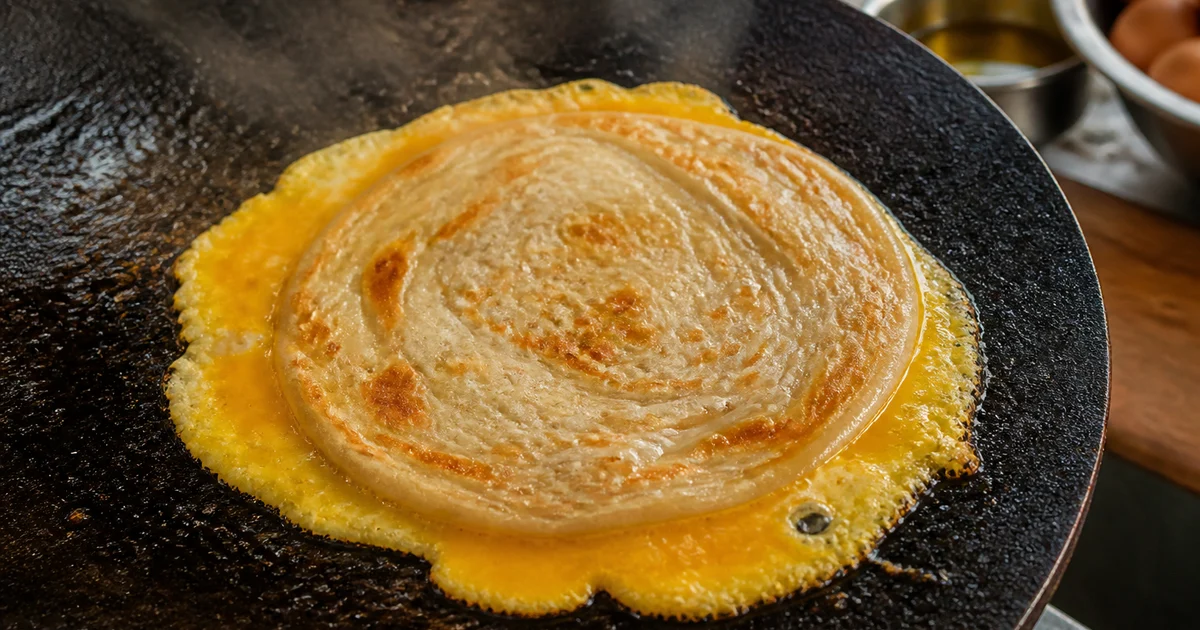
Beat one egg with approximately 0.5 g salt and spread it thinly on the hotter tawa. Place the hot paratha onto the egg within 10 seconds and press lightly for 35 to 45 seconds until the egg bonds and no liquid remains. The egg must reach at least 74°C at the centre.
- 8
Crisp the bread side
Flip the egg-coated paratha and cook the bread side for 20 to 30 seconds. Look for light golden patches and distinct layers without hard, dark edges. Move it immediately to the clean assembly surface with the egg side facing upward.
- 9
Fill and season evenly
Place one vegetable portion in a narrow line slightly off-centre. Add 5 ml lemon juice, approximately 1.5 g chaat masala, 10 g kasundi and 15 g chilli sauce. Keep the filling away from the bottom and side edges to prevent leakage.
- 10
Roll and serve promptly
Fold the bottom edge over the filling, tuck in one side and roll firmly without crushing the paratha. Place the seam down for 10 to 15 seconds, then wrap in food-grade paper. Serve immediately; if necessary, reheat on a 170 to 180°C dry tawa for 30 to 45 seconds, turning once.
Notes for your kitchen
This egg roll recipe produces 40 consistent Bangladeshi-style rolls for a food cart, café or restaurant snack counter. Each portion combines one laminated paratha, one egg, sliced vegetables, kasundi and chilli sauce. The parathas can be prepared before service, leaving only reheating, egg cooking, filling and rolling during the rush.
Why egg roll works commercially
Egg roll works commercially because it uses a short ingredient list, cooks quickly on one tawa and can be assembled to order. The basic version needs no cooked meat filling, gravy station or deep fryer. It is therefore one of the quickest potentially high-margin rolls for a small cart, provided egg size, paratha weight, sauce portions and vegetable portions remain controlled.
A trained cook can work with two tawa zones and complete one roll in roughly 2 to 3 minutes when parathas and vegetables are ready. During a busy period, one cook can manage the tawa while another adds fillings, rolls and wraps. Keep the basic egg roll simple, then sell extra egg, cheese or chicken as separate variations rather than increasing every standard portion.
Ingredient selection and quality
Paratha texture and egg freshness matter more than expensive sauces in this egg roll recipe. Use medium-protein maida that forms an elastic dough without becoming bread-like. Flour that absorbs unusually high or low amounts of water can change rolling speed, finished diameter and yield, so test each new flour supply before full production.
Choose consistent eggs
Eggs should be clean, fresh and purchased in a consistent size grade. Large changes in egg weight affect coverage on the tawa and may force cooks to use extra eggs. Reject cracked eggs and store accepted trays at 5°C or below, away from ready-to-eat cucumber, onion and herbs.
Control vegetable moisture
Dry vegetables are essential for a roll that does not leak or become soggy. Choose firm cucumber with a small watery seed core and sound onions without soft layers. Wash vegetables before cutting, drain thoroughly and keep them covered at 5°C or below. Do not salt the sliced vegetables in advance because salt pulls out water.
Kasundi supplies mustard heat and acidity, while chilli sauce supplies sweetness, colour and moisture. Select products for flavour consistency rather than using more sauce to hide a weak paratha. Lemon juice should taste fresh and clean, not bitter from crushed seeds or peel.
Paratha preparation before service
Par-cooking the parathas before service is the main preparation that makes this recipe fast enough for a busy cart. Develop the dough until smooth, rest it properly and weigh every ball. Lamination oil must be spread thinly to the edges; heavy pockets of oil cause tearing, while too little oil produces a flat, chewy bread.
Roll every paratha to approximately 24 to 25 cm. A template marked on the rolling table helps staff maintain diameter. Par-cook only until the layers are fixed and pale brown freckles begin to appear. Fully browning parathas during preparation makes them dry and hard after the second tawa cook.
Cool par-cooked pieces individually on wire racks rather than stacking them hot. Once steam has escaped, separate them with food-grade sheets and refrigerate at 5°C or below. Prepare only the expected next-day requirement; the best service quality comes from using them within 24 hours.
Tawa workflow and egg timing
The correct egg-to-paratha timing is to place the hot paratha onto the spread egg within 10 seconds. If the egg sets before contact, it will cook as a separate sheet and slide out of the roll. If the paratha is cold, it lowers the tawa temperature and delays setting.
Run the tawa with a hotter cooking zone at 195 to 205°C and a lower holding or recovery zone at 170 to 180°C. First reheat the paratha until flexible and hot through. Move it briefly to the lower zone, spread one seasoned egg on the hotter zone and immediately press the paratha onto it. Apply light, even pressure with a broad spatula so the egg bonds across the surface.
Cook until there is no liquid egg around the edge and the centre reaches at least 74°C. Flip once to restore crispness on the bread side, but do not keep pressing after the egg has set. Continuous pressure squeezes out oil and flattens the laminated layers. Scrape away burnt egg threads between orders because they create bitter black spots on later rolls.
Scaling the batch correctly
Scale this batch by weight and tawa capacity, not by estimating handfuls or multiplying cooking time. For 20 rolls, halve every ingredient while retaining the same dough-ball weight, paratha diameter and one-egg portion. For 80 rolls, double the ingredients but mix the dough in two batches unless the mixer can develop the larger load without overheating.
Dough should finish near 26 to 28°C. A larger mixer load creates more friction, so use cooler water when necessary and stop mixing as soon as the dough is smooth and elastic. Do not crowd extra parathas onto the tawa to increase output. Crowding drops surface temperature, slows evaporation and produces greasy, pale bread.
Scaling service also means matching labour to equipment. Above roughly four simultaneous orders, separate tawa cooking from filling and wrapping. Keep one measured container for each filling and replenish it from refrigeration in small quantities rather than putting the full batch beside the tawa.
Holding and reheating
Finished egg rolls should be served immediately and should not be held assembled for routine service. Steam from the egg and vegetables softens the paratha within minutes. If an order must wait, keep it unwrapped for no more than about 5 minutes in a clean warm area, then wrap immediately before handover.
Do not place assembled rolls in a steam cabinet. For a delayed pickup, reheat briefly on a dry tawa at 170 to 180°C for 30 to 45 seconds, turning once. Reheating can restore the outside slightly, but it cannot reverse moisture absorbed from cucumber and sauce.
Keep par-cooked parathas chilled until needed and bring out only a short service quantity. Discard prepared vegetables that have remained above 5°C for more than 2 hours in a hot kitchen. Refrigerated cut vegetables are best prepared daily because cucumber loses firmness and sliced onion develops a harsh aroma during extended storage.
Portioning and yield control
A controlled portion is one 133 g dough ball, one egg and one measured set of fillings per roll. Use a scale for dough and vegetables, portion pumps or squeeze bottles for sauces, and a small ladle for beaten egg if eggs are cracked in short batches. Never pool an entire tray of raw eggs; crack only 6 to 8 at a time, refrigerate and use within 30 minutes.
Follow a written portion control standard and check the first five rolls from every shift. The finished pieces should have the same diameter, filling line and number of folds. Recording broken eggs, torn parathas, burnt pieces and unsold vegetables supports practical reducing wastage work.
Mistakes that cost money
The most expensive mistakes are oversized dough balls, uncontrolled sauce, torn parathas and egg cooked before the paratha is ready. Oversized bread quietly reduces batch yield, while excess sauce increases cost and causes leakage. A cold or stiff paratha tears during rolling and must often be remade.
- Skipping dough rest: The dough shrinks during rolling, slowing production and creating thick edges.
- Stacking hot parathas: Trapped steam makes the surfaces sticky and damages the layers.
- Using a cool tawa: The paratha absorbs oil before browning and the egg takes too long to set.
- Overloading with vegetables: The roll cannot close securely and filling falls into the wrapper.
- Holding cut cucumber warm: Water release makes later portions wetter than early portions.
- Free-pouring sauces: Portion size changes between cooks and food cost becomes difficult to explain.
Keeping cost stable
Stable egg roll cost comes from supplier consistency, measured portions and accurate production records. Eggs and cooking oil usually cause the largest cost movement, while flour yield and vegetable trimming also matter. Compare actual rolls produced with the expected 40 rather than costing only the purchased ingredients.
Use a written recipe costing sheet whenever egg size, flour brand, oil absorption or sauce pack size changes. Rosuii can be used to record raw materials, suppliers, production quantities and wastage, then compare item sales and profit-and-loss reports without claiming automatic recipe deduction for every sale.
What drives the cost
Eggs and cooking oil normally dominate the variable cost, followed by flour and bottled sauces. Cost moves with egg size and market supply, oil absorption, flour yield, sauce portioning and vegetable trimming, so each of these should be measured.
Ingredient rates move with the market, so this describes what drives the cost rather than quoting a figure.
Questions from kitchens
How do I scale this egg roll recipe to 80 rolls?
How long can par-cooked parathas be stored?
Can finished egg rolls be held for a rush period?
Can kasundi be replaced?
Why does the batch produce fewer than 40 rolls?
Related recipes
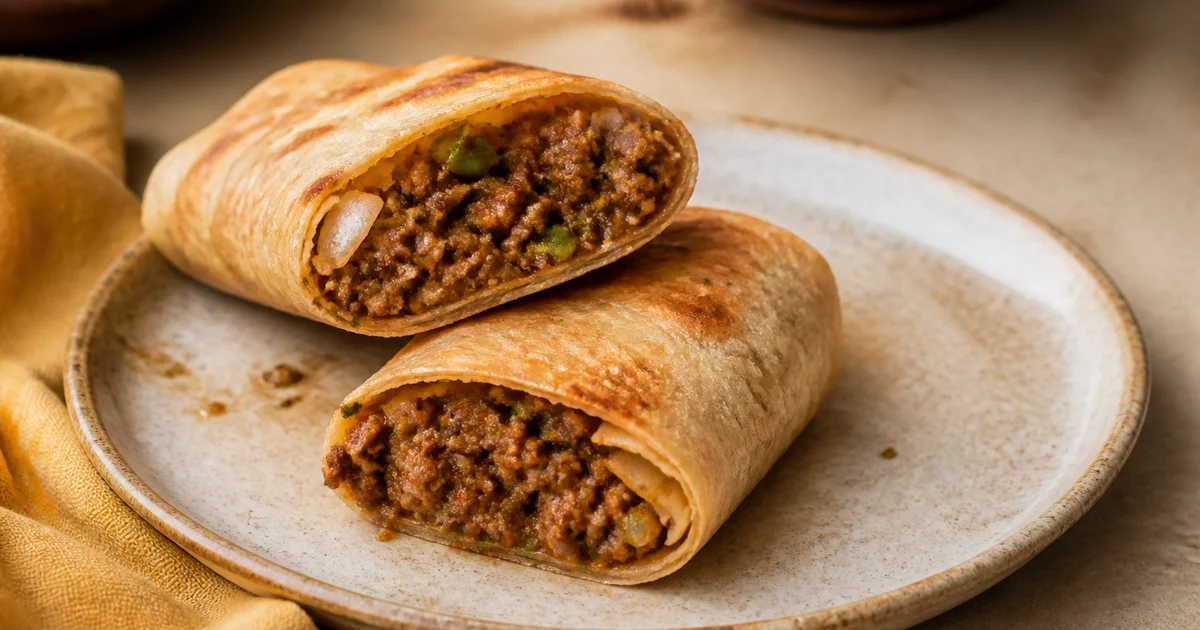
Commercial Bangladeshi Beef Roll Recipe
A commercial beef roll recipe producing 40 consistent rolls with tender cooked-down beef, crisp vegetables, controlled moisture and practical service guidance.
- Yield:
- 40 beef rolls
- Total:
- 1 hr 35 min
- Difficulty:
- Medium
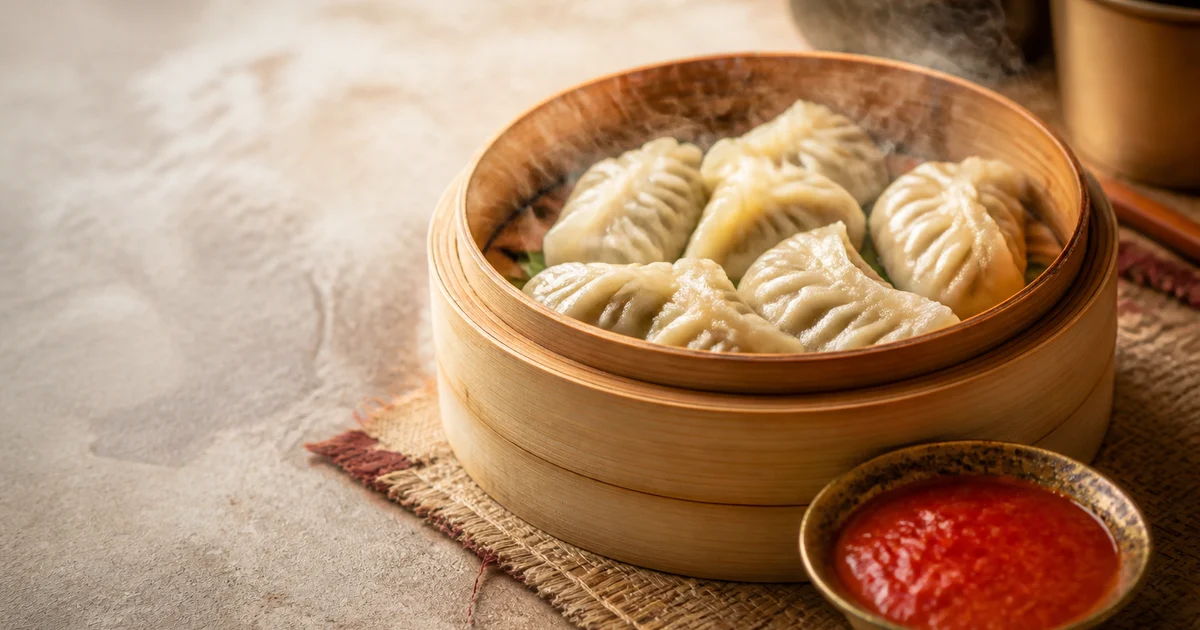
Commercial Chicken Momo Recipe
A commercial chicken momo recipe yielding about 200 pieces, with measured wrappers, juicy filling, fast folding, batch steaming, freezing and chutney control.
- Yield:
- about 40 plates
- Total:
- 3 hr 30 min
- Difficulty:
- Medium
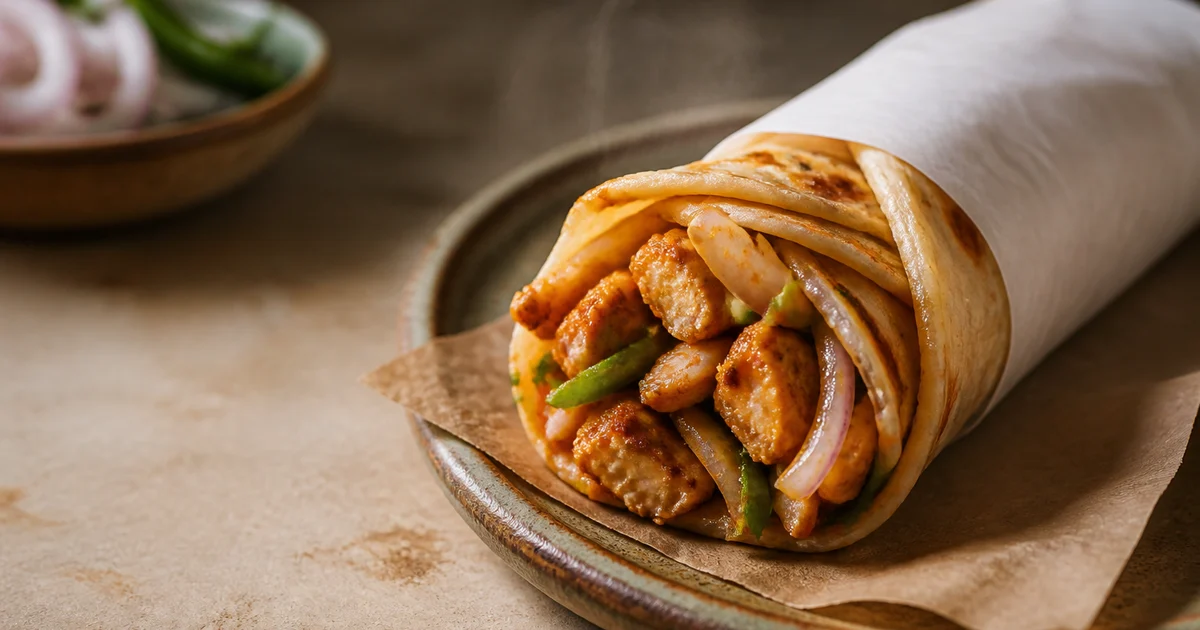
Commercial Bangladeshi Chicken Roll Recipe
A commercial chicken roll recipe producing 40 large rolls with flaky paratha, spiced chicken, egg, fresh vegetables and controlled portions.
- Yield:
- 40 large chicken rolls
- Total:
- 2 hr 30 min
- Difficulty:
- Medium
Run your restaurant on Rosuii
POS, menu, inventory, payroll and more — built for Bangladeshi restaurants.
Start free