
Restaurant Recipes
Restaurant Paratha Recipe for 40 Portions
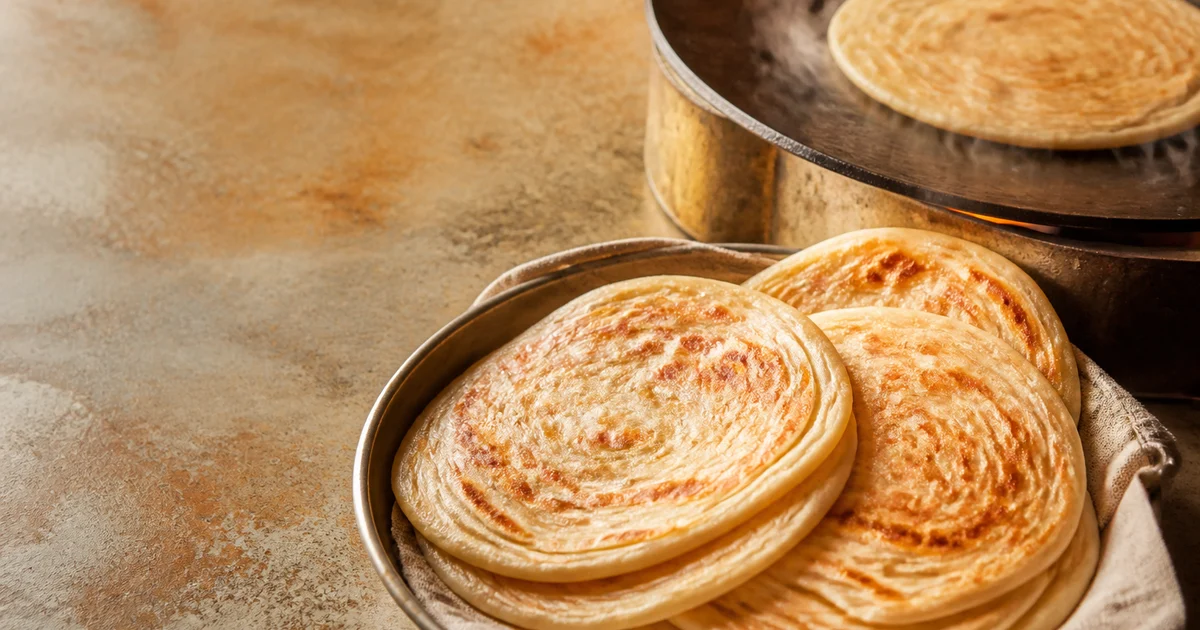
A commercial batch recipe for 40 flaky restaurant parathas, with controlled dough hydration, layered folding, par-cooking and rush-hour reheating.
- Prep
- 1 hr 40 min
- Cook
- 1 hr 10 min
- Total
- 2 hr 50 min
- Yield
- about 40 plates
- Difficulty
- Medium
- Cuisine
- Bangladeshi
Method
- 1
Weigh and mix dry
Combine the main maida, salt and sugar in the mixer bowl for 2 minutes on low speed. Keep the ingredients near room temperature and break up all visible flour lumps before adding liquid.
- 2
Add liquids gradually
Mix the beaten egg, 2.1 L water and dough oil, then add them gradually while mixing on low speed for 3 minutes. The dough should gather into a rough mass with no pool of liquid; add the reserved water in 25 ml stages only if dry flour remains.
- 3
Knead to smooth dough
Knead for 6 minutes on low speed and 2 to 3 minutes on medium speed. Stop when the dough is smooth, elastic and slightly tacky, with a finished temperature of 24°C to 26°C; do not continue if it becomes hot or glossy.
- 4
Rest and divide dough
Cover the dough and rest it for 30 minutes at 24°C to 28°C. Divide into 40 portions of approximately 170 g, form smooth balls, cover them and rest for another 20 minutes until they roll without pulling back.
- 5
Laminate and form coils
Roll each ball into a thin rectangle approximately 45 cm by 20 cm and about 2 mm thick. Spread roughly 12 g shortening evenly, dust with about 7 g maida, pleat into a 4 cm strip and coil it loosely; visible folds should remain distinct without fat leaking out.
- 6
Rest then roll evenly
Cover the coils and rest for 15 minutes at room temperature. Roll each one gently to 18 to 20 cm diameter and 4 to 5 mm thickness, turning frequently so the centre and edges stay even.
- 7
Par-cook on tawa
Heat the tawa to 190°C to 205°C and apply only a thin film of oil. Cook the first side for about 45 seconds and the second for 30 to 40 seconds, removing the paratha when the surface is dry with small bubbles and pale brown spots but no crisp crust.
- 8
Cool and stack safely
Transfer par-cooked pieces to cooling racks in a single layer for 15 to 20 minutes. Once steam has stopped, stack no more than 10 together with sheets between stacks; refrigerate at 5°C or below within 2 hours if they are not being used immediately.
- 9
Reheat for each order
Heat the service tawa to 210°C to 220°C and use approximately 10 to 12 ml oil per paratha. Cook for 60 to 90 seconds per side, turning as needed, until golden, crisp at the edges and at least 74°C in the centre; press or clap lightly after cooking to separate the layers.
Notes for your kitchen
This paratha recipe restaurant batch produces 40 evenly portioned, layered parathas for breakfast service. Each portion uses approximately 170 g of dough before lamination, giving a substantial single-paratha plate suitable for serving with dal, bhaji, dim or beef curry. The dough can be mixed and shaped before opening, then par-cooked and finished quickly as orders arrive.
Why restaurant paratha works commercially
Restaurant paratha works because most of the labour can be completed before the breakfast rush. Mixing, resting, portioning and lamination require time, but they do not need to happen during service. Par-cooked pieces can be finished in a hot tawa within a few minutes, allowing one cook to manage multiple orders without sending raw dough to the pan.
The product is also easy to standardise. Fixed dough-ball weights, measured lamination fat and a controlled final diameter reduce variation between cooks. Paratha pairs with several breakfast items, so the same production batch can support plain plates, egg combinations, dal sets and meat combinations without changing the base product.
Ingredient quality and selection
Medium-strength maida and clean-tasting fat matter more than expensive speciality ingredients. Use fresh maida with enough gluten to stretch without tearing. Very weak biscuit flour produces fragile sheets, while unusually strong flour can become elastic and shrink during rolling. If a new flour absorbs water differently, test a small dough before changing the full batch.
Vegetable shortening gives defined layers because it remains semi-solid during folding. It should smell neutral and spread without lumps. Margarine can add flavour but may contain more water, which can make layers stick together. Soybean oil is suitable for the dough and tawa, provided it is fresh and has not developed a stale or repeatedly heated smell.
Egg improves colour, tenderness and handling, but accurate weighing is more reliable than counting eggs of mixed sizes. Salt must be weighed because too little gives a flat taste and weakens control, while excess salt tightens the dough. Sugar supports browning, but excessive sugar causes dark patches before the centre is fully heated.
Dough hydration and resting
The correct dough is soft enough to roll thin but firm enough to hold visible layers. Begin with the stated water and keep the optional amount in reserve. Add it only if dry flour remains after several minutes of mixing. Humid storage, flour age and egg size can all change the amount needed.
Finished dough should be smooth, slightly tacky and approximately 24°C to 26°C. A dough that sticks heavily to the bowl is too wet for consistent lamination. A dough with rough edges, cracking or strong resistance during rolling needs either a little more water or more resting time.
Resting is part of the recipe, not idle time. The first rest allows flour to hydrate and gluten to relax after kneading. The second rest after portioning makes each ball easier to extend. A final rest after coiling prevents the rolled paratha from shrinking back. Keep every resting batch covered because even a thin dry skin creates hard lines and torn layers.
Folding creates the layers
Thin, even sheets and controlled fat distribution create more reliable layers than simply adding extra oil. The first sheet should be thin enough to become slightly translucent without developing holes. Spread shortening to the edges in a film rather than leaving thick patches, then apply a light flour dusting to keep adjacent surfaces separate.
Accordion pleating creates repeated alternating layers. Coiling the strip stores those layers inside the dough, while the final gentle rolling spreads them without crushing them. Pressing hard with a narrow rolling pin forces fat out and seals the folds. Use a wider pin, turn the piece frequently and stop when the thickness is even.
Do not mix loose scraps back into finished coils. Scrap pieces have extra flour and fat, so they roll and brown differently. Collect clean scraps separately and use them in the next fresh dough at no more than a small proportion of flour weight.
Scaling the commercial batch
Scale every ingredient from flour weight and keep the resting times unchanged. The base dough uses water at roughly 52.5 percent of flour weight before the optional adjustment, egg at 10 percent, dough oil at 4.5 percent, sugar at 2.5 percent and salt at 1.75 percent. Lamination shortening is approximately 12.5 percent of the main flour weight.
For a half batch, halve every weight but retain the same mixing cues, dough temperature and rest periods. For a larger batch, do not overload the mixer. Keep the filled bowl within the manufacturer's safe capacity, preferably no more than about 70 percent of bowl volume for a firm dough. Two correctly mixed batches are cheaper than one overheated batch with damaged gluten.
Water should not be multiplied blindly when switching flour suppliers. Hold back part of it, check the dough after initial mixing and record the final addition. This creates a practical flour specification that the next shift can follow.
Par-cooking, holding and reheating
Par-cooking sets the shape without fully crisping or colouring the paratha. The surface should show dry areas, small bubbles and only pale brown spots. Dark colour at this stage means the reheated product will taste bitter or become hard. A tawa that is too cool dries the dough before layers expand.
Cool par-cooked pieces on racks instead of sealing them while steaming. Trapped condensation makes the surfaces gummy and encourages pieces to stick. For an immediate rush, keep cooled pieces covered at room temperature for no longer than two hours. For later service, chill promptly to 5°C or below and use within 24 hours.
Finish each order on a hotter tawa with a measured amount of oil. Reheat until both sides are evenly golden, the edges separate and the centre reaches at least 74°C. A finished paratha is best served within 10 minutes. If brief holding is unavoidable, use a vented container or a clean cloth-lined basket; a sealed hot box traps steam and removes crispness.
Portioning and yield control
A 170 g dough portion is the main control point for achieving 40 saleable parathas. Weigh the complete dough, account for mixer residue and divide by the planned yield before shaping. Do not estimate portions by eye because a difference of only 10 g across 40 pieces consumes enough dough to reduce the final count.
Use measured shortening and dusting flour for each piece. Excess lamination fat increases cost, leaks onto the tawa and can make the centre greasy. Standardise the final diameter and use one paratha per stated plate. See the portion control guide when setting different plate sizes or add-on options.
Mistakes that cost money
The most expensive mistakes are inconsistent hydration, oversized portions, excess fat and overcooking before service. Wet dough requires extra bench flour, which changes the formula and creates tough patches. Dry dough tears during pleating and exposes shortening, causing poor layers and oily tawas.
- Skipping rests: The dough shrinks, takes longer to roll and encourages staff to use damaging pressure.
- Stacking while hot: Steam sticks the parathas together and causes tearing during reheating.
- Using an uneven tawa: Hot spots burn the sugar while cool areas remain pale and leathery.
- Free-pouring oil: Portions become inconsistent and the breakfast station uses more oil than recorded.
- Preparing excessive stock: Unsold par-cooked pieces lose quality or become wastage after unsafe holding.
Compare planned yield with actual sales and discarded pieces. The guides to recipe costing and reducing wastage can help identify whether losses come from purchasing, production or service. Rosuii can record the batch as a production from raw materials into finished paratha stock and log wastage when pieces are damaged or unsold.
Keeping the cost stable
Stable cost comes from supplier consistency, weighed portions and controlled tawa oil. Compare flour by usable absorption and dough performance, not only by bag price. Cheap flour that needs extra dusting or produces torn pieces may create a higher effective cost.
Track shortening, eggs and cooking oil closely because their market rates and actual usage can move the batch cost. Issue oil to the station in a measured bottle, record the par-cooked yield and investigate any repeated shortage against the expected 40 portions.
What drives the cost
Maida is the largest ingredient by volume, while shortening, eggs and cooking oil often cause the strongest cost movement when supplier rates change. Portion weight, lamination fat and tawa oil must be measured because small overuse across 40 pieces directly reduces the saleable yield.
Ingredient rates move with the market, so this describes what drives the cost rather than quoting a figure.
Questions from kitchens
Can this paratha recipe be doubled to 80 portions?
How long can par-cooked parathas be held for service?
Can egg be removed from the recipe?
Why did the batch produce fewer than 40 parathas?
Can par-cooked parathas be frozen?
Related recipes
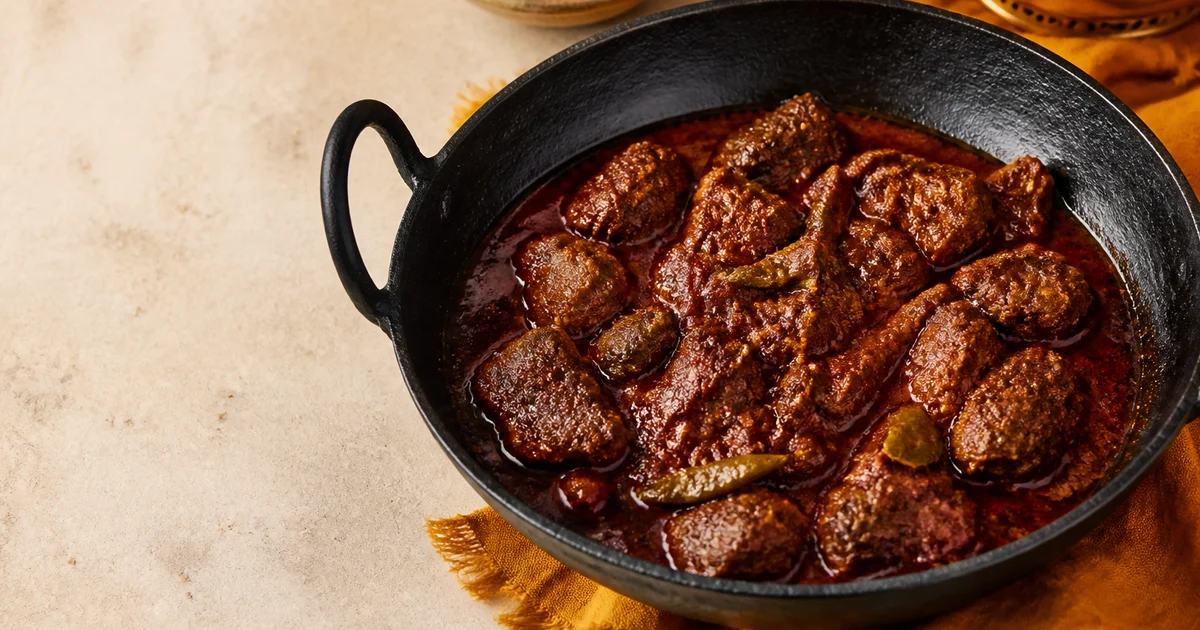
Commercial Beef Bhuna Recipe
A commercial beef bhuna recipe for about 40 plates, with a long bhuna stage, clear oil-separation cues, controlled portions and service-safe reheating.
- Yield:
- about 40 plates
- Total:
- 4 hr 15 min
- Difficulty:
- Medium
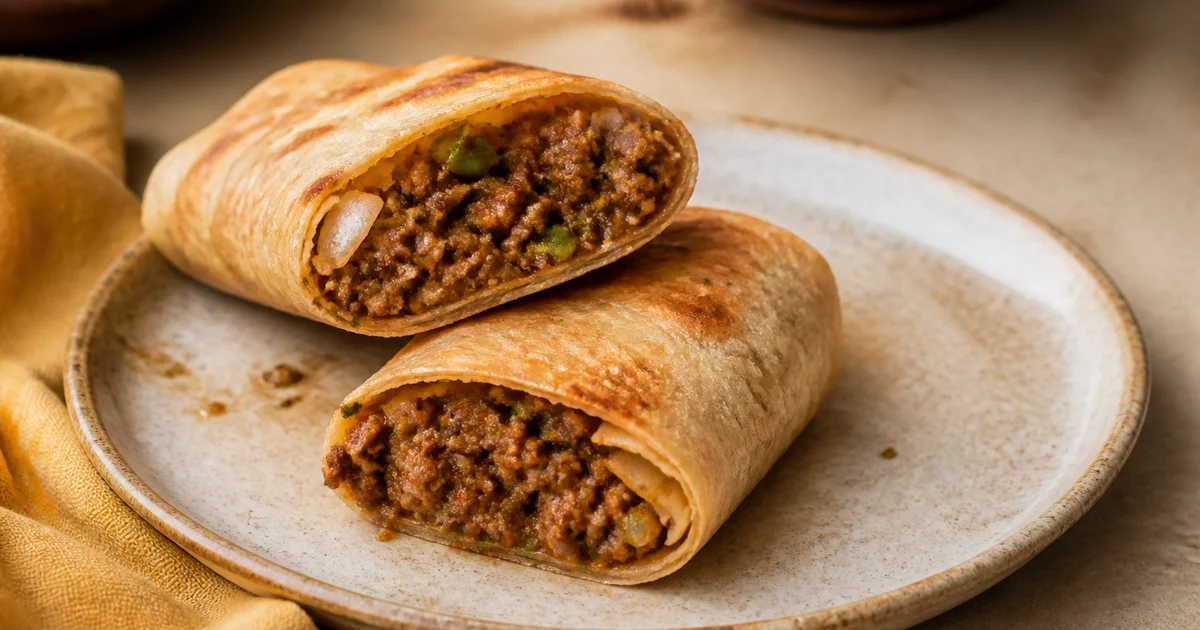
Commercial Bangladeshi Beef Roll Recipe
A commercial beef roll recipe producing 40 consistent rolls with tender cooked-down beef, crisp vegetables, controlled moisture and practical service guidance.
- Yield:
- 40 beef rolls
- Total:
- 1 hr 35 min
- Difficulty:
- Medium

Commercial Mishti Doi Recipe
A commercial mishti doi recipe for about 40 earthen-pot portions, with precise caramelisation, culture temperature, setting and yield control.
- Yield:
- about 40 earthen-pot portions
- Total:
- 13 hr 15 min
- Difficulty:
- Medium
Run your restaurant on Rosuii
POS, menu, inventory, payroll and more — built for Bangladeshi restaurants.
Start free