Food Cart Equipment List Bangladesh: Essential Setup
Buy equipment from the menu and site risks, not from a generic cart package.
Last verified: 2026-08-28
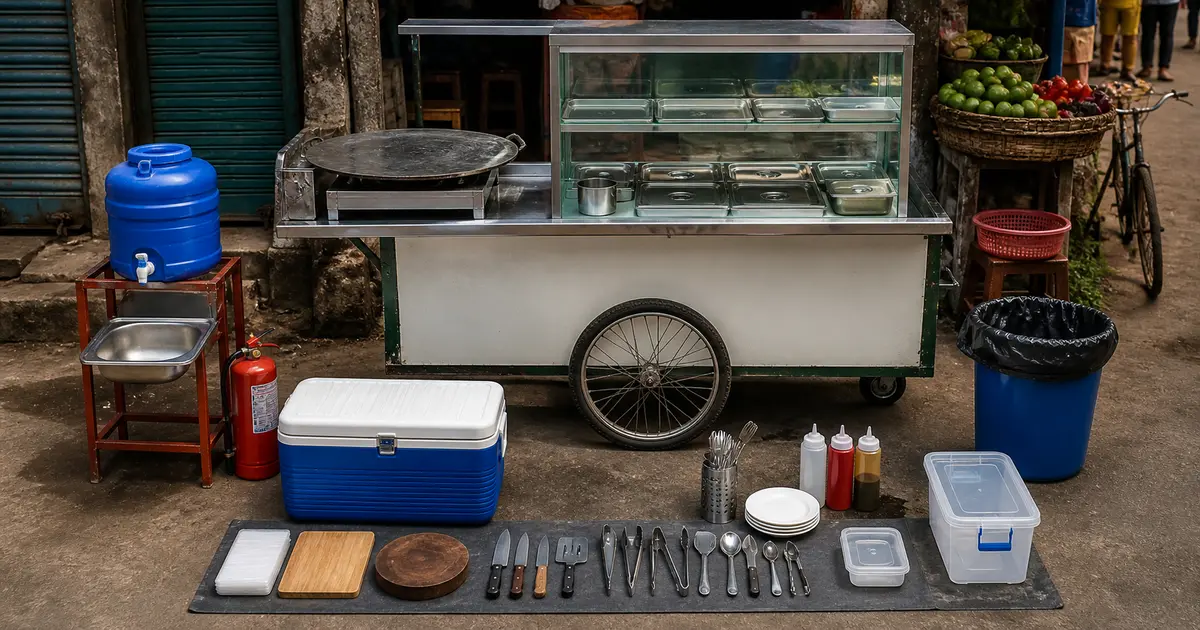
A food cart equipment list should be built from the menu, number of orders, power or fuel source, water, weather and the authority-approved location. The essential system is food protection, temperature control where needed, handwashing, safe cooking, clean service, waste and fire control.
Do not buy a complete cart package before measuring the workflow. A beautiful counter can still be unsafe or too slow if clean and dirty tasks cross.
Equipment by function
| Function | Essential examples | Selection test |
|---|---|---|
| Cooking | Suitable burner, griddle, fryer or steamer | Menu and legal fuel source |
| Cold holding | Insulated cooler or approved refrigeration | Capacity and temperature control |
| Prep | Food-safe boards, knives, covered pans, scales | Raw/ready separation |
| Handwashing | Clean water, tap, soap, catch tank | Always accessible |
| Service | Tongs, portion tools, covered display, packaging | Fast and protected |
| Waste | Lidded bins and wastewater container | No street discharge |
| Safety | Suitable extinguisher, first aid, lighting | Risk and authority advice |
Menu-to-equipment rule
List every production step from receiving to serving and place one tool, surface or container against it. Remove equipment that serves no menu item and add the missing control for raw food, cooked holding or allergen separation.
Measure the largest peak batch. Undersized cooling or holding creates unsafe improvisation; oversized equipment adds fuel, weight and cleaning work.
Cart layout
Arrange a one-way flow: clean storage, preparation, cooking, assembly, service and waste. Keep money and phones away from ready-to-eat contact or define a hand-cleaning step.
Place gas, electrical connections and hot oil so customers cannot reach them. Secure cylinders and follow current fire and local instructions.
Small tools people forget
- Probe thermometer where the process needs measurement
- Portion scoop or scale
- Spare tongs and cloth system
- Food covers and labels
- Cable and weather protection
- Rechargeable task light
- Cleaning chemicals stored away from food
- Basic repair and wheel lock
Buy, rent or test
Buy food-contact and safety-critical equipment only after inspecting material, stability and cleanability. Test high-cost cooking equipment at realistic load. A short rental or borrowed pilot can reveal capacity before purchase.
Ask for invoice, model, parts and service route. For electrical or fuel equipment, have a competent technician review the installation.
Opening checklist
Before each service, check water, soap, waste capacity, cold or hot controls, fire access, fuel or power, clean tools, packaging and weather protection. Keep a closing clean-down and maintenance note.
A POS and stock system can track ingredients and sales, but it cannot make an unsafe cart safe. Physical controls and staff practice remain primary.
Turn the menu into an equipment specification
List each item, batch size, preparation step, cooking method, holding limit, service container, peak units and cleaning requirement. Map the steps to equipment capacity and sequence. This prevents buying a visually impressive appliance that does not solve the menu's actual bottleneck.
Use current vendor quotations for prices; this guide does not invent a universal Bangladesh setup total. Record model, capacity, power or fuel requirement, dimensions, warranty, delivery, installation and service contact for every shortlisted item.
Equipment decision register
Confirm site and authority constraints before purchase. A portable cart has space, ventilation, weight, weather and utility limits that a normal kitchen equipment list may ignore.
| Category | Questions | Acceptance evidence |
|---|---|---|
| Cooking | Capacity, recovery and control | Timed batch test |
| Cold storage | Volume and temperature process | Commissioning record |
| Preparation | Food-contact, speed and cleaning | Workflow trial |
| Holding | Product limit and service flow | Approved procedure |
| Water/cleaning | Supply, waste and sanitation layout | Site test |
| Power/fuel | Load, connection and safe installation | Qualified verification |
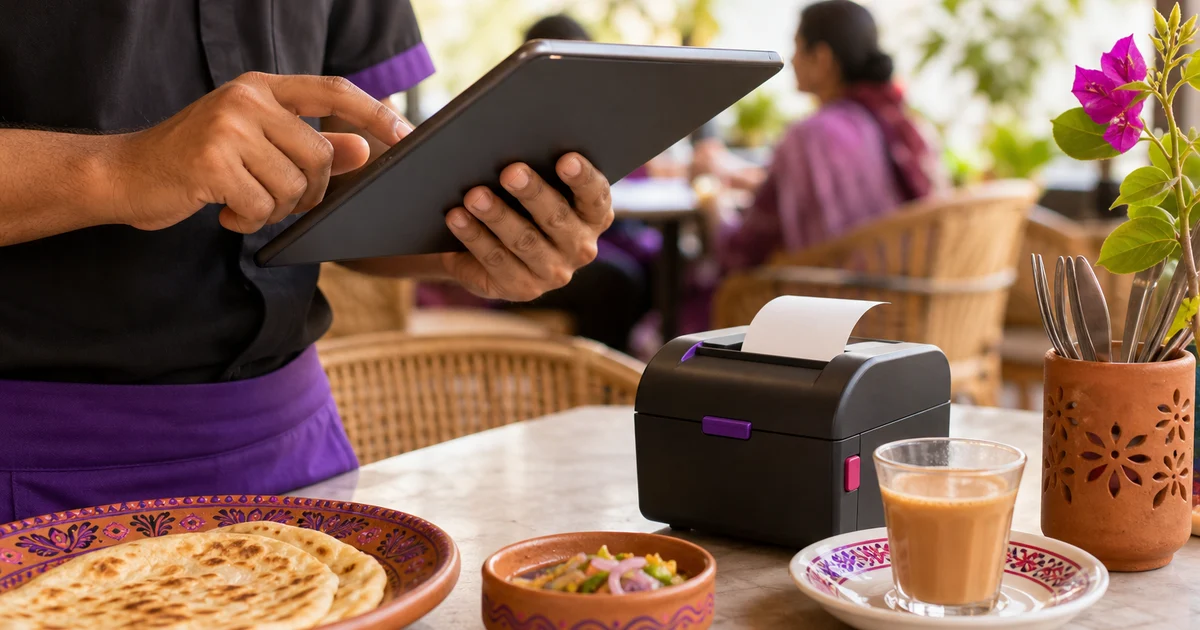
| POS | Device, printer, network and backup | End-to-end test |
| Safety | Applicable controls and access | Reviewed site checklist |
Compare total ownership, not sticker price
Add delivery, installation, utility modification, consumables, cleaning, calibration where relevant, preventive service, spare parts, downtime plan and warranty exclusions. Ask who provides local service and how a failed unit is diagnosed or transported.
A used unit may be suitable after inspection and load testing, but missing parts, unsafe modifications or unavailable service can erase the saving. Record condition and acceptance defects before payment.
Layout and movement test
Build a full-size tape or cardboard layout and rehearse a peak batch before final fabrication. Include staff reach, ventilation, rain protection and cleaning, and obtain appropriate professional or authority review for safety-critical design.
- Raw-to-ready flow avoids unnecessary crossing
- Hot, sharp and moving parts have safe clearance
- Frequently used tools are reachable
- Handwashing and cleaning access remain usable
- Cold storage opens under peak layout
- Packaging and handover do not block cooking
- Cash and customer queues stay away from hazards
- Waste can leave without crossing ready food
Commissioning and asset record
On delivery, match model and specification, inspect damage, record serial, manuals, invoice and warranty, then install and test under expected load. Train responsible staff on safe operation, shutdown, cleaning and defect reporting. Do not sign unconditional acceptance while material defects remain undocumented.
Create a maintenance schedule from manufacturer guidance and the operating environment. Log downtime and repair outcome, keep a defined backup for critical functions and review whether repeated failure justifies replacement.
Maintain a cart opening and closing check that covers condition, utility connection, cleanliness, consumables, temperature-control readiness under the approved process, POS power and critical spares. A failed safety-critical item should trigger the restaurant's stop-use and escalation procedure. Review asset records after any cart redesign because moved loads, cables, ventilation or service access may invalidate an earlier test. Keep current supplier and service contacts available to the shift owner.
The best cart is not the one with the most equipment. It is the smallest layout that safely completes the menu at peak demand and can be cleaned, moved and maintained.
Related guides
- Food Cart Design and Cost
- Street Food Hygiene Bangladesh
- Food Cart Location Selection
- Compare restaurant management software
See this workflow in Rosuii: Manage menu ingredients and stock in Rosuii
Sources checked
Updated:
Frequently asked questions
What equipment does a food cart need?
Does every cart need refrigeration?
What should be bought first?
Can I use household equipment?
Why include a thermometer?
How much does food cart equipment cost in Bangladesh?
Should equipment be selected before the menu?
Is used food-cart equipment a good option?
What information belongs in an equipment asset register?
Run your restaurant on Rosuii
POS, menu, inventory, payroll and more — built for Bangladeshi restaurants.
Start free